Making a major technology investment for your contact center can feel overwhelming. At first glance, the one-time purchase price of an on-premise system might seem appealing—a straightforward capital expense you can budget for and own outright. But this initial price is merely the tip of a massive financial iceberg. The real price tag isn’t the purchase price, but the Total Cost of Ownership (TCO), which includes every expense incurred over the system’s entire lifecycle.
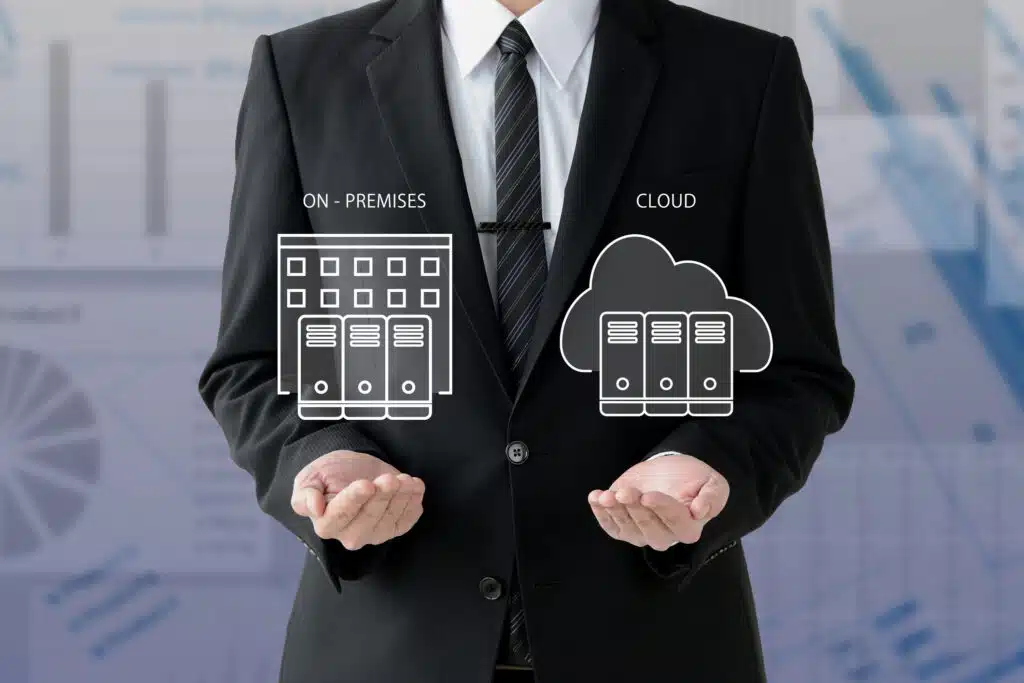
The debate of on premise vs cloud contact center technology boils down to two distinct financial models:
On-premise: You purchase, own, and manage all the hardware and software in your own data center. This is a large, upfront capital expenditure (CapEx).
Cloud (CCaaS): You access a powerful, ready-made platform over the internet from a provider like Xima for a predictable subscription fee. This is a manageable, ongoing operational expenditure (OpEx).
This article will break down the key cost comparisons, expose the often-overlooked expenses of on-premise systems, and show how a cloud-based approach transforms your cost structure for greater predictability and higher returns.
What Are the Real Costs of an On-Premise Contact Center?
The true TCO of an on-premise system extends far beyond the initial invoice. Many of the most significant expenses are recurring, unpredictable, and difficult to budget for. Let’s uncover the hidden costs of on premise contact centers. Xima’s on-premises contact center remains an option for teams that need it.
The Obvious: High Upfront Capital Expenditures (CapEx)
Before your first agent can even take a call, an on-premise deployment requires a substantial upfront investment [1]. This includes:
Hardware: Expensive servers, server racks, networking equipment, physical phones, and dedicated backup systems.
Software Licenses: High-cost perpetual software licenses for your core platform and for every single agent seat.
Physical Infrastructure: The cost of building or dedicating secure data center space, complete with specialized 24/7 power and cooling systems.
The Hidden: Unpredictable Ongoing Operational Costs
This is where the financial iceberg truly reveals its size. The “one-time” purchase is never truly a one-time cost. Ongoing operational expenses and risks quickly inflate your TCO.
Constant Hardware Refreshes: That expensive hardware isn’t a permanent asset. To keep performance and security up to date, it typically requires a full, costly replacement every 3 to 5 years.
Expensive Maintenance & Support Contracts: Vendors require you to purchase annual support contracts, often costing 15-20% of the initial license fee every single year [9]. These contracts are mandatory just to receive essential security patches and basic technical support.
Specialized IT Staffing: You must hire, train, and retain a dedicated team of IT professionals with expertise in telephony and server management. Their salaries, benefits, and ongoing training are a significant and permanent line item.
Complex and Costly Upgrades: Need access to modern features like AI-powered speech analytics or new communication channels? With an on-premise system, this often requires another major purchase and a complex, disruptive upgrade project that can take months to complete.
The Opportunity Cost: Inflexibility and Stagnation
Beyond direct expenses, the rigid nature of on-premise systems creates significant business risks and opportunity costs.
Inflexible Licensing: Need to add five agents for a seasonal rush? You might be forced to buy a block of 25 licenses, leading to expensive “shelfware” that sits unused for most of the year. Scaling down to reduce costs is often impossible.
The High Price of Downtime: When an on-premise system fails, your entire operation grinds to a halt. The responsibility—and the full financial impact of lost revenue and idle agents—is entirely on you.
Lack of Agility: On-premise systems struggle to adapt to modern business needs. Supporting a remote workforce, scaling instantly to handle unexpected call spikes, or integrating new channels becomes a slow and expensive ordeal. These are just some of the hidden expenses that a move to the cloud avoids.
How Do Cloud Contact Center Costs Compare?
A cloud contact center, also known as Contact Center as a Service (CCaaS), offers a financially intelligent alternative that eliminates the hidden costs and risks of on-premise ownership. The entire model is built for predictability, scalability, and continuous innovation. Cost structures are outlined on Xima pricing.
Minimal Upfront Investment, Maximum Value
The most immediate difference is the shift from CapEx to OpEx. With a CCaaS provider like Xima, you can get started without a massive capital outlay.
No Hardware Headaches: There are no servers to buy, maintain, or upgrade. Xima manages all the enterprise-grade infrastructure in secure, redundant data centers, included as part of your service.
Fast and Efficient Deployment: Cloud contact center solutions can be deployed in a matter of weeks, not months. This allows you to start realizing value and improving your customer experience almost immediately.
A Predictable, All-Inclusive Subscription
The CCaaS model simplifies your budget and eliminates financial surprises.
Your predictable monthly subscription fee is all-inclusive. It covers the software, 24/7 technical support, all ongoing maintenance, and—most importantly—all future feature updates and security patches.
This makes budgeting simple and transparent. You can confidently plan your expenses without worrying about a sudden, multi-million-dollar hardware refresh lurking around the corner.
The Financial Benefits of Flexibility and Scalability
Cloud agility translates directly into cost savings and competitive advantage.
Elastic Scaling: Easily scale your agent seats up or down in minutes to perfectly match business demand [3]. You only pay for what you use, completely eliminating the cost of unused “shelfware.”
Future-Proof Innovation: Get immediate access to the latest technology—including agentic AI, advanced analytics, and new communication channels—as soon as it’s released [6]. This innovation is part of your subscription, not a separate, costly project. This is a key advantage when comparing a platform like Xima vs. a custom-built solution.
Cost Factor | On-Premise Contact Center | Cloud Contact Center (CCaaS) |
|---|---|---|
Initial Cost | High CapEx: Servers, software licenses, infrastructure. | Low/No CapEx: No hardware to purchase. |
Pricing Model | Perpetual licenses + annual maintenance. | Predictable monthly/annual subscription (OpEx). |
Maintenance | Your responsibility: Requires dedicated IT staff. | Included: Handled entirely by the provider. |
Upgrades | Costly, complex, and disruptive projects. | Included: Automatic, seamless, and non-disruptive. |
Scalability | Rigid and expensive to scale up or down. | Elastic: Scale seats on demand and pay only for use. |
Downtime Risk | High; responsibility and cost fall on you. | Low; backed by provider SLAs (e.g., 99.99% uptime). |
How to Improve Contact Center ROI with a Modern Platform
Moving to a cloud contact center isn’t just about cutting costs; it’s about reallocating resources from “keeping the lights on” to driving measurable business value. This is how to improve contact center ROI with modern technology solutions. Instead of spending your budget on server maintenance, you can invest in initiatives that directly enhance performance and customer satisfaction.
A modern platform like Xima provides the tools to drive ROI in several key areas:
Reduce Operational Waste: Use intelligent call routing to lower Average Handle Time (AHT) and AI-powered tools for automated call summaries. This frees up agents to handle more complex, value-added interactions, boosting overall efficiency.
Optimize Agent Staffing: Leverage real-time analytics and workforce management tools to accurately forecast call volumes. This allows you to schedule agents precisely, preventing costly overstaffing while avoiding agent burnout.
Improve First Call Resolution (FCR): Connect customers to the best-equipped agent on the first try with skills-based routing. Improving FCR is one of the fastest ways to drive measurable ROI, as it significantly reduces the cost of repeat calls [7].
Lower Agent Attrition: Empower agents with intuitive, modern tools that make their jobs easier and more effective. Better tools lead to higher morale and lower turnover, saving you the immense costs associated with recruiting, hiring, and training new agents [8].
Ultimately, the ROI of modernizing your contact center is clear, especially for mid-size firms looking to compete in 2026.
Conclusion: The Clear Financial Path Forward
Choosing between an on-premise and a cloud contact center is a major business decision with long-term financial implications. While on-premise systems present a seemingly simple upfront cost, their true Total Cost of Ownership is far higher, bloated by hidden maintenance, mandatory upgrades, specialized staffing, and costly inflexibility.
A cloud contact center solution from Xima fundamentally changes the financial equation. It converts unpredictable capital expenditures into a simple, manageable operational subscription. This strategic shift not only lowers your TCO but also provides the agility, scalability, and continuous innovation necessary to improve your ROI, enhance customer experience, and stay competitive in a rapidly changing world.
Stop paying the hidden price of outdated technology. The path to a more cost-effective and powerful contact center is clear, and the migration can be planned efficiently to maximize benefits from day one.
Ready to see how much you could save? Request a Demo today and get a clear picture of your future ROI.