
As we stand in March 2026, the discussion around contact center modernization has passed a critical inflection point. For many businesses, clinging to traditional on-premise solutions is no longer a strategic choice—it’s a significant competitive disadvantage. Customer expectations for seamless, intelligent, and immediate support have soared, and legacy systems simply cannot keep up. This mounting pressure has created what many industry leaders call the cloud crunch of 2026, where the need to adapt is no longer a future goal but an immediate necessity.
Migrating your contact center to the cloud is far more than an IT project; it’s a foundational business transformation that reshapes how you engage with customers, empower your agents, and drive growth. This guide provides a comprehensive roadmap for making the switch, detailing why migration is critical, how to build a successful strategy, and how to navigate common challenges to unlock a new era of customer service excellence.
Why Is Cloud Migration a Strategic Imperative, Not Just an Upgrade?
Moving away from an on-premise model means embracing the agility, intelligence, and customer-centricity required to thrive in today’s digital-first world. While on-premise solutions offer a sense of direct control over physical hardware, they are often burdened by significant limitations and hidden costs that stifle innovation and hinder growth.
What is a Cloud Contact Center?
A cloud contact center, also known as Contact Center as a Service (CCaaS), is a comprehensive suite of tools, applications, and services hosted on a provider’s secure servers and accessed over the internet. Instead of buying and maintaining hardware, you pay a predictable subscription fee. This Software as a Service (SaaS) model delivers far more than remote agent capabilities; it provides a scalable, future-proof foundation for your entire customer experience (CX) operation. For a deeper dive, check out our full guide on what a cloud contact center is.
Let’s break down the core differences and the compelling benefits of making the switch.
On-Premise vs. Cloud: A Direct Comparison
Feature | On-Premise Contact Center | Cloud Contact Center (CCaaS) |
|---|---|---|
Initial Cost | High capital expenditure (CapEx) for hardware, servers, and software licenses. | Low-to-no upfront cost; predictable subscription-based model (OpEx). |
Scalability | Rigid and slow. Adding agents requires purchasing new hardware and licenses, often taking weeks or months. | Elastic and instant. Scale agent seats up or down in minutes to meet seasonal demand. |
Maintenance & Updates | Requires a dedicated IT team for ongoing maintenance, security patches, and complex version upgrades. | The provider manages all maintenance, security, and feature updates automatically. |
Features & AI | Limited access to new features; AI and analytics often require costly, complex third-party add-ons. | Instant access to the latest innovations, including integrated AI, speech analytics, and omnichannel routing. |
Accessibility & Staffing | Agents are typically tied to a physical location, limiting your talent pool and remote work capabilities. | Agents can work from anywhere with an internet connection, enabling a flexible, global workforce. |
For a more detailed breakdown of these two models, you can explore our complete guide on On-Premise vs. Cloud Contact Center.
The Hidden Costs and Risks of Sticking with On-Premise
The upfront investment in on-premise hardware is only the beginning. The true total cost of ownership (TCO) includes numerous ongoing expenses and strategic risks that are frequently overlooked. These hidden costs of on-premise contact centers can cripple a budget and divert focus from what truly matters—your customers.
Hardware Replacement Cycles: Servers, switches, and other physical equipment become obsolete, requiring expensive, disruptive replacement projects every three to five years.
Software Licensing and Maintenance Fees: Annual maintenance contracts and costly version upgrades add significant, recurring operational expenses just to keep the system running.
Specialized IT Staffing: You must hire, train, and retain a specialized IT team to manage, maintain, and troubleshoot the system, pulling valuable resources away from other strategic business projects.
Energy and Real Estate: Physical servers consume substantial power and require dedicated, climate-controlled rooms, adding to your facility overhead.
Opportunity Cost: Every dollar and hour your team spends on system maintenance is a resource not invested in innovating the customer experience. This is perhaps the greatest hidden cost of all.
The Transformative Benefits of Cloud Adoption
Migrating to a CCaaS solution like the one offered by Xima Software provides clear advantages that directly impact your bottom line and boost customer loyalty.
Enhanced Flexibility and Scalability: Effortlessly scale your operations to handle seasonal peaks, unexpected events, or business growth without massive capital investments or lengthy procurement cycles.
Superior Customer Experience (CX): Deliver true omnichannel support, allowing customers to move seamlessly between voice, chat, email, and social media without losing context. Features like intelligent call routing ensure customers are connected to the best-suited agent on the first try, dramatically improving metrics like First Contact Resolution (FCR) and Customer Satisfaction (CSAT).
Access to Advanced AI and Analytics: Leverage powerful tools that were once exclusive to the largest enterprises. With Xima’s AI-powered speech analytics, you can automatically transcribe and analyze 100% of your customer interactions to identify trends, gauge sentiment, and ensure agent script adherence.
Reduced IT Burden and Costs: Shift from a volatile, capital-intensive (CapEx) model to a predictable operating expense (OpEx). This frees your IT team from managing servers so they can focus on initiatives that drive real business value.
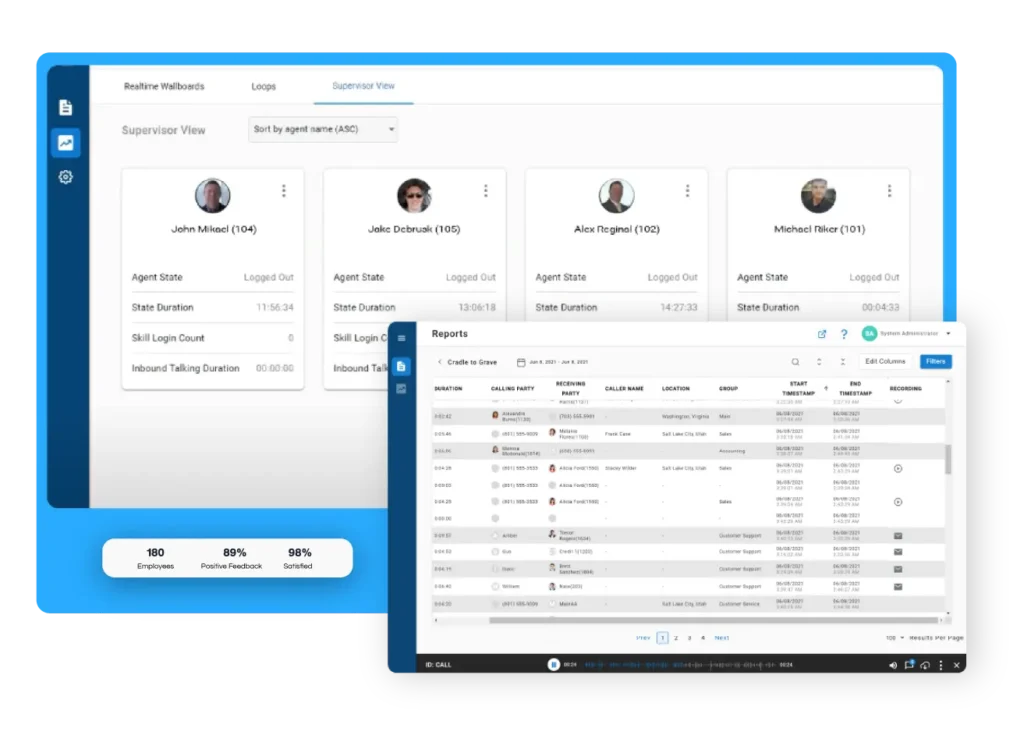
Actionable, Real-Time Insights: Equip supervisors with dynamic dashboards that provide a live view of agent performance, call queues, and service levels. This allows for immediate, in-the-moment coaching and data-driven adjustments to optimize operations.
How Do You Build an Actionable Cloud Migration Strategy?
A successful cloud contact center migration strategy is built on meticulous planning and a clear vision of your goals. Rushing the process without a proper roadmap can lead to service disruptions, poor user adoption, and a failure to realize the cloud’s full potential. As external experts note, a phased approach is crucial to ensuring a smooth and successful transition.
Follow these essential steps to build your contact center modernization strategy:
Assess Your Current Environment: Before planning your future state, you need a complete picture of your present. Audit your existing infrastructure, including call flows, IVR scripts, integrated applications (like your CRM), and current workflows. Document baseline key performance indicators (KPIs) like Average Handle Time (AHT), CSAT scores, and Net Promoter Score (NPS)—a measure of customer loyalty—to benchmark the success of your migration.
Define Clear Objectives and KPIs: What, specifically, do you want to achieve with this migration? Your goals must be measurable and tied directly to business outcomes.
Example Cost Goal: “Reduce operational costs by 20% within the first year by eliminating hardware maintenance fees and reducing IT overhead.”
Example CX Goal: “Improve our CSAT score by 15 points within six months by implementing skills-based routing to connect customers with the right experts faster.”
Example HR Goal: “Enable 50% of our agents to work remotely with full capabilities to expand our talent pool and improve business continuity.”
Choose the Right CCaaS Partner: This is the most critical decision in your migration. Look beyond a simple feature list and seek a provider that will act as a true partner in your success. Key criteria include proven reliability, robust security certifications (like SOC 2, HIPAA, or PCI), deep integration capabilities, and responsive, expert customer support. A platform like Xima Software is purpose-built to meet these needs with powerful analytics, AI tools, and workforce optimization features under one roof.
Develop a Secure Data Migration Plan: Your customer data and historical interaction records are invaluable business assets. Work with your chosen provider to create a secure, efficient, and compliant plan for transferring this data. This involves careful planning and execution to ensure data integrity while adhering to regulations like GDPR or CCPA.
Prepare and Empower Your Team: Technology is only as good as the people who use it. Prepare your agents, supervisors, and administrators by providing comprehensive training. A great partner will offer extensive resources. Focus on how the new platform makes their jobs easier, removes daily friction, and empowers them to provide better, more satisfying customer service.
Implement in Phases, Not All at Once: A “big bang” cutover, where everyone is switched over at once, is incredibly risky. A phased rollout minimizes disruption and allows you to learn and adjust as you go. Consider one of these proven approaches:
Pilot Program: Start with a small, tech-savvy group of agents. Let them test the system in a live environment, gather feedback, and become internal champions for the new platform.
Team-by-Team Rollout: Once the pilot is successful, gradually move individual teams or departments to the new platform, building momentum with each success.
Feature-by-Feature Rollout: Introduce new functionalities—like a new channel (e.g., web chat) or advanced AI analytics—incrementally to avoid overwhelming your team.
Xima’s cloud contact center software is the platform side of the strategy described here, for a comprehensive checklist to guide your journey, explore our Blueprint for Smooth Contact Center Cloud Migration.
What Are the Common Migration Challenges (And How Do You Solve Them)?
While the benefits are significant, any major technology shift comes with potential hurdles. Anticipating these challenges allows you to build a proactive strategy to mitigate risk and ensure a successful outcome.
Challenge: Data Security and Compliance Concerns
Solution: This is a valid concern, but reputable cloud providers invest far more in security than a single organization typically can for an on-premise setup. Choose a provider that is transparent about its security architecture, data encryption methods, and compliance with industry standards (e.g., SOC 2, HIPAA, PCI-DSS). Xima Software, for example, prioritizes a multi-layered security strategy to ensure your data and your customers’ data are always protected.
Challenge: Integration with Existing Business Systems (CRM, ERP)
Solution: A contact center that operates in a silo is inherently inefficient. Prioritize a CCaaS platform with open APIs and a library of pre-built integrations for essential tools like Salesforce, Microsoft Dynamics, and other business software. This creates a seamless flow of information and provides agents with a unified, 360-degree view of the customer.
Challenge: Employee Resistance to Change
Solution: The biggest risk to adoption is often cultural, not technical. Involve your team from the very beginning. Clearly communicate the “why” behind the migration, focusing on the benefits to them—such as easier workflows, better tools, remote work flexibility, and the ability to help customers more effectively. Celebrate the small wins from your pilot group to build excitement and momentum.
Challenge: Fear of Downtime and Service Disruption
Solution: A well-planned, phased migration is your best defense against disruption. A detailed cutover plan is essential for a smooth transition. Work closely with your provider to schedule the final cutover during off-peak hours and ensure a documented rollback plan is in place as a safety net.
Have more questions about the process? We’ve answered some of the most common ones in our article, Questions About Moving to the Cloud Answered.
How Does Cloud Migration Drive ROI and Future-Proof Your Business?
Moving to the cloud isn’t just about solving today’s problems; it’s about building an agile foundation that prepares your organization for the future of customer service. A flexible, cloud-native platform gives you the ability to adapt to new channels, evolving customer behaviors, and emerging technologies without being locked into a rigid infrastructure.
Driving a Measurable Return on Investment (ROI)
The financial case for cloud migration extends far beyond reducing CapEx. A modern CCaaS platform delivers a strong contact center ROI through multiple avenues:
Increasing Agent Efficiency: AI-powered agent assistance, streamlined workflows, and unified desktop tools reduce handle times and increase the number of interactions an agent can successfully manage.
Reducing Agent Attrition: Empowering agents with better tools and removing daily frustrations leads to higher job satisfaction and lower turnover—a massive and often underestimated cost saving.
Boosting Customer Loyalty and Lifetime Value: Superior, personalized experiences powered by omnichannel consistency and intelligent routing lead to higher customer retention.
Teams that need to keep call processing on site can review Xima’s on-premises contact center, to better understand the financial impact, see how you can Maximize ROI by Moving to the Cloud.
Unlocking a Faster, Smarter Customer Experience
In 2026, speed and intelligence are the currency of world-class customer service. A cloud platform is the engine that powers this new standard. With a solution like Xima, you can unlock a faster CX by leveraging:
Intelligent Routing: Go beyond basic call distribution. Use data from your CRM to route high-value customers to your top-performing agents or connect a returning caller with the last agent they spoke to for seamless continuity.
Proactive Self-Service: Deploy AI-powered chatbots and voicebots that can handle common inquiries 24/7, resolving issues instantly and freeing your human agents for more complex, high-value interactions.
Continuous, Data-Driven Improvement: Use speech and text analytics to uncover the root cause of customer friction. Are customers repeatedly confused by a recent policy change? The answers are in your interaction data, and the cloud makes it possible to find them and take action.
Your Partner in Modernization
The migration from an on-premise system to the cloud is one of the most impactful investments you can make in your business’s long-term success. It is the cornerstone of any effective contact center modernization strategy, enabling you to deliver exceptional experiences, empower your team, and gain the agility needed to thrive in a constantly changing world.
The journey may seem complex, but with a clear strategy and the right technology partner, it can be a smooth and profoundly rewarding transition.
Ready to see how a cloud contact center can transform your customer service and prepare you for the future? Request a demo of Xima Software today and let us show you what’s possible.