
Fast, consistent customer service is no longer a differentiator. It is an expectation. Yet many contact centers still operate with fragmented tools, limited visibility, and infrastructure that makes it difficult to adapt as demand patterns and customer behavior continue to shift.
As interaction volumes fluctuate and channels multiply, contact center leaders face increasing pressure to improve customer experience without adding operational strain. Cloud based contact center platforms have become a practical response to this challenge, not because they introduce novelty, but because they remove constraints that legacy environments struggle to overcome.
Cloud Migration and the Cost of Standing Still
For many contact centers, cloud migration is no longer about introducing new capabilities. It is about maintaining control as service demands become less predictable and teams more distributed.
Legacy systems may continue to function day to day, but they often limit visibility, slow response to change, and increase operational strain during peak periods or unexpected disruptions. Industry analysis shows that contact centers relying on on-premise infrastructure face higher operating complexity and reduced flexibility compared to cloud based environments, particularly as customer expectations rise and service models evolve [1].
These tradeoffs are most visible when comparing on-premise contact center environments with cloud based models where differences in scalability, supervisor insight, and recovery during demand spikes become clear.
Over time, these constraints surface in familiar ways: longer wait times, higher agent stress, reduced supervisor awareness, and slower response when volumes increase. The risk is rarely tied to a single event, but to the cumulative impact of operating within systems not designed for constant change. Xima’s cloud contact center software is the platform referenced throughout this post.
Supporting More Consistent Customer Experiences
Customer interactions rarely occur within a single channel. Conversations often move between voice, messaging, and digital touchpoints over multiple sessions. When context is lost between these interactions, customer frustration increases and resolution times lengthen.
Modern cloud contact center platforms are designed to preserve this context by unifying interactions into a single customer timeline. This allows agents to understand prior conversations regardless of channel and helps supervisors identify where breakdowns occur. Research indicates that customers increasingly expect this continuity as part of a modern service experience [2].
Capabilities such as skills-based routing and queue callback are now widely recognized as best practices for reducing unnecessary transfers and minimizing perceived wait times. Platforms such as Xima Software support these capabilities as part of their core cloud architecture, reflecting broader industry standards rather than point solutions layered on top of existing systems.
Reducing Agent Friction and Improving Supervisor Visibility
Agent experience and customer experience are closely linked. When agents are required to manage multiple interfaces or manually reconstruct customer context, productivity declines and fatigue increases.
Cloud contact center platforms address this friction by consolidating communication channels, interaction history, and CRM data into a unified workspace. This reduces task switching and allows agents to focus on resolution rather than navigation.
Supervisor visibility is equally critical. Workforce research consistently shows that limited insight into interaction quality and workload contributes to burnout and higher attrition in contact center environments [3].
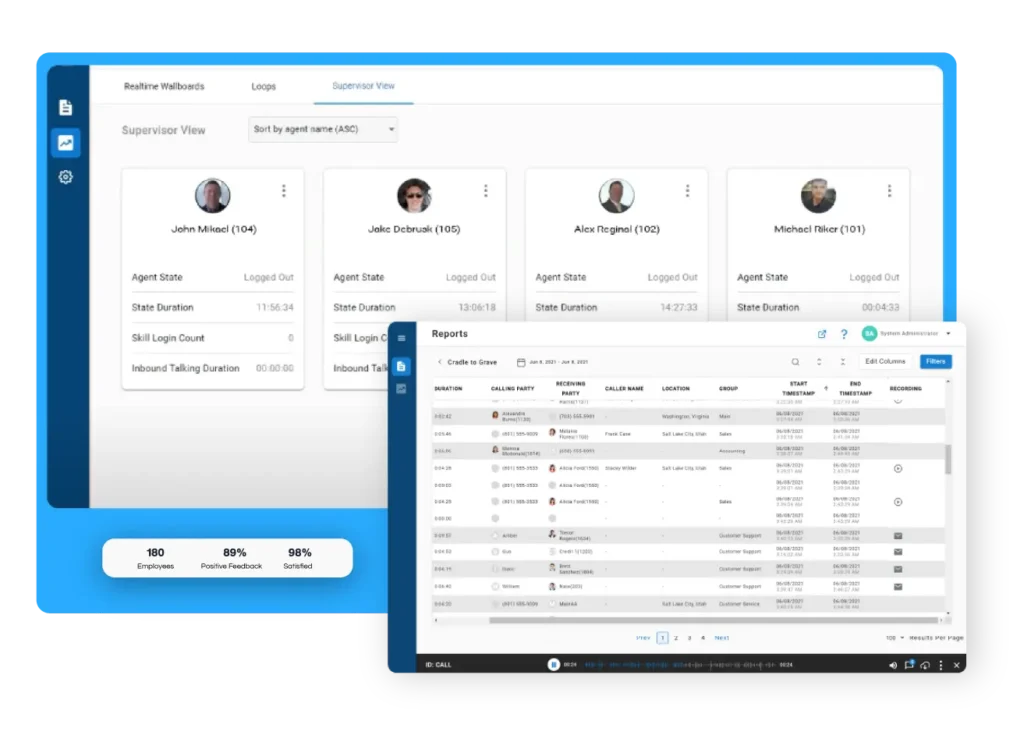
Features such as interaction transcripts, sentiment indicators, and consolidated reporting help supervisors identify emerging issues earlier and focus coaching efforts where they have the greatest impact.
These capabilities are increasingly expected as part of modern contact center operations, rather than treated as advanced or optional tools.
Flexibility as an Operational Requirement
Contact centers now operate in environments shaped by hybrid work, distributed teams, and fluctuating demand. Flexibility is no longer an upgrade path. It is a baseline requirement.
Cloud based platforms allow agents to work securely from different locations while maintaining consistent access to tools, reporting, and performance metrics. Capacity can be adjusted without infrastructure changes, supporting continuity during seasonal spikes or unexpected disruptions.
As analytics and AI-assisted insights become more widely adopted across contact centers, access to centralized, real-time interaction data is becoming foundational to maintaining service quality and operational control [4].
Cost Structure and Operational Efficiency
From a cost perspective, cloud platforms shift contact center operations away from large capital investments toward more predictable operating expenses. Hardware maintenance, manual upgrades, and infrastructure refresh cycles are reduced or eliminated.
Pricing models such as concurrent user licensing further align costs with actual usage, supporting flexible staffing without over-provisioning. Over time, these efficiencies contribute to improved operational sustainability, particularly when paired with gains in productivity and CX consistency.
Moving Forward with Greater Control
Cloud adoption in the contact center is less about following technology trends and more about maintaining control as service expectations, workforce models, and operational pressures continue to evolve.
Reducing structural constraints and improving visibility allows organizations to stabilize customer experience while supporting agents and supervisors more effectively. For many teams, understanding the operational differences between on-premise and cloud contact center environments is the most practical starting point when evaluating next steps.