
But as your team grows, so do your needs. Basic tools can quickly become limiting when you need deeper visibility, better reporting, and more control over performance. What worked at the start may no longer support where you are headed.
This is where it becomes important to look beyond entry-level solutions. In this guide, we compare Xima with entry-level call center software, highlighting key differences and what small teams should consider when choosing a platform that supports long-term success.
Key Takeaways for Small Support Teams
- Entry-level call center software is designed for simplicity and small team environments.
- As call volume increases, reporting depth and queue visibility often become limiting factors.
- Xima is built around structured routing, supervisor oversight, and scalable configuration.
- The decision is about operational control, not feature volume.
- Growing teams should evaluate when lightweight tools begin creating blind spots.
Xima’s contact center solutions for small businesses are built for teams at this size.
What Entry-Level Call Center Software Is Designed To Do
Entry-level call center software is built for simplicity. These platforms are designed to help small teams get up and running quickly, without the complexity that often comes with more advanced systems. Most offer core functionality like basic call routing, simple IVR menus, and limited reporting so teams can handle inbound and outbound calls with minimal setup.
For many organizations just getting started, this level of functionality feels like enough. The appeal often lies in the idea of flexibility and automation, with features that suggest you can customize workflows as needed.
In most cases, entry-level solutions are:
- Easy to deploy, with minimal technical setup required
- Affordable for teams with a low number of agents
- Designed to support straightforward, uncomplicated call flows
- Limited when it comes to advanced reporting, visibility, and performance oversight
Where Entry-Level Platforms Begin to Show Strain
As teams grow, the demands on your call center software begin to shift. What once felt simple and efficient can start to create friction. Increased call volume, more defined service levels, and a greater need for supervisor oversight all require deeper functionality than entry-level platforms are typically built to support.
At this stage, limitations in routing logic and reporting clarity become more noticeable. Teams may struggle to direct calls as precisely as needed or lack the visibility required to manage performance in real time. What worked for a small, early-stage operation can quickly become a barrier to efficiency.
These challenges do not always appear all at once, but they tend to surface as expectations increase. Without the right tools in place, teams can find themselves reacting to issues instead of proactively managing performance.
How Xima Supports the Next Stage of Call Center Growth
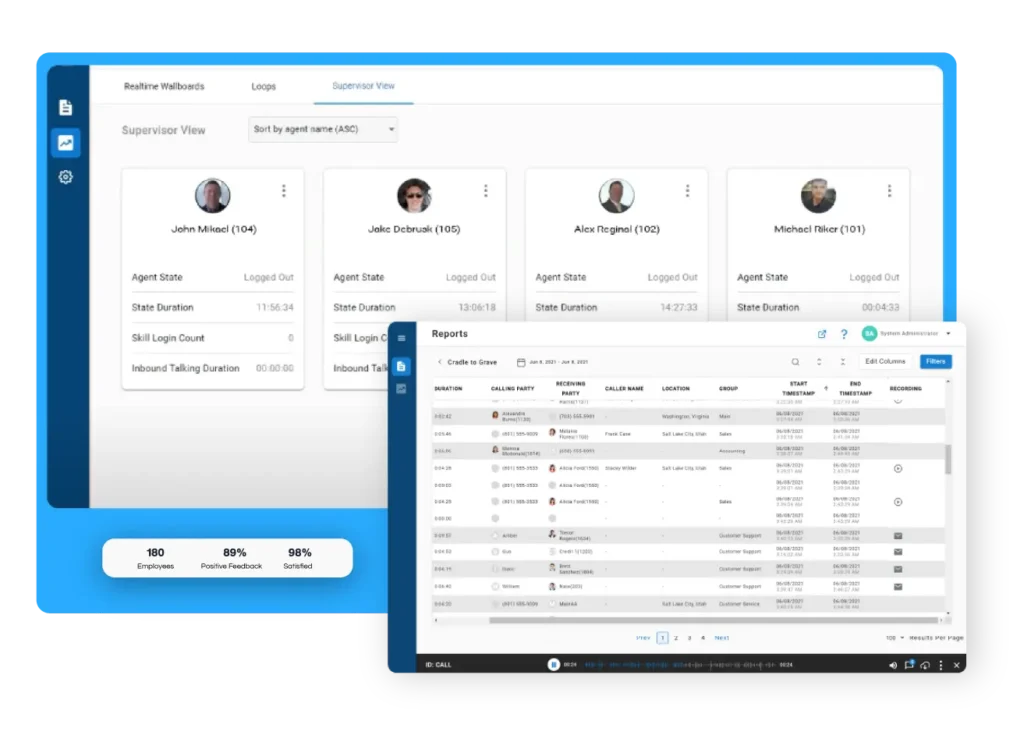
As call center operations become more complex, the need for structure grows. Xima is designed to support that transition, giving growing teams the tools they need to operate with greater clarity and control. Instead of treating advanced functionality as an add-on, Xima builds core capabilities such as routing logic, reporting, and team management directly into the platform’s foundation.
This approach allows teams to introduce structure without taking on the complexity of a large enterprise system. You can refine how calls are handled, gain clearer insight into performance, and support supervisors with the tools they need to stay proactive. The result is a more predictable and manageable operation as your team continues to grow.
Xima’s key capabilities include:
- Real-time dashboards that provide immediate visibility into queues, agents, and call activity
- Structured routing logic that supports more precise and intentional call flows
- Supervisor monitoring tools that make it easier to track performance and respond to issues as they happen
- Scalable configuration that grows alongside your team without adding unnecessary complexity
With Xima, small teams are not forced to choose between simplicity and capability. You gain the structure needed to scale while maintaining the flexibility to adapt as your needs evolve.
Structured growth does not require enterprise complexity. Platforms designed around queue visibility and reporting clarity help teams scale without adding administrative burden.

Operational Comparison: Entry-Level Software vs Xima
At a glance, many platforms may appear similar based on feature lists alone. The real difference shows up in how those features function day to day. This comparison is less about the number of tools available and more about the level of visibility and control each platform provides.
Entry-level software is designed to cover the basics, which can work well for simple operations. Xima, on the other hand, is built to give teams a clearer view of performance and more control over how calls are managed.
|
Operational Area |
Entry-Level Software |
Xima |
|
Routing Depth |
Basic call distribution |
Structured and configurable routing logic |
|
Reporting |
Limited or summary-level reports |
Detailed, real-time performance dashboards |
|
Supervisor Oversight |
Minimal live visibility |
Real-time queue and agent monitoring |
|
Workflow Flexibility |
Limited customization |
Configurable workflows without coding |
|
Scalability |
Designed for small teams |
Designed for steady growth |
|
Administrative Control |
Simplified settings |
Structured management tools |
Cost Behavior as Teams Grow
Cost is often one of the first factors small teams consider, but focusing only on the starting price can be misleading. Entry-level platforms are typically affordable at low agent counts, which makes them attractive early on. As teams grow, many entry-level tools rely on tiered pricing models that introduce new costs over time. Features that were not necessary at the start may become essential, but accessing them often requires upgrades or add-ons. This can create unexpected cost increases and make it harder to predict long-term spend.
Instead of evaluating software solely by its entry price, it is more useful to consider the total cost over time. Understanding how pricing scales with your team can help you avoid surprises and choose a platform that supports both your current needs and future growth.
Onboarding and Administrative Load
Entry-level call center platforms are designed to be quick and easy to set up. That simplicity can be helpful for small teams with straightforward needs, but it often comes at the expense of structure. As workflows become more complex, teams may find there is little guidance or built-in support for configuring routing logic, reporting, or performance management in a meaningful way.
This can shift more responsibility onto administrators and supervisors, who are left to piece together processes without a clear framework. What starts as a lightweight solution can gradually require more manual effort to maintain and adapt.
Platforms like Xima that are built for scalable configuration take a different approach. They are designed to support more structured onboarding, helping teams establish clear workflows, reporting standards, and oversight practices from the beginning. This not only reduces administrative strain over time but also makes it easier for supervisors to manage performance and maintain consistency as the team grows.
When Entry-Level Software Still Makes Sense
Entry-level call center software can still be the right choice in certain situations, such as:
- Very small teams with only a few agents
- Low call volume that does not require advanced routing or oversight
- Simple call flows with minimal need for customization
- Limited reporting requirements where basic metrics are sufficient
In these scenarios, the simplicity and lower upfront cost can align well with operational needs. The key is recognizing when those needs begin to evolve and ensuring your platform can keep up.
When It May Be Time to Move Beyond Basic Tools
As call center operations mature, priorities begin to shift. What once worked as a simple solution can start to limit visibility, consistency, and control. This is often the point where teams need a platform that supports more structured operations without introducing unnecessary complexity.
Xima is designed for this stage. It focuses on helping small and growing support teams manage call activity with greater clarity and predictability. Rather than requiring layered configuration or enterprise-level administration, the platform is built around core operational needs like reliable reporting, structured queue management, and real-time supervisor oversight.
This makes it a strong fit for teams experiencing:
- Call-heavy inbound environments where consistent queue management is critical
- The need to formalize service levels and define clearer queue structures
- Supervisors who rely on live dashboards to monitor performance and make adjustments in real time
- SMBs that prioritize control, ease of management, and clear insights over highly customized or complex systems
At this stage, the goal is not maximum customization; it’s having the right level of control to manage performance effectively, supported by tools that are easy to use and aligned with how your team operates day-to-day.
Choosing the Right Fit for Your Team’s Growth Stage
The right call center software should support your team today and as it scales. Entry-level platforms can be a strong starting point, but as call volume increases and workflows become more structured, greater visibility, control, and consistency often become necessary.
Xima is built for that next stage. It gives small and mid-sized teams the tools to manage performance with confidence, without adding unnecessary complexity or administrative burden. With clear reporting, structured routing, and real-time insight, your team can move from reactive to proactive operations.
If your current system is creating more friction than clarity, it may be time to explore a platform designed for the way your team actually works. Book a demo with Xima to see how greater visibility and control can support your next phase of growth.
FAQs
If you are struggling to manage call volume, lack visibility into performance, or need more structured routing and service levels, your current system may no longer be enough.
They often include limited queue configuration, shallow reporting, reduced real-time visibility, and minimal support for scaling workflows.
Xima provides real-time dashboards, more detailed reporting, and built-in supervisor tools, giving teams clearer insight and greater control over performance.
Not necessarily. Platforms designed for growing teams focus on structured onboarding and intuitive configuration to reduce disruption during the transition.
Look beyond the starting price and consider how well the platform supports increasing call volume, more complex workflows, and long-term visibility without requiring constant upgrades.