
When budgets are tight, every investment gets scrutinized. And modernizing your contact center? That’s the kind of project that gets pushed to “maybe next year” pretty quickly. It feels like a big spend. Implementation sounds disruptive. And the return on investment seems fuzzy compared to something like adding salespeople or launching a marketing campaign.
But here’s what that reasoning misses: your contact center is either making you money or costing you money. There’s no neutral. And if you’re running on outdated systems, clunky processes, and tools that make life harder for your agents and customers, you’re paying for it every single day.
The ROI of modernizing your contact center isn’t fuzzy. It’s just spread across a bunch of different buckets, so it’s easy to miss if you’re not looking for it. Let’s break it down.
You’re Already Paying for Inefficiency
The first thing to understand about contact center ROI is that the cost of not modernizing isn’t zero. It’s just hidden.
Old systems require constant maintenance. Your IT team spends hours troubleshooting, patching, and keeping things running instead of working on projects that actually move the business forward. Downtime happens more often, which means agents can’t work and customers can’t get help. Manual processes eat up time that could be spent on higher-value work.
All of that has a price tag. You’re paying it right now. Modernization doesn’t add those costs, it removes them.
Cloud-based contact center platforms need way less IT babysitting. Updates happen automatically. Downtime becomes rare. Processes that used to require manual work get automated. The hours your team was spending keeping an old system alive? Those hours get freed up.
That’s not a soft benefit. That’s real money back in your budget.
Customer Churn Is Expensive
Let’s talk about what happens when your contact center doesn’t work well.
Customers wait too long on hold, so they hang up frustrated. They get transferred three times and have to repeat their issue each time. They can’t reach you outside business hours, so they give up. The agent they finally talk to doesn’t have access to their account history, so the interaction starts from scratch.
Those aren’t just bad experiences. They’re reasons to switch to a competitor. And replacing a lost customer costs way more than keeping one.
Research from Bain & Company consistently shows that customer acquisition costs are five to seven times higher than retention costs. So every customer who leaves because your contact center made their life harder? That’s a big financial hit.
Modernizing your contact center directly impacts retention. Shorter wait times, smarter routing, better first-call resolution, omnichannel options that let customers reach you how they want, these aren’t luxury features. They’re the basics of keeping customers around.
The ROI calculation here is straightforward: reduce churn by even a few percentage points and you’ve more than paid for the investment in better systems.
Agent Turnover Drains Resources Fast
Agent attrition is one of the most expensive problems contact centers face. Hiring and training new agents costs anywhere from 30% to 50% of an annual salary, according to Deloitte research. And that’s just the direct costs. It doesn’t account for the productivity loss while new agents get up to speed, the strain on remaining team members who have to pick up the slack, or the impact on customer experience when you’re constantly staffing with inexperienced agents.
When turnover is high, you’re stuck in a cycle: hire, train, watch them leave, hire again. It’s expensive, exhausting, and it never gets better.
One of the biggest drivers of turnover? Tools that make the job unnecessarily hard. Agents don’t quit because they don’t like helping customers. They quit because outdated systems, lack of supervisor support, and constant technical frustrations turn the job into a daily battle. Gallup research shows that employee experience, particularly the tools and resources available to do the job well, is one of the top predictors of retention.
Modern contact center platforms fix that. They give agents interfaces that actually make sense, real-time support from supervisors who can see what’s happening, tools that help them resolve issues faster, and reliability so they’re not dealing with system crashes during peak times.
Better tools lead to better retention. And better retention saves you hundreds of thousands of dollars in hiring and training costs every year.
The ROI here isn’t theoretical. It’s math. Calculate what turnover is costing you right now. Then figure out what even a 20% reduction would save. That number is probably bigger than the cost of modernization.
Visibility Prevents Expensive Mistakes
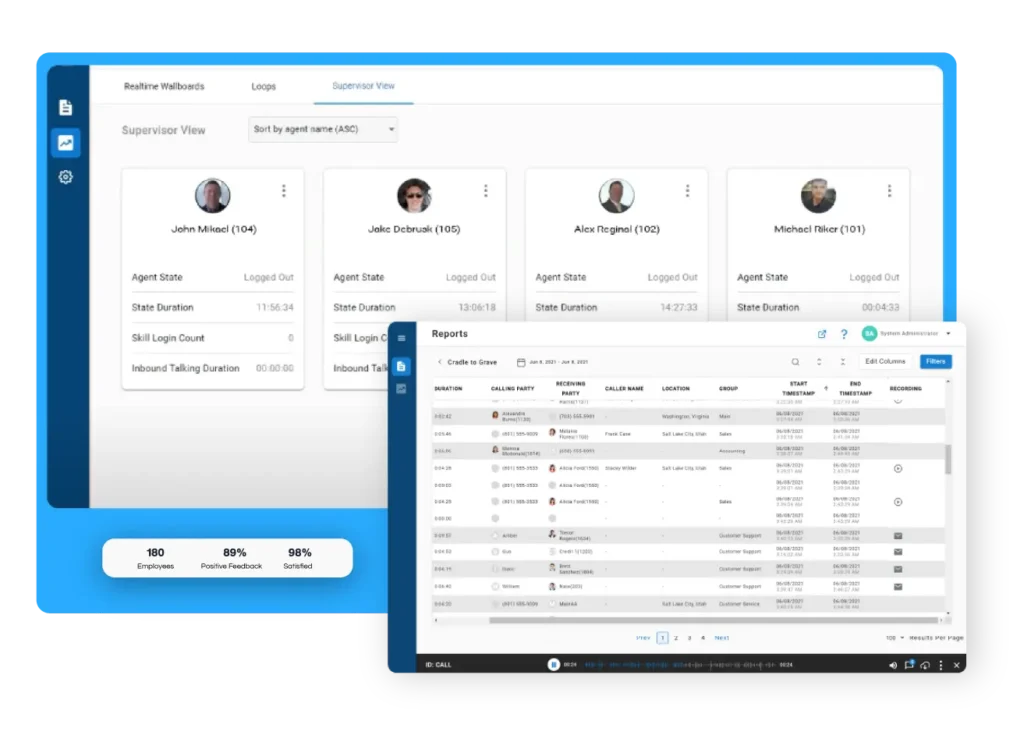
One of the most underrated benefits of modern contact center software is visibility. Real-time dashboards that show call volumes, wait times, agent performance, and customer satisfaction scores as they happen.
Older systems don’t offer that. You get reports after the fact, sometimes hours or days later. By the time you see a problem, it’s already done damage. Customers have already left. Agents have already burned out. Opportunities have already been missed.
Real-time visibility changes the game. Supervisors can spot issues as they develop and fix them before they spiral. If call volume spikes unexpectedly, you can shift resources immediately instead of finding out about the backlog tomorrow. If a particular agent is struggling, you can provide coaching in the moment instead of reviewing their stats at the end of the week.
That kind of responsiveness prevents expensive mistakes. It keeps customers from getting frustrated. It keeps agents from getting overwhelmed. It keeps small problems from becoming big ones.
The ROI of visibility is hard to quantify precisely because it’s about preventing bad outcomes that never happen. But anyone who’s managed a contact center knows: the ability to see and respond to problems in real time is worth a lot.
Automation Frees Up Capacity Without Adding Headcount
When contact centers grow, the default solution is to hire more agents. But that’s expensive, slow, and harder in tight labor markets.
Modern contact center platforms offer a different path: automation. Not the kind that replaces human agents entirely, but the kind that handles repetitive, low-value tasks so agents can focus on complex issues that actually need human judgment.
Automated call routing directs customers to the right agent the first time. AI-powered self-service lets customers solve simple problems themselves without waiting for an agent. Automated workflows handle routine account updates without manual work. Chatbots answer common questions instantly, 24/7.
All of that adds capacity without adding costs. You’re not hiring more people to do work that software can handle. You’re using your existing team more effectively.
The ROI shows up in two ways: you can handle more volume without increasing headcount, and your agents spend their time on interactions that actually benefit from human expertise instead of wasting it on stuff that could be automated.
Scalability Costs Less When You’re in the Cloud
Contact centers need to scale up and down based on demand. Peak seasons, product launches, unexpected events, volume fluctuates. Older on-premise systems don’t handle that well. Scaling up requires buying more hardware, installing it, and hoping you got the capacity planning right. Scaling down means you’re paying for infrastructure you’re not using.
Cloud-based contact center platforms scale instantly. Need more capacity for the holidays? Turn it on. Slower period after? Scale back down. You pay for what you use, not for what you might need someday.
The ROI is straightforward: you stop overpaying for unused capacity and stop scrambling to add capacity when you need it.
Compliance and Security Failures Are Expensive
Industries like healthcare, finance, and utilities face strict regulatory requirements around data security and customer privacy. Old systems often struggle to keep up with evolving compliance standards like HIPAA, PCI DSS, and GDPR. A breach or compliance failure can result in fines, lawsuits, and reputation damage that costs way more than the systems would have.
Modern contact center platforms are built with security and compliance in mind. Encryption, access controls, audit trails, regular security updates, these aren’t afterthoughts. They’re built in.
The ROI of avoiding a data breach or compliance penalty is massive. Even one incident can wipe out years of savings from sticking with cheaper, outdated systems.
The Math Works Even in Challenging Times
When you add it up, the ROI of modernizing your contact center becomes pretty clear:
Lower IT maintenance costs. Reduced customer churn. Better agent retention. Fewer expensive mistakes from lack of visibility. More capacity without more headcount. Flexible scaling that matches actual demand. Lower risk of compliance failures and security breaches.
None of those are small things. Together, they represent real money saved and real revenue protected. And they keep compounding over time. The longer you use modern systems, the more value you get.
Challenging times don’t change the math. They make it more important. When every dollar counts, inefficiency costs more. When customers are more discerningchoosier, bad service pushes them away faster. When hiring is hard, turnover hurts more.
Modernizing isn’t a luxury expense you save for when things get easier. It’s a strategic investment that makes your business more efficient, more competitive, and more resilient when it matters most.
Waiting Costs More Than Acting
The question isn’t whether you can afford to modernize your contact center. The question is whether you can afford not to.
Every day you wait, you’re paying for inefficiency, losing customers to bad service, burning through agents who are stuck with terrible tools, and falling further behind competitors who aren’t waiting.
The ROI is there. The math works. And the longer you put it off, the more it’s costing you.