
Have you ever tried to solve a simple problem with a company, only to find yourself stuck in a maze of phone menus, repeating your issue to multiple agents, and wasting precious time? That friction is a universal frustration. As we navigate 2026, customers don’t just value great service; they demand effortless service. This is where the Customer Effort Score (CES) becomes a game-changing metric for your business.
So, what exactly is CES? Customer Effort Score (CES) is a customer experience (CX) metric that measures how easy it was for a customer to get an issue resolved, a question answered, or a need fulfilled. While other popular metrics like Customer Satisfaction (CSAT) track in-the-moment happiness and Net Promoter Score (NPS) measures long-term loyalty, CES focuses specifically on the amount of friction in the customer journey.
The data is clear: making service easy is a direct path to creating loyalty. In fact, research shows that reducing customer effort is a more reliable predictor of future loyalty than simply delighting customers. This guide will walk you through proven best practices for improving customer effort score metrics, helping you build a more loyal customer base and a more efficient contact center.
Why a Low-Effort Experience is No Longer Optional
In today’s crowded market, making things difficult for your customers is a direct path to losing them. A high-effort experience is one of the most significant drivers of customer churn, while a low-effort interaction is directly tied to loyalty and repeat business. The risk of ignoring customer effort is simply too high.
Focusing on CES delivers tangible business benefits that go straight to your bottom line:
Increased Customer Loyalty: The easier you make it for customers to get the help they need, the more likely they are to stay with your brand for the long haul.
Reduced Operational Costs: Effortless interactions mean faster resolutions. When customers can solve problems on the first try, it drastically cuts down on repeat calls, lowers overall interaction volume, and frees up valuable agent time.
A Powerful Competitive Advantage: Companies that are easy to do business with stand out. A frictionless experience can become a core part of your brand identity and a key reason customers choose you over a competitor.
By investing in a low-effort strategy, you aren’t just improving a single metric; you’re building a more resilient and profitable business. This sharp focus on efficiency can drive measurable ROI without disrupting your contact center.
How to Identify High-Effort Friction Points in Your Contact Center
You can’t fix what you can’t see. The first step toward a lower CES is using data to pinpoint exactly where your customers are struggling. This is where powerful contact center reporting becomes your most valuable diagnostic tool. A modern reporting platform transforms raw operational data into a clear map of the customer journey, highlighting the bumps and roadblocks along the way. Instead of guessing, you can follow the data. Menu structure is configured through Xima’s interactive voice response.
Key Metrics That Signal High Effort
Look for these red flags in your dashboards to find sources of friction.
Repeat Contacts: Are customers calling or messaging multiple times about the same underlying issue? This is a flashing warning light for high effort and shows that problems aren’t being fully resolved.
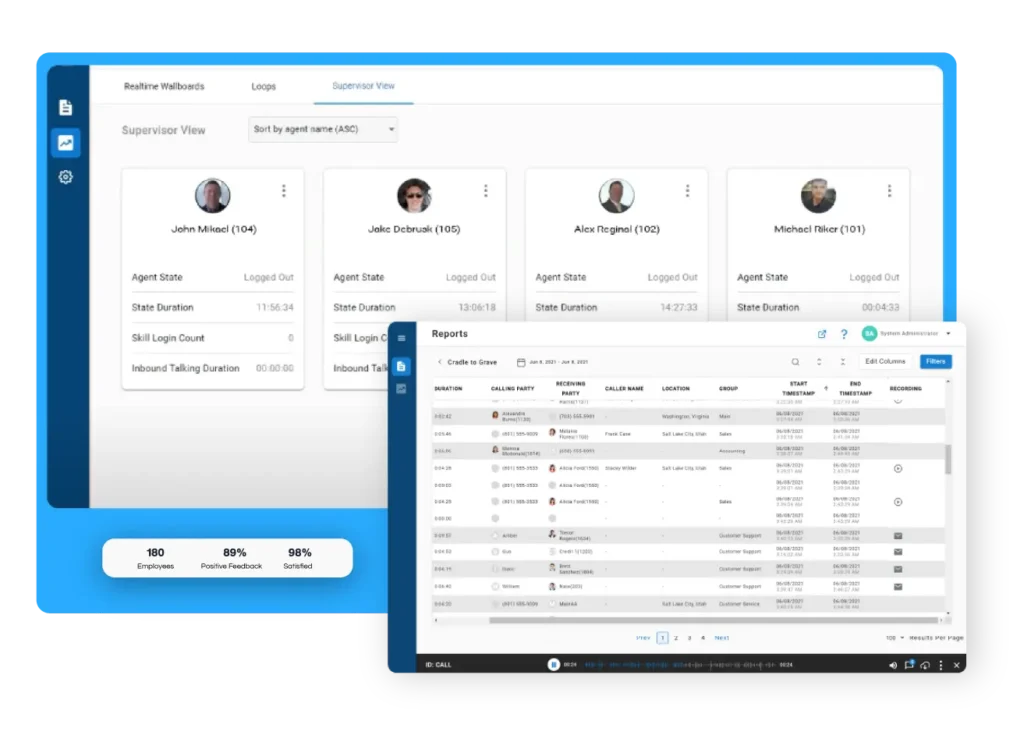
Pro Tip: Use a reporting tool that offers “cradle-to-grave” tracking to easily see a customer’s entire interaction history across a set period, flagging multiple contacts on the same issue.
High Average Handle Time (AHT): Unusually long interactions can indicate that agents are struggling to find information or that your internal processes are overly complex. Offering a callback rather than a hold is handled through queue callback.
Pro Tip: Segment your AHT by queue, team, or issue type to identify specific problem areas. A high AHT in your “Billing Questions” queue might point to a confusing invoicing system.
Low First Call Resolution (FCR): FCR is the sister metric to CES. If a customer can’t get their issue resolved on the first contact, their effort level automatically skyrockets.
Pro Tip: Track this using agent disposition codes or post-call IVR surveys that ask, “Was your issue resolved today?” A platform like Xima allows you to build custom reports to track FCR trends over time.
High Channel Switching: When a customer starts on your website, moves to a chatbot, and finally has to call an agent, it’s a classic sign of a fragmented and high-effort journey [6].
Pro Tip: This is often invisible without a unified platform. Omnichannel reporting reveals these broken journeys by tracking a single customer query across multiple touchpoints.
To truly understand the “why” behind these numbers, you need to go deeper. This is where tools like contact center speech analytics provide crucial context. By analyzing the content of conversations for keywords like “I already explained this” or detecting customer frustration through sentiment analysis, you can uncover the root causes of friction. Effective contact center reporting gives you the data, while analytics provides the story. For a deeper look, explore these key metrics and best practices for reporting.
5 Proven Practices to Lower Customer Effort and Boost CES
Once you’ve identified your friction points, it’s time to smooth them out. Let’s dive into five proven strategies that will make your customer experience as effortless as possible.
1. Empower Agents to Achieve First Call Resolution (FCR)
Your frontline agents are your number one asset in the fight against customer effort. When they are empowered to solve problems quickly and completely, your customers and your business win.
Provide a single, unified agent desktop that integrates CRM data, interaction history, and knowledge base articles into one screen. A platform like Xima provides this out-of-the-box, eliminating the need for agents to toggle between multiple applications.
Ensure instant access to a centralized knowledge base. An easily searchable resource allows agents to find accurate answers in real-time, reducing holds and callbacks.
Give agents the authority and training to solve problems. Empower them to handle common issues without needing to escalate—a process that adds time and frustration for the customer.
Empowering your team is the most direct path to boosting First Call Resolution and, in turn, your CES.
2. Streamline Journeys with AI and Automation
Artificial intelligence is no longer a futuristic concept; it’s a practical tool for removing friction from the customer journey right now.
Use intelligent routing to connect customers to the agent best equipped to handle their specific issue from the start. This includes skills-based, data-directed (based on CRM info), and even sentiment-based routing to prioritize highly frustrated customers.
Leverage AI-powered agent assistance that acts as a real-time copilot. Xima’s platform can transcribe calls live and proactively suggest knowledge articles or recommend next-best-action steps during a conversation.
Automate repetitive tasks like after-call work (ACW). By automatically summarizing calls and populating disposition codes, you reduce agent wrap-up time and allow them to help the next customer more quickly.
This intelligent automation is a core part of an effective AI-powered contact center efficiency playbook.
3. Optimize Your Self-Service Options
For many customers, the lowest-effort interaction is one they can handle themselves—as long as it works flawlessly. Self-service must be effective and intuitive to successfully reduce effort.
Build a comprehensive and easily searchable FAQ page or knowledge base. Use data from your contact center to identify the most common questions and create clear, concise answers.
Deploy intelligent chatbots that can resolve simple, transactional queries 24/7. Pro Tip: Analyze chatbot failure points—interactions where users type “speak to an agent”—to continuously improve bot scripts and knowledge.
Ensure a seamless handoff from a self-service channel to a live agent. All context and conversation history must carry over so the customer never has to repeat themselves. This is only possible with a unified platform.
4. Communicate Proactively
The easiest support interaction is the one that never has to happen. Proactive communication anticipates customer needs and solves problems before they even arise.
Send automated outbound notifications via SMS or email for order status updates, appointment reminders, or known service outages.
This outreach builds trust, manages expectations, and prevents a flood of avoidable inbound contacts [8].
Technical Tip: Integrate your communications platform with your business systems using APIs. For example, set up an API trigger from your shipping software to automatically send an SMS when an order’s status changes to “shipped.”
5. Unify the Customer Experience Across Channels
Customers don’t see departments or channels; they see one brand. They expect to be able to start a conversation on your mobile app and continue it over the phone without losing their place.
A modern omnichannel approach is essential for providing this consistent and connected experience.
Using a single cloud contact center platform is the key to unifying all your communication channels—voice, email, chat, and social media.
This technology creates a persistent customer profile that aggregates all interactions into a single timeline. This gives agents a complete view of the customer’s journey, enabling faster, more contextual, and much less effortful support.
Put It All Together with Xima
Reducing customer effort requires a clear strategy built on identifying friction, empowering agents, and streamlining journeys. Xima Software provides the integrated, AI-powered platform to make it all happen.
Our cradle-to-grave reporting and real-time dashboards turn your CES data into a clear roadmap for improvement, pinpointing exactly where customers are struggling. Xima’s AI-driven speech analytics and automated quality management help you uncover root causes and give your agents the resources they need to resolve issues on the first contact. With Xima, you can build a low-effort, high-efficiency contact center that drives long-term customer loyalty and achieves your business goals.
Start Reducing Customer Effort Today
Lowering customer effort is one of the most powerful investments you can make in your customer experience and your bottom line. Don’t let high-effort interactions and disconnected systems hold your business back.
Ready to see how Xima can help you boost your CES? Request a Demo.