Xima FAQs: Common Questions About Call Center Analytics and Reporting
If you’re researching call center analytics software, reporting tools, or ways to gain better visibility into contact center performance, this Xima FAQ page is designed to answer the most common questions. Below, you’ll find information about how Xima works, what it integrates with, and how organizations use it to improve reporting, agent oversight, and operational decision-making.
Xima is a call center analytics and reporting platform built to give teams deeper insight into customer interactions, agent activity, and overall contact center performance. It works alongside many existing phone systems, helping businesses add advanced reporting, wallboards, real-time monitoring, and analytics without replacing their current infrastructure.
For organizations looking for a more unified approach, Xima can also serve as part of an all-in-one contact center platform by providing the phone system itself. This flexibility allows teams to either enhance an existing environment or consolidate tools into a single solution, depending on operational needs.
If you’re already using Xima and need troubleshooting guidance, configuration help, or product-specific documentation, support resources are available to help you find answers quickly.
General Information About Xima
Xima is a call center analytics and reporting platform designed to help organizations gain clearer visibility into contact center performance. It provides real-time and historical insights into call activity, agent productivity, queue performance, and customer service trends, helping teams make more informed operational decisions.
The platform is built for customer-focused organizations with inbound-heavy support environments, particularly mid-sized businesses in industries like healthcare, finance, and retail. Xima is commonly used by contact centers that need better reporting and performance oversight without replacing their existing phone system.
By turning call data into actionable insights, Xima helps managers identify bottlenecks, monitor service levels, improve agent performance, and create a more consistent customer experience.
What is Xima?
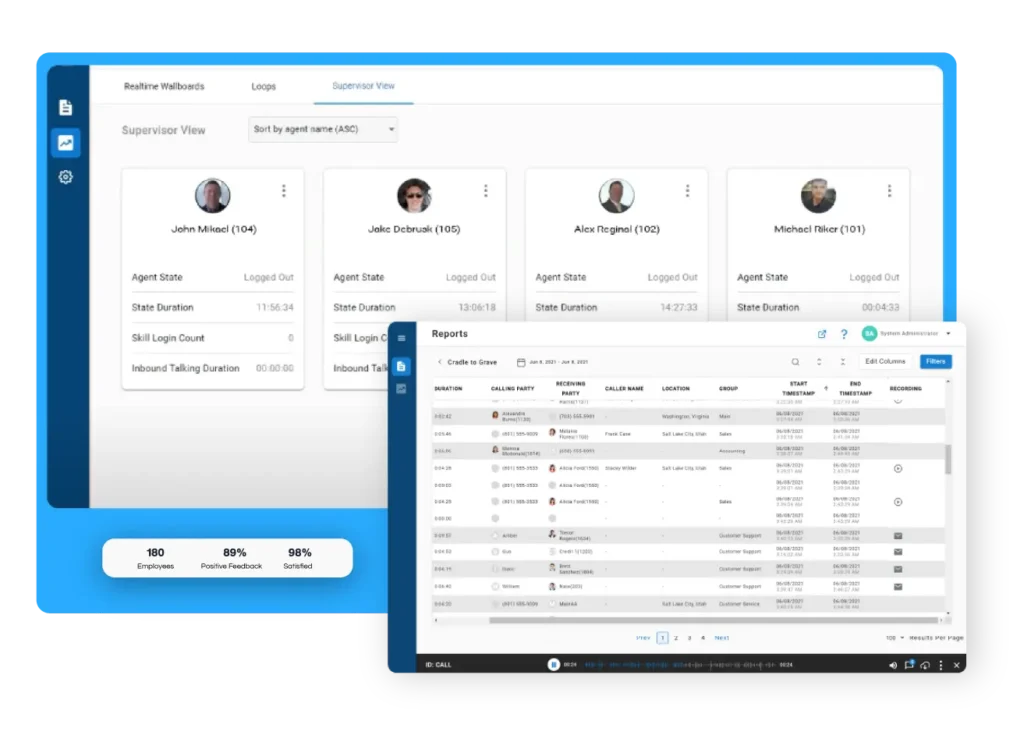
Xima is a call center analytics and reporting platform that helps organizations monitor performance, understand customer interactions, and gain better visibility into day-to-day contact center activity. It gives managers access to real-time dashboards, historical reporting, wallboards, and agent performance insights that make it easier to track service levels and improve operational efficiency.
Unlike a traditional phone system replacement, Xima can work alongside many existing UC and PBX environments to add deeper analytics and reporting capabilities. For organizations looking for a more unified solution, Xima can also provide the phone system itself as part of an all-in-one contact center platform.
To learn more about features, integrations, and platform capabilities, visit the main Xima page.
Who uses Xima?
Xima is used by organizations that rely on consistent, high-quality customer communication and need better visibility into contact center performance. Common users include contact center supervisors, operations leaders, customer service managers, and IT teams responsible for maintaining communication systems and reporting workflows.
The platform is especially valuable for small to mid-sized businesses with inbound-heavy support environments, where tracking agent activity, queue performance, and service levels plays a direct role in customer experience. Teams across healthcare, finance, retail, and other service-driven industries often use Xima to monitor performance and make faster operational decisions.
What problems does Xima solve?
Many contact centers have access to large amounts of call data but struggle to turn that information into clear, actionable insights. Reporting may be limited, delayed, or spread across multiple systems, making it difficult to understand what’s happening in real time.
Xima helps solve common challenges such as limited visibility into call activity, manual or time-consuming reporting, inconsistent performance tracking, and difficulty monitoring agent productivity. Instead of relying on fragmented data, teams gain a centralized view of contact center performance through real-time dashboards, historical analytics, and customizable reporting.
This visibility helps managers identify trends faster, respond to service issues earlier, and make decisions based on actual performance data rather than assumptions. For organizations focused on improving customer experience and operational efficiency, clearer reporting often becomes the foundation for better day-to-day management.
Using Xima with Your Existing Phone System
Xima is designed to fit into your current communication environment without requiring a full system replacement. For many organizations, that means adding analytics, reporting, and performance visibility to an existing phone system rather than disrupting established workflows or infrastructure.
By working alongside supported UC and PBX platforms, Xima helps contact centers gain deeper insight into call activity, agent performance, queue behavior, and customer interactions using the tools they already rely on. This makes it easier to improve reporting and operational oversight without the complexity of migrating to an entirely new system.
For organizations looking to simplify their tech stack, Xima can also serve as part of an all-in-one contact center solution by providing the phone system itself. This gives teams the flexibility to either enhance what they already have or consolidate communications, analytics, and reporting into a single platform.
Does Xima replace my phone system?
Xima is primarily designed to work alongside your existing phone system rather than replace it. It integrates with many UC and PBX environments to add advanced analytics, reporting, and performance visibility without disrupting the communication tools your team already uses.
That said, Xima can also function as part of an all-in-one contact center solution by providing the phone system itself for organizations that want a more unified platform. This flexibility allows businesses to either enhance their current setup or consolidate systems depending on their operational needs.
What phone systems does Xima work with?
Xima is designed to integrate with a wide range of established phone systems and contact center platforms, making it a flexible option for organizations that don’t want to overhaul their existing infrastructure. It commonly works with systems such as Cisco, Avaya, Mitel, and other enterprise and mid-market UC/PBX solutions, depending on configuration and deployment needs.
Phone System | Compatibility Notes |
Cisco | Supports integration with enterprise UC environments |
Avaya | Compatible with contact center and PBX deployments |
Mitel | Works with on-prem and hybrid configurations |
Other UC/PBX platforms | Supported depending on setup and integration requirements |
Because environments can vary, compatibility is typically confirmed during the implementation process to ensure accurate data capture and reporting alignment.
How does Xima connect to my existing system?
Xima connects to your existing communication system by integrating at the data layer, pulling call records, agent activity, and interaction details into a centralized analytics environment. This allows organizations to layer reporting and performance insights on top of their current phone system without changing how calls are handled.
Once connected, Xima processes and organizes this data into real-time dashboards, historical reports, and performance metrics. For more technical details on integration options and setup, you can refer to the integration overview or technical documentation pages.
Reporting, Analytics, and Insights
Xima provides both real-time and historical visibility into contact center performance, helping teams understand what is happening now as well as how performance trends develop over time. This dual perspective allows managers to respond quickly to live issues while also identifying long-term opportunities for improvement.
What real-time reporting does Xima provide?
Xima delivers real-time dashboards, live queue monitoring, and customizable wallboards that give supervisors immediate insight into contact center activity. Teams can track active calls, wait times, service levels, and agent status in real time, making it easier to manage staffing and respond to fluctuations in call volume.
Agent activity tracking also helps supervisors see who is available, on a call, or in after-call work, enabling faster operational adjustments throughout the day.
What historical reports are available in Xima?
Xima’s historical reporting provides deeper insight into long-term trends, including call volumes, agent performance, customer interaction patterns, and service level performance over time. This helps teams evaluate efficiency, identify recurring issues, and measure performance against KPIs.
Reporting Type | What It Includes |
Real-time | Live calls, queue status, agent activity, service levels |
Historical | Trends, performance reports, call volume analysis, KPI tracking |
Together, these reporting capabilities help contact centers move from reactive management to more data-driven decision-making.
Does Xima offer AI-driven insights?
Xima provides advanced analytics that help contact centers identify trends, monitor performance, and gain deeper visibility into customer interactions and agent behavior. Rather than relying solely on manual reporting, teams can use structured data insights to understand what is happening across the contact center in real time and over longer periods of time.
These capabilities also support more consistent quality management through tools like Auto QA, which helps streamline the review process by evaluating a broader set of interactions than traditional manual QA methods. This gives supervisors a more complete view of agent performance and helps surface patterns that may not be visible through sampling alone.
While Xima focuses on delivering actionable insights rather than positioning itself as an AI-first platform, these analytics-driven features help teams move from reactive reporting to more proactive performance management.
Does Xima offer speech analytics or transcriptions?
Xima does not position itself primarily as a full speech-to-text transcription platform, but it does support call analysis capabilities that help teams better understand interaction patterns and customer behavior. This includes tools like keyword and event tracking, which allow organizations to surface important moments within calls and identify trends across large volumes of interactions.
These insights are typically used to support quality assurance, compliance monitoring, and coaching efforts, especially when paired with broader reporting and performance data. In practice, this helps supervisors move beyond surface-level metrics and gain more context around what is happening in customer conversations.
Supervisor and Performance Management Tools
Xima provides supervisors with the tools they need to monitor activity, manage team performance, and maintain consistent service levels across the contact center. By combining real-time visibility with historical reporting, supervisors can quickly identify issues, support agents in the moment, and track performance improvements over time.
How can supervisors monitor calls in Xima?
Supervisors can monitor calls in real time using Xima’s built-in monitoring and quality assurance tools. These features allow managers to listen to live calls, observe agent activity, and track queue performance as interactions are happening.
Additional capabilities within the monitoring and QA framework support structured evaluation of interactions, helping supervisors maintain service standards and ensure consistency across teams. More details on these features can be found in Xima’s monitoring and quality assurance resources.
How does Xima help improve agent performance?
Xima helps improve agent performance by giving supervisors clear, data-driven visibility into key metrics such as call handling times, service levels, and individual agent activity. This makes it easier to identify coaching opportunities and provide targeted feedback based on actual performance rather than assumptions.
With consistent access to both real-time and historical data, managers can track progress over time, reinforce positive behaviors, and address performance gaps more effectively. This combination of visibility and accountability supports more structured coaching and a stronger overall customer experience.
Integrations and Compatibility
Xima is built to integrate with a range of business systems, allowing organizations to connect contact center data with the tools they already use. This helps create a more unified view of customer interactions and operational performance across different platforms.
What systems and tools does Xima integrate with?
Xima integrates with common CRM platforms, communication systems, and contact center technologies, helping organizations connect customer data with call activity and performance reporting. This allows teams to align customer records with interaction history for more complete visibility.
Integrations are typically tailored to the organization’s existing tech stack, ensuring that reporting and analytics are aligned with the systems already in place.
Does Xima offer API access or custom integrations?
Yes, Xima supports API access and custom integration options for organizations with more specific technical requirements. This allows businesses to extend functionality, connect additional systems, or build custom workflows that fit their operational needs.
These capabilities are particularly useful for teams with complex environments or unique reporting requirements that go beyond standard integrations.
Call Data and Telephony Support
Xima captures and organizes detailed call data to help organizations understand contact center activity at both a high level and a granular level. This includes key operational metrics that support reporting, forecasting, and performance management.
What call data does Xima track?
Xima tracks a wide range of call and performance data to provide a complete view of contact center operations. This includes call volume, call duration, queue activity, agent status, and service level performance, along with additional interaction-level details depending on system configuration.
Metric | What It Shows |
Call Volume | Total inbound and outbound call activity |
Call Duration | Average and total handling time per interaction |
Queue Activity | Wait times, abandonment rates, and queue performance |
Agent Status | Availability, time in call, and after-call work |
Performance Indicators | Service levels, response times, and efficiency trends |
Together, these metrics help supervisors and operations teams better understand how the contact center is performing and where improvements can be made.
Does Xima control call routing or IVR?
Yes, Xima offers call routing and IVR capabilities as part of its contact center platform. Organizations can use skills-based routing to direct callers to the most appropriate agent based on expertise, availability, or predefined routing logic. This helps reduce transfers, improve first-contact resolution, and create a smoother customer experience.
Xima also supports IVR functionality that allows businesses to create customized call flows and menu options, helping callers reach the right destination more efficiently. For organizations using Xima alongside an existing phone system, routing and IVR may work in coordination with that environment, depending on deployment and configuration.
What tools do I need to set up Xima?
Setting up Xima typically starts with confirming compatibility between your communication environment and the platform. Organizations generally need a supported phone system or UC platform, network access for data connectivity, and the appropriate user permissions to configure reporting, dashboards, and integrations.
Implementation requirements can vary depending on whether Xima is being added to an existing phone system or deployed as part of an all-in-one contact center solution. Setup may also include configuration of reporting preferences, user roles, wallboards, and performance metrics. For technical requirements and deployment details, users can reference Xima’s setup documentation or implementation resources.
Security and Compliance
Since contact centers manage sensitive customer interactions, visibility and reporting tools must be built with data protection in mind. Xima is designed to support secure access to reporting and communication data while helping organizations maintain operational oversight without compromising system security.
How does Xima protect customer data?
Xima uses standard security practices to help protect customer and operational data within the platform. This may include secure authentication methods, permission-based user access, and encrypted data handling where applicable to safeguard sensitive information.
Access controls help ensure that reporting, dashboards, and contact center data are only visible to authorized users, supporting both operational security and administrative oversight. For organizations operating in regulated industries, security considerations can also be aligned with broader internal compliance requirements depending on deployment and configuration.
Pricing and Implementation
Pricing and onboarding are often key considerations when evaluating a contact center analytics platform. Xima is designed to support a range of business environments, whether organizations are adding reporting to an existing phone system or implementing a more unified contact center solution.
How much does Xima cost?
Xima pricing depends on several factors, including deployment type, number of users or agents, required features, and whether the platform is being used alongside an existing phone system or as a full contact center solution.
Since operational needs vary across organizations, pricing is typically customized based on business requirements. For the most accurate information, users can visit the pricing page or contact the Xima team for a tailored quote.
What is the Xima onboarding process like?
The Xima onboarding process typically begins with evaluating system compatibility and defining reporting or contact center goals. From there, implementation includes connecting to the communication environment, configuring dashboards and reporting preferences, and setting up user access and permissions.
Depending on system complexity, onboarding timelines can vary, but most organizations move through setup in phases to ensure reporting accuracy and minimal disruption. Training and configuration support may also be included to help teams become comfortable using dashboards, monitoring tools, and analytics features.
For a deeper look at implementation best practices, setup expectations, and contact center optimization strategies, you can explore the Xima blog for additional guidance and resources.
What resources are needed for setup?
Xima is designed to be straightforward to deploy and configure, which means most organizations do not need a large IT team to get started. Many Xima customers have small technical departments—or no dedicated IT team at all—and are still able to implement the platform successfully.
Setup typically involves confirming system compatibility, connecting to the existing communication environment, and configuring reporting preferences, dashboards, and user access. Because the platform is built with usability and flexibility in mind, much of the configuration can be managed without extensive technical resources, making onboarding more accessible for lean teams.
How is Xima different from other call center software?
Xima stands out because it offers flexibility. Organizations can use it alongside an existing phone system to add advanced analytics, reporting, and performance visibility, or adopt Xima as a full contact center platform with built-in communication capabilities.
Compared to native phone system reporting, Xima provides deeper insight into call activity, agent performance, and operational trends. To explore how Xima compares to other solutions, visit the Xima Comparison Hub.
Getting Started and Support Resources
Whether you’re evaluating Xima for the first time or preparing to implement the platform, getting started is designed to be straightforward. Xima offers onboarding guidance, flexible deployment options, and support resources to help teams move from setup to day-to-day use with minimal friction.
How do I get started with Xima?
Getting started with Xima typically begins with identifying your contact center goals, confirming system compatibility, and determining whether you want to integrate with an existing phone system or use Xima as a full contact center platform. From there, teams can configure dashboards, reporting preferences, user access, and monitoring tools based on operational needs.
Organizations interested in exploring the platform can request a demo, connect with the Xima team, or review product information to better understand available features and deployment options.
What support options are available?
Xima provides multiple support resources to help customers during implementation and ongoing use. This may include documentation, onboarding guidance, training materials, and direct support for troubleshooting or configuration questions.
For day-to-day assistance, users can access product resources, technical documentation, and support channels designed to help teams get answers quickly and keep contact center operations running smoothly. For additional assistance, users can visit the Xima Support page for access to help resources, troubleshooting guidance, and customer support options.