
Key Takeaways for Your 2026 Strategy
As we navigate 2026, Artificial Intelligence (AI) is no longer a futuristic concept for contact centers—it’s an essential tool for survival and growth. AI solutions are actively reshaping customer service by automating tasks, personalizing every interaction, and boosting agent performance. This playbook will explore how you can leverage AI to revolutionize your contact center operations for maximum efficiency and customer satisfaction.
AI drives efficiency and satisfaction: AI contact center solutions automate routine tasks, provide deep customer insights, and empower agents with real-time assistance, leading to better outcomes for both your customers and your business.
Core AI technologies are accessible: Key functions like Natural Language Processing (NLP), Machine Learning, and Intelligent Routing form the backbone of modern AI platforms, making it easier than ever to understand and serve customers effectively.
Implementation yields tangible benefits: Integrating AI leads to a clear return on investment (ROI) through an enhanced customer experience (CX), reduced operational costs, and significantly improved agent productivity and morale.
What Are AI Contact Center Solutions?
AI contact center solutions refer to a suite of technologies that use artificial intelligence to augment and automate customer service operations. Rather than replacing human agents, these tools empower them, creating a smarter, more empathetic, and data-driven customer experience (CX). A modern Contact Center as a Service (CCaaS)—a cloud-based software model—integrates these AI capabilities seamlessly, and platforms like Xima Software are built on this principle.
Xima’s AI contact center capabilities are described in full on the product page.
Successful AI adoption depends on how well it integrates with your existing tools, such as your Customer Relationship Management (CRM) and ticketing systems. A well-designed platform can overlay your current infrastructure, minimizing disruption and accelerating your path to value. These integrations create a unified view of the customer, enabling your team to deliver personalized and context-aware support 24/7.
Natural Language Processing (NLP)
Natural Language Processing (NLP) is the technology that allows computers to understand, interpret, and respond to human language. In the contact center, NLP elevates Interactive Voice Response (IVR) systems from frustrating phone trees to natural, conversational entry points. It helps identify a customer’s intent and sentiment from their words, bridging the gap when a customer struggles to articulate their exact problem. For agents, NLP provides a holistic summary of past interactions, allowing them to grasp the customer’s history instantly.
Machine Learning Algorithms
Machine learning is the engine that powers predictive and analytical AI features. These algorithms sift through massive amounts of interaction data—from calls, chats, and emails—to identify patterns and trends that would be impossible for a human to spot. This analysis can predict future customer behavior, forecast contact volumes, and provide agents with tailored, real-time guidance. Machine learning is also essential for automated quality management, ensuring every interaction is evaluated consistently to drive performance improvements.
Intelligent Call Routing
Intelligent call routing uses AI to direct incoming inquiries to the best-suited agent based on criteria like agent skill, customer history, and stated intent. This goes far beyond traditional routing by ensuring the customer connects with the right person on the first try, dramatically reducing transfers and wait times. By improving key metrics like First Contact Resolution (FCR) and lowering Average Handle Time (AHT), intelligent routing directly boosts operational efficiency and customer satisfaction.
How Does AI Improve Contact Center Performance and Customer Experience?
Implementing AI in your contact center delivers powerful benefits that create a positive feedback loop: happier customers lead to happier agents, which in turn fuels business growth. AI achieves this by automating repetitive tasks and streamlining workflows, enabling faster, more personalized resolutions.
Enhanced Customer Experience
Today’s customers expect fast, personalized, and effortless service. AI helps you meet and exceed those expectations.
Reduced Wait Times: AI-powered chatbots and virtual assistants can handle common queries instantly, eliminating queues for simple issues.
Hyper-Personalization: By analyzing historical data, AI enables agents to tailor every conversation, creating a more personal and relevant experience that builds loyalty.
Proactive Support: Sentiment analysis allows your team to understand the emotional tone of an interaction and respond with greater empathy, turning potentially negative experiences into positive ones.
Reduced Operational Costs
One of the most compelling arguments for AI is its impact on the bottom line.
Self-Service Automation: Offering customers effective self-service options deflects a significant volume of calls, directly lowering costs. An AI-powered knowledge base or chatbot can resolve issues that previously required a live agent.
Optimized Staffing: AI can accurately forecast contact volumes and peak times, allowing you to optimize staffing schedules and avoid costly over- or under-staffing. DMG Consulting’s 2026 CX AI Playbook highlights this as a key move toward strategic modernization.
Actionable Intelligence: AI transforms raw data into actionable insights, helping managers identify emerging issues, allocate resources effectively, and make informed decisions that improve the overall AI contact center ROI.
Improved Agent Productivity
AI empowers your agents to be more effective, engaged, and satisfied in their roles.
Focus on High-Value Work: By automating routine tasks, AI frees up agents to handle more complex and rewarding customer issues that require critical thinking and a human touch.
Real-Time Agent Assist: AI tools can listen to conversations and provide agents with real-time suggestions, knowledge base articles, and next-best-action recommendations, effectively making every agent your best agent.
Unified Information: Modern cloud contact center platforms give agents a single screen with all the context they need, eliminating the frustration of toggling between different applications.
What Are the Best Agent Assist Technology Solutions for Call Centers?
The market is full of AI-powered tools, with many reviews available on the best AI contact center solutions for customer service. While some platforms offer standalone features, the most effective approach integrates these functions into a single, cohesive platform.
Virtual Assistants and Chatbots
Chatbots and voicebots are often the first point of contact for customers, providing 24/7 support for common inquiries. They excel at handling routine transactions like checking an order status or resetting a password. When a query becomes too complex, they can seamlessly escalate the conversation to a live agent with the full context of the interaction intact. Increasingly sophisticated AI voice agents are handling more of the customer journey independently, further boosting efficiency.
Speech and Sentiment Analytics
This technology transcribes and analyzes 100% of your voice and text interactions, providing invaluable insights into customer sentiment, agent performance, and emerging trends. Leading platforms like Xima Software embed these capabilities directly into their core offering.
Automated Quality Management: Automatically score every interaction against your quality standards, providing fair and consistent feedback.
Uncover Root Causes: Identify the “why” behind low Customer Satisfaction (CSAT) scores or repeat calls.
Ensure Compliance: Monitor interactions for script adherence and regulatory compliance automatically.
Enhance Coaching: Use real interaction examples to provide targeted, data-driven coaching for agents.
Automated evaluation sits within Xima’s quality management capabilities.
Predictive Analytics
Predictive analytics uses historical data and machine learning to forecast future outcomes. This powerful tool helps you anticipate customer needs and optimize operations. By analyzing past behaviors, it can identify customers at risk of churn, predict their likelihood to purchase, and inform service strategies to meet their needs proactively. While many contact center AI solutions offer this, its power is magnified when integrated with real-time analytics and routing.
How Xima Puts AI into Practice
At Xima Software, we believe AI should be practical, accessible, and deliver measurable results. Our cloud-based CCaaS solutions are designed to integrate powerful AI capabilities directly into your daily workflow, empowering both agents and supervisors.
Instead of offering a confusing array of separate tools, we provide a unified platform that includes:
AI-Powered Speech Analytics: Analyze every customer interaction to improve quality management, ensure compliance, and provide agents with data-driven coaching.
Intelligent Routing: Get customers to the right agent on the first try with skills-based and data-driven routing logic.
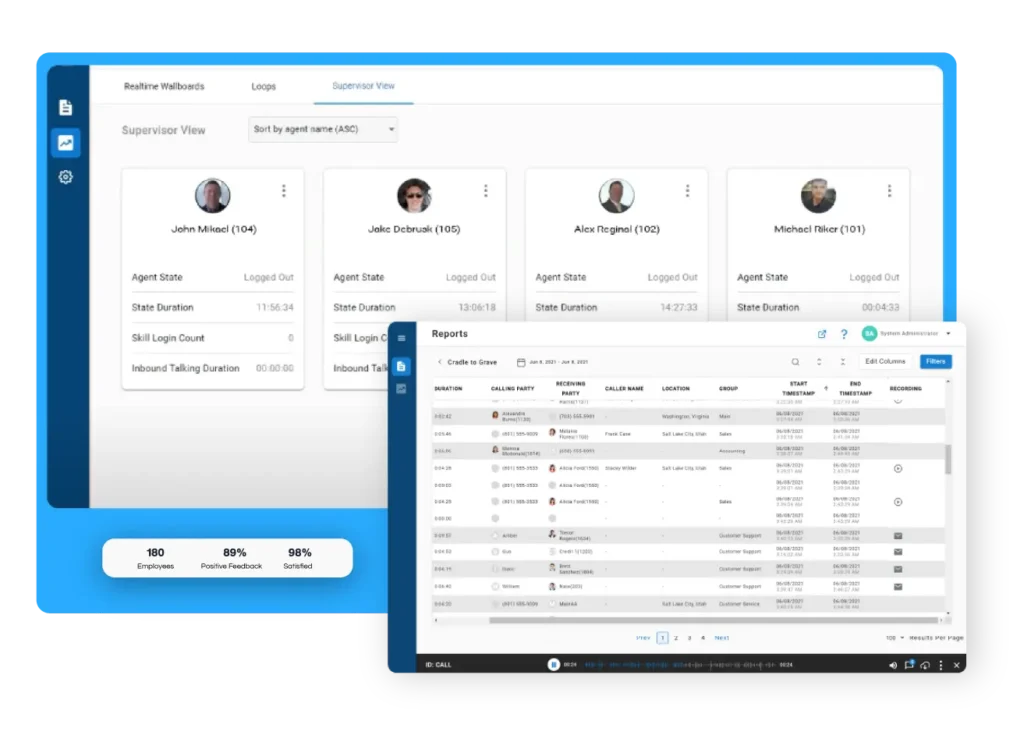
Real-Time Dashboards & Analytics: Give supervisors the insights they need to manage their teams effectively and make decisions based on live data, not guesswork.
Our approach ensures that you can truly transform your contact center without the complexity and high cost typically associated with enterprise-level AI.
How to Implement AI in Your Contact Center Operations
Successfully adopting AI requires a thoughtful strategy. Following a few best practices can ensure a smooth transition and maximize your return on investment.
1. Set Clear Objectives
Before you integrate generative AI technology into your contact center workflow, define what you want to achieve. Your goals should be SMART: Specific, Measurable, Achievable, Relevant, and Time-bound. Are you trying to improve CSAT, reduce AHT, or increase FCR? Clear objectives will guide your implementation and help you measure success.
2. Prioritize Training and Change Management
Technology is only effective if people use it. A comprehensive training program is crucial for helping agents and supervisors understand and trust the new tools. Emphasize how AI will help them in their roles—not replace them. Managing the human side of change is just as important as the technical implementation.
3. Ensure Data Privacy and Security
AI systems rely on data, making security and privacy paramount. Work with a trusted partner like Xima Software that prioritizes data protection. Ensure your solution uses robust encryption, secure data storage, and complies with regulations like GDPR. Being transparent with customers about how their data is being used is key to building and maintaining trust.
Understanding the Risks and Tradeoffs of AI
While the benefits of AI are significant, it’s crucial to acknowledge the potential challenges. A clear-eyed approach will help you navigate a successful implementation by turning risks into manageable tasks.
Risk | Potential Impact | Mitigation Strategy |
|---|---|---|
Implementation Complexity & Cost | Projects can go over budget and timeline, delaying ROI. | Start with a clear pilot project. Choose a scalable, low-cost contact center software designed for easy integration. |
Poorly Implemented AI | A bad chatbot or faulty IVR increases customer frustration and effort. | Design with the customer journey in mind. Test thoroughly and always maintain a clear, easy path to a human agent for escalation. |
Data Security & Algorithmic Bias | A data breach erodes customer trust. Biased data can lead to unfair or inaccurate outcomes. | Partner with a vendor that has strong security credentials. Regularly audit your AI models and data for bias and performance. |
Over-Reliance on Automation | Losing the human touch for sensitive or complex issues can damage customer relationships. | Define which interactions are best for automation and which require human empathy. Use AI to assist agents, not just replace them. |
What Future AI Trends Will Shape Contact Centers?
The pace of AI innovation continues to accelerate. Staying aware of future trends will help you maintain a competitive edge. Industry forecasts for 2026 point toward a deeper integration of AI into all aspects of the customer journey.
Integration with Omnichannel Platforms
The future is omnichannel. Customers expect to switch seamlessly between voice, chat, email, and social media without repeating themselves. AI is the thread that connects these channels, maintaining context and providing a consistent experience. This unified approach is central to modern contact center tools.
Advancements in Generative AI
Generative AI, which creates new content, is becoming more sophisticated. It now powers hyper-personalized customer interactions, drafts email responses for agents, and even generates training simulations. As noted in the CX Current 2026 report, this technology is turning contact centers into engines for revenue and resilience.
Continuous Improvement Through AI
AI systems are not static. The most effective solutions use a continuous feedback loop to learn and improve over time. By analyzing performance data in real time, these systems adapt to changing customer behaviors and business needs. This commitment to continuous improvement ensures your AI investment delivers value for years to come.
Your Partner in AI-Powered Efficiency
We’ve explored how AI is fundamentally changing contact centers, from its core technologies to its practical benefits and future trends. It’s clear that AI is the key to unlocking new levels of efficiency, improving agent performance, and delivering the exceptional customer experiences that build lasting loyalty.
The journey to an AI-powered contact center may seem complex, but with the right strategy and the right partner, it is well within reach. By setting clear goals, managing the human element, and choosing a scalable platform, you can harness the power of AI to drive transformative results.
Ready to see how Xima Software can bring the power of AI to your contact center?
AI-Powered Contact Centers FAQs
AI contact center solutions use technologies like machine learning and NLP to automate tasks, analyze interactions, and provide real-time assistance to agents. Platforms like Xima Software integrate these tools into a unified Contact Center as a Service (CCaaS) platform to improve efficiency and enhance the customer experience.
AI improves the customer experience (CX) by providing 24/7 self-service options, reducing wait times, personalizing interactions based on customer history, and ensuring customers are routed to the agent best equipped to solve their problem on the first try.
Key tools include conversational AI (chatbots and voicebots), speech and sentiment analytics for quality management, and intelligent routing to connect customers with the right agent quickly. The best solutions, like Xima, combine these features into a single, easy-to-use platform.
Successful implementation involves setting clear, measurable goals; providing thorough training and change management for your team; and ensuring robust data security and privacy measures are in place from a trusted partner.
Contact centers should plan for deeper integration with omnichannel platforms, the rise of advanced generative AI for hyper-personalization, and a focus on AI systems that continuously learn and improve. To learn more, see our outlook on what contact centers should plan for in 2026.