
Call center cost reduction means finding smarter ways to run your operation so every dollar goes further. For operations leaders, it is about reducing waste. For IT teams, it is about simplifying the stack. For supervisors, it is about helping agents work faster and more effectively without sacrificing quality. The best approach is data-driven and practical. It uses contact center analytics to reveal where time and money are being lost, then applies focused fixes that create lasting savings.
Key Takeaways
- The most effective cost reduction strategies improve routing, self-service, visibility, and agent efficiency without weakening customer experience.
- Better analytics and reporting lower costs by exposing waste, showing staffing gaps, and helping supervisors act before problems grow.
- Small businesses can reduce operating costs within a few months by making targeted changes in routing, callback, dashboards, coaching, and cloud infrastructure.
How to Calculate Your Current Call Center Costs
Take your total monthly customer support spend, including salaries, software licenses, and phone bills, then divide it by the number of resolved interactions. That gives you your cost per contact.
According to current industry guidance, the average cost per live phone call ranges from $2.70 to $5.60 in 2026. If your number is higher, that usually points to structural friction such as long handle times, repeated calls, poor routing, or too much manual work.
That baseline matters for call center cost reduction strategies because you cannot improve what you cannot measure.
Xima pricing gives the figures for a like-for-like comparison.
Actionable Strategies to Reduce Call Center Costs
The best savings usually come from removing operational leaks, not from cutting service. Start with the changes that reduce wasted time, unnecessary transfers, and avoidable manual work.
1. Route Calls to the Right Agent on the First Try
One caller can end up touching multiple agents, taking multiple minutes, and tying up multiple lines before the issue is resolved. That increases labor cost and slows the whole queue.
Use skills-based routing so each call goes to the agent best equipped to handle it. When the right person answers the first time, resolution is faster and repeat contacts drop.
That is good for the customer and good for the budget.
2. Offer Automated Queue Callbacks
A queue callback option gives customers the choice to hang up and keep their place in line. That reduces abandonment, smooths out spikes in demand, and helps your team avoid the cost of handling angry callers who have already been waiting too long.
It is one of the easiest ways to improve experience while protecting capacity.
3. Use Interactive Voice Response for Tier-1 Issues
Not every issue needs a live agent.
A clean interactive voice response menu can handle common requests like billing balances, business hours, order status, and other predictable tasks. That is a major win for self-service because it moves repetitive work out of the live queue.
The result is lower cost per contact and more time for agents to focus on the conversations that actually need human judgment.
4. Track Live Dashboard Metrics to Adjust Staffing
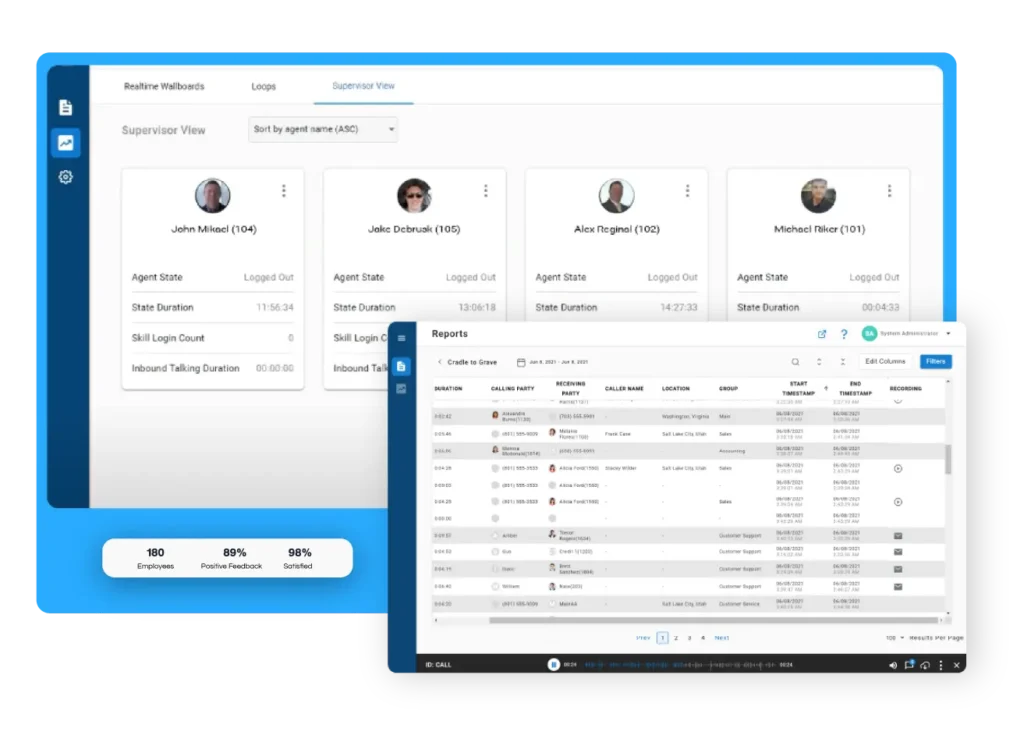
Live wallboards and dashboards help supervisors see exactly when demand rises. That makes it easier to move people where they are needed most and reduce guesswork in daily staffing decisions.
A good starting point is call center dashboards. With real-time queue data, service levels, and agent availability in front of them, managers can react before a small issue becomes an expensive one.
5. Monitor Cradle-to-Grave Call Lifecycles
A full interaction view lets managers follow the complete timeline of a call from start to finish. That kind of visibility reveals bottlenecks, such as a department that consistently creates long holds or a workflow that causes unnecessary wrap-up time.
That is why cradle-to-grave reporting is so valuable. It turns mystery into detail and detail into action.
6. Consolidate Support Channels Into One Omnichannel Screen
Agents lose time every time they jump between systems.
If voice, chat, SMS, and email live in separate windows, the team spends more time hunting for context and less time helping customers. That adds friction, increases average handle time, and creates more administrative overhead than most small businesses realize.
A unified workspace, like multi-channel communications, brings those interactions together in one place. The agent sees the full history, asks fewer repeat questions, and moves more quickly from issue to resolution.
7. Automate Quality Assurance and Interaction Summaries
Automated speech analytics and interaction summaries change the equation. They help surface compliance risks, coaching opportunities, and performance gaps across far more conversations without requiring managers to spend hours manually reviewing recordings.
This is where conversation intelligence style visibility can support faster action, better oversight, and less wasted management time.
8. Target Agent Coaching Using Performance Scorecards
High turnover is one of the most expensive problems in a contact center. Recruiting, onboarding, and retraining all add up quickly.
Structured scorecards make coaching more specific and more useful. Instead of vague feedback, supervisors can show agents exactly where performance is strong and where improvement is needed. That helps prevent frustration, supports confidence, and gives managers a better way to address issues before they become turnover problems.
A focused scorecard and evaluations approach makes coaching easier to scale and more consistent across the team.
9. Deflect Voice Volume With Integrated Web Chat
Voice is powerful, but it is also linear. One agent can only handle one call at a time.
Chat creates a very different cost profile because agents can often manage more than one conversation at once, especially for simpler requests. That makes it a strong tool for reducing call volume without expanding headcount.
The key is to offer it in a place customers will actually use. An integrated web chat option, connected through your broader cloud contact center strategy, can help deflect basic requests away from the phone queue and make better use of your existing team.
10. Migrate to Cloud-Hosted Infrastructure
Instead of carrying physical infrastructure, your team gets predictable operational pricing and easier scalability. That lowers maintenance costs, reduces surprise repair spend, and frees IT from supporting aging equipment.
For small businesses, a cloud contact center is often one of the fastest ways to reduce long-term overhead while improving flexibility.
A Step-by-Step Plan to Reduce Call Center Operating Costs in 90 Days
A 90-day rollout is realistic for small teams. Trying to do everything at once usually creates disruption, confusion, and burnout. A phased plan keeps the work manageable.
- Days 1 to 30, assess
Review baseline metrics, cost per contact, staffing pressure points, abandonment, AHT, and FCR. Use contact center analytics to identify the biggest cost drivers and the workflows that create the most waste. - Days 31 to 60, implement
Put the highest-impact fixes in place first. Start with skills-based routing, queue callback, IVR improvements, and better dashboard visibility. These changes usually pay off quickly because they reduce friction at the front end of the call. - Days 61 to 90, optimize
Fine-tune staffing, coaching, and reporting. Use scorecards and evaluations to improve performance, review the impact of self-service, and adjust workflows based on what the data shows. This is also the time to confirm whether cloud migration or channel consolidation should be your next step.
Optimize Your Small Business Call Center Costs With Xima Software
Xima Software helps small businesses reduce costs without losing control of the customer experience. Our platform brings together the tools that matter most, including intelligent routing, callback options, cradle-to-grave visibility, quality insights, and real-time reporting. That means fewer bottlenecks, better agent performance, and faster decisions.
When your team can see what is happening in the queue, understand why it is happening, and fix it quickly, cost control becomes much easier. Xima gives supervisors and operations teams the visibility they need to act with confidence.
Ready to see it in action? Book a demo and learn how Xima can help streamline your contact center and lower support costs.
FAQs About Call Center Cost Reduction
Start with routing and self-service. Improving skills-based routing and adding queue callback usually lowers waste fast because it reduces transfers, abandonment, and unnecessary wait time.
Focus on efficiency that helps the customer. Better IVR, better routing, and better visibility improve both cost and experience because they reduce friction instead of cutting support quality.
Average handle time and first call resolution both matter a lot. High AHT increases labor cost, while low FCR creates repeat contacts that multiply work.
Turnover drives recruiting, training, and lost productivity costs. It also lowers consistency, which can increase handle time, repeat calls, and coaching overhead.