
As we navigate January 2026, the healthcare industry stands at a critical crossroads. Patient demand for services is growing at an unprecedented rate, yet the number of available healthcare professionals is shrinking. This widening gap presents a significant challenge for hospitals and clinics aiming to maintain high-quality care and operational stability. The key to solving this paradox lies not in finding more people, but in empowering the teams you have with smarter technology.
The Unfolding Staffing Crisis: What the Data Says for 2026
The healthcare staffing shortage is an issue that has been simmering for years, but it is now accelerating toward a boiling point. The numbers paint a stark picture of the challenge ahead. Projections show a potential deficit of up to 86,000 physicians by 2036 [2]. This isn’t limited to doctors; the industry will also need more than 275,000 additional nurses by 2030 to meet rising demand [1]. This crisis is fueled by a combination of factors, including widespread staff burnout, an aging workforce nearing retirement, and professionals leaving the industry altogether [3].
This staffing crisis has a direct and tangible impact on the Patient Experience. When fewer staff members are available to manage a growing number of patients, it creates frustrating bottlenecks across the entire patient journey. Patients face longer wait times for appointments, feel rushed during consultations, and struggle to get answers to their questions. This decline in service quality inevitably damages healthcare patient satisfaction and can quickly erode the trust and loyalty a patient has for their healthcare provider. Xima’s contact center software for healthcare supports patient-facing teams.
Why Traditional Solutions Fall Short
In the past, the go-to solution for increased demand was simple: hire more people. Today, that model is no longer feasible. Shrinking budgets and a limited talent pool make it nearly impossible to hire your way out of the problem. This creates a “scalability dilemma” where patient expectations for fast, efficient service are rising, but the resources to meet those expectations are stagnant or even decreasing. Healthcare providers must find a way to scale their patient communication operations without scaling their headcount. Staffing to actual demand is handled through workforce management software.
The Modern Solution: Technology-Driven Healthcare Contact Centers
The Healthcare contact center is the central hub of patient communication and the frontline of the Patient Experience. By modernizing this hub with intelligent technology, you can bridge the gap between patient demand and your available staff. Healthcare contact center automation is no longer a luxury; it’s a strategic necessity for improving patient care quality and efficiency.
Reduce Patient Wait Times with Intelligent Automation
AI-powered automation tools can manage a high volume of routine tasks, which frees up your skilled agents to focus on patients with more complex needs.
Smart IVR (Interactive Voice Response): An intelligent IVR allows patients to self-serve for common requests. They can check appointment times, confirm office hours, or get directions without ever needing to speak to an agent.
Queue Callback: Instead of forcing patients to wait on hold, this feature gives them the option to receive a callback when an agent is free. This simple courtesy is proven to reduce abandoned calls by an average of 32% and dramatically improves the patient experience.
AI-Powered Virtual Assistants: Chatbots and virtual agents on your website or patient portal can handle initial questions, gather patient information, and route the conversation to the correct department, ensuring a smooth handoff.
These automated hospital contact center solutions ensure that patients get faster service while your staff’s time is reserved for high-value interactions.
Improve First-Call Resolution with Skills-Based Routing
Skills-based routing healthcare is a game-changer for efficiency. This technology automatically directs a patient’s call to the specific agent or department best equipped to handle their needs.
A patient with a question about a bill is sent directly to the billing department.
A request to schedule a follow-up is routed to a scheduling coordinator.
A clinical question is sent to a triage nurse.
By connecting patients to the right person on the first try, this system reduces frustrating transfers and lowers Average Handle Time (AHT). More importantly, it resolves the patient’s issue quickly and effectively, making them feel heard and valued.
Ensure Security with HIPAA Compliant Contact Center Software
In healthcare, protecting patient privacy is non-negotiable. All communication must be secure and compliant with the Health Insurance Portability and Accountability Act (HIPAA).
HIPAA compliant contact center software is specifically designed to protect sensitive patient information.
Key features include end-to-end data encryption, strict access controls, and the ability to pause call or screen recordings when sensitive details like payment information are shared.
Platforms like Xima Software are built to be secure and HIPAA certified, giving both you and your patients peace of mind and building foundational trust in your medical call center services. You can learn more about revolutionizing patient communications with a secure platform.
The Tangible Benefits of a Modernized Contact Center
Enhancing the Quality of Patient Care
By implementing these technologies, you aren’t just improving efficiency—you are directly improving patient care quality. When your staff is no longer buried under repetitive administrative tasks, they have more time and mental energy to dedicate to empathetic and compassionate patient care. Furthermore, leading contact center platforms can integrate with your Electronic Health Record (EHR) system. Xima’s platform, for instance, integrates with over 70 popular EHR solutions, giving agents a complete view of a patient’s history for more personalized and context-aware conversations.
Building Operational Resilience
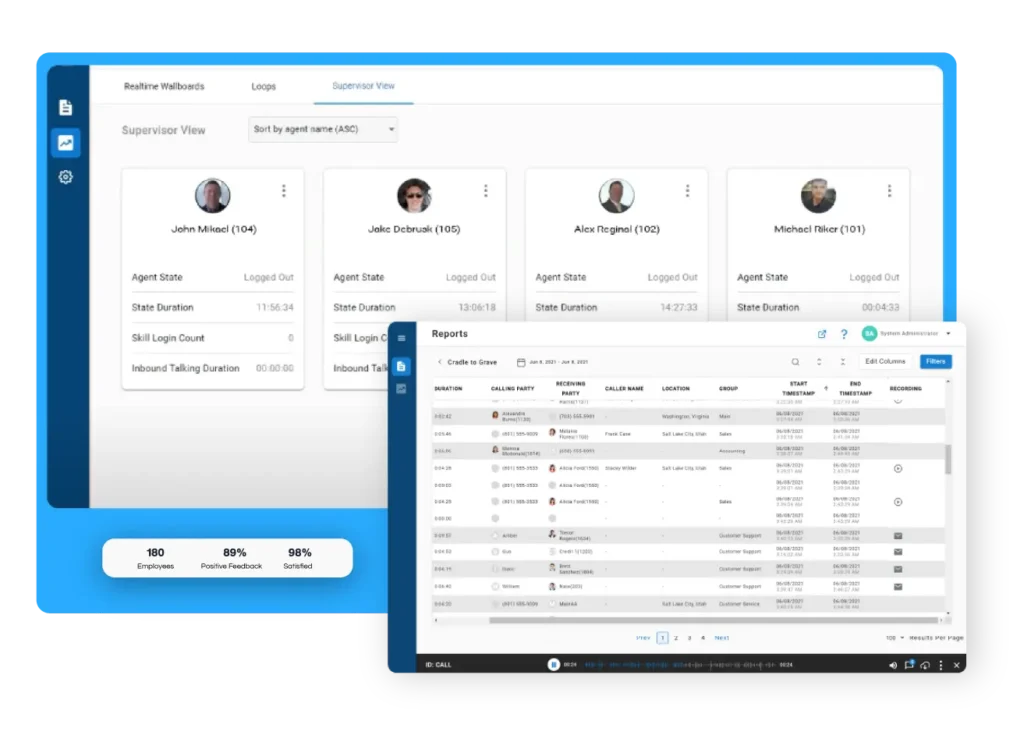
Automation and intelligent routing create a resilient healthcare customer service center that can handle sudden spikes in call volume—whether from a seasonal flu outbreak or an unexpected public health event—without buckling under the pressure. Real-time dashboards provide supervisors with a clear view of call queues and agent activity, allowing them to manage workloads and reallocate resources on the fly. This proactive management helps reduce staff burnout and builds a more sustainable, stable operational model for the future.
Preparing for 2026: Your Next Steps
The healthcare landscape of 2026 and beyond will be defined by the challenge of delivering more care with fewer resources. The proactive adoption of modern healthcare staffing shortage solutions is no longer just an option—it is essential for survival and growth. Investing in an intelligent, secure, and automated communication platform is a direct investment in healthcare patient satisfaction, operational excellence, and the long-term health of your organization.
Ready to see how you can meet rising demand and enhance patient care? Explore Xima’s contact center solutions for the healthcare sector and schedule a demo today.