
Are you still relying on a clunky, expensive business phone system that can’t keep up with your customers’ expectations? In today’s competitive landscape, outdated communication infrastructure isn’t just an inconvenience—it’s a direct threat to your bottom line and customer loyalty. The solution is a strategic shift to a cloud phone system for business, a modern approach where your communications are hosted securely over the internet instead of on physical hardware in your office [6].
This technology evolves into a full cloud contact center, an integrated platform that unifies all your customer communication channels—from voice and chat to email and social media [9]. These systems operate on a Software-as-a-Service (SaaS) model, replacing hefty upfront investments with a predictable monthly subscription. This article will show you how this technology delivers a powerful one-two punch: cutting operational costs while dramatically boosting your customer experience (CX).
Why Are Traditional Phone Systems Holding Your Business Back?
Before we look forward, let’s assess the burdens of legacy technology. Many businesses underestimate the true cost and operational drag of their on-premise phone systems.
The Hidden Costs of On-Premise Systems
The initial purchase price of a traditional PBX system is just the tip of the iceberg. The long-term financial drains are significant [4].
Massive Upfront Investment: Traditional systems require substantial capital expenditure (CapEx) for physical servers, wiring, handsets, and installation.
Constant Maintenance & Upgrades: You bear the full cost of technician visits, software patches, and inevitable hardware failures, leading to unpredictable expenses [2].
Inflexible Scalability: On-premise systems force you to over-provision capacity for future growth. If you need to scale down, you’re stuck paying for hardware you no longer use. If you need to scale up, it often involves a costly and disruptive overhaul.
Siloed Infrastructure: Managing separate systems for voice, email, and chat is complex and expensive, requiring multiple vendors and administrative overhead.
The Damaging Impact on Customer Experience (CX)
Outdated technology doesn’t just cost money; it costs you customers.
Limited Agent Flexibility: On-premise systems tie agents to their desks, making remote or hybrid work models difficult to implement and limiting your access to a wider talent pool.
Disconnected Customer Journeys: When a customer has to repeat their issue every time they switch from an email to a phone call, it creates immense frustration. This happens when your communication channels don’t talk to each other.
Lack of Actionable Insight: Without a unified data platform, it’s nearly impossible to get a clear view of agent performance, identify recurring service issues, or understand customer sentiment.
How Exactly Does a Cloud Phone System Cut Costs?
Moving to the cloud is one of the smartest financial decisions a modern business can make. It fundamentally changes your cost structure and unlocks new levels of efficiency.
Say Goodbye to Hardware and Maintenance Headaches
The most immediate benefit of a cloud phone system for business is the shift from a high-cost Capital Expenditure (CapEx) model to a predictable Operating Expenditure (OpEx) model. Instead of a massive upfront purchase, you pay a manageable monthly subscription.
With a provider like Xima, all server maintenance, security updates, and software upgrades are handled for you. This eliminates surprise repair bills and frees your IT team to focus on more strategic initiatives instead of just keeping the phones running. This is a key reason why scalable contact center software can cut costs so effectively in 2026.
Achieve True Business Agility with Effortless Scalability
Business needs change. A cloud system changes with you. You can add or remove users with just a few clicks, ensuring you only pay for what you use.
For example, a retail business can easily scale up its agent licenses for the busy holiday season and scale back down in January without financial penalty. This flexibility allows you to adapt to market demands and support rapid growth. By leveraging scalable cloud CCaaS solutions, businesses can transform their operations from rigid and expensive to agile and cost-effective.
Boost Efficiency with Unified Communications
A cloud contact center consolidates all your communication channels—voice, video, and messaging—onto a single platform. This not only simplifies administration but also reduces the subscription costs of juggling multiple single-purpose tools. By centralizing everything, Xima’s Voice and Unified Communications solutions also improve internal collaboration, leading to faster issue resolution and higher team productivity.
How Does a Cloud Contact Center Elevate Your Customer Experience?
Cost savings are only half the story. A cloud platform provides the modern tools necessary to meet and exceed customer expectations, turning your contact center from a cost center into a loyalty-building engine [1].
Create Seamless, Omnichannel Conversations
Modern customers expect to interact with you on their terms, whether that’s a phone call, a web chat, or a social media message. Omnichannel support allows them to switch between these channels without having to start over. A unified agent desktop gives your team the full context of every interaction, empowering them to deliver the quick, informed service that improves key metrics like Customer Satisfaction (CSAT) and First Contact Resolution (FCR). This is how you unlock faster, more effective CX with a modern platform.
Empower Agents with Data-Driven Tools
A happy, empowered agent leads to happy customers. A cloud contact center provides tools that reduce agent effort and boost their effectiveness.
Intelligent, Skills-Based Routing: Automatically connects a customer with a billing question to an agent in the finance department, ensuring the right expert handles the query from the start.
CRM Integration: Provides agents with a customer’s entire history—past purchases, previous support tickets, and contact information—the moment the interaction begins.
Queue Callback: Gives customers the option to receive a call back rather than waiting on hold, respecting their time and significantly reducing call abandon rates.
Make Smarter Decisions with Advanced Analytics
A cloud platform is a goldmine of data. Unlike on-premise systems, it captures every interaction and makes that data available for analysis.
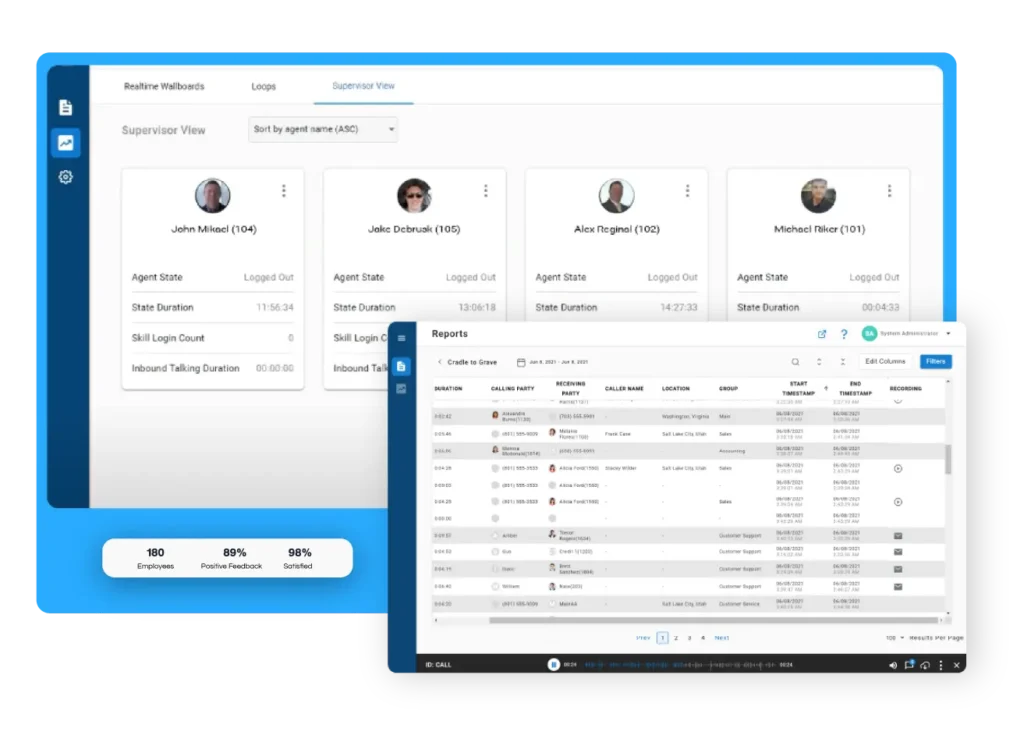
With Xima, you can leverage both historical analytics to spot long-term trends and real-time analytics to address issues as they happen. For example, a supervisor can see that an agent is on a long call with a customer showing negative sentiment and can “whisper” advice to the agent or join the call to de-escalate the situation. These real-time analytics are essential for a better CX.
Furthermore, AI-powered analytics can uncover the root causes of call abandonment and customer dissatisfaction by analyzing conversations at scale, giving you the insights needed to make data-driven improvements.
Ready to Make the Switch? Here’s How to Get Started
Migrating to the cloud may seem daunting, but with the right partner, it’s a smooth and strategic process that sets your business up for future success.
Key Features to Look for in a Cloud Provider
When evaluating solutions, use this checklist to ensure you’re choosing a true partner:
Reliability & Security: Does the provider guarantee high uptime and have robust security certifications to protect your data?
Ease of Use: Is the platform intuitive for both agents and supervisors to learn and use effectively? For small businesses, finding one of the best contact center software solutions for SMBs is critical.
Integration Capabilities: Can the platform easily connect to your CRM and other essential business tools to create a single source of truth?
Expert Support: A true partner, like Xima Software, works with you to ensure a seamless transition and provides ongoing support to help you maximize your investment.
Planning Your Migration to the Cloud
A successful move to the cloud begins with a clear strategy. While the technical lift is handled by your provider, it’s important to plan the transition to minimize disruption and maximize adoption.
For a detailed walkthrough, check out our step-by-step guide to moving your contact center to the cloud. And to ensure a smooth project, be sure to review these essential cloud migration do’s and don’ts.
Conclusion: The Future of Your Business Communication is in the Cloud
Staying with an on-premise phone system in 2026 means accepting higher costs, reduced flexibility, and a compromised customer experience. The move to a cloud phone system for business is no longer just an option—it’s a strategic necessity for growth and profitability.
Cloud systems replace high, unpredictable capital costs with a low, predictable operating expense.
They provide the omnichannel support, AI tools, and analytics needed to deliver the fast, seamless service modern customers demand.
Making the switch is a direct investment in efficiency, scalability, and long-term customer loyalty.
Xima’s cloud contact center platform was built to deliver these benefits in one powerful, easy-to-use solution.
Ready to see how much you can save and how happy you can make your customers? Request a Demo of Xima today and let us show you.
Explore our flexible plans to find the perfect fit for your business.