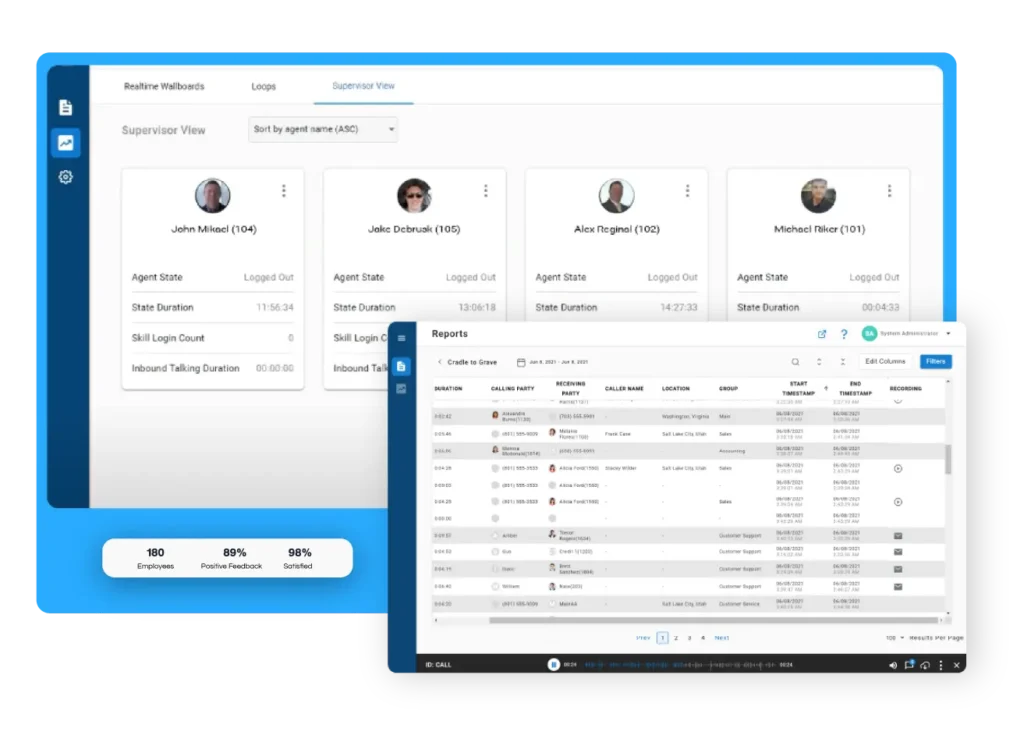

Both platforms offer robust capabilities and cloud-based environments. The difference is most visible in how those capabilities are delivered and managed day-to-day. Implementation effort, reporting visibility, administrative complexity, and long-term cost all evolve differently as operations grow.
This guide compares Xima vs Genesys Cloud for SMB contact centers in terms of operational fit. The goal is to help teams understand how each platform supports real workflows, scales over time, and aligns with the needs of a growing contact center.
Key Takeaways for Small Call Center Teams
- Genesys Cloud is built for enterprise environments with complex routing, automation, and layered configurations.
- SMB teams often evaluate it for scalability, even if current needs are more straightforward.
- Xima focuses on structured queue management, real-time visibility, and reporting clarity.
- Enterprise platforms can introduce added configuration effort and higher cost as complexity grows.
- The right fit depends on operational maturity and how each platform scales in both complexity and cost.
How Genesys Cloud and Xima Approach Contact Center Operations
Genesys Cloud and Xima both support cloud-based contact centers, but they are designed for different operational environments.
Genesys Cloud’s Enterprise Platform Model
Genesys Cloud is built for large, complex environments that require advanced routing, automation, and customization. Teams can create highly tailored workflows, but this often involves managing multiple configuration layers over time. This level of flexibility supports enterprise use cases, though it also introduces ongoing management needs as systems evolve.
Xima’s Structured Call Center Model
Xima’s contact center software is built around clear queue behavior and real-time visibility. Teams can manage routing, reporting, and performance without relying on complex configuration layers or dedicated technical resources. Key advantages include:
- Predictable routing structures
- Real-time dashboards
- Configuration without heavy IT dependency
- Alignment with SMB operational workflows
This structure allows teams to grow without taking on the complexity or cost typically associated with enterprise platforms.
Platform Design Impacts Daily Operations
Platform design directly shapes how teams manage workflows, reporting, and performance. Enterprise contact center systems offer flexibility but often require more effort and oversight, while SMB platforms prioritize clarity and ease of use. This affects both operational efficiency and the way complexity and costs scale over time.
Why SMB Teams Evaluate Enterprise Platforms Like Genesys
Many SMB teams consider enterprise contact center platforms like Genesys Cloud to prepare for future growth. Larger systems are often associated with scalability, flexibility, and advanced capabilities, even before those needs fully exist. This decision is often influenced by a future-proofing mindset, strong brand recognition, and the assumption that more complex platforms will better support long-term expansion.
However, these perceived advantages do not always align with current operational needs, leading SMBs to pay for features they don’t use and spend more time managing technical aspects. This is especially true for teams focused on efficiency, visibility, and ease of management.
What Enterprise Contact Center Platforms Are Built to Handle
Enterprise platforms such as Genesys Cloud are designed for large-scale, complex operations that span multiple teams, regions, and systems. They support environments where coordination across channels, locations, and workflows is a core requirement. Because of this, enterprise contact center platforms often include:
- Global routing and infrastructure
- Deep workflow orchestration
- Workforce management modules
- Extensive integration ecosystems
Where Enterprise Platforms Can Introduce Friction
Enterprise contact center capabilities can be necessary for larger operations, but may exceed the practical needs of smaller teams. They often require:
- Longer implementation timelines
- More complex training and onboarding
- Ongoing configuration management
- Dependence on specialized roles or IT support
- Pricing structures aligned with enterprise scale
These challenges are not limitations of capability, but reflections of how enterprise systems are built to support more complex environments.
How Xima Supports SMB Contact Center Growth
Xima is built to help contact center teams grow without adding unnecessary complexity. Core functions such as routing, reporting, and performance management are built in, so teams can stay focused on operations rather than system maintenance. It offers:
- Real-time performance insights
- Queue-based workflows
- Direct supervisor visibility
- Scalable setup as teams expand
This approach allows teams to expand operations while maintaining clear visibility and predictable system behavior. Pricing and functionality scale with contact center activity, keeping growth aligned with actual usage.
Operational Comparison: Genesys Cloud vs Xima
The comparison below highlights how Genesys Cloud and Xima impact daily contact center operations. When making your decision, focus on differences in visibility, management effort, and scalability as each platform evolves over time, rather than feature depth alone.
Operational Area | Genesys Cloud | Xima |
Core Platform Focus | Enterprise-scale orchestration and customization | Structured contact center operations for SMB teams |
Implementation Complexity | Multi-step setup with layered configuration and deployment planning | Faster setup focused on queues, reporting, and supervisor visibility |
Administrative Overhead | Often requires dedicated admins or IT oversight for ongoing management | Designed for lean teams without specialized administrative roles |
Routing & Queue Management | Highly customizable routing with complex orchestration options | Predictable, structured queue logic built for day-to-day management |
Reporting & Visibility | Deep, customizable analytics that may require configuration to surface insights | Real-time dashboards centered on call center KPIs and operational clarity |
Supervisor Oversight | Available through advanced tools, often within broader system layers | Direct, real-time visibility into queues, agents, and performance metrics |
Integration Approach | Broad enterprise integrations designed for large-scale system orchestration | Integrations aligned to call workflows, reporting accuracy, and operational consistency |
Scalability Model | Built for global deployments and high-volume, multi-region environments | Scales with agent growth, queue complexity, and support operations |
Cost Structure and Long-Term Fit
Contact center costs typically change as teams expand and needs become more complex. Enterprise platforms like Genesys Cloud typically use tiered pricing models, in which access to advanced functionality depends on higher-tier plans or add-ons. This can lead to unforeseen expenses and make long-term budgeting difficult.
SMB contact center platforms like Xima align pricing with contact center activity rather than feature tiers. Core functionality is not gated behind higher plans, which helps teams maintain more predictable costs as they grow.
Evaluate how your current contact center platform supports daily operations and long-term growth.
If complexity, limited visibility, or unpredictable costs are slowing your team down, it may be time to consider a solution better aligned with how your business actually runs.

Integration and Workflow Alignment
Integrations play different roles depending on the platform. Genesys Cloud supports broad integrations that connect multiple systems across an enterprise environment, often as part of larger orchestration efforts.
Xima focuses on integrations that align directly with contact center workflows. These integrations support accurate reporting, consistent queue behavior, and day-to-day operational visibility, keeping systems connected without adding unnecessary complexity.
When Genesys Cloud May Be the Right Fit
Genesys Cloud can be a strong fit for organizations operating at enterprise scale or planning for complex, distributed environments. It may be the right choice for:
- Large or geographically distributed teams
- Contact centers with global routing requirements
- Operations that rely on advanced automation and customization
- Organizations with dedicated IT or administrative resources to manage the system
When Xima May Be the Better Fit
A structured SMB platform like Xima is often a better fit for teams focused on clarity, visibility, and ease of management. It supports contact centers that are growing steadily without the need for complex system configuration.
It may be the right choice for:
- Growing but centralized teams
- Clearly defined queues and service levels
- Teams that need real-time performance visibility
- Organizations with limited internal IT resources
Choosing the Right Platform for Your Contact Center
The decision between Genesys Cloud and Xima comes down to how each platform aligns with your current operations. Genesys Cloud supports flexibility, customization, and enterprise-scale environments, while Xima focuses on clarity, manageability, and structured growth for SMB teams.
Evaluate your contact center based on reporting visibility, system complexity, cost scalability, and team structure. The right choice is the one that supports how your team operates today while allowing you to grow without adding unnecessary overhead.
If Xima seems like the best contact center solution for your SMB, request a demo today to see it in action.
FAQs
It can be, depending on your needs. Genesys Cloud is designed for enterprise environments, so smaller teams may find the configuration and management effort to be more than they’re ready to handle.
Xima focuses on structured workflows, real-time visibility, and ease of use. It delivers core contact center functionality without the complexity of enterprise systems.
Enterprise platforms often use tiered pricing and add-ons, which can make long-term costs harder to predict as your needs grow and evolve.
If the platform requires more effort to manage than it delivers in value, or if costs and complexity are increasing without a clear operational benefit, it may be time to reassess your contact center software.
Focus on how a platform handles your current workflows, reporting needs, and team structure. Scalable systems should support growth without requiring major increases in complexity or cost.