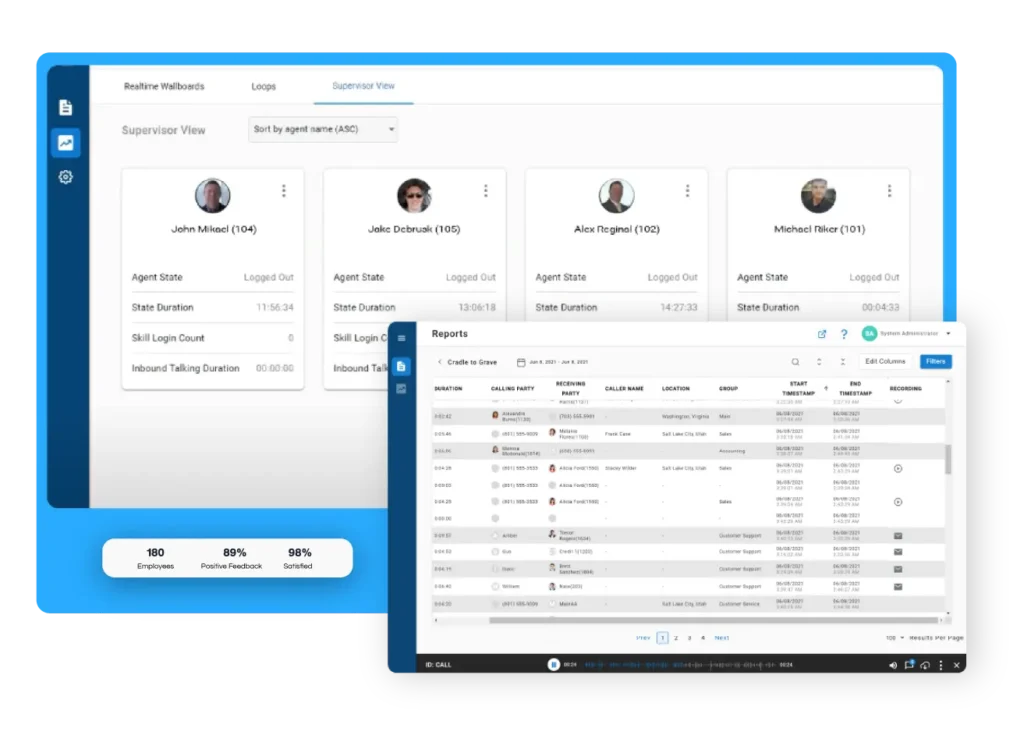

3CX and Xima both support inbound calling and basic queue management. The difference comes down to how each platform is built. 3CX extends a phone system with call center functionality through configuration, while Xima is designed around queue-based workflows and performance visibility from the start.
That foundation influences setup time, day-to-day management, and how complexity develops over time. Let’s take a closer look at Xima vs. 3CX so you can find the right solution for your call center.
Key Takeaways for Small Call Center Teams
- 3CX is typically used as a PBX-driven system with call center features added on.
- Xima is designed specifically for structured contact center workflows.
- Both platforms support inbound calling and basic queue management.
- 3CX often requires more internal setup and ongoing system management.
- Xima emphasizes usability, reporting clarity, and predictable scaling as teams grow.
- The right choice depends on technical resources, reporting needs, and operational maturity.
How 3CX and Xima Approach Call Center Operations
The biggest difference between Xima and 3CX lies at the architectural level. Each platform is built with a different priority in mind, and that choice affects how teams set up, manage, and scale their call center operations.
3CX is rooted in telephony infrastructure. Call center functionality is configured within a broader phone system, which provides teams with flexibility but also requires greater involvement in setup and ongoing adjustments.
Xima, in contrast, is structured around how calls move through queues and how performance is measured. Routing, visibility, and reporting are built into the core experience rather than added through configuration.
This distinction influences how supervisors monitor performance, how quickly teams can respond to changes, and how much time is spent managing the system versus managing the operation.
3CX’s PBX-Driven Approach
3CX treats call center functionality as an extension of a broader phone system. Routing logic, queue behavior, and reporting are all configured within that environment. This model gives teams a high level of control over how the system is built, but it can also require more hands-on management and a stronger level of technical familiarity to maintain performance as needs change.
Xima’s Contact Center-First Model
Xima is structured around how calls move through queues and how performance is tracked in real time. It offers:
- Queue behavior as a foundational element
- Real-time reporting and supervisor visibility
- Structured routing without complex setup
Teams can focus on managing performance and customer interactions instead of maintaining a broader telephony system. This approach supports more consistent operations as call volume and complexity increase.
Platform design shapes daily operations.
PBX systems like 3CX prioritize control over telephony infrastructure. Contact center platforms like Xima prioritize queue management, reporting clarity, and operational visibility. This distinction shows up in how easy the system is to use each day and how smoothly it scales as your team grows.
Why SMBs Consider Systems Like 3CX
3CX often attracts small and mid-sized teams looking for flexibility and a lower barrier to entry. It is commonly evaluated by organizations moving away from legacy phone systems because it offers:
- Potentially lower upfront costs
- Control over system configuration
- Flexibility for teams with technical resources
These advantages can make 3CX appealing early on. However, teams take on responsibility for setup, adjustments, and system maintenance.
What a PBX-Based Call Center Setup Involves
A PBX-based call center is not a one-time setup. It is an ongoing operational model where the team is responsible for building and maintaining how the system works.
Each change in call flow, queue structure, or business need requires updates within the system. Teams gain control over how everything is configured, but that control comes with continued involvement.
This model can work well for organizations with dedicated technical resources. For lean teams, it often means balancing customer operations with system management responsibilities.
Where PBX-Based Systems Can Create Friction
As call volume grows and workflows become more complex, managing a PBX-based system can require more time and coordination.
- Configuration becomes more complex as call flows expand
- Reporting is often limited without additional setup
- Routing changes require manual updates
- Ongoing reliance on internal technical expertise
What starts as a manageable setup can become harder to maintain as more queues, agents, and reporting needs are introduced. The effort required to keep everything running smoothly tends to increase alongside growth. For some teams, this can outweigh the potentially lower upfront costs.
How Xima Supports Structured SMB Call Centers
Xima is built to give SMBs a clear, structured way to manage call center operations without adding system complexity. The platform focuses on visibility, usability, and consistency as teams grow. Its core features include:
- Built-in reporting and dashboards
- Queue-based workflow structure
- Supervisor visibility without added configuration
- Reduced need for technical management
Supervisors can monitor performance in real time, track key metrics, and make adjustments without working through layers of system setup. Routing and queue behavior follow a structured model, which helps teams stay organized as call volume increases.
This approach allows teams to focus on performance, staffing, and customer experience rather than maintaining the underlying system.
Operational Comparison: 3CX vs Xima
3CX and Xima don’t just differ in features, but in how they impact daily operations.
Operational Area | 3CX | Xima |
Core Platform Focus | PBX system with call center features | Contact center-focused platform |
Setup Complexity | Requires configuration and technical setup | Structured setup centered on queues and reporting |
Administrative Overhead | Ongoing system management required | Designed for lean team management |
Routing & Queue Management | Configurable but manually structured | Predictable, structured queue logic |
Reporting | Limited or requires setup/configuration | Real-time dashboards with call center KPIs |
Scalability Model | Scales through configuration and system expansion | Scales with team growth and call volume |
Pricing Behavior | Lower upfront cost but may require ongoing management effort | Pricing aligned to contact center usage and SMB growth |
Cost Structure and Long-Term Fit
Call center system costs are not fixed at the point of purchase; they evolve as the system grows and as operational demands increase.
With 3CX, costs may be lower at the start. Licensing and setup may appear more affordable, especially for smaller teams. Over time, additional effort is required to manage configuration, maintain performance, and adapt the system to changing needs.
With Xima, pricing is tied more directly to usage and team size. Core functionality is already in place, so teams do not need to layer on additional tiers or features to access reporting or structured workflows.
See how your current call center setup compares.
If your team is spending time managing configurations instead of tracking performance, it may be time to evaluate a more structured approach to call center operations.

Integration and Workflow Alignment
3CX connects primarily at the telephony level. Integrations tend to center around extending phone system functionality, which can work well for teams focused on call handling and system control.
Xima aligns integrations with contact center workflows. Reporting, queue activity, and agent performance can connect more directly with CRM platforms and support tools, giving teams better visibility into how customer interactions tie into broader operations.
When 3CX May Be the Right Fit
3CX can be a strong fit for:
- Teams prioritizing potentially lower upfront costs
- Organizations with internal technical expertise
- Simple call routing and queue needs
- Preference for configuring and controlling system behavior
When a Contact Center Platform Like Xima Is the Better Fit
Xima is often the better option for call centers with more structured and performance-driven operations. This includes small call centers with:
- Growing call volume and increasing queue complexity
- Need for real-time reporting and visibility
- Limited IT or administrative resources
- Teams prioritizing ease of use and scalability
As teams introduce service levels, track KPIs, and manage multiple queues, having a platform built around those workflows helps reduce friction and maintain consistency.
Choosing the Right Platform for Your Call Center
The decision between 3CX and Xima depends on how much internal effort your team can support and what your operations will look like over time. Teams with technical resources and simpler workflows may benefit from the flexibility of a PBX-based system. Teams managing higher call volume, multiple queues, or performance-driven goals often need a platform designed around those demands.
If your team is spending more effort configuring systems than managing performance, it may be time to consider a platform built for contact center operations. Request a demo from Xima today to see how it can transform your call center.
FAQs
Xima is designed specifically for contact center workflows, with built-in reporting, structured queue management, and real-time visibility. PBX-based systems typically require more configuration to achieve similar functionality.
Control allows teams to customize how the system operates but requires more time and technical effort. Ease of use reduces the need for ongoing configuration and helps teams focus on performance and customer experience.
3CX may have lower upfront costs, but it can require additional time and resources for maintenance. Xima aligns pricing with usage and team growth, offering more predictable costs as operations expand.
Teams often make the switch from a PBX system to a contact center platform when call volume increases, reporting becomes more important, and managing the system starts to take time away from daily operations and performance tracking.