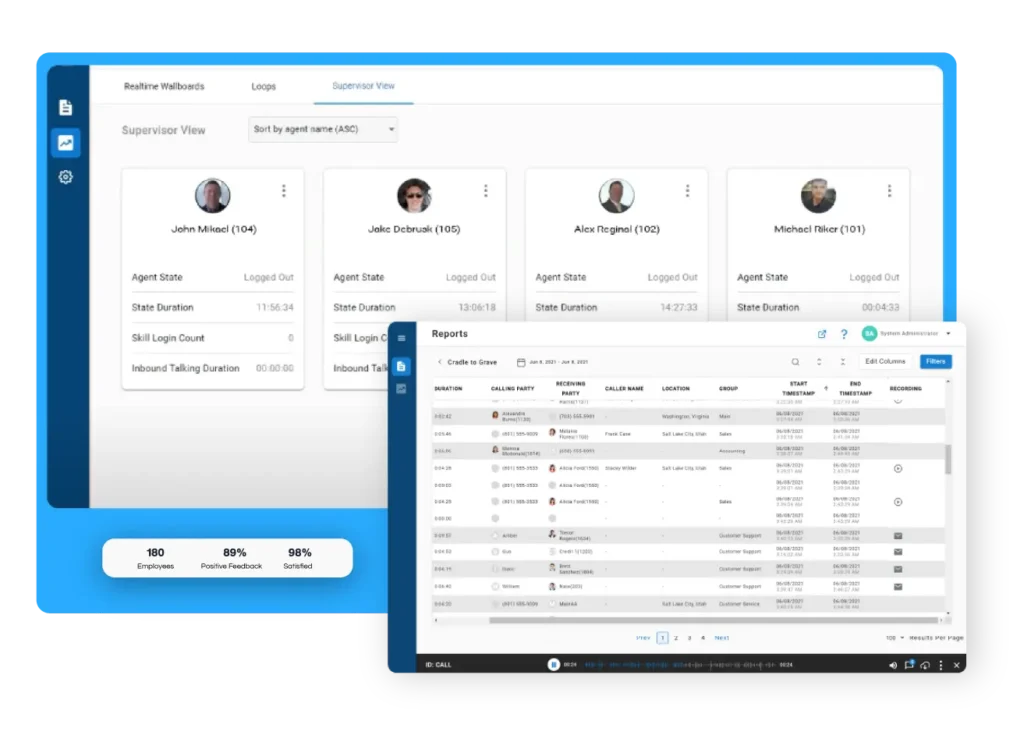

Are you drowning in call center data but thirsty for actionable insights? It’s a common challenge in 2026. You have access to countless metrics, but turning that flood of information into real-world improvements can feel overwhelming. The key isn’t just to collect data but to use it strategically to enhance performance, reduce costs, and elevate the customer experience (CX).
This guide will show you exactly how to optimize call center operations with data insights. We’ll move beyond simply listing metrics and provide a clear framework for transforming your operations, empowering your agents, and proving the value of your contact center to leadership. Let’s dive in.
Why Should Data Drive Your Call Center Strategy?
In today’s competitive landscape, the most successful contact centers have moved beyond guesswork. They operate not as cost centers, but as value-driving hubs of business intelligence. Without data, decisions are based on assumptions, which invites hidden costs like high agent turnover, customer churn, and missed revenue opportunities from inefficient workflows [5]. The reporting layer behind this is Xima’s contact center reporting.
A data-driven strategy empowers leaders to make confident, evidence-based decisions. Here’s why it’s foundational to your success:
Move Beyond Guesswork: Data replaces assumptions with certainty. It allows for precise adjustments to workflows, staffing, and agent coaching, ensuring your efforts are targeted and effective [8].
Enhance the Customer Experience (CX): Data analytics help you understand customer behavior, pain points, and preferences. This allows you to personalize interactions and resolve issues more efficiently, boosting loyalty. The essential first step is knowing how to measure customer experience effectively.
Boost Operational Efficiency: By analyzing performance data, you can identify and eliminate bottlenecks. Data reveals where time is lost, which processes are inefficient, and how resources can be better allocated to control costs [4].
Empower and Retain Agents: Use performance data not for punishment, but for targeted, supportive coaching. When agents understand their performance and feel supported in their growth, their job satisfaction and productivity increase, which directly improves customer interactions.
What Key Metrics Connect Operations to ROI?
To demonstrate value, you must focus on what are the best metrics to measure contact center ROI. It’s not about tracking everything; it’s about tracking the right things that link directly to business outcomes. A comprehensive platform like Xima Software centralizes this data, providing integrated dashboards that offer a clear, consolidated view of performance.
Efficiency and Productivity Metrics
Average Handle Time (AHT): The average duration of a single customer interaction, from initiation through all after-call work (ACW).
Why it matters: Lowering AHT without sacrificing quality means agents can handle more interactions, directly reducing the cost per call. Even small improvements lead to significant savings, helping you drive measurable ROI without disrupting your contact center.
First Call Resolution (FCR): The percentage of interactions where a customer’s issue is resolved on the first attempt, without needing a follow-up call or transfer.
Why it matters: A high FCR is a powerful indicator of both efficiency and customer satisfaction [12]. It reduces repeat call volume (lowering costs) and prevents customer frustration (improving retention).
Agent Utilization: The percentage of time agents spend actively engaged in call-related work versus their total paid time.
Why it matters: This metric helps optimize staffing and control labor costs. Consistently high utilization (often cited as above 85-90%) can lead to agent burnout, while low utilization may indicate overstaffing [2]. Finding the right balance is key.
Customer Experience (CX) Metrics
Customer Satisfaction (CSAT): Typically measured with a post-interaction survey asking, “How satisfied were you with this interaction?”, this metric provides a direct pulse on customer happiness.
Why it matters: CSAT offers immediate feedback on agent performance and process effectiveness. It’s a leading indicator of customer loyalty and is directly impacted by factors like FCR and agent empathy.
Abandonment Rate: The percentage of callers who hang up before connecting with an agent.
Why it matters: A high abandonment rate often points to long wait times or a frustrating Interactive Voice Response (IVR) system [1]. Each abandoned call is a potentially lost customer and a negative brand experience. Keeping an eye on this is one of the top 5 real-time metrics every manager needs.
Service Level: The percentage of calls answered within a predefined time threshold (e.g., 80% of calls answered in 20 seconds).
Why it matters: Service level is a primary measure of your team’s accessibility and responsiveness. Consistently failing to meet your service level goals leads to higher abandonment rates and lower CSAT scores.
Xima groups these views under contact center operations tools.
How Do You Turn Insights into Actionable Improvements?
Collecting data is only half the battle. The true value lies in turning those numbers into concrete actions. This is how you implement customer experience analytics successfully: by creating a feedback loop where data informs strategy, and strategy drives improved results [9].
Optimize Agent Performance with Data-Driven Coaching
Your agents are your most valuable asset. Empower them with targeted, constructive feedback.
Analyze 100% of interactions with speech analytics, not just a small sample. AI-powered tools like Xima’s automatically scan every call for keywords (“frustrated,” “cancel”), excessive dead air, high crosstalk (where agent and customer speak over each other), and adherence to compliance scripts. Explore our complete contact center speech analytics guide to learn more.
Combine quantitative data (like AHT) with qualitative insights from Quality Assurance (QA) scores and CSAT feedback. This provides a holistic view for delivering well-rounded feedback on both efficiency and effectiveness.
Create personalized coaching plans that focus on one or two specific skills at a time. Integrated scorecards make it easy to track progress and tie coaching directly to performance metrics, transforming speech analytics insights into tangible CX improvements.
Streamline Workflows and Technology
Inefficient processes create friction for customers and agents alike. Use data to smooth out the journey.
Analyze call flow data to identify where customers get stuck or transferred unnecessarily. High transfer rates often signal a need for better IVR design or more intelligent routing. An AI-powered contact center can route calls more intelligently based on customer intent.
Use real-time analytics dashboards to monitor call queues and agent availability. This allows supervisors to make immediate adjustments to staffing and skill-based routing, ensuring the right calls get to the right agents quickly. This is fundamental to providing better CX in cloud contact centers.
Unify your technology stack. A platform that offers a complete view of the customer journey is essential. Xima’s omnichannel analytics solution prevents data silos by consolidating voice, chat, email, and social media interactions into a single timeline, enabling a seamless experience.
Implement Smart Scheduling and Forecasting
Align your staffing with customer demand to control costs and improve service.
Use historical call volume data to predict future demand accurately. This helps you build schedules that match staffing to peak and off-peak times, reducing both overstaffing costs and customer wait times [2].
Analyze patterns in AHT and call types to ensure your staffing plan accounts for interaction complexity, not just volume. For example, technical support queues may require longer AHTs than simple billing inquiries.
Leverage a robust contact center reporting tool to automate forecasting and scheduling, freeing up manager time for more strategic tasks like coaching and process improvement.
How Can You Prove the ROI of Your Optimization Efforts?
To secure budgets and highlight your team’s value, you must translate operational improvements into the financial language that resonates with executive leadership. It’s about building a compelling business case backed by hard data [11].
Frame Your Narrative: Don’t just present a dashboard of KPIs. Tell a story that connects your team’s efforts to the company’s bottom line. Start with the problem, explain the data-driven action you took, and quantify the financial outcome [13]. For a complete guide, explore how to start demonstrating ROI from your contact center.
Calculate Cost Savings:
Lowered Cost-Per-Interaction: Show how reducing AHT and improving FCR directly lowers the cost of handling each interaction. For example, if you reduce AHT by 15 seconds across 100,000 calls, you save over 400 hours of agent time, which translates to thousands of dollars in direct labor savings.
Reduced Agent Attrition: Connect improvements in agent satisfaction and data-driven coaching to lower turnover rates. Then, quantify the savings from reduced hiring and training costs—a key focus in our essential guide to controlling contact center costs.
Highlight Revenue and Retention Impact:
Customer Retention: Show how modernizing your contact center with better analytics and CX tools prevents customer churn. Correlate improvements in CSAT and FCR with customer retention rates and calculate the lifetime value of those saved customers.
Quantify Revenue at Risk: Use a simple formula to frame your service level as a revenue protection mechanism:
Abandoned Calls × Historical Conversion Rate × Average Order Value = Revenue at Risk. This powerfully illustrates the financial impact of missed calls.
Build Your Business Case: Use a comprehensive tool like Xima to consolidate your data and build reports that clearly demonstrate these financial wins. A solid data foundation is crucial for proving the ROI of your contact center software.
Conclusion
Optimizing your call center is about making strategic, data-driven decisions. By focusing on a handful of key metrics that connect directly to efficiency, customer experience, and business ROI, you can achieve incredible clarity.
The real power comes from turning that data into action through:
Targeted, AI-assisted agent coaching
Streamlined, intelligent workflows
Smart, data-driven scheduling
Finally, proving the ROI of your efforts is crucial for securing resources and demonstrating the contact center’s value to the entire organization. By embracing a data-first mindset and leveraging powerful tools for analysis, you can transform your call center from a cost center into a strategic asset that drives customer loyalty and long-term business success.
Ready to unlock the power of your call center data? See how Xima’s all-in-one reporting and analytics platform makes it easy. Request a Demo Today