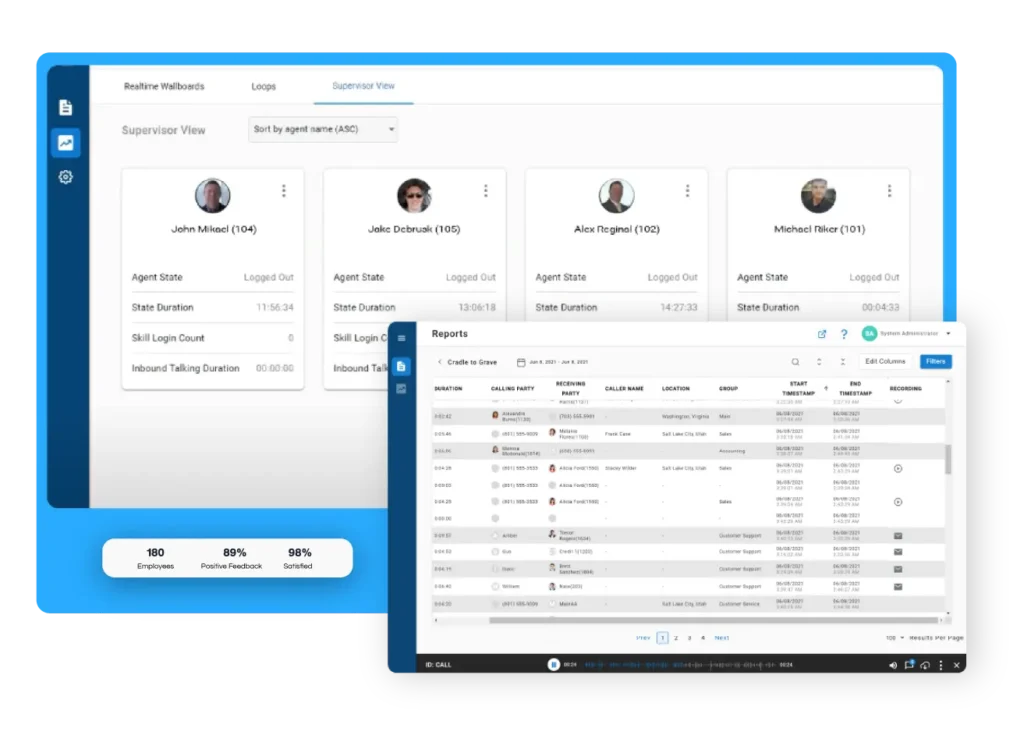

This guide provides a practical framework for SMBs evaluating contact center solutions through an ROI lens. We focus on the metrics that matter most when teams and budgets are lean, including efficiency gains, cost control, agent productivity, and customer experience improvements. By breaking ROI down into tangible outcomes, SMBs can confidently connect software capabilities to real financial impact.
What ROI Looks Like for SMB Contact Centers
For SMB contact centers, ROI is defined by speed and visibility. Unlike large enterprises running multi-year transformation projects, small teams need fast payback, clear performance data, and improvements that show up in day-to-day operations.
The most meaningful gains often come from practical changes: fewer missed calls, shorter handle times, better agent utilization, and more consistent customer experiences. Improving even one core call center KPI, such as first-contact resolution or average handle time, can unlock cost savings while reducing agent strain and improving service quality.
How SMBs Typically Calculate ROI for Contact Center Software
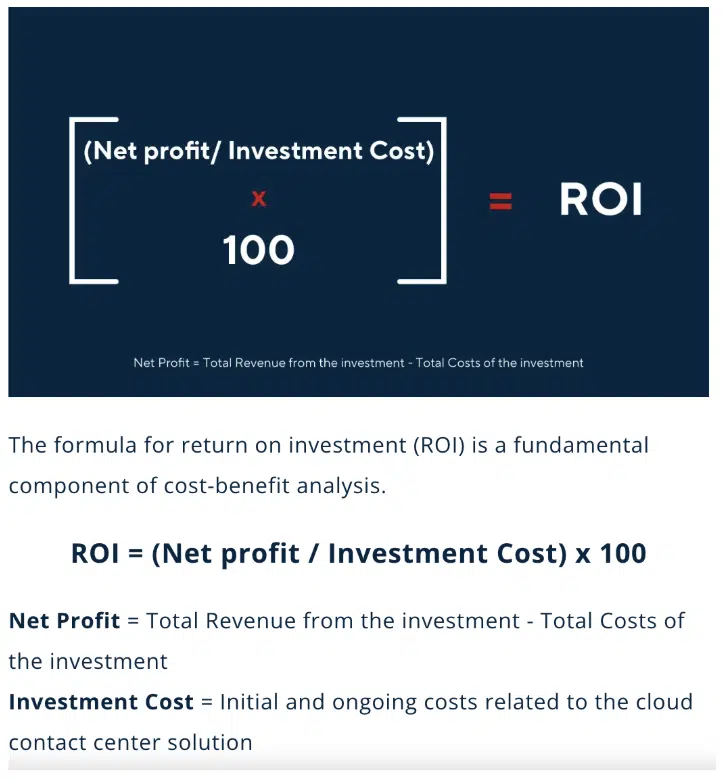
At its simplest, contact center ROI compares total savings against total software costs over a defined period:
ROI (%) = (Annual Savings – Annual Software Cost) ÷ Annual Software Cost × 100
For example, an SMB spending $12,000 per year on contact center software that generates $30,000 in annual savings would achieve a 150 percent ROI. In many cases, payback begins within months as efficiency gains compound across daily interactions.
Much of this value comes from eliminating hidden costs. Missed calls, delayed follow-ups, manual documentation, and inefficient staffing quietly drain productivity. Contact center software addresses these issues through automation, real-time reporting, and KPI visibility, allowing SMBs to turn everyday inefficiencies into measurable business outcomes.
For a detailed walkthrough of ROI scenarios, see Xima’s guide to demonstrating contact center ROI.
Competitor example:
Where Contact Center Software Delivers the Biggest Financial Wins
For SMBs, the financial value of contact center software shows up in routine workflows, not abstract efficiencies. The strongest ROI drivers reduce wasted time, prevent repeat work, and help agents resolve issues faster with better context. These gains lower operating costs while improving customer satisfaction, making ROI visible early and consistently.
Area of Impact | What Improves | Financial Result |
Call Resolution | Faster answers, fewer repeat calls | Lower cost per interaction |
Agent Efficiency | Less manual work, better context | More handled with same staff |
Issue Prevention | Proactive follow-ups and routing | Reduced inbound volume |
Performance Tracking | Clear Call Center KPI visibility | Smarter staffing and planning |
Faster Resolutions and Lower Handling Costs
Shorter calls and fewer repeat issues are among the fastest ways SMBs see ROI. When agents have immediate access to interaction history and clear next steps, they resolve issues correctly the first time.
Even modest improvements add up quickly. Reducing average handle time by 30 seconds across dozens or hundreds of daily calls can reclaim hours of agent capacity each week. Over time, this reduces cost per call, limits backlog, and delays the need for additional hires.
These improvements directly strengthen call center KPIs like average handle time and first-contact resolution, helping SMBs control costs while delivering faster service customers immediately notice.
Competitor Example:
Higher Customer Retention and Repeat Revenue
For SMBs, service quality plays a direct role in customer retention. Retaining existing customers is typically far less expensive than acquiring new ones, and contact center software helps teams deliver the consistent support that builds long-term trust.
Description | Customer Satisfaction Features | Business Impact |
Faster issue resolution | Intelligent routing and shared customer context | Lower churn and higher satisfaction |
Consistent service quality | Standardized workflows and interaction history | Stronger loyalty and brand trust |
Proactive communication | Automated updates and follow-ups | Fewer repeat issues and return customers |

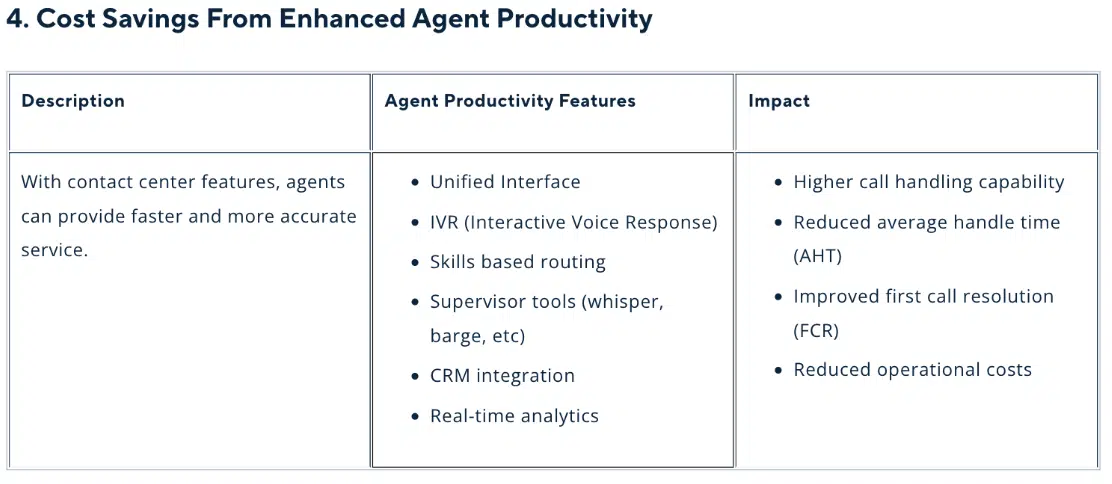
Improved Agent Productivity and Better Utilization
For smaller teams, productivity gains matter more than raw volume growth. Contact center software helps agents spend less time on administrative tasks and more time resolving customer issues.
Description | Agent Productivity Features | Business Impact |
Less time per interaction | Unified agent workspace and automation | More calls handled per agent |
Fewer manual workflows | Automated routing and follow-ups | Reduced administrative overhead |
Smarter workload distribution | Real-time visibility performance tracking | Balanced staffing and less burnout |
By improving utilization, SMBs can handle higher interaction volumes with existing staff. Over time, these gains appear in stronger call center KPIs, lower cost per interaction, and a more sustainable support operation.
Competitor Example:
More Visibility Into Performance and Staffing Needs
Clear reporting helps SMBs staff more accurately and avoid unnecessary costs. Real-time insight into call volume, handle time, and agent workload prevents overstaffing during slow periods and burnout during spikes.
Just as importantly, KPI visibility surfaces issues early. When metrics like repeat calls or handle time start to trend upward, teams can intervene before small inefficiencies turn into costly problems.
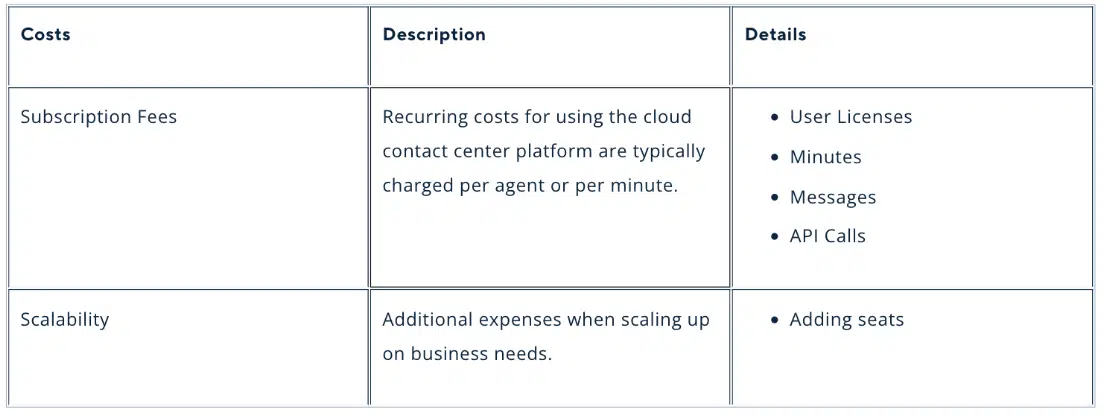
Cost Factors SMBs Should Expect Before Buying
Understanding total cost upfront helps SMBs accurately weigh spend against expected ROI. While pricing models vary, most contact center software costs fall into predictable categories that should be evaluated together.
Software Subscription and User Licensing
Most platforms price based on user count, features, or usage. SMBs should look beyond base pricing and confirm which capabilities are included at each tier to avoid paying extra for essentials later.
Onboarding, Support, and Training
Time to value depends heavily on onboarding quality. Some vendors include setup and training, while others charge separately. Understanding this upfront helps set realistic ROI timelines.
Add-Ons and Hidden Costs to Watch For
Advanced analytics, integrations, automation, or routing may be sold as add-ons. SMBs should clarify which features are required to achieve their goals and whether those costs are recurring.
How SMBs Can Measure Their Payback Period
Measuring ROI does not require complex financial models. SMBs can tie improvements in core call center KPIs directly to cost savings and recovered revenue.
Calculating Call Center Return on Investment
A simple approach is to total monthly or annual savings and compare them to software costs:
ROI (%) = (Total Savings – Software Cost) ÷ Software Cost × 100
Source of Savings | Example Metric | Financial Impact |
Shorter call times | Reduced average handle time | Lower cost per call |
Fewer missed calls | Higher answer rate | Recovered revenue |
Better staffing | Improved utilization | Delayed hiring needs |
By tracking these improvements consistently, SMBs can clearly demonstrate payback to stakeholders and make informed decisions about future investments—without needing outside analysis or complex tooling.
For a step-by-step walkthrough and real-world ROI examples, see Xima’s guide to demonstrating contact center ROI.
Competitor Example:

Choosing the Right Contact Center Software With ROI in Mind
When evaluating platforms, SMBs benefit most by prioritizing measurable outcomes over long feature lists. The right solution simplifies workflows, improves core call center KPIs, and continues delivering value as the business grows.
Key Questions SMBs Should Ask Vendors
- Which costs scale as our team or volume grows?
- What features are included versus add-ons?
- How long does onboarding typically take?
- How does your platform improve KPIs like AHT or FCR?
- Can you share SMB ROI examples?
Clear answers backed by real results help align expectations before purchase.
How to Compare Platforms on Features and Financial Impact
The most effective comparisons connect features directly to outcomes. For example, intelligent routing should translate to faster resolutions, not just better call distribution. Automation should reduce manual work, not add configuration overhead. SMBs should evaluate how each platform reduces friction for agents and managers alike, and whether those improvements clearly support cost savings or revenue retention.
Evaluating Vendors Through an ROI Lens
Ultimately, the strongest contact center investments are the ones SMBs can clearly explain to leadership. By tying software capabilities to time saved, costs avoided, and performance improvements, teams can make a compelling case for long-term value.
Evaluating vendors through an ROI lens makes it easier to justify spend, align stakeholders, and choose a platform that delivers results beyond the initial rollout. When the financial impact is clear, contact center software becomes more than a tool—it becomes a strategic investment in efficiency, experience, and sustainable growth.