
An abandoned call is more than a missed connection. It’s a failed customer experience, a lost revenue opportunity, and a clear signal that a process within your contact center is broken. As of April 2026, customer patience is at an all-time low, meaning every caller who hangs up before reaching an agent chips away at your brand’s reputation and bottom line. Guesswork won’t solve this critical issue. The key is to reduce your call center abandonment rate with a data-driven approach.
This playbook provides proven strategies for using analytics to understand exactly why customers are leaving and how to make them stay, ultimately improving first contact resolution for your call center and strengthening customer loyalty.
Why Do Customers Really Abandon Calls?
Before you can fix the problem, you must understand the frustration that causes it. A high call abandonment rate is a symptom of deeper issues in your customer journey. From the customer’s perspective, the decision to hang up often comes down to a few common and completely avoidable pain points.
Callback options are covered under queue callback.
The #1 Reason: Unacceptable Wait Times
The single biggest reason why customers abandon calls is waiting too long in a queue with no end in sight. When a customer needs help, every minute on hold feels like an eternity. Without clear communication about their place in line or an estimated wait time, they feel powerless and frustrated. Research shows customer patience often runs out in as little as two minutes [1], at which point they decide their time is better spent elsewhere. For a deeper look at this and other factors, explore these 5 Root Causes & Fixes for Abandoned Calls.
Inefficient IVR Frustration
Many customers hang up before they even reach the queue. A complicated or confusing Interactive Voice Response (IVR) menu can feel like a maze with no exit. If the options are irrelevant, the prompts are unclear, or there’s no clear path to speak with a human agent, customers will abandon the call rather than continue to struggle with a system that isn’t helping them. This initial friction sets a negative tone for the entire interaction.
The Fear of “Transfer Limbo”
Nothing erodes a customer’s confidence faster than being transferred from one agent to another and being forced to repeat their issue each time. This poor experience is a direct result of low First Contact Resolution (FCR)—the ability to solve a customer’s issue in a single interaction. When customers anticipate a long, painful journey of transfers, they are far more likely to give up early, believing the call will be a waste of their time [6].
From Symptom to Solution: Using Data to Diagnose Abandonment
Simply knowing your abandonment rate is high isn’t enough; you need to know why. Moving from observing the symptom to diagnosing the root cause requires the right data and analytics tools. This is how top-performing contact centers turn insights into action and dramatically reduce abandoned calls in the contact center.
How to Measure and Track Rates Effectively
The first step is establishing a clear baseline. Learning how to measure and track first contact resolution rates effectively, starting with the abandonment rate itself, is critical. The formula is simple:
(Total Number of Abandoned Calls / Total Number of Inbound Calls) x 100
While industry standards often cite an acceptable rate between 5-8%, top-performing organizations consistently aim for under 3% [3]. This number is only a starting point. It tells you what is happening but not why. This metric is one of the Top 5 Real-Time Metrics Every Call Center Manager Needs, but its true power is unlocked when combined with deeper analysis of your overall Customer Experience (CX)—the total perception a customer has of your brand based on all their interactions.
A word of caution: Focusing too intensely on just the abandonment rate can lead to unintended consequences. If agents are pressured to answer calls quickly just to keep the queue clear, they might rush through interactions, hurting FCR and causing those same customers to call back. The goal is to reduce abandonment by improving the experience, not by sacrificing quality.
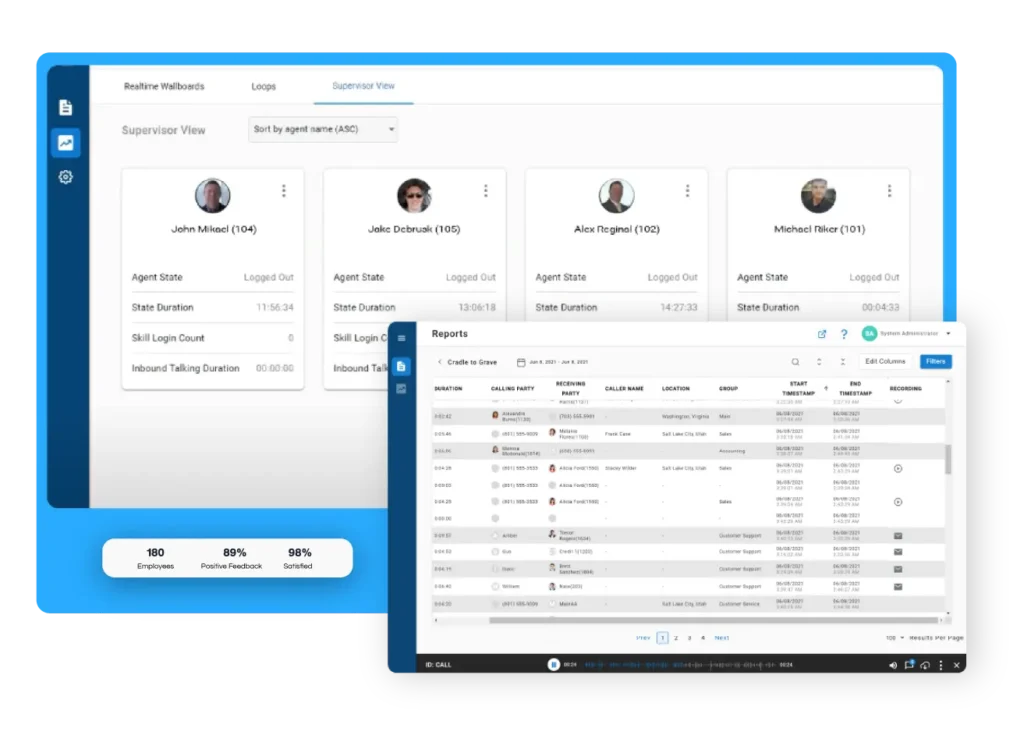
The metrics needed for this diagnosis come from Xima’s contact center reporting.
Uncovering Root Causes with AI Analytics
Modern Contact Center as a Service (CCaaS) platforms like Xima Software go beyond basic metrics. This software, delivered via the cloud as a service (SaaS), uses AI-powered contact center analytics to analyze interaction data at scale and uncover the hidden drivers of abandonment.
Pinpoint Abandonment Spikes: Analytics can reveal the exact point in a queue or IVR menu where customers are most likely to hang up by correlating abandoned calls with specific IVR nodes or queue duration thresholds.
Identify IVR Flaws: Our Contact Center Speech Analytics guide shows how AI can analyze call recordings to identify confusing prompts, dead ends, or points of high customer frustration within your IVR.
Analyze by Call Type: You can determine if abandonment rates are higher for specific departments, campaigns, or customer segments, allowing for targeted fixes.
This level of detailed insight, explained further in our Contact Center Reporting best practices guide, is essential for making informed, effective changes.
Your 2026 Playbook: Data-Driven Strategies to Reduce Abandoned Calls
Once you’ve used data to diagnose the problem, you can implement targeted strategies to fix it. Here are four data-driven tactics that stand out as ways to increase FCR rate best practices and help you reduce abandonment.
1. Offer a Queue Callback Option
Hypothesis: Providing a queue callback option directly combats the #1 cause of abandonment: long wait times.
Evidence: Instead of forcing customers to stay on hold, a callback option allows them to hang up, keep their place in line, and receive a call when an agent is free. This simple feature transforms a negative waiting experience into a positive one by respecting the customer’s time. Implementing queue callback can reduce abandonment by up to 35% [4].
The Tradeoff: The risk of a failed callback—due to a technical glitch or an incorrect number—can be even more frustrating for a customer than waiting on hold.
How Xima Helps: Xima’s scalable cloud CCaaS solution makes it easy to offer this critical feature with robust controls and reporting to ensure a seamless, reliable experience.
2. Implement Intelligent Skills-Based Routing
Hypothesis: Intelligent routing prevents “transfer limbo” by connecting customers to the right agent on the first try.
Evidence: This strategy uses data—such as the customer’s IVR selections or CRM history—to route them to the agent best equipped to handle their specific issue. This is one of the most effective first call resolution strategies for 2026 because it directly improves efficiency and customer confidence [8].
The Tradeoff: Poorly configured skill groups or inaccurate data can lead to misrouted calls, creating new bottlenecks and defeating the purpose of the strategy.
How Xima Helps: Xima’s platform ensures routing is seamless and provides real-time analytics to monitor queue performance across different skill groups, allowing you to reallocate resources before a bottleneck develops.
3. Optimize Staffing with Predictive Forecasting
Hypothesis: Proactive staffing based on predictive forecasting prevents long queues from forming in the first place.
Evidence: An AI-powered contact center uses historical data and machine learning to predict call volumes with incredible accuracy. This allows you to move from reactive staffing adjustments to a proactive, data-driven schedule that ensures you have the right number of agents ready during peak hours.
The Tradeoff: Over-reliance on historical data without accounting for new marketing campaigns or known service issues can lead to forecasting errors.
How Xima Helps: Xima’s workforce optimization tools help you create accurate forecasts and easily adjust schedules, ensuring you can cut costs without sacrificing service levels.
4. Proactively Follow Up on Abandoned Calls
Hypothesis: Proactively calling back abandoned callers can turn a negative experience into a positive one.
Evidence: Turning a negative into a positive is a hallmark of excellent call center customer service techniques. Real-time dashboards can alert supervisors the moment a call is abandoned, creating an opportunity for a quick, proactive callback. This shows a powerful commitment to resolving the issue and can rescue a customer relationship. For more practical advice, see our expert tips to reduce call abandonment.
The Tradeoff: This strategy can be resource-intensive. It’s most effective when used strategically for high-value customers or during critical service disruptions, rather than for every single abandoned call.
How Xima Helps: Xima’s real-time dashboards and cradle-to-grave reporting make it easy to identify abandoned calls and the associated customer information, enabling swift and effective follow-up.
Turn Insights into Action with Xima
Understanding and solving call abandonment requires a unified platform that connects powerful analytics with actionable tools. When you choose the right AI contact center platform like Xima Software, you get an all-in-one CCaaS solution designed to give you the visibility and control needed to transform your customer experience.
With Xima, you can:
Leverage a Unified Platform: Manage all your channels, analytics, routing, and reporting in one intuitive system.
Uncover Deep Insights with AI: Go beyond basic metrics with advanced speech and text analytics to understand the “why” behind customer behavior.
Empower Managers with Actionable Dashboards: Give your leaders the real-time visibility to identify and address service-level issues before they impact customers.
Scale and Grow Efficiently: Adapt your contact center to changing business needs with a flexible cloud solution that helps you achieve your goals.
Request a Demo to see how Xima’s powerful analytics and CCaaS platform can help you slash abandonment rates.
Conclusion
A high call abandonment rate is a clear warning sign of friction in your customer experience, but it is entirely fixable. By moving away from guesswork and embracing a data-driven mindset, you can diagnose the root causes of customer frustration and implement targeted strategies that work.
Success in 2026 hinges on your ability to use data to understand customer behavior and make strategic, technology-enabled improvements. By focusing on improving first contact resolution, optimizing wait times, and empowering your team with the right tools, you can turn abandoned calls into a thing of the past and build a foundation of lasting customer loyalty.
Get Your Demo Today and take the first step toward transforming your customer experience.