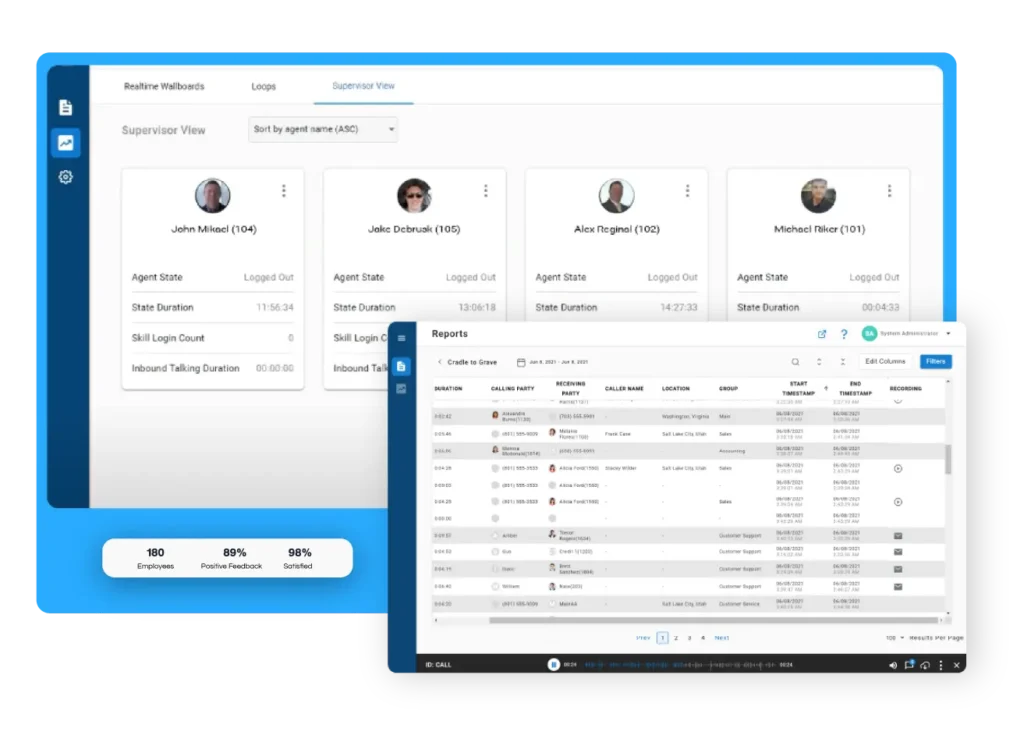

In the competitive landscape of 2026, a single customer service interaction can define a brand relationship. Today’s customers expect fast, effective solutions—not a frustrating runaround of transfers and callbacks. This is where First Call Resolution (FCR) becomes more than just a metric; it’s a strategic imperative. Full call paths are visible through cradle to grave call tracking.
FCR is the percentage of customer inquiries that are fully resolved during the first contact, with no need for a follow-up interaction. As a crucial Key Performance Indicator (KPI), a high FCR rate is a direct driver of customer satisfaction (CSAT), improved operational efficiency, and long-term business success [8]. Moving beyond simply tracking this number to actively improving it is what separates good contact centers from great ones.
This article breaks down five actionable first call resolution strategies for 2026 that will help you empower your team, delight your customers, and strengthen your bottom line.
Why Getting It Right the First Time Matters More Than Ever
Getting an issue resolved on the first try is no longer a “nice-to-have”—it’s a core expectation. A high FCR rate creates a ripple effect of positive outcomes across the entire organization:
Boosts Customer Loyalty: Resolving an issue quickly and painlessly is a powerful way to build trust. Research shows that for every 1% improvement in FCR, there’s a corresponding 1% increase in customer satisfaction [3].
Increases Operational Efficiency: When issues are resolved on the first call, agents don’t have to spend time on follow-ups or escalations. This reduces call volume, shortens wait times, and allows your team to handle more unique customer inquiries.
Lowers Operational Costs: Fewer callbacks and shorter handle times directly translate to lower costs. Improving FCR can reduce operational expenses by up to 30% [5].
Improves Agent Morale: Empowering agents to solve problems effectively reduces their stress and increases job satisfaction, which is critical for agent retention.
How Do You Accurately Measure First Call Resolution?
Before you can improve your FCR, you need to know where you stand. The first step is learning how to measure and track first contact resolution rates effectively. While the formula itself is straightforward, the key is in the details.
Routing accuracy is handled through skills-based routing.
The standard formula is:
(Total Resolved Cases on First Contact / Total Number of Cases) x 100 = FCR Rate
The most important part of this equation is defining “resolved.” Best practice dictates that a case is only resolved when the customer agrees it is resolved. An agent marking a ticket as closed doesn’t count if the customer has to call back the next day. Common ways to measure this from the customer’s perspective include:
Post-Interaction Surveys: Using a short post-call IVR, SMS, or email survey to ask a direct question like, “Was your issue fully resolved during your interaction today?”
Repeat Call Tracking: Analyzing contact center data to see if the same customer calls back about the same issue within a predefined timeframe, such as 7-14 days [1].
Technology makes this process seamless. A powerful platform like Xima’s contact center reporting and analytics software is essential for tracking FCR accurately and consistently. Xima provides managers with real-time dashboards that offer a clear, up-to-the-minute view of FCR alongside other critical metrics. This allows for immediate insight and proactive management, helping you understand not just what your FCR is, but why it is what it is. To dive deeper, explore Contact Center Reporting: Key Metrics & Best Practices.
What Are the Top 5 Best Practices for Increasing Your FCR Rate?
Improving FCR isn’t about pressuring agents to work faster; it’s about creating a supportive ecosystem where they are equipped and empowered for success. Here are the top five ways to improve First Call Resolution (FCR) in 2026.
1. Empower Agents with a Centralized Knowledge Base
Agents can’t resolve issues if they can’t find the right answers quickly. One of the primary drivers of escalations and repeat calls is scattered, outdated, or hard-to-navigate information. The solution is to create a single, reliable “source of truth” for your team.
An effective knowledge base must be:
Accurate and consistently updated.
Easily searchable with intuitive navigation.
Integrated directly into the agent’s desktop to avoid application switching.
Leading contact center platforms like Xima can integrate with knowledge management systems, putting critical information at your agents’ fingertips right when they need it.
2. Implement Data-Driven Agent Training and Coaching
One-size-fits-all training is a thing of the past. The most effective agent development programs are continuous, personalized, and informed by real performance data. By analyzing call recordings, you can identify common customer friction points, recurring questions, and agent knowledge gaps.
This data allows managers to provide targeted coaching that addresses specific needs instead of offering generic feedback. This is one of the most effective best practices to increase FCR.
Xima’s Contact Center Speech Analytics makes this level of insight possible. Our platform can transcribe and analyze 100% of calls to automatically surface coaching opportunities, measure customer sentiment, and identify emerging trends. This transforms call recordings from a compliance tool into a powerful engine for continuous improvement. To learn more, check out our blog, “Boost CX with Xima’s Contact Center Speech Analytics Guide.” Data-driven coaching is also a cornerstone of effective Call Center Quality Assurance Best Practices.
3. Leverage AI for Smart Routing and Real-Time Assistance
In 2026, Artificial Intelligence (AI) is no longer a futuristic concept—it’s a practical and powerful tool for boosting FCR. There are two key ways AI makes an immediate impact:
Intelligent Routing: Instead of just sending a customer to the next available agent, AI-powered routing analyzes a customer’s intent (based on their IVR selection or initial spoken request) and matches them with the agent who has the specific skills and experience to solve that exact problem. This dramatically reduces transfers [12].
Real-Time Agent Assist: AI can also act as a “co-pilot” for agents during a live interaction. By listening to the conversation in real time, the AI can automatically surface relevant knowledge base articles, customer history data, and step-by-step guidance.
Xima’s AI-powered solutions are designed to augment your human agents, making them faster, more accurate, and more confident in their ability to resolve issues on the first try. You can explore our complete AI-Powered Contact Centers: Xima Software’s 2026 Efficiency Playbook and see how you can Boost Agent Performance with AI Powered Cloud Software.
4. Grant Agents Greater Decision-Making Authority
A surprisingly common reason for escalations and repeat calls is that front-line agents simply lack the authority to approve a solution. When an agent has to say, “Let me get my manager to approve that,” it adds friction and time to the interaction.
Empowering agents by giving them the autonomy to make decisions within clear, pre-approved guidelines—such as issuing a small refund or waiving a shipping fee—can dramatically improve FCR. This sense of ownership not only creates a better customer experience but also builds agent confidence and engagement. When agents are well-trained and equipped with great tools, you can trust them with more responsibility.
5. Analyze and Eliminate the Root Causes of Repeat Calls
This is the most strategic practice of all. Instead of just reacting to individual repeat calls, top-performing contact centers use analytics to understand why customers are calling back in the first place. This shifts the focus from fixing calls to fixing the broken processes that cause them.
Are repeat calls clustered around a confusing billing statement? A recent marketing promotion? A broken link on your website?
By digging into this data, you can provide actionable feedback to other departments—like Product, Marketing, or Web Development—to fix the problem at its source. This requires a robust reporting tool that moves beyond surface-level metrics. Xima’s reporting and analytics empower managers to perform the deep root cause analysis needed for true, data-driven improvements. Start exploring with our guide to the Top Call Center Reporting & Analytics Software for 2026 and see how this approach is essential to Controlling Contact Center Costs.
Your Roadmap to a Higher FCR with Xima
Improving your FCR is a journey, not a destination. By bringing together people, processes, and technology, you can create a virtuous cycle of continuous improvement. Here is a clear roadmap to get you started:
Establish Your Baseline: Use Xima’s analytics to accurately measure your current FCR rate and identify the most common reasons for repeat calls.
Equip & Empower Your Team: Build a comprehensive knowledge base, implement a data-driven coaching program with Xima Speech Analytics, and grant agents the authority they need to solve problems.
Augment with Technology: Deploy Xima’s AI-powered tools to implement intelligent routing that gets customers to the right agent faster and provide real-time assistance during live calls.
Analyze & Iterate: Use Xima’s advanced reporting to monitor your progress, find the root causes of non-resolution, and continuously refine your processes.
Xima provides the end-to-end cloud contact center platform to execute this entire strategy, helping you transform your service operations into a powerful driver of customer loyalty and business growth.
Conclusion: Resolve More, Repeat Less
Improving your First Call Resolution rate is a strategic initiative that pays significant dividends. It leads to happier, more loyal customers, more confident and engaged agents, and a more efficient, cost-effective operation. Achieving a world-class FCR of 80% or higher is possible, but it requires a holistic approach that combines empowered people, streamlined processes, and intelligent technology [3].
By implementing these five best practices, you can stop the cycle of repeat calls and start building a reputation for effortless, effective customer service.
Ready to transform your customer service and boost your First Call Resolution? Request a Demo of Xima today to see these best practices in action.