
Nextiva focuses on unified communications and customer experience consolidation, bringing voice, messaging, and collaboration into a single platform. Xima also delivers unified communications and omnichannel capabilities, but with a stronger emphasis on contact center performance, operational visibility, and day-to-day oversight.
Both support growing teams. The difference comes down to how you want to manage and optimize your support operation as it matures, and how your pricing model scales alongside that growth. Let’s compare Xima vs. Nextiva in-depth so you can make the best decision for your SMB.
Key Takeaways for Small Business Support Operations Teams
- Nextiva approaches contact center functionality within a broader unified communications ecosystem that combines voice, messaging, video, and collaboration.
- Xima centers its platform around structured queue management, reporting reliability, and real-time supervisor visibility. It also offers unified communications.
- The key difference becomes whether your team prioritizes communication consolidation or operational call center control.
- Xima’s pricing is structured to avoid unnecessary bundled upgrades as teams scale.
- The right choice depends on how central inbound and outbound call handling is to daily performance and how predictably costs align with support growth.
Xima’s contact center solutions for small businesses are built for these teams.
What Happens as Volume and Complexity Increase?
As SMB support teams grow, platforms are tested in new ways. Adding agents, building more queues, and introducing formal service levels require clearer routing logic, stronger reporting, and more consistent supervisory control. We’ve broken down how Xima and Nextiva handle growth below.
Growth also introduces financial considerations. As capabilities expand, the way features are bundled and priced can influence long-term budget planning.
Nextiva’s Unified Communications Model
Nextiva approaches contact center functionality as part of a larger communications platform. Voice, messaging, and collaboration tools are tightly integrated, making it attractive for teams looking to simply consolidate vendors and centralize systems. As teams scale, however, deeper contact center capabilities may be tied to broader tier upgrades that extend beyond support-specific needs.
Contact center tools sit alongside unified communications capabilities within that environment. This structure supports consistency across internal and external communication while allowing organizations to expand within a single ecosystem.
Xima’s Structured Call Center Model
Xima’s architecture centers on call center workflows. Unified communications and omnichannel engagement are fully supported, but queue behavior, routing logic, and reporting visibility remain core to the experience.
The platform is organized around how interactions move through queues and how agents perform within them. As teams expand, pricing and functionality tend to scale in closer alignment with contact center requirements rather than across unrelated communication layers. For teams where inbound and outbound calls drive daily workload, this structure supports predictability, supervisor control, and operational clarity as complexity grows.
Include a short callout that reinforces how foundational architecture influences scalability and day-to-day manageability:
Unified communications platforms like Nextiva often prioritize bringing voice, messaging, and collaboration into a single ecosystem. Contact center-focused platforms like Xima prioritize structured queue management, routing predictability, and real-time supervisory control. As call volume grows, understanding whether your team needs communications breadth or operational oversight becomes increasingly important, both operationally and financially.
When Communication Consolidation Matters Most
For some SMBs, the primary goal is simply consolidation. As teams grow, managing separate systems for voice, messaging, video meetings, and internal collaboration can create administrative overhead and vendor sprawl. In these situations, leadership may prioritize bringing communication channels under a single provider to simplify management, billing, and user experience.
A unified communications platform like Nextiva often works well in this context. Voice, messaging, video, and collaboration tools are integrated within one ecosystem, allowing organizations to standardize how employees communicate internally and externally. This structure can be especially practical when queue complexity remains moderate, and the support function operates alongside broader business communication needs.
When Operational Call Center Control Becomes Critical
For SMBs running high call volumes each day, support operations often function with defined targets tied to response time, abandonment rates, and resolution efficiency. Performance is measured closely, and small shifts in staffing or routing can have a visible impact.
As teams expand, supervisors need clear insight into how queues are performing and how agents are handling workload throughout the day. Adjustments to routing paths, coverage, and priorities must be deliberate and easy to manage. Reporting needs to surface meaningful trends without requiring extensive configuration.
Xima’s structure is built around this level of hands-on oversight. Queue logic, agent activity, and performance reporting remain central within the platform, supporting teams that depend on structured call handling and measurable service levels. When call handling discipline and supervisory visibility shape daily outcomes, the underlying operational design of the platform carries greater weight in the decision process.
Feature Comparison: Nextiva vs Xima
One of the best ways to determine whether Nextiva or Xima is the best fit for your SMB is to compare their features side by side. Keep in mind that this comparison is designed to highlight how each platform supports daily contact center operations, not to inventory every available feature. As you review the table, focus on how routing logic, reporting clarity, and supervisor visibility will impact your team’s ability to manage growing call volume. The right fit depends on whether communication consolidation or structured call center control is the stronger priority for your support operation.
Capability | Nextiva | Xima |
Core Voice Delivery | Cloud voice delivered within a unified communications ecosystem that includes messaging and collaboration tools. | Cloud voice built specifically for structured inbound and outbound contact center operations. |
Queue Management Approach | Queue functionality integrated into broader communications tiers, designed to support voice within a larger platform. | Queue management is foundational, with routing logic designed for predictable call flow and structured team oversight. |
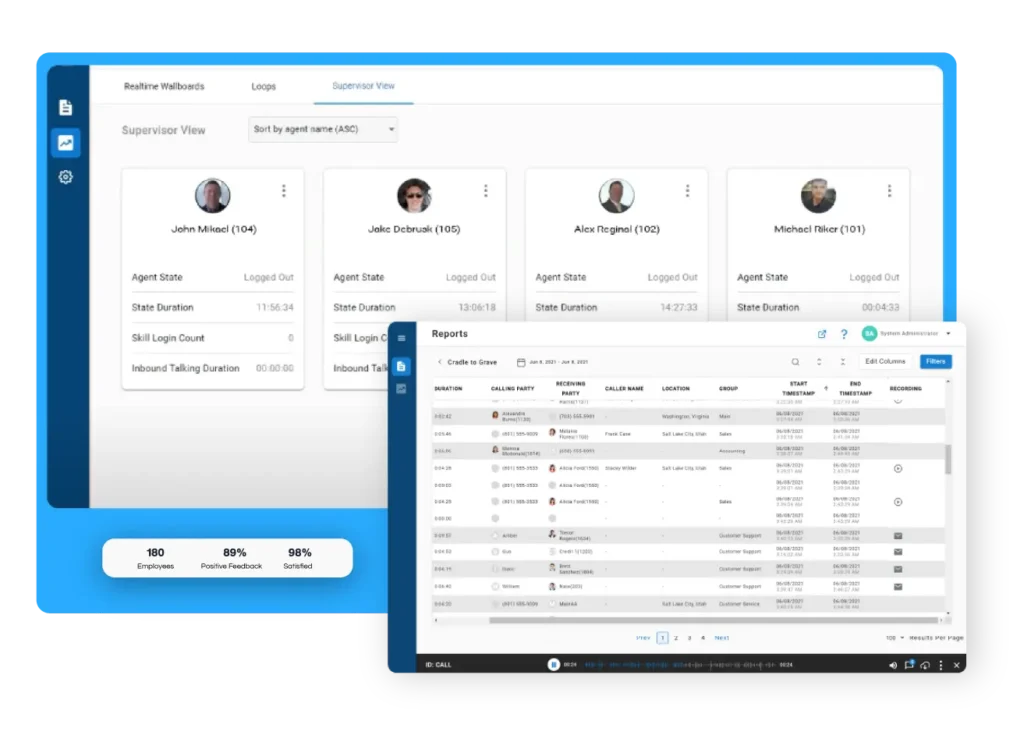
Supervisor Visibility | Supervisory tools available within the broader communications interface, with visibility tied to platform-wide analytics. | Direct, real-time visibility into queues, agent status, call handling, and performance metrics. |
Reporting & Dashboards | Reporting aligned with unified communications and CX analytics, often combining communication and support data. | Reporting centered on contact center KPIs, with real-time and historical visibility tailored to queue performance. |
Agent Workspace Focus | Unified interface combining voice, messaging, and team collaboration in one environment. | Agent workflows optimized for efficient call handling and structured queue management. |
Integration Philosophy | Broad ecosystem integrations supporting communications, CRM, and collaboration alignment. | Integrations focused on reporting accuracy, call tracking, and structured contact center workflows. |
Pricing Structure Behavior | Tiered unified communications plans with contact center capabilities layered into bundled offerings. | Pricing structured around contact center usage and operational requirements as teams scale. |
Scalability Model | Scales across communications and collaboration needs as the organization expands. | Scales around agent growth, call volume increases, and supervisory complexity within a structured contact center. |
Cost Structure and Budget Predictability
Pricing structure influences long-term planning just as much as feature depth.
Nextiva primarily uses bundled communications tiers. Voice, messaging, collaboration, and contact center capabilities are packaged together, which can simplify vendor consolidation and initial rollout. Advanced contact center functionality often sits within higher-tier plans or requires additional modules, meaning support-specific enhancements may be tied to broader communication upgrades. For organizations scaling broadly across departments, this model can align well with companywide communication growth. The tradeoff is that support-specific enhancements may be tied to broader plan upgrades.
Xima’s pricing structure is more closely aligned with contact center operations. Core queue management, reporting visibility, and supervisory tools are central to the platform rather than positioned as secondary layers within a communications bundle. As agent counts increase, costs scale more closely to support team expansion and performance requirements.
For SMBs focused primarily on contact center performance, this structure can make budgeting more predictable by tying spend directly to support operations rather than broader communications bundles.
Is Your Support Operation Built for How You’re Growing?
As call volume, agent count, and reporting expectations increase, it’s important to determine whether your platform supports structured queue management and real-time oversight, or broader communication consolidation. Review your operational needs and growth trajectory before committing to your next system.

Integration Philosophy and Ecosystem Fit
Integration strategy often reveals what a platform is designed to optimize.
Nextiva connects CRM systems, helpdesks, and collaboration tools within a unified communications ecosystem. Voice, messaging, and customer data are positioned to move across departments, supporting organizations that want sales, service, and internal teams operating inside the same communications framework. Integrations reinforce continuity across the broader business environment.
Xima also supports unified communications and integrates with CRM and helpdesk platforms, but its integration approach is structured around contact center performance. Call activity, queue data, and agent metrics are aligned with external systems in a way that prioritizes reporting accuracy and workflow consistency. The goal is not only connectivity, but operational clarity within the support environment.
Both platforms connect to common business tools. The distinction lies in emphasis: Nextiva’s ecosystem model centers on communication alignment across departments, while Xima’s integration strategy is designed to strengthen structured call workflows and performance visibility within the contact center.
Choosing the Right Model for Your Support Strategy
The right platform depends on where your organization is focusing its operations. If simply consolidating communication tools across departments is the primary objective, a unified ecosystem model like Nextiva’s may align naturally with that direction. If structured queue management, performance reporting, and supervisory visibility sit at the center of daily execution, a contact center-focused model may be a better fit.
Xima supports unified communications while keeping call center performance and oversight central to the experience, offering structured scalability without unnecessary enterprise layering. For SMBs that need clarity, control, and scalability inside their support operation, Xima provides the structure to grow confidently. Book a demo today to see how Xima can help transform your SMB call center.
FAQs
Nextiva positions contact center capabilities within a broader unified communications ecosystem, supporting companywide voice, messaging, and collaboration alignment. Xima also provides unified communications, but its architecture centers more directly on contact center performance, queue oversight, and reporting visibility.
Xima places queue behavior, routing logic, and real-time performance data at the core of the platform experience, giving supervisors direct visibility into call flow and agent activity. Nextiva supports queue management within its unified communications framework, where contact center tools operate alongside broader collaboration features.
SMBs should look beyond entry-level plans and evaluate how pricing scales with additional agents, reporting needs, and advanced features. Nextiva’s bundled tiers may align with organizations only looking to consolidate communications across departments, while Xima’s structure more closely reflects contact center growth and oversight requirements.
Queue visibility becomes more critical when daily performance depends on structured call handling, defined service levels, and active supervisory oversight. If managing wait times, agent workload, and routing precision directly affects outcomes, deeper operational visibility may carry more weight than broader communications consolidation.