
A ringing phone should be a good thing—a customer is actively reaching out to your business. But what happens when that customer hangs up before you can even say hello? That’s a call abandonment, and it’s more than just a missed call; it’s a missed opportunity, a potential crack in your customer experience (CX), and a direct threat to your bottom line.
High call abandonment rates are often a symptom of deeper issues within a contact center, such as long wait times, inefficient processes, or a lack of communication options. In 2026, customers expect quick, convenient, and personalized service. Leaving them waiting in a silent queue is a surefire way to send them to your competitors.
Fortunately, reducing your call abandonment rate is an achievable goal. By implementing a combination of smart strategies and modern technology, you can transform your caller’s experience from frustrating to fantastic.
Let’s dive into seven expert tips for effective contact center queue management that will help you reduce abandoned calls in your contact center.
1. Why do customers abandon calls? Set clear expectations.
One of the biggest drivers of frustration is uncertainty. When a customer doesn’t know how long they’ll have to wait, every minute feels longer than the last. This is a primary reason why customers abandon calls. Unexplained waits feel significantly longer than explained waits.
By providing an estimated wait time upfront, you give control back to the customer. They can decide if the wait is acceptable or if they’d prefer to try again later. Wait messaging and menu structure are configured through interactive voice response.
How to implement this:
Automated Announcements: Use your Interactive Voice Response (IVR) system to automatically announce the caller’s position in the queue or the estimated wait time.
Dynamic Updates: Modern Contact Center as a Service (CCaaS) platforms, like Xima Software, can dynamically calculate and update these wait times based on real-time agent availability and call volume. This ensures the information you provide is as accurate as possible.
Offer Alternatives: In the same message, you can offer alternative options, which leads us to our next point.
2. Offer the Convenience of a Queue Callback
Sitting on hold is a relic of the past. Today’s technology allows you to offer a much better option: a virtual queue or queue callback. This feature allows customers to hang up the phone, keep their place in line, and receive an automatic call back from an agent as soon as they are available.
This single feature can dramatically improve your customer’s experience and is a cornerstone of call abandonment reduction. It acknowledges that your customer’s time is valuable and gives them the freedom to go about their day. This is handled through Xima’s queue callback.
Benefits of Queue Callback:
Lower Abandonment Rates: Customers are far less likely to abandon their “spot” in line when they aren’t tethered to their phone.
Improved Customer Satisfaction (CSAT): Offering a callback is a powerful gesture that shows you respect your customer’s time, boosting satisfaction scores.
Smoother Call Volume: Callbacks help spread out demand, reducing the pressure of peak-hour rushes on your agents.
With a platform like Xima, implementing a queue callback feature is straightforward, allowing you to offer this essential service with minimal technical overhead.
3. Embrace an Omnichannel Service Strategy
While voice is still a critical channel, your customers are also communicating via email, web chat, SMS, and social media. An omnichannel approach doesn’t just mean having these channels available; it means integrating them into a single, seamless experience.
By diverting inquiries to different channels, you can reduce the load on your voice queues. For example, a simple status update request can be handled instantly by a chatbot, freeing up a live agent for a more complex issue.
This strategy helps you manage resources more efficiently and meet customers on their preferred platforms, which is a key part of learning how to reduce call center abandoned rates.
Xima Software’s CCaaS platform unifies all your communication channels—voice, chat, email, and more—into a single agent interface. This allows your team to handle multiple interactions efficiently and provides leadership with a holistic view of all customer conversations.
4. Empower Customers with Self-Service Options
Many customers don’t actually want to talk to an agent; they just want a fast answer. Providing robust self-service options is one of the most effective ways to deflect simple inquiries from the voice queue entirely.
In 2026, self-service goes far beyond a simple FAQ page.
Modern Self-Service Examples:
AI-Powered Chatbots & Voicebots: These bots can understand natural language to answer complex questions, process payments, track orders, or even help troubleshoot basic issues 24/7. AI voice agents can offer instant scalability and are always available, which is something human agents can’t match.
Interactive IVR: Design your IVR to resolve issues, not just route calls. Allow customers to check account balances, confirm appointments, or make payments without ever needing an agent.
Customer Portals: A secure online portal where customers can manage their accounts, view history, and find information is an invaluable resource.
By investing in self-service, you not only reduce abandoned calls but also empower your agents to focus on high-value interactions that require a human touch. Explore how you can maximize CX with an AI-powered contact center to see these tools in action.
5. Optimize Call Routing with Intelligent Workflows
Misdirected calls are a major source of frustration and a key reason for call abandonment. Being transferred multiple times forces the customer to repeat their issue, wastes time, and erodes their confidence in your brand.
Instead of relying on basic overflow teams, use intelligent call routing to get the customer to the right person on the first try.
How to Route Calls Intelligently:
Skill-Based Routing: Route calls based on agent skills, language proficiency, or product knowledge. Xima’s platform allows you to assign skills to agents and build routing rules that match callers to the agent best equipped to help them.
Time-Based Routing: Automatically direct calls to different teams or locations based on the time of day or during peak volume periods.
Data-Directed Routing: Use data from your CRM to route high-value customers to a dedicated team or callers with an open support ticket directly to the agent handling their case.
This level of precision ensures faster resolutions and a smoother customer journey, which is crucial for meeting SLA compliance in demanding industries.
6. Make the Wait Time Productive
If a wait is unavoidable, you can still use that time effectively. Rather than playing repetitive hold music, engage the caller with productive tasks or useful information.
This not only makes the wait feel shorter but also streamlines the conversation once the agent connects, reducing the overall Average Handle Time (AHT).
Ideas for a Productive Wait:
Pre-Authentication: Use the IVR to have the customer enter their account number, date of birth, or ticket number. This information can be passed directly to the agent’s screen for a faster start to the conversation.
Information Gathering: Prompt the caller to have key information ready, such as an order number or product model.
Helpful Tips & Updates: Share short, relevant tips or company announcements that might answer their question before the agent even connects.
7. Proactively Follow Up on Abandoned Calls
Even with the best strategies, some calls will still be abandoned. The difference between a good and a great contact center is what you do next. Proactively redialing abandoned numbers shows customers that you value their business and are committed to resolving their issues. Tracking KPIs like abandonment rate is crucial for identifying these opportunities.
How to Manage Abandoned Call Follow-Ups:
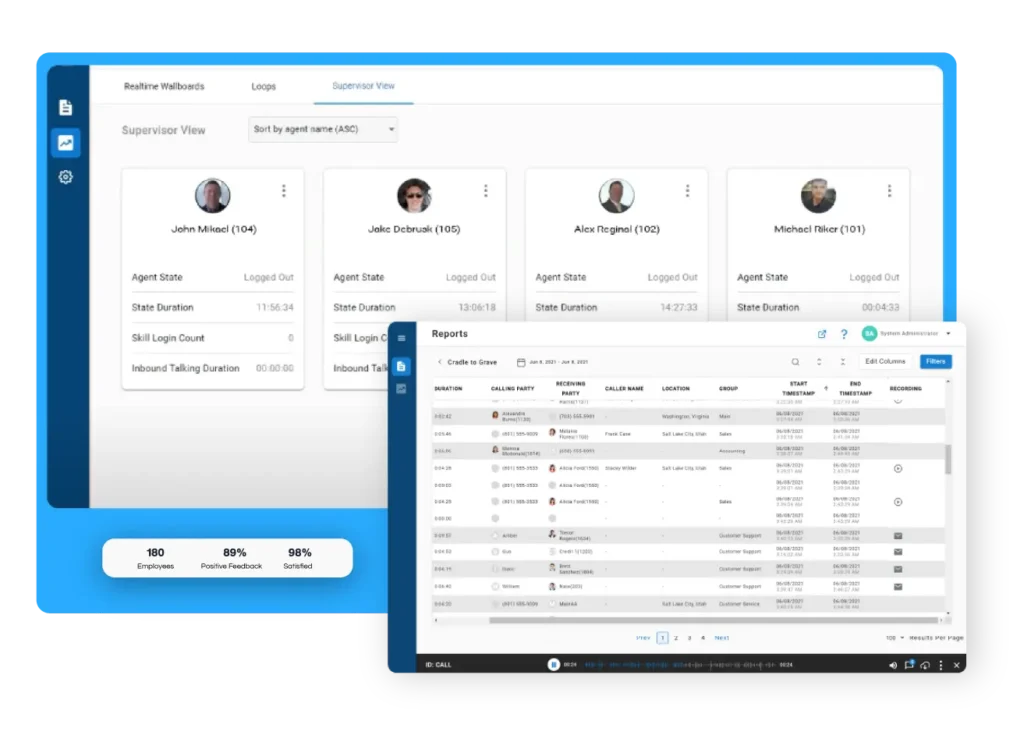
Use Real-Time Dashboards: Monitor your abandonment rate throughout the day. Xima’s real-time dashboards provide immediate visibility into key metrics, including the number of abandoned calls. You can even see this data broken down with reports like the Queued Call Volume report.
Create a Follow-Up Queue: Use your CCaaS system to automatically create a list or queue of abandoned numbers.
Schedule Callbacks: During slower periods, assign agents to work through this list. This turns a negative experience into a positive, proactive one and keeps your team productive during lulls.
This practice is one of the most powerful ways to recover potentially lost customers and gather feedback on why they hung up in the first place. For more on tracking this, see the top 5 real-time metrics every manager needs.
Turn Abandoned Calls into Opportunities with Xima
Reducing call abandonment isn’t about a single fix; it’s about building a customer-centric operation from the ground up. It requires a strategic combination of thoughtful processes and powerful technology. The tips above offer a clear roadmap, but their success hinges on having a flexible and intelligent contact center platform.
Xima Software provides a scalable contact center software solution designed for the demands of 2026. Our AI-powered CCaaS platform gives you all the tools you need—from intelligent routing and queue callback to omnichannel support and real-time analytics—to reduce abandonment, boost agent efficiency, and drive measurable ROI.
Stop letting customers slip away. See how Xima can help you build a better caller experience.