
Is your on-premise contact center holding your business back? For many organizations, legacy systems have become a source of frustration. They are often expensive to maintain, difficult to scale, and simply cannot provide the flexible, seamless experiences that customers in April 2026 demand. They become a barrier to growth and to delivering an excellent Customer Experience (CX)—the overall perception a customer forms of your brand through all their interactions.
If this sounds familiar, you’re in the right place. Moving to the cloud is no longer just a technical upgrade; it’s a strategic business decision that unlocks new levels of efficiency, enhances customer loyalty, and future-proofs your operations. This guide provides a clear, four-phase plan to help you move your contact center from on premise to the cloud with confidence and precision.
Why Is Moving to the Cloud a Strategic Imperative?
The limitations of on-premise systems—built around physical hardware like PBX systems and servers—have become increasingly apparent in our digital-first world. They often require significant upfront capital expenditure, dedicated IT staff for maintenance, and costly, disruptive upgrades. In contrast, cloud solutions offer unparalleled agility.
Modern customers expect to connect with you on their preferred channel—be it voice, email, chat, or social media—and receive consistent, high-quality service. A cloud-based Contact Center as a Service (CCaaS) platform, which operates on a flexible subscription software model, is built from the ground up to meet these demands. The advantages are clear and compelling.
Reduced Costs: Eliminate spending on physical hardware, ongoing maintenance contracts, and complex upgrade cycles. A predictable subscription model simplifies budgeting and lowers your total cost of ownership (TCO).
Enhanced Scalability: Instantly scale your agent licenses up or down to match seasonal demand or business growth. There’s no need to purchase and install new hardware, giving you ultimate operational flexibility.
Improved Customer Experience (CX): Deliver the seamless service customers expect with a true enterprise omnichannel platform. Unify all communication channels so agents have a complete, contextualized view of every customer journey.
Greater Flexibility & Reliability: Empower your agents to work effectively from anywhere with an internet connection. Top CCaaS providers offer enterprise-grade security and dependable uptime, ensuring business continuity.
Access to Innovation: Instantly benefit from the latest advancements in contact center technology. Features like AI-powered analytics, intelligent routing, and speech analytics are continuously updated and available without requiring manual intervention from your IT team.
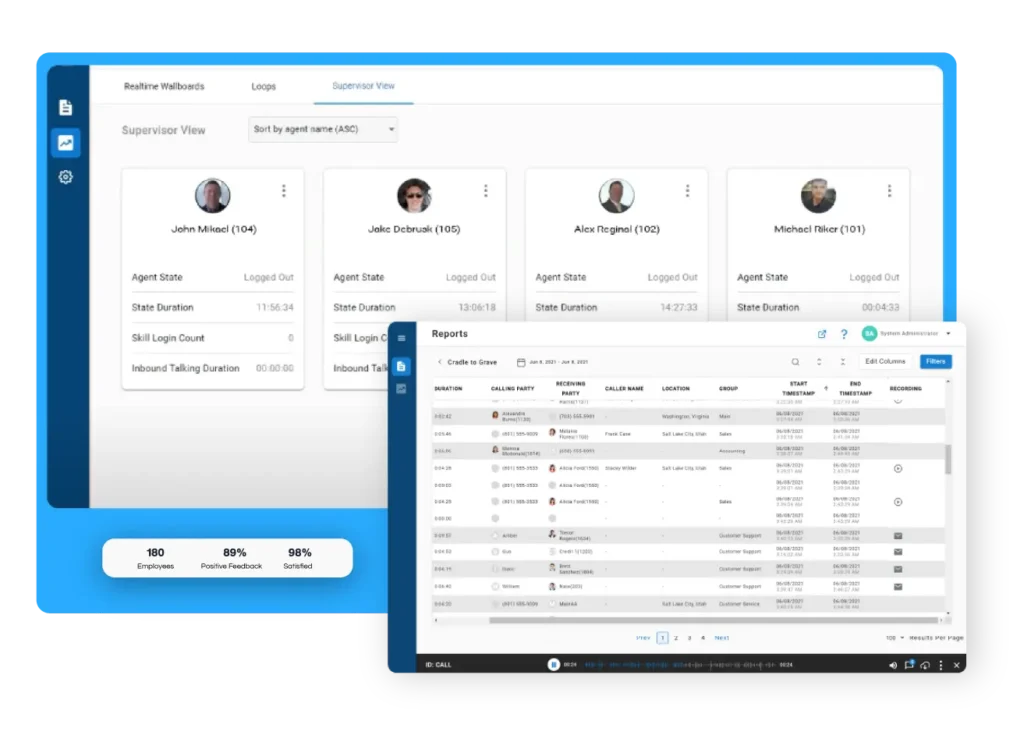
Data-Driven Decisions: Centralize all your contact center data in one platform. Powerful analytics dashboards from providers like Xima turn raw numbers into actionable insights, helping you understand performance and customer behavior like never before.
To dive deeper into these fundamental differences, explore our complete comparison of on-premise vs. cloud contact centers.
Phase 1: Assess and Plan Your Cloud Migration Strategy
A successful move to the cloud begins long before you select a vendor. Careful preparation is the most critical phase of any cloud contact center migration strategy, as it minimizes risks and sets your project up for success. Taking the time to build a solid blueprint for your migration will pay dividends throughout the process. Xima’s cloud contact center software is the destination platform for this plan.
Audit Your Current Environment
Before you can map out your future state, you need a deep, technical understanding of your present one. A thorough audit is the essential first step.
Document Infrastructure: Catalog all existing hardware (PBX systems, Automatic Call Distributors (ACDs), servers), software licenses, and network configurations.
Identify Integrations: Map all connections to other business systems, especially your Customer Relationship Management (CRM), helpdesk, or ERP software.
Analyze Costs: Calculate your current TCO, including maintenance contracts, licensing fees, telephony costs, and IT staff hours spent supporting the system.
Map Workflows: Interview agents and supervisors to uncover daily pain points, document existing call routing logic and IVR scripts, and identify feature gaps in your current setup.
Define Your Goals and Success Metrics
Why are you migrating? Your goals must be specific, measurable, and tied to tangible business outcomes. This is crucial for proving the return on investment (ROI) of your project.
Business Outcomes: What do you want to achieve? Examples include “reduce operational costs by 20% within the first year” or “improve our CSAT (Customer Satisfaction) score by 15 points in six months.”
Key Performance Indicators (KPIs): Define the metrics you will use to measure success. Common contact center KPIs include:
Average Handle Time (AHT): The average duration of a single customer transaction, from initiation to post-call work.
First Contact Resolution (FCR): The percentage of incoming service requests that are resolved in a single interaction.
Net Promoter Score (NPS): A metric measuring customer loyalty and willingness to recommend your brand.
Project Timeline: Set clear and realistic timelines for each phase of your migration project.
Assemble Your Migration Team and Budget
A cloud migration is a team sport that requires buy-in and participation from across the organization.
Your Team: Identify key stakeholders from IT, operations, finance, and customer service to form a dedicated project team. Designate a project manager to own the initiative and drive it forward.
Your Budget: Account for all potential costs, including the new platform’s subscription fees, one-time data migration expenses, professional services for complex integrations, and the cost of employee time for training.
Phase 2: Choose the Right Cloud Contact Center Partner
With your plan in place, it’s time to find a partner who can help you achieve your goals. The right CCaaS partner offers more than just software; they provide expertise, support, and a platform designed to empower your contact center without burdening your IT team.
Key Platform Features to Prioritize
Look for a platform that solves your current challenges while providing the tools you need for future growth.
True Omnichannel Capabilities: The platform must provide a single, unified agent interface to manage voice, email, web chat, SMS, and social media interactions seamlessly.
Robust Reporting and Analytics: Demand customizable, real-time dashboards and deep historical reporting. The ability to generate actionable insights into agent performance, queue metrics, and the customer journey is non-negotiable.
AI-Powered Tools: Features like intelligent IVRs, AI-driven sentiment analysis, and real-time agent-assist tools are essential for boosting efficiency and elevating CX.
Scalability and Ease of Use: The platform must have an intuitive interface that is easy for agents and supervisors to learn. Adding or removing users should take minutes, not weeks.
Integration-Friendly Platform: The provider should offer pre-built integrations for popular CRMs and business tools, along with a robust and open API for any custom connections you might need.
How to Evaluate Potential Vendors
Be diligent in your evaluation process to ensure you find a true partner, not just a vendor.
Ask detailed questions about their security architecture, compliance certifications (HIPAA, PCI, GDPR), uptime guarantees (SLAs), and global voice quality.
Always request a live demo that is tailored to your specific business needs and use cases. A generic presentation will not give you the insights you need to make an informed decision.
Check independent customer reviews and ask for case studies or references from businesses in your industry.
Thoroughly understand the provider’s onboarding process and what training resources are included. At Xima, we pride ourselves on a proven framework that ensures a smooth and efficient onboarding experience.
See how Xima stacks up. Request a Demo today.
Phase 3: Execute the Technical Migration
With a partner selected, you can begin the technical implementation. This phase is about methodical execution, not speed. A well-planned migration minimizes disruption to your operations. To avoid common pitfalls, review these migration do’s and don’ts.
Data Migration and System Integration
This step involves moving valuable historical data and connecting the new CCaaS platform to your existing technology stack.
Work closely with your chosen partner to create a plan for migrating essential data, such as customer profiles, historical interaction transcripts, and call recordings.
Prioritize and configure key integrations, especially with your CRM, to create a unified agent desktop. This prevents agents from having to switch between multiple applications, saving time and reducing errors [4].
Conduct a Pilot Test
Never attempt a “big bang” cutover where everyone moves to the new system at once. A pilot test is a crucial step to de-risk your launch.
Select a small, representative group of tech-savvy agents and supervisors to test the new system in a live, but controlled, environment.
Use this phase to validate complex call flows, test integration points under real-world load, and confirm the accuracy of reports.
Gather detailed feedback from the pilot group to refine configurations and training materials before the full launch.
Train Your Entire Team
Your new technology is only as good as the people using it. Comprehensive training is non-negotiable for successful adoption.
Provide dedicated, role-based training sessions for agents and supervisors. Focus on the “why” behind the change and how the new workflows and features will benefit them directly.
Create quick-reference guides, video tutorials, and a knowledge base to offer ongoing support as the team adapts.
Highlight how the new system will make their jobs easier, reduce tedious tasks, and empower them to deliver superior customer service.
Phase 4: Go Live and Optimize for Long-Term Success
The migration project doesn’t end when you flip the switch. The real value of a cloud platform is unlocked through continuous monitoring and optimization, transforming your contact center into a strategic asset.
Manage the Full Rollout
Based on the learnings from your pilot test, you can now manage the final cutover for the entire organization.
Decide on a rollout strategy. A phased approach—moving teams or departments over one by one—is often safer than a full cutover on a single day.
Ensure your internal IT team and your new partner’s support team are on high alert during the transition to address any issues immediately.
Communicate clearly and frequently with the entire team about the go-live schedule and what to expect.
Monitor Performance and Continuously Improve
Your new cloud platform is a treasure trove of data. Use it to drive constant improvement.
Closely monitor the KPIs you defined in the planning phase. Use your new real-time analytics dashboard to track progress against your goals.
Regularly solicit feedback from both agents and customers. Use tools like post-call surveys and speech analytics to understand their experience with the new system.
Leverage the data-driven improvements offered by platforms like Xima to refine call routing strategies, update IVR menus, and optimize agent schedules. This is the path to long-term business success and a consistently excellent customer experience.
Your Path to a Modern Contact Center
Migrating your contact center to the cloud is a transformative journey. While it may seem complex, breaking it down into four distinct phases—plan, choose, execute, and optimize—makes the path clear and manageable. This journey moves your contact center from a reactive cost center to a strategic driver of growth, efficiency, and outstanding customer experience.
Ready to start your migration journey? Get Your Demo of Xima Today and let us show you the path to a modern, efficient, and intelligent contact center.