
Switching contact center systems feels risky. The implementation. The training. The “what if something goes wrong” scenarios that keep decision-makers up at night. It can be tempting to stick with what you know, even when what you know is frustrating, expensive, and holding you back.
But here’s what those fears miss: staying with a broken system is also risky. And for a lot of contact centers, the risk of not changing turned out to be way bigger than the risk of switching.
Let’s look at two real examples of organizations that made the jump. Not because switching was easy, but because staying put was costing them too much.
1. Suburban Propane: 668 Locations With No Centralized Visibility
Suburban Propane operates across 41 states with 668 locations and more than 1.1 million customers. That kind of scale brings complexity. And for years, that complexity was creating major blind spots.
Each location was essentially operating independently. There was no centralized way to see what was happening across the network. Call data stayed local. Reports were fragmented. Supervisors had no way to compare performance between locations or spot trends that crossed regional lines.
When issues came up (long wait times at one location, abandoned calls spiking at another), management found out after the fact, sometimes days later. By then, customers were already frustrated and the damage was done.
The lack of centralized reporting also made quality assurance nearly impossible. Trying to review calls across 668 locations? Forget it. Training programs couldn’t leverage best practices from high-performing locations because nobody could see what was actually working where.
Their old system technically functioned. Calls got answered. But it wasn’t built for the scale and centralization they needed. The pain wasn’t dramatic enough to create immediate panic, but it was constant. And it was holding them back from operating as one unified organization instead of 668 separate islands.
When Suburban Propane switched to Xima, the transformation was immediate. Chronicall was deployed at each location with a centralized repository server in the cloud. Suddenly, leadership could see everything.
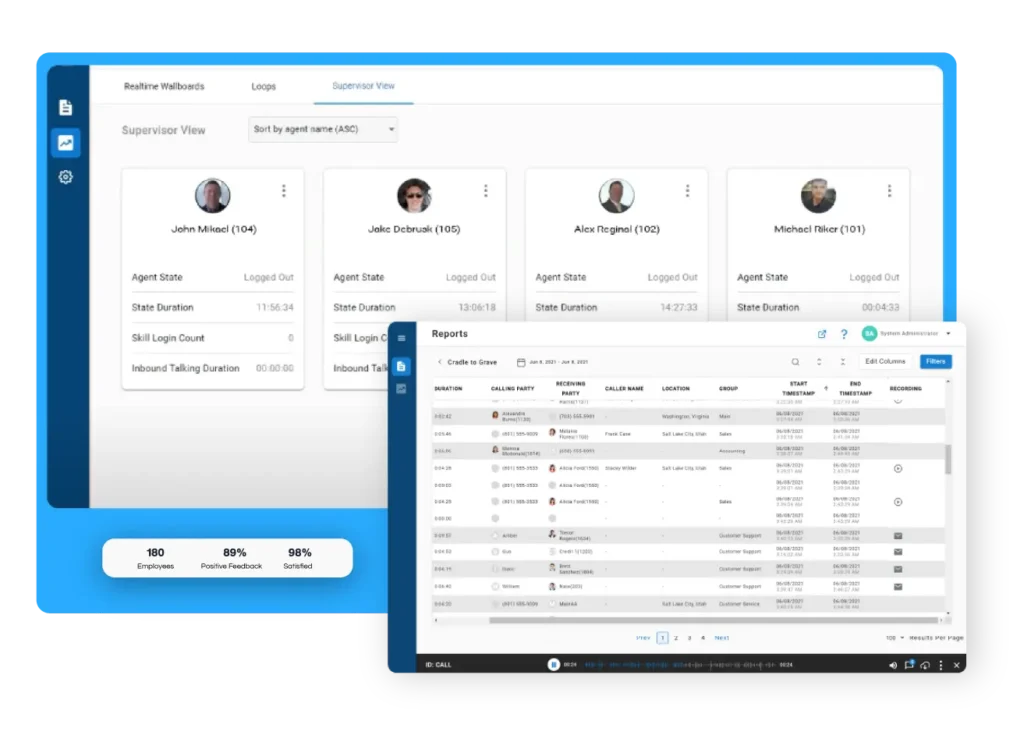
Standard reports gave them the ability to report on each location individually and all locations collectively. They could spot patterns, identify high-performers, catch problems early. Using the Recording Library, they could play back recorded calls from any location and review them for quality assurance. Custom reports let them drill down into the exact call data their business needed.
The result? Suburban Propane now operates with the centralized visibility and control that a 668-location operation actually requires. They’re not reacting to problems days after they happen. They’re catching them as they develop and learning from what works across their entire network.
What they learned: scale without visibility is chaos. You can’t manage what you can’t see. The switch gave them control they didn’t have before, and that control translated directly into better operations and better customer service across all 41 states.Both moved to Xima’s cloud contact center software.
2. Privia Medical Group: Healthcare That Couldn’t Keep Up With Patient Expectations
Privia Medical Group is a physician-led, multi-specialty medical group focused on putting the patient-provider relationship at the heart of healthcare. But their contact center technology wasn’t living up to that mission.
Patients were struggling to reach the right person. Calls weren’t being routed intelligently, which meant longer wait times, more transfers, and frustrated patients who just wanted to schedule an appointment or talk to someone about their care. For a healthcare organization, that’s not just annoying. It undermines trust.
Privia’s leadership knew they needed better tools to deliver the customer experience their patients deserved. Their old system wasn’t giving them the real-time insights they needed to manage call flow effectively. Supervisors were flying blind. When call volume spiked, they found out too late to respond effectively.
And in healthcare, where patient access directly impacts outcomes and satisfaction, those delays have real consequences. Patients who can’t get through to schedule preventive care end up in emergency rooms later. Patients who can’t reach their care liaison get frustrated and leave the practice. Xima’s contact center software for healthcare covers requirements like these.
Privia needed technology that could actually support their mission of nurturing the patient-provider relationship. That meant smarter routing, better analytics, and tools that helped their team deliver excellent service instead of fighting against outdated systems.
When Privia switched to Xima’s CCaaS platform, they implemented intelligent call routing with both historical and real-time analytics. Patients could now reach care liaisons through multiple channels (phone, chat, online), and the system routed them to the right person based on their specific needs.
The intelligent routing meant fewer transfers, shorter wait times, and patients getting help from someone who could actually address their specific situation. The real-time analytics gave supervisors visibility into what was happening right now, not yesterday. If volume spiked during flu season or after hours, they could respond immediately instead of discovering the backlog the next morning.
As Michelle Spence, COO of Privia Medical Group, put it: “Privia needs to leverage the best technology available in the marketplace to provide the customer experience our clients expect. By implementing Xima CCaaS and leveraging the intelligent call routing with historical and real-time analytics, Privia is equipped to deliver on our promise to our customers.”
The result? Better patient access. Reduced friction in getting help. Care liaisons who aren’t overwhelmed by poorly routed calls. And a contact center that actually supports Privia’s mission instead of undermining it.
What they learned: in healthcare, access is everything. When patients can’t reach you easily, your clinical excellence doesn’t matter because they’re not staying with your practice. The technology isn’t just about efficiency. It’s about delivering on the promise of patient-centered care.
The Pattern
Two different industries. Two different pain points. But the same underlying story: they both stayed with broken systems longer than they should have because switching felt risky.
What they found on the other side was that the real risk was staying put. Suburban Propane was operating 668 locations without the visibility needed to manage them effectively. Privia Medical was trying to deliver excellent patient care with technology that made patient access unnecessarily difficult.
Switching wasn’t painless. But it wasn’t the disaster they feared either. Implementations went smoother than expected. Training happened faster than planned. And the benefits showed up quickly, not after months of adjustment.
The organizations that switched aren’t glad they did it because they love change. They’re glad because their contact centers actually work now. Problems get caught before they spiral. Customers and patients get helped faster. Staff have tools that don’t make their jobs harder than they need to be.
What Keeps People Stuck
If you’re reading this and thinking “yeah, but our situation is different,” you’re probably right. Every organization has unique complications. But the reasons for not switching usually aren’t unique at all.
Timing never feels perfect. Budgets are always tight. Stakeholder buy-in is always a challenge. The implementation always sounds harder than it probably is.
But those reasons don’t go away. Next year, timing still won’t feel perfect. Budgets will still be tight. And your contact center will still be frustrating customers, burning through agents, and costing you more than it should.
Suburban Propane and Privia Medical didn’t wait for perfect conditions. They recognized that the cost of waiting was higher than the cost of acting. And now they’re on the other side, wondering why they didn’t do it sooner.
You could wait another year. Or you could be a year ahead of where you are now.