
Not every implementation looks the same, though. Some organizations use conversational AI to improve customer self-service, while others rely on it to assist agents, streamline workflows, or surface insights that improve contact center performance. Looking at real-world conversational AI examples is one of the best ways to understand where it delivers the most value and what to consider when evaluating solutions for your business.
Key Takeaways
- Unlike rule-based bots, conversational AI uses natural language processing to understand intent, hold more natural conversations, and increasingly complete multi-step tasks through agentic AI capabilities.
- Conversational AI creates valuable operational data. Customer transcripts, intent, sentiment, and interaction trends become actionable insights when paired with a robust analytics platform.
- The most successful enterprise use cases solve specific business problems. Organizations like Bank of America, Klarna, Moveworks, and ServiceNow focus on targeted, measurable workflows instead of trying to automate every customer interaction.
- Integration matters as much as AI capabilities. Organizations using Cisco, Mitel, or Avaya should evaluate how well a solution fits into existing systems and how easily it makes conversational data available for reporting and analysis.
- Roll out conversational AI in phases. Begin with a well-defined use case, monitor performance through clear success metrics, refine the workflow, and expand to additional queues or departments as the solution proves its value.
What is conversational AI? How it differs from rule-based chatbots and generative AI
Conversational AI is technology that allows computers to understand, process, and naturally respond to human language. It combines natural language processing (NLP), natural language understanding (NLU), and natural language generation (NLG) to recognize customer intent, interpret context, and generate relevant responses across voice and digital channels.
Unlike traditional chatbots, conversational AI isn’t limited to scripted decision trees or predefined responses. It can adapt to different ways people ask questions, carry context across multiple exchanges, and guide conversations toward the right outcome. That flexibility makes it well suited for customer service, employee support, intelligent routing, and other enterprise workflows.
Conversational AI also differs from generative AI. Generative AI tools excel at creating content and answering open-ended questions, while conversational AI is designed to power interactive experiences that connect with enterprise systems and business processes. Many modern conversational AI platforms use generative AI capabilities, but the technologies are not interchangeable.
Agentic AI takes conversational AI a step further. Instead of just answering questions, it completes multi-step tasks on a user’s behalf. In a contact center, that could include authenticating a customer, updating account information, routing the interaction to the appropriate queue, and summarizing the conversation after the call ends.
Type | Understands context? | Maintenance effort | Typical use case |
Rule-based chatbot | No. Follows fixed decision trees. | High. Every conversation path must be manually scripted. | FAQs, basic menu navigation |
Generative AI | Yes, within a single conversation or project. | Low, though enterprise deployments require appropriate data grounding. | Content creation, research, answering open-ended questions |
Conversational AI | Yes, across multiple turns and channels. | Moderate. Learns and operates using enterprise data and workflows. | Customer self-service, intent recognition, intelligent routing |
Agentic AI | Yes, plus multi-step task execution. | Moderate to high, depending on workflow complexity. | Completing end-to-end tasks such as processing requests or resolving service issues |
Popular conversational AI examples in 2026
Conversational AI is already part of many people’s daily lives. Consumer tools have helped familiarize users with AI-powered conversations, making it easier for enterprises to adopt similar technology in customer service, employee support, and contact center operations. Here are a few of the most widely recognized everyday conversational AI examples:
- ChatGPT and Google Gemini: These general-purpose AI assistants help users research topics, draft content, answer questions, brainstorm ideas, and complete a wide range of language-based tasks. Their conversational interfaces demonstrate how AI can understand context and generate natural responses across many subjects.
- Amazon Alexa and Google Assistant: Voice-first assistants designed for everyday convenience. They can answer questions, set reminders, control smart home devices, play music, and perform simple tasks using spoken commands.
- Apple Siri: Apple’s built-in voice assistant helps users send messages, place calls, set alarms, manage calendars, navigate with maps, and perform quick searches across Apple devices using natural language.
While these tools showcase the flexibility of conversational AI, enterprise deployments are built with different goals in mind. Organizations typically use conversational AI to automate specific workflows, improve operational efficiency, and support employees or customers through well-defined business processes. Those focused use cases are where conversational AI delivers measurable business value.
Top enterprise conversational AI examples and use cases
Consumer AI tools demonstrate what’s possible, but enterprise conversational AI is built to solve specific business challenges. The most successful deployments focus on targeted workflows that improve efficiency, reduce manual work, and deliver measurable results. In highly regulated industries, they also depend on strong governance, security, and compliance practices that ensure AI supports existing processes without compromising sensitive data.
Company/Tool | Industry | Primary use case | Key outcome |
Bank of America Erica | Banking | Account support and proactive alerts | More customer inquiries resolved through self-service |
Klarna AI assistant | Retail and ecommerce | Customer support | Faster resolutions and reduced ticket volume |
Moveworks | Internal IT and HR | Employee self-service | Fewer routine support tickets and faster issue resolution |
ServiceNow Now Assist | Internal IT and HR | Ticket triage and workflow automation | Faster routing and more efficient case resolution |
Bank of America Erica
Bank of America’s virtual financial assistant, Erica, helps customers complete everyday banking tasks through natural conversation. Customers can check balances, review transactions, receive proactive account alerts, and get answers to common banking questions without waiting for a live representative. Handling millions of customer interactions each year allows Erica to improve self-service while freeing agents to focus on more complex requests.
Klarna AI assistant
Klarna uses conversational AI to automate a significant portion of its customer support operations. The AI assistant helps customers track orders, manage returns, answer account questions, and resolve common issues through natural conversations. Automating these high-volume interactions has helped Klarna reduce ticket volume and deliver faster support at scale.
Moveworks
Moveworks brings conversational AI to internal IT and HR teams. Employees can ask questions, reset passwords, request software access, or find company information through a conversational interface instead of submitting traditional support tickets. Faster self-service helps reduce routine requests while allowing support teams to focus on higher-value work.
ServiceNow Now Assist
ServiceNow Now Assist uses generative and conversational AI to improve IT service management. It assists with ticket triage, summarizes cases, recommends next steps, and helps route requests to the appropriate teams. Automating these repetitive tasks helps organizations resolve issues more efficiently while improving the employee support experience.
Conversational AI in contact centers: real-world scenarios
Enterprise organizations are already using conversational AI to automate targeted workflows and improve service delivery. In contact centers, those same capabilities can support every stage of the customer journey, helping teams route calls more intelligently, assist agents in real time, and capture richer operational data.
Some of the most common conversational AI examples for contact centers include:
- Inbound call routing: Conversational AI can identify a customer’s intent, verify basic information, and route the interaction to the most appropriate agent or queue. Better routing reduces transfers, minimizes wait times, and helps customers reach the right resource faster.
- Real-time agent assist: During live conversations, conversational AI can surface relevant knowledge base articles, recommend next steps, or suggest responses based on the customer’s questions. Giving agents immediate access to helpful information can reduce average handle time while improving consistency.
- Automatic call summarization: Instead of manually documenting every interaction, AI can generate call summaries, identify the reason for contact, and apply consistent tags after each conversation. Cleaner data improves reporting accuracy and reduces after-call work.
- Quality assurance and compliance monitoring: Conversational AI can analyze conversations for required disclosures, policy violations, or high-risk language while calls are taking place. Supervisors gain faster visibility into potential compliance issues instead of waiting for post-call reviews.
Each of these use cases generates valuable operational data that extends beyond the individual interaction. Customer intent, conversation trends, agent performance, and compliance insights become easier to measure, helping contact center leaders identify opportunities to improve service and efficiency over time.
Why conversational AI needs analytics to be useful
Conversational AI can automate interactions, assist agents, and generate detailed conversation data. Analytics helps organizations use AI to surface insights from that data, giving teams the information they need to make better operational decisions.
Every customer interaction reveals why customers are calling, how agents respond, where conversations break down, and how customers feel throughout the interaction. AI can capture transcripts, identify intent, detect sentiment, and summarize conversations, but organizations still need a way to organize and interpret that information at scale.
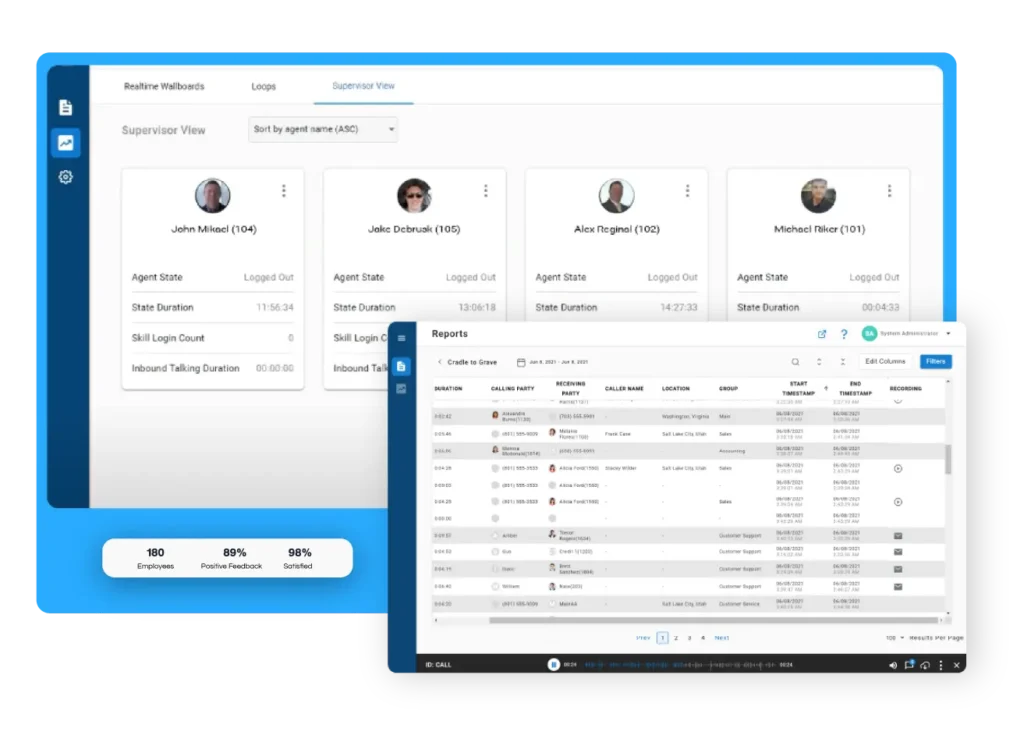
A robust analytics platform makes that possible by bringing AI-generated data into dashboards and reports that supervisors can use. Teams can identify emerging call drivers, monitor recurring customer issues, track agent performance, and uncover coaching opportunities without manually reviewing individual conversations.
Real-time visibility is equally important. Supervisors who can monitor conversations as they happen are better equipped to respond to developing issues, support agents during complex interactions, and address potential compliance concerns before they escalate.
Evaluating conversational AI for Cisco, Mitel, and Avaya environments
For contact centers using Cisco, Mitel, or Avaya, consider the following when deciding which conversational AI platform best meets your needs:
- Evaluate integration capabilities. Look for solutions that integrate natively with your existing environment. Native integrations typically simplify deployment, reduce reliance on custom middleware, and allow data to move more seamlessly across systems.
- Confirm reporting depth. Dashboards can provide a high-level view of performance, but supervisors should also have access to call transcripts, intent data, sentiment analysis, and other conversation details that support coaching and operational improvements.
- Review governance and security. Understand where conversational data is stored, what security certifications the vendor maintains, and how the platform supports your organization’s compliance requirements.
- Validate performance under real-world conditions. Product demonstrations often showcase ideal scenarios. Ask vendors how their solution performs under actual call volumes, including response accuracy, latency, and reliability during peak demand.
- Define success metrics before expanding. Establish clear performance goals early, then use reporting and analytics to measure outcomes as conversational AI is introduced to additional queues or departments.
Getting started with conversational AI: rolling out one queue at a time
Successful conversational AI implementations start with a clear plan. Instead of introducing AI across every team at once, focus on a single department or high-volume queue where repetitive interactions create the greatest opportunity for improvement. This phased approach makes it easier to measure performance, refine workflows, and build confidence before expanding to additional use cases.
As conversational AI is introduced, establish success metrics early and monitor progress through real-time reporting and analytics. Involve supervisors and agents throughout the rollout to identify opportunities for improvement and ensure AI supports existing workflows rather than disrupting them.
Ready to see how conversational AI and analytics work together? Request a demo today to learn how Xima helps contact centers gain greater visibility into every customer interaction.

FAQs About Conversational AI
Bank of America’s Erica and Klarna’s AI assistant are two well-known examples of conversational AI in customer service. These solutions help customers complete routine tasks, answer common questions, and resolve issues through natural conversations, allowing human agents to focus on more complex requests.
Conversational AI can understand customer intent, maintain context, and adapt to natural conversations, while traditional chatbots rely on predefined rules and scripted decision trees. That flexibility makes conversational AI better suited for complex customer interactions and enterprise workflows.
Yes, ChatGPT is a conversational AI tool, but it serves a different purpose than most enterprise conversational AI platforms. ChatGPT is a general-purpose assistant designed for tasks like research, writing, and answering questions, while enterprise solutions are built to support specific business workflows and integrate with existing systems.
Contact centers use conversational AI to automate inbound call routing, provide real-time agent assistance, generate call summaries, and support quality assurance and compliance monitoring. These capabilities help improve efficiency while giving supervisors greater visibility into customer interactions and team performance.
Look for a solution that integrates with your existing telephony platform, provides access to detailed reporting and conversation data, and meets your organization’s security and compliance requirements. It’s also important to evaluate how the platform performs under real call volumes and how success will be measured as you expand adoption across your contact center.