
For contact center managers and business leaders, the directive for 2026 is clear: deliver an exceptional customer experience (CX) while reining in expenses. The pressure to reduce contact center operating costs has never been more intense. Many organizations resort to reactive measures like cutting staff or limiting service hours, but these short-term fixes often backfire, causing customer satisfaction to plummet and agent attrition to rise.
Fortunately, sustainable cost savings and a superior CX are not mutually exclusive. The solution lies not in cutting corners, but in strategic technology adoption and intelligent operational optimization. In this guide, we will explore how you can achieve significant savings with proven strategies and affordable contact center solutions, positioning your operations for long-term success.
Why Are Contact Center Operating Costs Soaring?
If your budget feels increasingly stretched, you are not alone. Several industry-wide factors are driving up the cost of running a modern contact center.
High Agent Attrition: The financial impact of agent turnover is staggering. Costs go beyond recruiting and training; they include lost productivity during ramp-up, diminished team morale, and the increased workload on remaining agents, which can lead to burnout and a vicious cycle of attrition.
Demand for Omnichannel Support: Customers expect seamless support across voice, email, chat, and social media. Managing these channels with siloed systems creates massive inefficiencies. Agents waste valuable time context-switching and searching for customer history, which inflates handle times and leads to frustrating, repetitive interactions for the customer.
Increasingly Complex Customer Issues: As self-service tools and AI automate simple, Tier-1 queries, live agents are left with more complex, time-consuming, and emotionally charged interactions. These Tier-2 and Tier-3 issues demand higher-skilled agents and more time to resolve, increasing the cost per interaction.
Outdated On-Premise Technology: Legacy contact center systems are often burdened by technical debt. They are rigid, expensive to maintain, and lack the API-first architecture needed for modern integrations. This model requires significant capital expenditure (CAPEX) for upgrades, whereas modern SaaS (Software-as-a-Service) platforms operate on a predictable, subscription-based operational expenditure (OPEX) model, offering continuous updates and lower overhead.
How Can You Strategically Reduce Costs Without Sacrificing CX?
Let’s dive into the most effective ways to lower expenses while simultaneously boosting performance and customer satisfaction. The path forward is about working smarter with the right strategies and technology. Xima’s contact center solutions for small businesses are sized for tighter budgets.
Strategy 1: Optimize Agent Workflows and Performance
Your agents are your most valuable asset and typically your largest expense. Empowering them to be more efficient is the most direct way to control costs. This means providing tools that automate manual tasks and enhance their effectiveness during live interactions.
Reduce Key Handling Metrics: A modern CCaaS platform provides tools to directly reduce Average Handle Time (AHT)—the total time an agent spends on an interaction—and After-Call Work (ACW), the manual wrap-up tasks post-interaction. For example, AI-powered features can provide automated post-call summaries that populate CRM fields, drastically cutting the time agents spend on manual data entry[2].
Improve First Call Resolution (FCR): FCR measures the percentage of customer issues resolved in a single interaction. A high FCR is critical for cost savings, as it eliminates expensive follow-up calls. Technology improves FCR by ensuring calls are routed correctly the first time and by giving agents instant access to a unified customer history.
Provide In-the-Moment Coaching: The industry has seen a massive 144% year-over-year jump in the use of AI for live agent coaching[1]. This proactive support, including sentiment analysis alerts and on-screen compliance scripts, helps agents de-escalate issues and adhere to protocols without needing a supervisor’s direct intervention.
Strategy 2: Leverage Smart Automation and AI
Not every customer interaction requires a live agent. By automating routine inquiries with intelligent systems, you can free your team to focus on the complex, high-value conversations that require a human touch.
Modern AI has evolved far beyond frustrating, dead-end chatbots. Today’s virtual agents are sophisticated resolution engines capable of end-to-end resolution. This means the AI uses API integrations to orchestrate complex, multi-step workflows across different enterprise systems—like billing, CRM, or shipping—to resolve an issue entirely within a single automated interaction[3].
This strategy delivers proven financial results. Philippine Airlines successfully deployed AI to manage customer inquiries, reducing average wait times to under one minute and achieving substantial cost savings[5]. This approach aligns with a broader trend where SaaS companies use AI to reduce costs and scale their operations more efficiently[11].
Strategy 3: Choose the Right Budget-Friendly Contact Center Software
Your technology platform is the foundation of your cost-saving strategy. A truly budget-friendly contact center software isn’t just about a low initial price; it’s about delivering maximum value and long-term ROI. Current cost structures are outlined on Xima pricing.
When evaluating platforms, look beyond the initial quote and consider the Total Cost of Ownership (TCO). Key technical criteria include:
Licensing Model: Does the vendor offer a flexible concurrent licensing model (paying only for simultaneous users) versus a more costly named-seat model?
Integration Capabilities: Does it have a robust API and pre-built integrations to connect seamlessly with your CRM and other business tools?
Security & Compliance: Does the platform adhere to critical standards like SOC 2 or HIPAA compliance?
For a detailed guide on this process, explore how to choose the best contact center software for small businesses.
How Xima Delivers Affordable, High-Impact Solutions
Now that we’ve covered the strategies, let’s look at how a concrete solution puts them into practice. Xima Software provides a powerful, all-in-one CCaaS platform designed to deliver enterprise-grade functionality at an affordable price point. The platform is built to directly address the cost-saving strategies we’ve discussed.
Here’s how Xima helps you reduce contact center operating costs:
Intelligent Skills-Based Routing: Instead of random queuing, Xima’s platform uses call-specific data—such as IVR selections or CRM-integrated customer history—to route interactions to the agent pool with the precise skill set, language proficiency, or product knowledge required. This dramatically improves FCR, reduces frustrating call transfers, and lowers overall handle times.
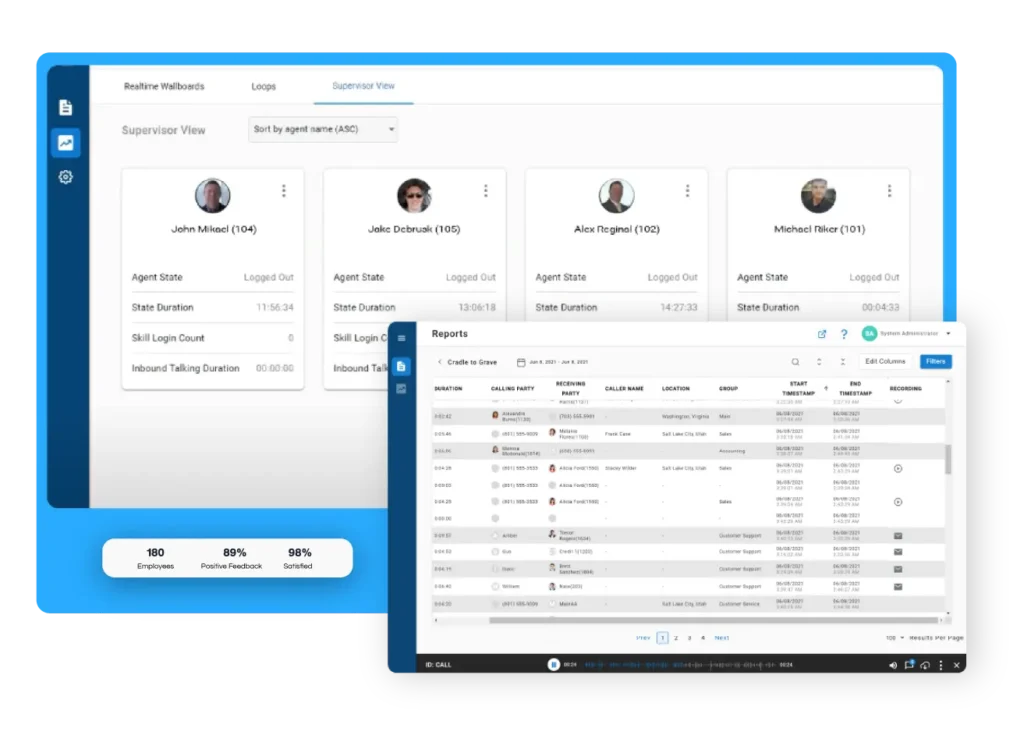
Real-Time Analytics and Wallboards: With Xima, managers can monitor crucial KPIs on live dashboards, including Average Speed of Answer (ASA), Abandonment Rate, agent status, and Service Level Agreements (SLAs). This allows supervisors to identify bottlenecks and provide data-driven coaching precisely when it’s needed, boosting team efficiency on the fly.
Comprehensive Call Reporting: Xima’s historical reporting provides deep, actionable insights. Features like Cradle-to-Grave reports trace the entire lifecycle of an interaction, empowering you to optimize staffing schedules, identify training opportunities, and make informed decisions that directly impact your budget.
An Affordable, Scalable Platform: Xima is designed to grow with your business. Its flexible concurrent licensing model ensures you only pay for what you use, making it an ideal budget-friendly contact center software. As one healthcare client noted, “This is one of the best systems we’ve worked with—even compared to more expensive platforms.”
Ready to see these features in action? Request a Demo to learn how Xima can fit your budget.
Gearing Up for 2026: The Role of AI in Future-Proofing Your Contact Center
Looking ahead, artificial intelligence will become even more integral to contact center operations. The future is not about replacing human agents but augmenting them—creating a powerful “co-pilot” synergy between human expertise and AI efficiency. This “intelligence layer” provides agents with real-time transcription, automated summaries, sentiment analysis, and relevant knowledge base articles mid-conversation[4].
By investing in an AI-powered, analytics-driven platform like Xima today, you are not just cutting costs for this year—you are building a resilient, future-proof foundation for sustained success.
Your Path to an Efficient and Affordable Contact Center
Rising operational costs don’t have to force a compromise on service quality. By focusing on strategic optimization—improving KPIs like FCR and AHT through enhanced agent workflows, leveraging API-driven automation, and choosing the right technology partner—you can build a more efficient and resilient contact center.
Xima delivers the tools you need to achieve these goals in one affordable, scalable, and user-friendly package. You can gain control over your budget while simultaneously improving the key metrics that drive customer loyalty and long-term business growth.
Stop letting rising expenses dictate your customer experience. Take control with a solution built for efficiency and growth. Get Your Free Demo Today!