
Xima and 8×8 both offer cloud-based contact center solutions designed to improve efficiency and customer experience. Each platform brings its own strengths, features, and approach to performance visibility and team management. Understanding those differences is key to finding the best contact center platform for your business.
Let’s take a closer look at Xima vs. 8×8 for SMBs.
Key Takeaways for SMB Support Teams
- SMBs often compare Xima and 8×8 when replacing fragmented phone and messaging systems.
- 8×8 delivers contact center functionality within its unified communications platform, similar in scope to Xima’s UC capabilities, but structured differently in how reporting and oversight are surfaced.
- Xima prioritizes queue structure, reporting reliability, and supervisor visibility.
- Enterprise-style unified platforms can introduce tiered pricing that exceeds immediate needs.
- The decision often comes down to whether communication consolidation or operational control is more important.
- The right choice depends on how central call handling is to daily performance.
How 8×8 and Xima Approach Small Business Contact Centers
Xima and 8×8 were built for different priorities. One leans toward a broad communications ecosystem designed to connect entire organizations, while the other centers its design around the realities of contact center performance and visibility. This impacts how calls are routed, how agents stay on track, and how managers see what’s happening in real time.
8×8’s Unified Communications Model
8×8 brings voice, video, messaging, and contact center capabilities together in a single platform. This unified communications model is designed to support cross-departmental collaboration, making it easier for teams to stay connected without relying on multiple vendors or tools.
Within this structure, contact center functionality exists alongside broader communication features. Teams can manage customer interactions while also using the same system for internal messaging and meetings. This approach can work well for organizations looking to standardize communication across the business and reduce platform sprawl.
Xima’s Contact Center-Focused Design
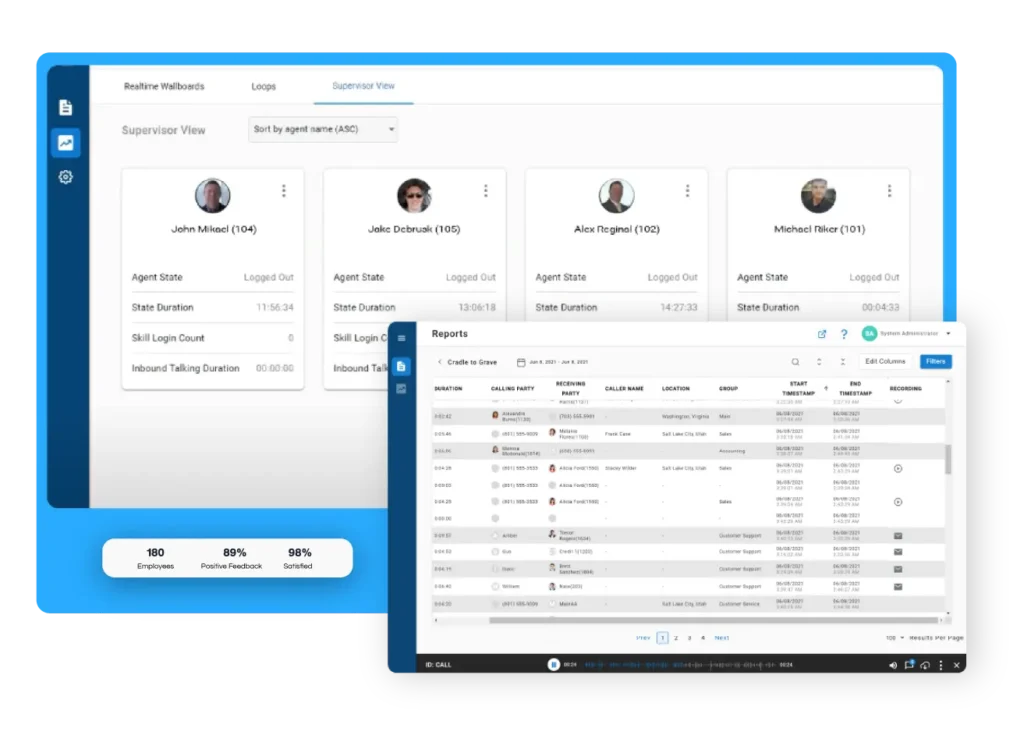
Although Xima offers unified communications, it’s built around the core functions of a contact center, with an emphasis on how calls move through the system and how teams respond in real time. Its structure prioritizes queue management, routing logic, and clear reporting, giving managers direct visibility into performance as it happens.
This design supports environments where handling inbound and outbound calls is central to daily operations. Agents and supervisors can rely on consistent workflows, while leadership gains a clearer understanding of volume, wait times, and team activity without navigating unrelated communication tools.
The result is a system that feels predictable and manageable, especially as call volume increases and operational demands grow.
Where Unified Communications Consolidation Makes Sense
For some SMBs, the priority is not just handling customer interactions but also simplifying how teams communicate internally. Managing multiple tools for voice, messaging, video meetings, and support can create friction, especially as teams grow and workflows become more complex.
In these scenarios, consolidating communications into a single platform can help create a more consistent experience across departments. Sales, support, and operations teams can stay aligned using the same system, which can make handoffs smoother and internal collaboration more accessible.
This approach often fits organizations where communication breadth carries equal weight to support structure. Teams that frequently shift between internal conversations and customer interactions may benefit from having everything in one place, even if contact center functionality operates within a broader ecosystem.
As you evaluate SMB contact center options, consider what matters more for your team’s day-to-day workflow: streamlined internal communication across the business, or a system designed specifically around structured queue management and support visibility.
For Call-Centric Support Environments
If your SMB’s customer support is built around voice, performance depends on how efficiently calls move through defined queues and how clearly teams can see what is happening at any given moment. Day-to-day operations are shaped by service levels, wait times, and agent availability, all of which require consistent oversight.
Teams working in call-centric environments often rely on structured queue management to keep workflows predictable. Calls are routed based on clear logic, agents are assigned with intention, and supervisors monitor activity as it unfolds. Small shifts in volume or staffing can have immediate impacts, so visibility into those changes becomes essential.
Real-time dashboards play a central role in this type of operation. Supervisors use live data to understand queue buildup, identify bottlenecks, and make quick adjustments to maintain performance. Historical reporting supports longer-term decisions, but it is the moment-to-moment visibility that keeps service levels on track throughout the day.
This structure supports teams that need consistency and control in how they manage customer interactions. When voice drives the workload, having a clear view of queues and performance metrics helps reduce uncertainty and keeps operations running smoothly as demand fluctuates. Xima offers these capabilities and more.
Growing Beyond Fragmented Communication Tools
Many small businesses start with a mix of basic tools to handle calls, messages, and internal communication. Early on, this can feel flexible and cost-effective. As teams grow and customer demand increases, those same tools can create gaps in how work is managed and tracked.
An increase in agent count often brings new expectations around reporting, accountability, and performance visibility. Leaders need a clearer view of queue activity, response times, and workload distribution across the team. Systems built primarily for broad communication can support these needs, but they may require additional configuration, oversight, or workarounds to establish structure for support operations.
Layering more communication tools into the stack can help fill immediate gaps, but it can also introduce complexity into the day-to-day workflow. Teams may spend more time navigating between systems, reconciling data, or manually tracking performance instead of focusing on customer interactions.
Xima is built around structured queue management, which creates a more consistent operational rhythm. Calls follow defined paths, reporting aligns with how work is actually handled, and supervisors can rely on clear visibility without piecing together information from multiple sources.
Operational Comparison: 8×8 vs Xima
Below is a quick overview of how Xima and 8×8 compare to help guide your decision.
Operational Area | 8×8 | Xima |
Core Focus | Unified communications plus contact center | Structured contact center operations |
Queue Control | Integrated within broader ecosystem | Foundational routing and oversight |
Reporting Visibility | Combined communications analytics | Call center KPI-focused dashboards |
Supervisor Oversight | Platform-wide visibility tools | Real-time visibility into queues, agent status, and call performance with a reporting-first design |
Integration Strategy | Broad UCaaS and CRM ecosystem | 300+ CRM integrations and open APIs |
Pricing | Tiered unified plans with feature bundles tied to higher levels | Contact center-aligned pricing designed to scale predictably with team growth |
Scalability Pattern | Expands across channels | Expands around call volume and team size |
The differences above reflect how each platform is structured and how that structure shapes daily operations. Unified communications platforms tend to layer contact center capabilities into a broader ecosystem, while contact center-focused systems prioritize queue logic and reporting visibility from the start. As teams grow, those structural differences can directly affect manageability, supervisor oversight, and how easily performance can be tracked and improved.
Costs as Unified Communications Platforms Scale
Unified communications platforms like 8×8 often package contact center capabilities into higher-tier plans. As teams grow and require more advanced routing, reporting, or management tools, access to those features can come with increased per-user costs tied to broader platform upgrades. In practice, this can mean paying for a wider set of communication features even if the primary need remains structured call handling.
As small businesses add agents and refine their workflows, these pricing structures can become more noticeable in day-to-day budgeting. The cost is not only tied to headcount but also to the scope of features included in each tier, which may extend beyond what support teams actively use.
Pricing models built around contact center operations, such as Xima’s, tend to follow a different path. Costs align more directly with queue management, reporting visibility, and agent activity, allowing teams to scale the parts of the system that impact daily support performance without adopting additional modules that are not essential to their workflow.
When evaluating long-term costs, it helps to look beyond initial access to features and consider how pricing will evolve alongside your operations. The goal is not just to find a platform that fits today, but one that continues to align with how your team works as it grows.
Managing an All-in-One Communications Suite vs a Focused Contact Center Platform
Platform design directly affects how much time and effort go into setup and ongoing management. All-in-one communications suites like 8×8 support a wide range of use cases, which often means navigating layered feature sets during implementation. As teams expand usage across voice, messaging, video, and support, administrative responsibilities can grow alongside those capabilities.
This added breadth can introduce more decisions around configuration, permissions, and feature access. Over time, managing the platform may involve balancing multiple communication needs across departments while also maintaining contact center performance. Subscription costs can follow a similar pattern, increasing as more features and users are brought into the system.
Because Xima is designed specifically around contact center workflows, it takes a more focused approach. Configuration centers on queue structure, routing logic, and reporting, allowing teams to align the system more closely with how support operations run each day. Administrative effort tends to scale with operational complexity rather than expanding across unrelated communication layers.
This difference shapes how manageable the platform feels over time. Teams can spend less energy navigating broad feature sets and more time maintaining clear, predictable support workflows as demand grows.
Ecosystem Consolidation vs Contact Center Workflow Alignment
Both 8×8 and Xima support integrations with unified communications tools and CRM systems, enabling teams to connect customer data, communication channels, and daily workflows. The difference comes down to how each platform is architected and what it prioritizes at its core.
8×8 is built to bring communications and contact center functionality into a single ecosystem. Voice, messaging, meetings, and support tools are integrated into a single environment, enabling organizations to centralize how teams connect internally and externally. This structure can help create consistency across departments, especially for businesses aiming to streamline communication on a single platform.
Xima is centered around contact center operations. Reporting clarity and structured queue workflows are not secondary layers but core elements of the system. The platform focuses on how calls are handled, how performance is tracked, and how managers maintain visibility throughout the day.
Both approaches support integration and connectivity. The distinction lies in what the platform is built around, which ultimately shapes how teams experience day-to-day operations and how easily they can align the system with their priorities.
Platform architecture plays a major role in how manageable daily support operations feel over time.
As volume increases, the way your system is structured can either simplify oversight or add layers of complexity.

Choosing Between Vendor Consolidation and Operational Control
Selecting the right SMB call center solution often comes down to how your team defines its day-to-day priorities. Some organizations value the simplicity of consolidating vendors, bringing internal communication and customer interactions into a single system that supports multiple departments at once. Others place more weight on how effectively they can manage call flow, monitor performance, and maintain control over structured support operations.
A useful starting point is to look at how central voice is to your support model. Teams that rely heavily on inbound and outbound calling, manage multiple queues, or track service levels closely may need a system like Xima that reflects that complexity in a clear and predictable way. As queue structures become more layered, visibility and control tend to play a larger role in maintaining consistency.
On the other hand, teams with lighter queue demands or a broader mix of communication channels may find value in a more consolidated platform like 8×8, where internal collaboration and customer engagement live within the same environment.
The Right Platform for Your Support Strategy
When deciding between Xima and 8×8, consider how your contact center operates today and how you expect it to evolve. A solution aligned with your daily workflows makes it easier to manage demand, support your agents, and maintain consistent service levels without added friction.
If your team relies on voice as a core channel and needs greater visibility into call center performance, Xima offers a focused approach designed around how support teams actually work. Book a demo today to see how Xima can transform your SMB call center.
FAQs
8×8 is an all-in-one communications platform that includes contact center capabilities alongside voice, messaging, and video. Xima is designed specifically around contact center operations, with a focus on queue management, real-time reporting, and performance visibility.
Unified communications platforms bring multiple communication channels into one system for company-wide use. A contact center-first platform is structured around handling customer interactions. It focuses on call routing, queue management, and operational visibility.
It depends on operational priorities. Teams focused on internal collaboration and tool consolidation may prefer 8×8’s unified communications model. Teams managing increasing call volume, structured queues, and performance tracking often benefit from Xima’s contact center-focused approach.
8×8 typically bundles contact center features into higher-tier plans, which can increase costs as more functionality is needed. Xima’s pricing aligns more directly with contact center capabilities, allowing teams to scale reporting and queue management without expanding into broader communication features they may not need.
SMBs should evaluate how central voice support is to their operations, how complex their queue structures are, and how much visibility they need into performance. It’s important to balance the convenience of consolidation with the need for structured workflows and manageable day-to-day operations.