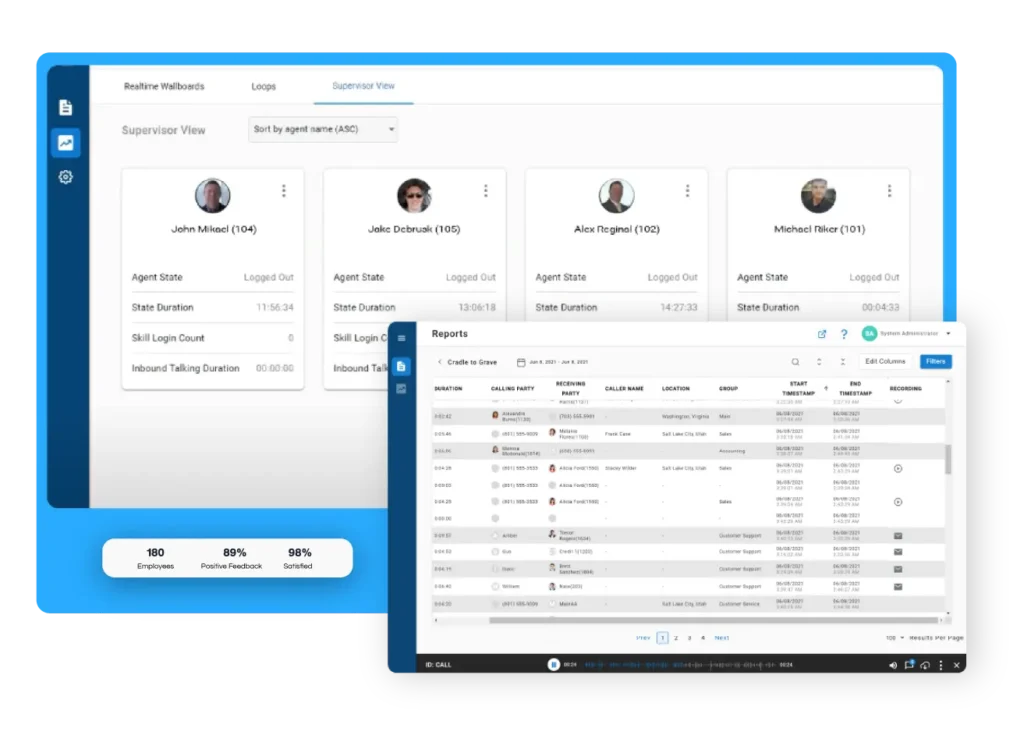

Somewhere in your contact center today, an agent is wrapping up a call. Maybe the customer left satisfied. Maybe they didn’t. Without speech analytics, you won’t know which — or why.
Speech analytics changes that. It converts recorded conversations into measurable data about customer sentiment, agent performance, and service trends. For contact center managers who need visibility beyond random call sampling, it’s the difference between guessing and knowing.
Xima Software builds speech analytics directly into its contact center platform, giving you AI-powered insights without enterprise-level complexity. This guide explains how speech analytics works, what it reveals, and how to apply it in your operation.
Key Takeaways: What Is Speech Analytics in Contact Centers
- Speech analytics converts call recordings into text and then extracts sentiment, keywords, and performance patterns from those conversations.
- Contact centers use speech analytics to automate quality assurance, moving from 1-3% call sampling to reviewing 100% of interactions.
- Xima Software’s AI-powered speech analytics scores every call automatically, giving supervisors actionable data without manual review.
- Sentiment analysis identifies frustrated or satisfied customers in real time, allowing agents and supervisors to respond before issues escalate.
- Speech analytics helps you spot recurring problems, training gaps, and compliance risks by analyzing patterns across thousands of calls.
What Is Speech Analytics and How Does It Work?
Speech analytics is software that transcribes recorded phone calls into text and then analyzes that text for patterns. The analysis identifies keywords, phrases, sentiment, and conversation dynamics that would take hours to detect manually.
Xima’s speech analytics performs this analysis.
Here’s the basic process: A customer calls your contact center. The system records the interaction. Speech analytics software transcribes the audio into text using speech-to-text processing. Then algorithms scan the transcript for specific words, emotional cues, and conversational patterns.
The output is structured data you can measure: How many calls mentioned a competitor? What percentage of customers expressed frustration? Which agents consistently hit compliance checkpoints? These answers emerge automatically from conversations that would otherwise sit unreviewed in storage.
How Does Speech Analytics Turn Calls Into Actionable Data?
Raw call recordings are information, not insight. Speech analytics bridges that gap through three core capabilities: transcription, categorization, and scoring.
Transcription: Converting Voice to Text
Speech-to-text engines transcribe spoken words into searchable text. Modern engines handle accents, background noise, and overlapping speech with increasing accuracy. Once transcribed, every call becomes a document you can search, filter, and analyze at scale.
Categorization: Sorting Calls by Topic and Intent
After transcription, the software categorizes calls based on keywords and phrases. Did the customer mention a billing dispute? A product defect? A competitor’s name? Categorization lets you pull reports on specific topics without listening to every call yourself.
Scoring: Measuring Quality and Compliance
Speech analytics assigns scores to calls based on criteria you define. Did the agent greet the customer properly? Confirm their identity? Avoid prohibited language? Automated scoring turns subjective quality reviews into consistent, measurable benchmarks.
What Are the Key Benefits of Speech Analytics for Contact Centers?
Speech analytics addresses operational blind spots that manual processes cannot reach. Here are the measurable outcomes contact center managers report.
100% Call Coverage for Quality Assurance
Manual QA typically reviews 1-5% of calls. That leaves 95%+ of customer interactions invisible. With speech analytics, every call gets scored. You stop hoping your sample represents reality and start knowing exactly what’s happening across your entire operation.
Faster Identification of Training Gaps
When multiple agents miss the same compliance checkpoint or struggle with the same objection, speech analytics surfaces that pattern. Instead of discovering problems through customer complaints or audit findings, you catch them while they’re still coachable.
Real-Time Sentiment Analysis
Advanced speech analytics identifies customer emotion as it happens. Frustrated tone, negative keywords, and escalation signals trigger alerts. Supervisors can intervene during the call rather than learning about a problem days later in a survey response.
Data-Driven Performance Coaching
Speech analytics gives supervisors specific call examples to use in coaching sessions. Rather than telling an agent to “be more empathetic,” you can play back a call where empathy was missing and another where it was present. Concrete examples drive faster improvement.
How Do Contact Centers Use Speech Analytics for Quality Assurance?
Traditional QA relies on supervisors manually reviewing a handful of calls per agent per month. That approach has two problems: coverage and timing.
Coverage is the math problem. If your contact center handles 1,200 calls a day and your supervisors can review 50, you’re working with a 4% sample. The other 96% is assumption.
Timing is the feedback problem. By the time a supervisor reviews a call from two weeks ago, the agent has handled hundreds more interactions. The coaching moment is gone.
Xima Software solves both problems with AI-powered Auto QA. Every call gets scored automatically against your quality criteria. Supervisors see results immediately. Instead of sampling, you’re monitoring. Instead of delayed feedback, you’re coaching in context.
What Should You Look for in a Speech Analytics Solution?
Not every speech analytics tool fits every contact center. Here’s what matters for small and mid-sized operations.
Accuracy Across Your Call Types
Test transcription accuracy with your actual calls. Industry jargon, regional accents, and technical terms trip up generic engines. Ask vendors to demonstrate accuracy on recordings from your environment, not polished demo samples.
Integration With Your Existing Systems
Speech analytics data becomes more valuable when it connects to your CRM, workforce management, and reporting tools. Look for native integrations rather than middleware that adds complexity and cost.
Usability for Non-Technical Staff
Your supervisors need to pull reports and build scorecards without submitting IT tickets. Choose a platform that puts analytics in the hands of the people who use them daily. Xima’s reporting dashboards are built for contact center managers, not data scientists.
Scalability Without Surprise Costs
Understand how pricing scales with call volume. Some platforms charge per minute of transcription, which compounds quickly in high-volume environments. Ask for transparent pricing that matches your operational reality.
In Conclusion: Why Speech Analytics Matters for Your Contact Center
Speech analytics turns voice data into visibility. It shows you what customers feel, what agents do, and where your operation needs attention — across every call, not just the ones you happen to sample.
For contact center managers who want to move from reactive to proactive, speech analytics is the foundation. Xima Software delivers speech analytics as part of a complete contact center platform, with AI-powered QA, real-time sentiment analysis, and cradle-to-grave reporting built in.
The question isn’t whether you need visibility into your customer conversations. The question is how long you’re willing to operate without it.
FAQs About Speech Analytics in Contact Centers
What is the difference between speech analytics and call recording?
Call recording captures audio. Speech analytics analyzes that audio. Recording gives you raw material. Speech analytics gives you structured data — transcripts, sentiment scores, keyword flags, and performance metrics you can act on.
How does speech analytics detect customer sentiment?
Speech analytics identifies sentiment through word choice, tone patterns, and conversation dynamics. Negative keywords, raised vocal pitch, and interruptions signal frustration. Xima Software’s sentiment analysis flags these signals automatically so supervisors can respond in real time.
Can speech analytics help with compliance monitoring?
Yes. Speech analytics scores every call against compliance criteria — required disclosures, prohibited phrases, identity verification steps. Xima Software’s Auto QA covers 100% of interactions, replacing random sampling with complete audit trails.
What industries benefit most from contact center speech analytics?
Healthcare, financial services, and any regulated industry benefit significantly. Compliance requirements demand documentation. Speech analytics creates that documentation automatically while also improving customer experience and agent performance.
How long does it take to implement speech analytics?
Implementation timelines vary by platform. Xima Software focuses on fast onboarding with white-glove support, meaning your team can start seeing insights within days rather than months. Cloud deployment eliminates hardware delays.
Does speech analytics work with existing phone systems?
Most modern speech analytics platforms integrate with major phone systems. Xima Software connects with existing infrastructure without requiring you to change phones or numbers, reducing switching friction and protecting your current investments.