Prioritizing customer experience (CX) directly influences retention, revenue growth, and long-term brand loyalty. Businesses that establish clear tracking methods gain a distinct competitive edge by making decisions based on direct user data rather than assumptions.
The shift from product-centric to customer-centric strategies has made understanding and improving CX a top priority. But how do you measure something as complex as customer experience? Without the right data, businesses risk making decisions based on assumptions rather than insights.
This guide will walk you through how to measure customer experience effectively. By leveraging data-driven insights, you can fine-tune your approach, enhance customer interactions, and ultimately drive long-term success.
Why Measuring Customer Experience is Important
Measuring customer experience is crucial because it directly impacts business success. A positive CX fosters loyalty, strengthens brand reputation, and drives revenue growth. Companies that effectively track and analyze CX can make data-driven improvements that enhance customer satisfaction and long-term engagement.
Understanding customer experience metrics helps businesses retain more customers. Satisfied customers are not only more likely to make repeat purchases but also become brand advocates, spreading positive word-of-mouth and improving overall brand perception. Conversely, identifying areas where customers face friction allows companies to refine their approach and eliminate pain points that could lead to dissatisfaction.
Measuring CX helps businesses maintain a competitive advantage. In a crowded market, companies that prioritize customer experience stand out by delivering seamless, personalized interactions. Tracking and optimizing CX metrics can reduce churn, boost customer retention, and position a brand as a leader in its industry.
A 5-Step Customer Experience Measurement Framework
A practical framework translates customer interactions into clear, actionable data points. Instead of trying to fix everything at once, contact center managers can establish a reliable measurement framework by following these four simple steps:
Step 1: Outline clear operational goals
Start by defining a specific, measurable objective for your tracking initiative, such as reducing customer churn or shortening support queue wait times. Setting an explicit goal ensures your data collection remains focused on solving a concrete business problem.
Step 2: Map the critical customer journey
Identify the key touchpoints where customers interact directly with your team, focusing heavily on primary support channels like inbound phone lines, live chat, or ticket queues. Mapping these paths helps you pinpoint exactly where friction or delays are most likely to occur.
Step 3: Assign targeted metrics to each touchpoint
Match relevant key performance indicators to each interaction node on your map. Combine quantitative metrics like Customer Satisfaction (CSAT) or Customer Effort Scores (CES) with qualitative post-call survey comments to capture both the performance score and the context behind it.
Step 4: Automate your feedback collection
Configure your communication platforms to trigger surveys automatically the moment an interaction concludes. Collecting feedback via immediate voice responses or automated digital messages captures accurate customer sentiment while the experience is fresh, without requiring manual effort from your agents.
Step 5: Centralize metrics for unified analysis
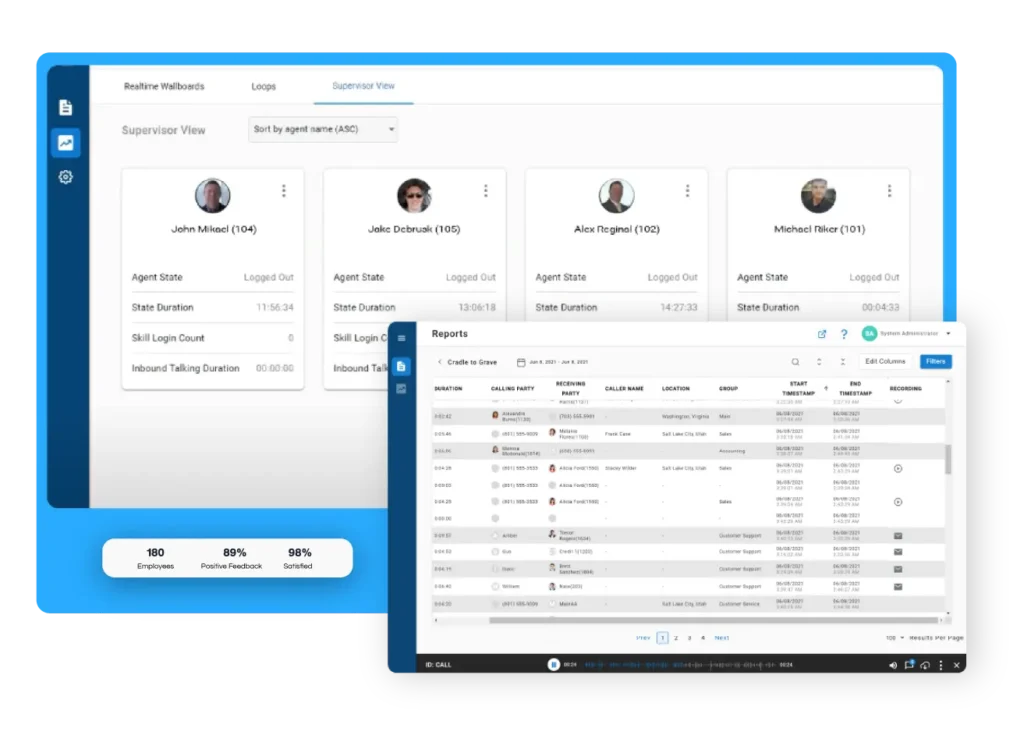
Bring your survey results and operational call analytics together into a single reporting dashboard. Consolidating this data makes it easy to uncover performance trends and optimize your service strategy.
To effectively measure customer experience, businesses rely on specific metrics that provide insights into customer satisfaction, loyalty, and overall engagement. These metrics help organizations understand how well they are meeting customer expectations and where improvements are needed.
Customer Satisfaction Score (CSAT)
CSAT is a widely used metric that measures customer satisfaction with a specific interaction, product, or service. It is typically gathered through post-interaction surveys, where customers rate their satisfaction on a scale (e.g., 1 to 5 or 1 to 10). High CSAT scores indicate that customers are happy with their experience, while low scores highlight areas that require improvement. By tracking CSAT over time, businesses can identify trends and take proactive steps to enhance customer satisfaction.
Net Promoter Score (NPS)
Net Promoter Score (NPS) is a widely used metric to measure customer advocacy and loyalty. It is calculated by asking customers a simple question: “On a scale of 0-10, how likely are you to recommend our product/service to a friend or colleague?” Based on their response, customers are grouped into three categories: promoters (9-10), passives (7-8), and detractors (0-6).
The NPS score is then calculated by subtracting the percentage of detractors from the percentage of promoters. This results in a score ranging from -100 to +100. A higher NPS indicates stronger customer loyalty, suggesting that a larger proportion of customers are willing to advocate for the brand. NPS is an invaluable tool for businesses looking to understand customer sentiment, gauge satisfaction, and ultimately improve loyalty by addressing concerns of detractors.
Customer Effort Score (CES)
CES tracks how easy or difficult it is for a customer to resolve an issue, complete a transaction, or find information on your system. Evaluating this score helps you pinpoint and eliminate process friction before it frustrates your users and drives them to a competitor.
First Response Time and Average Resolution Time
First Response Time (FRT) measures how quickly a company acknowledges a customer inquiry, while Average Resolution Time (ART) tracks the total time it takes to fully resolve an issue. These two metrics are critical indicators of a company’s responsiveness and efficiency in handling customer concerns.
A fast First Response Time reassures customers that their issues are being addressed, reducing frustration and increasing trust in the brand. Meanwhile, a lower Average Resolution Time signifies a well-optimized support system that swiftly resolved problems. Businesses that consistently improve these metrics enhance customer satisfaction, reduce churn, and build stronger brand loyalty by demonstrating reliability and commitment to customer care.
First Contact Resolution (FCR)
FCR measures the percentage of customer issues resolved during the initial interaction without requiring any additional follow-ups. Monitoring this metric gives you an accurate look at your team’s efficiency.
Average Resolution Time (ART)
ART monitors the total turnaround time it takes to fully resolve a customer’s inquiry from the moment it is opened to final closure. Keeping tabs on this metric allows you to highlight operational bottlenecks within your support channels.
Customer Churn and Retention Rate
These rates track the percentage of customers who either stay with or leave your business over a specific time period. Reviewing these trends provides the ultimate validation of your service quality, alerting you to systemic issues in the customer journey the moment retention numbers drop.
Customer Lifetime Value (CLV)
CLV calculates the total revenue a single customer account generates throughout their entire relationship with your business. Tracking this metric quantifies the direct financial return of your experience management investments.
Best Practices for Data-Driven CX Improvement
Effectively measuring and improving customer experience requires a data-driven approach. By leveraging advanced tools like reporting, analytics, and skills-based routing, businesses can gain deeper insights into customer interactions and streamline their support processes. Xima Software offers comprehensive CX solutions that help organizations track key metrics, uncover trends, and make informed decisions to enhance customer satisfaction.
Analyzing and Interpreting CX Data
To improve customer experience, businesses must go beyond raw data and uncover meaningful patterns. Analyzing CX metrics over time helps identify trends, such as recurring pain points or opportunities for engagement. Segmenting data—by customer demographics, service interactions, or purchasing behavior—provides a more granular understanding of customer needs and preferences.
Transforming data into actionable insights is crucial for strategic decision-making. Businesses can use reporting and analytics tools to extract valuable insights and refine their CX strategies. Learn more about how Xima Software supports this process with its reporting and analytics solutions.
Creating a Culture of Customer Centricity
A data-driven CX strategy is only effective when supported by a customer-centric company culture. Engaged employees play a vital role in delivering outstanding customer experiences. Organizations that prioritize customer-centric training and initiatives empower their teams to make proactive, customer-first decisions.
By fostering a culture where employees feel ownership over CX, businesses can ensure that every interaction contributes to a positive experience. Discover how Xima Software enables businesses to create customer-centric service and support through its tailored solutions: customer-centric service support.
Continuous Improvement and Optimization
Customer experience is not a one-time effort—it requires ongoing refinement. Regularly monitoring CX metrics allows businesses to spot shifts in customer expectations and adjust their strategies accordingly. Implementing A/B testing helps organizations experiment with different approaches and identify the most effective solutions for enhancing CX.
Feedback loops are essential for continuous improvement. By collecting and acting on customer feedback, businesses can proactively address concerns, enhance service quality, and maintain long-term customer satisfaction.
Measuring customer experience is essential for driving business success. By tracking key metrics–such as NPS, CSAT, CES, and response times–companies can gain valuable insights into customer satisfaction, identify areas for improvement, and create a competitive edge. A data-driven approach ensures that businesses can continuously refine their strategies, enhance service delivery, and foster long-term customer loyalty.
Now is the time to take action. Implementing a structured CX measurement framework and leveraging powerful analytics tools can transform the way your business interacts with customers. Xima Software provides advanced CX reporting, analytics, and skills-based routing solutions to help you streamline the process and make data-backed decisions with confidence.
Ready to elevate your customer experience strategy? Book a demo today and discover how easy it is to measure, analyze, and optimize CX.
Artificial intelligence in customer experience is the use of bots and analytics to streamline support. Explore how SMBs improve efficiency and reduce costs.
Learn how AI and real-time analytics improve operational efficiency in small to mid-sized contact centers, boosting visibility, compliance, and agent performance.
Customer experience metrics are the specific measurements used to track how people feel about your customer service. These numbers combine direct ratings from your customers with your own daily support data to show how fast, easy, and helpful your service interactions are.
Which CX metrics matter most for contact centers?
Contact centers should prioritize actionable operational metrics over broad brand sentiment. While Net Promoter Score (NPS) tracks long-term loyalty, day-to-day call center performance is best measured using First Contact Resolution (FCR), Average Resolution Time (ART), and Customer Effort Scores (CES) captured right after an interaction ends.
What is a good performance benchmark for these customer experience metrics?
Standard industry benchmarks vary, but top-tier contact centers generally aim for a First Contact Resolution (FCR) rate of 70% to 75%, an average Customer Satisfaction (CSAT) score above 80%, and an Net Promoter Score (NPS) above +50. Establishing your own historical baseline is often more valuable than chasing external numbers, as it allows you to measure true internal progress.
What steps should you take with customer feedback data?
Gathering data is only the initial phase; the most critical step is immediately acting on the findings. Supervisors must use real-time alerts to follow up with unhappy accounts quickly, while analyzing long-term trends to fix the root causes of customer friction.
To provide the best experiences, we use technologies like cookies to store and/or access device information. Consenting to these technologies will allow us to process data such as browsing behavior or unique IDs on this site. Not consenting or withdrawing consent, may adversely affect certain features and functions.
Functional
Always active
The technical storage or access is strictly necessary for the legitimate purpose of enabling the use of a specific service explicitly requested by the subscriber or user, or for the sole purpose of carrying out the transmission of a communication over an electronic communications network.
Preferences
The technical storage or access is necessary for the legitimate purpose of storing preferences that are not requested by the subscriber or user.
Statistics
The technical storage or access that is used exclusively for statistical purposes.The technical storage or access that is used exclusively for anonymous statistical purposes. Without a subpoena, voluntary compliance on the part of your Internet Service Provider, or additional records from a third party, information stored or retrieved for this purpose alone cannot usually be used to identify you.
Marketing
The technical storage or access is required to create user profiles to send advertising, or to track the user on a website or across several websites for similar marketing purposes.