
Somewhere in your contact center today, someone is wondering whether it’s finally time to move to the cloud. Your phone system works—most of the time. Your reporting tells you some of what you need to know—eventually. And your CRM integration exists, even if it requires a few workarounds and manual data entry.
But there’s a reason you’re reading this guide. The gap between “working” and “working well” is costing you time, visibility, and the ability to make decisions in real time. This guide walks you through what a cloud contact center migration actually looks like for SMBs—from preserving call flow continuity to maintaining CRM integrations and protecting the reporting visibility your supervisors rely on every day.
Xima Software has helped hundreds of SMB contact centers make this transition without losing the operational clarity they’ve built over years of work. What follows is everything you need to plan a migration that doesn’t disrupt your team or your customers.
Key Takeaways: Cloud Contact Center Migration for SMBs in 2026
- Cloud migration preserves telephony continuity when you plan call routing and failover before cutting over to the new system.
- CRM integrations require mapping data fields and workflows early—rushing this step creates blind spots in customer history.
- Xima Software’s cradle-to-grave reporting ensures you retain complete interaction visibility throughout and after migration.
- Phased rollouts reduce risk by allowing you to test routing, integrations, and reporting in controlled groups first.
- Your migration timeline depends on integration complexity—plan for eight to sixteen weeks for most SMB deployments.
What Is Cloud Contact Center Migration?
Cloud contact center migration moves your telephony infrastructure, agent tools, and customer interaction data from on-premise systems to a cloud-based platform. This isn’t just a technology upgrade. It’s a shift in how your contact center operates, scales, and surfaces information.
Xima’s cloud contact center software is the destination platform for the migration described here.
For SMBs, the stakes are different than for enterprises. You don’t have a dedicated IT team managing the transition. You can’t afford extended downtime during business hours. And you’re often running on systems that were never designed to talk to each other in the first place.
A successful migration means your customers never notice the change. Calls route correctly. Agents have the tools they need. And supervisors can still see what’s happening in real time.
Why Are SMB Contact Centers Moving to the Cloud in 2026?
The pressure to migrate isn’t coming from one direction. It’s coming from everywhere at once—aging hardware, rising maintenance costs, remote work requirements, and the growing expectation that customer data should be available instantly, not after someone runs a report.
Aging On-Premise Infrastructure
If your phone system is more than seven years old, you’re running on borrowed time. Replacement parts become harder to source. Vendor support becomes limited. And every year that passes, the gap between what your system can do and what your business needs grows wider.
That’s not a scare tactic. It’s the operational reality most SMB contact center leaders face when budget conversations happen.
The Remote and Hybrid Work Shift
On-premise systems were built for a world where agents sat in the same building as the phone switch. That world doesn’t exist anymore. Cloud platforms let agents work from anywhere without VPN workarounds or degraded call quality—because the phone system lives in the same place they do: online.
Real-Time Visibility Expectations
Your supervisors shouldn’t have to wait until end-of-day reports to know whether service levels are slipping. Cloud platforms surface data in real time, which means you can react to queue spikes, staffing gaps, and escalating calls while they’re still happening.
What Are the Biggest Risks of Cloud Contact Center Migration?
Migration projects fail for predictable reasons. Understanding those risks before you start is the difference between a successful cutover and a recovery project.
Telephony Continuity Risks
The most visible failure mode is calls dropping, routing incorrectly, or going unanswered during the transition. This happens when call flows aren’t fully mapped before migration, when number porting timelines slip, or when failover plans don’t exist.
Here’s what makes this dangerous: call flow complexity often exceeds what’s documented. If your team has built workarounds over the years—manual transfers, specific queues for specific situations—those need to be rebuilt in the new system before you flip the switch.
CRM Integration Risks
Your agents rely on screen pops, customer history, and case management tools that connect to your CRM. If those integrations break during migration, agents are flying blind on every call.
The risk isn’t that integrations fail completely. It’s that they fail partially—customer records load, but call disposition data doesn’t sync back. Or screen pops work, but the wrong account appears because field mappings weren’t tested.
Reporting Continuity Risks
This is the blind spot most SMBs underestimate. You’ve built reports, dashboards, and wallboards over years of work. They show you service levels, handle times, abandonment rates, and agent performance. If your new platform doesn’t replicate that visibility, supervisors lose the operational awareness they depend on.
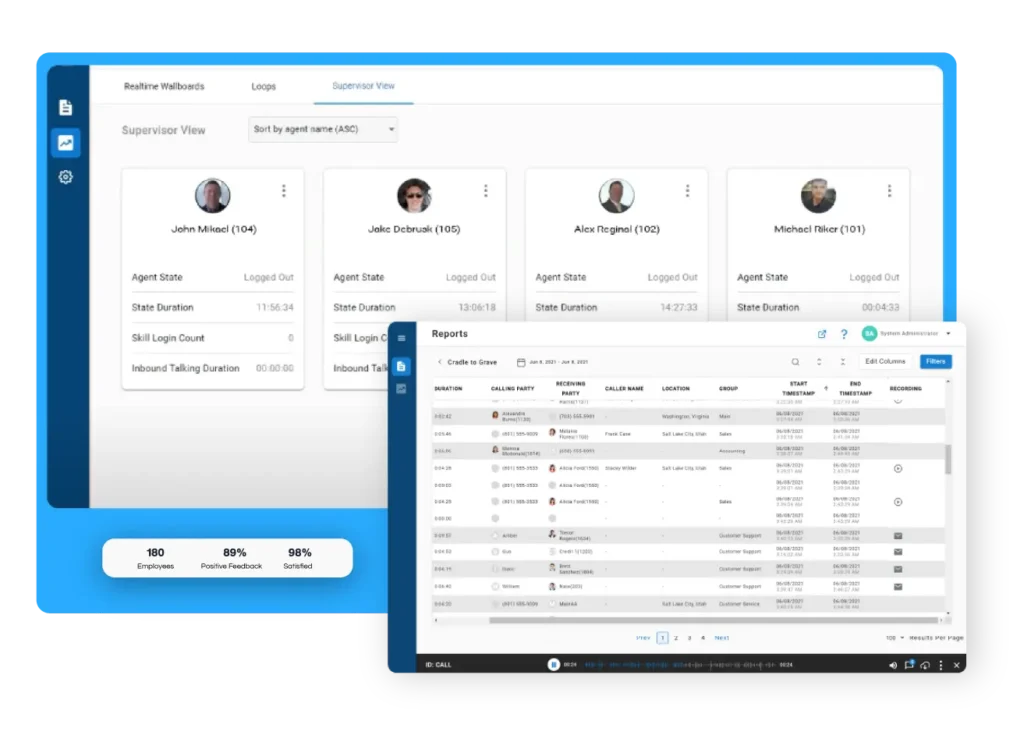
Xima Software’s reporting capabilities address this directly—cradle-to-grave tracking captures every interaction from start to finish, so the visibility you’ve built doesn’t disappear when you migrate.
How Do You Preserve Telephony Continuity During Migration?
Telephony continuity isn’t about hoping the cutover goes smoothly. It’s about planning for the ways it won’t—and having answers ready before problems become customer-facing.
Map Every Call Flow Before You Start
Document every inbound route, every IVR branch, every queue, and every transfer rule. Don’t rely on what’s supposed to happen. Trace actual calls through your current system and confirm what’s working today.
Here’s where most projects get stuck: undocumented call flows. Your team has built workarounds that work—but nobody wrote them down. Migration forces you to surface those workarounds and decide whether to rebuild them or replace them.
Plan Number Porting Carefully
Number porting is where migration timelines slip. Your carriers need coordination, your new provider needs lead time, and the actual port window needs to happen when call volume is lowest.
Build buffer time into your porting schedule. If your carrier says three business days, plan for five. If your cutover window is Sunday morning, confirm that support resources are available on both sides.
Build Failover and Rollback Plans
What happens if the new system fails during the first week? Do calls route to a backup queue? Do agents have access to the old system as a fallback? These questions need answers before migration day, not during.
Failover isn’t admitting defeat. It’s acknowledging that complex systems don’t always behave as expected, and protecting your customers from the consequences.
How Do You Maintain CRM Integration During Cloud Migration?
CRM integration sounds straightforward until you try to replicate it on a new platform. Every field, every sync rule, and every automation needs to work exactly the way it did before—or you need to decide intentionally what changes.
Inventory Your Current Integrations
Start by listing every touchpoint between your contact center and your CRM. Screen pops. Call logging. Disposition codes. Case creation. Callback scheduling. Click-to-dial. Each of these needs to work on day one.
Don’t assume your current vendor has documented this for you. Walk through actual agent workflows and identify every moment where CRM data appears or gets updated.
Map Data Fields Before Migration
Your new platform may use different field names, different formats, or different structures than your current system. A phone number stored as “(555) 555-5555” in one system might become “5555555555” in another—and that mismatch can break screen pop matching.
Field mapping is tedious work. But it’s the difference between an integration that works and one that fails silently while agents enter data manually.
Test Bidirectional Data Sync
Integration testing isn’t just about data flowing in one direction. You need to confirm that call data written to your CRM from the new platform matches the format your reports and automations expect.
Xima Software’s native CRM integrations are bidirectional by design—data flows in both directions without third-party middleware, which reduces the failure points that cause sync issues during migration.
How Do You Protect Reporting Visibility During Migration?
Your supervisors have built their operational rhythm around the reports and dashboards they use today. Migration disrupts that rhythm unless you plan for reporting continuity as carefully as telephony.
Document Every Active Report and Dashboard
Before migration, inventory every report your team runs. Daily service level summaries. Agent performance scorecards. Abandonment rate trends. Wallboards. Scheduled email reports. Don’t forget the ad hoc reports people pull manually when something goes wrong.
Each of these needs a plan. Will it transfer automatically? Does it need to be rebuilt? Will the new platform support the same metrics and calculations?
Confirm Metric Definitions Match
Handle time in one platform might include wrap-up time. In another, it might not. Abandonment might count calls that disconnect after five seconds or after thirty seconds. These differences seem small until your post-migration reports show numbers that don’t match historical trends.
Work with your new vendor to confirm exactly how each metric is calculated. If definitions differ, decide whether to adjust historical baselines or modify new calculations.
Plan for Historical Data Access
What happens to the call data and reports from your old system after migration? If your compliance requirements include retaining records for years, you need to either migrate that data or maintain access to the old system in read-only mode.
Xima Software’s Chronicall platform has served as the reporting backbone for thousands of contact centers—and the migration path to Xima CCaaS preserves historical reporting continuity so you’re not starting from zero.
What Does a Phased Cloud Contact Center Migration Look Like?
Big-bang migrations—where everything changes at once—work for some organizations. For most SMBs, phased rollouts reduce risk and give your team time to adjust.
Phase 1: Pilot Group Deployment
Start with a small team—five to ten agents who represent typical call volumes and workflows. Deploy them on the new platform while the rest of your contact center stays on the old system.
This pilot group tests everything: call quality, CRM integration, reporting accuracy, and agent experience. Fix what breaks before the problems scale to your entire team.
Phase 2: Expanded Rollout
Once the pilot group runs smoothly for two to four weeks, expand to additional teams. This phase surfaces integration issues that only appear at higher volumes and tests your new platform’s ability to handle concurrent users.
Keep the rollback option available during this phase. If major issues appear, you can move agents back to the old system while you resolve them.
Phase 3: Full Cutover
Full cutover happens only after expanded rollout proves stable. By this point, you’ve tested call flows, integrations, reporting, and agent workflows. The remaining migration is operational, not experimental.
Plan full cutover for a low-volume period. Schedule extra support resources. And communicate the timeline to your entire team so nobody is surprised.
Organizations that need to keep call processing on site can compare Xima’s on-premises contact center.
How Long Does SMB Cloud Contact Center Migration Take?
Migration timelines vary based on complexity, but most SMB contact centers should plan for eight to sixteen weeks from planning to full cutover.
Planning and Discovery: Weeks 1-3
This phase covers call flow mapping, CRM integration inventory, reporting documentation, and vendor coordination. Rushing this phase creates problems that surface during deployment—problems that are harder to fix once systems are live.
Configuration and Integration: Weeks 4-8
Your new platform gets configured based on discovery findings. CRM integrations are built and tested. Reports and dashboards are recreated. Agent training materials are prepared.
Pilot and Testing: Weeks 9-12
Pilot groups deploy, test, and surface issues. Integration fixes happen. Training gaps get addressed. The goal is to catch every problem before it affects your full contact center.
Expanded Rollout and Cutover: Weeks 13-16
Teams migrate in phases until the entire contact center operates on the new platform. Post-migration support addresses issues that appear under full production load.
What Questions Should You Ask Cloud Contact Center Vendors?
Vendor selection matters as much as migration planning. The wrong platform creates problems that no amount of planning can solve. Use these questions in every demo.
Questions About Telephony and Call Routing
- Show me how call routing is configured. Can my team modify routes without IT involvement?
- What happens if your platform experiences an outage? Where do calls go?
- How do you handle number porting, and what’s your typical timeline?
Questions About CRM Integration
- Show me a screen pop with customer data. How long does it take to load?
- Is your CRM integration bidirectional? Can I see call data syncing back to the CRM in real time?
- Do you require third-party middleware for integrations, or is this native functionality?
Questions About Reporting and Analytics
- Show me a real-time wallboard. Can supervisors customize what metrics appear?
- How do you define handle time? Abandonment? First-call resolution?
- Can I export historical reports from your platform for compliance retention?
If a vendor pivots away from any of these questions or redirects you to a different part of the demo, that’s your answer. These aren’t nice-to-have features. They’re operational requirements.
How Does Xima Software Support Cloud Contact Center Migration?
Xima Software has supported SMB contact centers through migrations for over fifteen years—first with Chronicall’s on-premise reporting, and now with Xima CCaaS’s full cloud platform.
Cradle-to-Grave Reporting Continuity
Xima’s cradle-to-grave reporting captures every interaction from queue entry to wrap-up. This means you don’t lose visibility during migration—and you don’t have to rebuild reports from scratch.
For contact centers migrating from Chronicall, the transition to Xima CCaaS preserves historical data and reporting structures. You’re not starting over. You’re continuing.
Native CRM Integrations
Xima CCaaS includes native integrations with popular CRMs—bidirectional, without third-party middleware. Screen pops, call logging, and disposition syncing work out of the box, which reduces integration complexity during migration.
White-Glove Support
SMBs don’t have enterprise IT teams. Xima’s white-glove support includes hands-on migration assistance, agent training, and post-cutover troubleshooting. You’re not handed a manual and wished good luck.
What Are Common Cloud Migration Mistakes to Avoid?
Most migration failures trace back to predictable mistakes. Knowing what to avoid is as important as knowing what to do.
Underestimating Training Time
Agents learn new systems while handling live calls. That means training can’t be a one-hour session the day before cutover. Build training into your timeline—multiple sessions, hands-on practice, and accessible reference materials.
Skipping Post-Migration Monitoring
The first two weeks after cutover are when problems surface. Schedule extra supervisor coverage. Monitor call quality closely. Track integration errors and reporting discrepancies. Don’t assume success after day one.
Ignoring Agent Feedback
Your agents use the platform every day. If something doesn’t work—screen pops are slow, call transfers are confusing, disposition codes don’t match—they’ll know before supervisors notice in reports. Build feedback channels and act on what you hear.
How Do You Calculate the ROI of Cloud Contact Center Migration?
Migration requires investment—time, money, and organizational attention. Understanding the return helps justify the effort and set expectations.
Reduced Hardware and Maintenance Costs
On-premise systems require servers, maintenance contracts, and replacement parts. Cloud platforms eliminate those costs. Calculate what you’re spending annually on hardware support and compare it to cloud subscription costs.
Supervisor Time Savings
If your supervisors spend hours each week pulling manual reports or checking systems for data that should be available automatically, that’s time you can reclaim. Real-time dashboards and automated reporting give supervisors hours back every week.
Reduced Downtime and Recovery Costs
On-premise failures can take hours to resolve. Cloud platforms include built-in redundancy and vendor-managed recovery. Calculate the cost of one major outage—lost calls, frustrated customers, overtime for recovery—and compare it to the reliability improvements cloud platforms offer.
In Conclusion: Planning Your Cloud Contact Center Migration for Success
Cloud contact center migration isn’t a weekend project. It’s a structured transition that requires planning, testing, and attention to the details that make your contact center work—call routing, CRM integration, and reporting visibility.
The SMBs that succeed are the ones who treat migration as an operational project, not just a technology purchase. They map call flows before they sign contracts. They test integrations before they train agents. And they plan for reporting continuity from day one.
Xima Software has helped hundreds of SMB contact centers make this transition while protecting the visibility and workflows their teams depend on. Ready to see what migration looks like for your contact center?
FAQs About Cloud Contact Center Migration for SMBs
How long does a typical cloud contact center migration take for SMBs?
Most SMB cloud contact center migrations take eight to sixteen weeks from planning through full cutover. The timeline depends on integration complexity, the number of agents, and how thoroughly you test before going live.
Rushing the process increases risk. Building adequate time for pilot testing and phased rollouts reduces the chance of customer-facing problems.
Will we lose historical call data during migration?
You won’t lose historical data if you plan for it. Options include migrating data to the new platform, maintaining read-only access to the old system, or archiving records for compliance.
Xima Software’s migration path preserves historical reporting for customers transitioning from Chronicall to Xima CCaaS, so years of operational data remain accessible.
Can our CRM integrations survive cloud migration?
CRM integrations can survive migration if you map data fields, test bidirectional sync, and verify screen pops before cutover. The risk isn’t losing integrations entirely—it’s partial failures that create data gaps.
Xima CCaaS includes native CRM integrations that work without third-party middleware, which simplifies the integration preservation process.
What happens to our call quality during the transition?
Call quality depends on your network infrastructure and cutover planning. Test call quality with pilot groups before full migration. Address bandwidth, latency, and failover routing before your entire team moves to the new system.
Phased rollouts let you identify and fix quality issues while they still affect a small group of agents, not your entire contact center.
How do we train agents on the new platform while maintaining service levels?
Training happens in stages—initial orientation before pilot deployment, hands-on practice during pilot testing, and refresher sessions as you expand rollout. Build training time into your migration timeline rather than compressing it into cutover week.
Xima Software’s white-glove onboarding support includes agent training, so your team learns the platform from people who built it.
What’s the biggest risk in cloud contact center migration?
The biggest risk is losing operational visibility—supervisors who can’t see service levels, integrations that don’t sync, and reports that don’t match historical data. These issues compound when you don’t plan for them.
Xima Software’s cradle-to-grave reporting ensures visibility continuity, capturing every interaction from start to finish so supervisors never lose sight of what’s happening.