Your customers don’t think in channels. They call, chat, email, and text—sometimes all in the same day about the same issue. And they expect you to keep up. A cloud contact center with omnichannel support ties those interactions together into one continuous conversation, giving your agents the full picture and your customers the experience they actually want.
This guide breaks down how omnichannel support works inside a cloud contact center, what to look for when evaluating platforms, and how Xima Software helps SMBs and mid-market teams deliver enterprise-grade customer experiences without enterprise complexity.
Key Takeaways: How Omnichannel Support Works in a Cloud Contact Center
- Omnichannel support connects voice, chat, email, and SMS into a single customer journey your agents can see in one view.
- Cloud contact centers eliminate channel silos by routing all interactions through a unified platform with shared data.
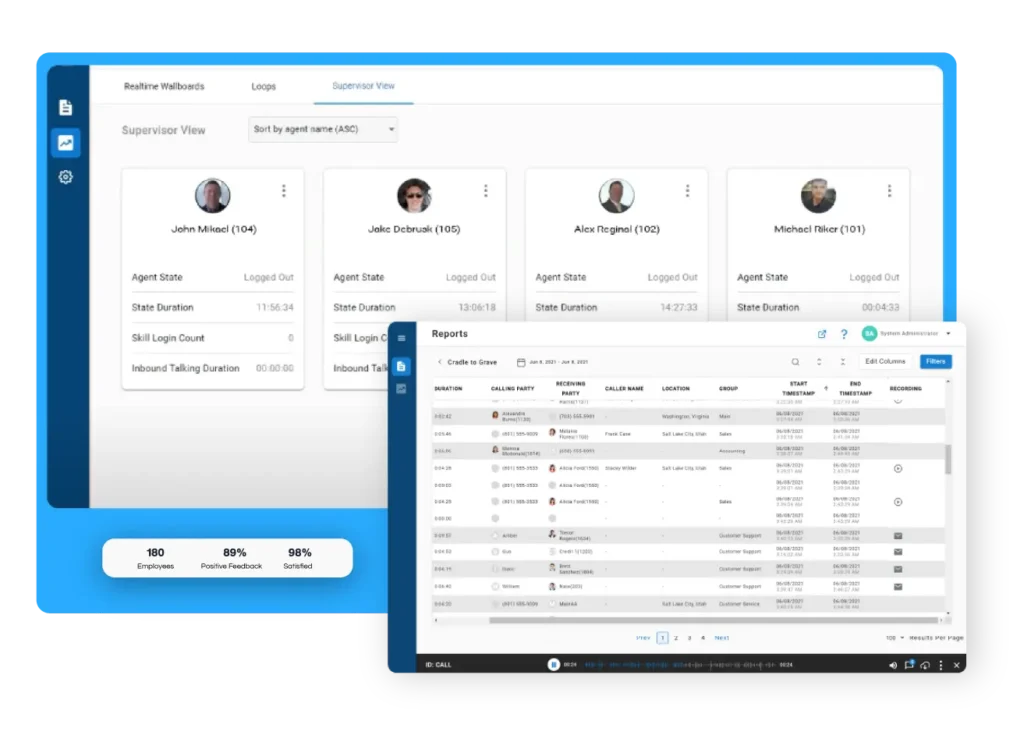
- Cradle-to-grave reporting captures every touchpoint, giving supervisors real-time visibility into the complete customer experience.
- Xima Software delivers omnichannel cloud contact center capabilities with native CRM and EHR integrations for SMBs.
- Skills-based routing and queue callback reduce wait times and improve first-contact resolution across all channels.
- Xima’s cloud contact center software is where these channels come together.
What Is Omnichannel Support in a Cloud Contact Center?
Omnichannel support means connecting every communication channel—phone, chat, email, SMS, and social media—into one unified experience for both your customers and your agents. In a cloud contact center, this happens through software hosted off-site and accessed over the internet, rather than hardware sitting in your server room.
Xima handles these channels through multi-channel communications.
Here’s what makes it different from multichannel. Multichannel means you offer multiple ways to reach you. Omnichannel means those channels talk to each other. When a customer sends an email on Monday and calls on Wednesday, your agent sees both interactions in one place—no asking the customer to repeat themselves, no digging through separate systems.
For SMB and mid-market contact centers, this shift matters because it closes the visibility gap that frustrates customers and burns out agents.
How Does Omnichannel Routing Work?
Routing is where omnichannel support either works or falls apart. In a cloud contact center, incoming interactions—regardless of channel—enter a single queue system. From there, skills-based routing directs each interaction to the agent best equipped to handle it, based on factors like language, product expertise, or customer history.
That routing decision happens in real time. An email from a VIP customer might skip the general queue entirely. A chat about a technical issue goes to an agent with product training. A follow-up call gets routed to the same agent who handled the original ticket.
The result: faster resolution, fewer transfers, and customers who don’t have to explain their issue three times.
Why Unified Customer Data Matters for Omnichannel Support
Omnichannel support falls apart without unified data. If your agents can only see phone calls in one system and emails in another, you don’t have omnichannel—you have multiple channels running in parallel without context.
A true omnichannel cloud contact center pulls data from every interaction into a single customer record. This includes call recordings, chat transcripts, email threads, and SMS exchanges. When your CRM integrates natively with your contact center platform, that record gets even richer—purchase history, support tickets, account notes all visible in the same screen.
Xima CCaaS connects natively with popular CRMs and over 70 EHR systems, giving agents the full context they need without switching between applications.
What Is Cradle-to-Grave Reporting in a Cloud Contact Center?
Cradle-to-grave reporting tracks every interaction from the moment a customer reaches out to the moment the issue is resolved—and everything in between. Transfers, hold times, wrap-up notes, sentiment scores. All captured, all connected to that single customer journey.
For supervisors, this changes what’s possible. Instead of sampling a handful of calls per week, you can see patterns across every interaction. Which agents consistently hit first-call resolution? Where do customers drop off? What’s the average handle time on billing questions versus technical support?
This level of visibility is what separates contact centers that operate on assumptions from contact centers that operate on evidence.
How Do Queue Callback and Wait Time Reduction Work?
Long hold times cost you customers. According to research from Forbes, 66% of customers cite poor experiences—including long waits—as a reason to switch providers.
Queue callback addresses this directly. Instead of forcing customers to wait on hold, your cloud contact center offers to call them back when an agent becomes available. The customer hangs up, goes about their day, and gets a call when it’s actually their turn.
Xima Software includes queue callback as a core feature, reducing abandonment rates and improving the customer experience without adding headcount. Your customers spend less time on hold. Your agents spend less time apologizing for wait times.
What Should You Look for in Omnichannel Contact Center Software?
When evaluating omnichannel cloud contact center platforms, focus on five criteria that separate platforms built for SMBs from those that will bury you in complexity.
Native CRM and EHR Integrations
Ask whether integrations are native and bi-directional or require third-party middleware. Middleware adds cost, complexity, and points of failure. Native integrations mean your contact center and CRM share data in real time without extra tools.
Real-Time Reporting and Wallboards
You need to see what’s happening now, not what happened yesterday. Look for customizable dashboards that show queue depth, agent status, and service levels at a glance. Wallboards give supervisors and agents shared visibility into performance.
AI-Powered Quality Assurance
Manual QA reviews typically cover 1-5% of interactions. AI-powered auto QA can score 100% of calls, chats, and emails—flagging compliance risks, identifying coaching opportunities, and surfacing sentiment trends automatically.
Flexible Deployment Options
Some industries require on-premises infrastructure for compliance reasons. Others need pure cloud flexibility. The right platform offers both options without forcing you into one model.
Transparent Pricing With No Surprise Costs
Ask for all-in pricing that includes implementation, training, and support. Platforms that quote low monthly fees but charge separately for every integration and feature become expensive fast.
How Does Xima Software Support Omnichannel Cloud Contact Centers?
Xima Software built its CCaaS platform specifically for SMB and mid-market contact centers that need enterprise-grade capabilities without the complexity that comes with enterprise-grade platforms.
That means unified omnichannel support across voice, chat, email, and SMS. Cradle-to-grave reporting that tracks every interaction from start to finish. Native integrations with popular CRMs and over 70 EHR systems—critical for healthcare contact centers that need patient context on every call.
Xima Software also includes AI-powered auto QA and speech analytics, covering 100% of interactions instead of the 1-5% that manual review typically captures. Skills-based routing and queue callback come standard, not as add-ons.
And because SMBs don’t have dedicated IT teams to manage complex implementations, Xima provides white-glove onboarding and tiered support to get you running quickly.
In Conclusion: How to Evaluate Omnichannel Cloud Contact Centers for Your Team
Omnichannel support in a cloud contact center isn’t about adding more channels. It’s about connecting the channels you already have so your agents see one customer, one conversation, one journey—regardless of how that customer reached out.
The right platform gives you that unified view plus the reporting, routing, and integrations to actually act on it. For SMB and mid-market teams, that means finding a platform built for your scale—not a stripped-down version of enterprise software with the useful features locked behind higher tiers.
Ready to see what omnichannel support looks like in practice? Schedule a demo with Xima Software and see how cradle-to-grave visibility changes what’s possible for your contact center.
FAQs About How Omnichannel Support Works in a Cloud Contact Center
What’s the difference between omnichannel and multichannel support?
Multichannel means you offer multiple ways for customers to reach you—phone, email, chat. Omnichannel means those channels share data and context, so agents see the full customer history regardless of which channel the customer used previously. Xima Software’s unified platform connects all channels into one view.
How does a cloud contact center differ from an on-premises system?
Cloud contact centers run on software hosted by the vendor and accessed over the internet. On-premises systems run on hardware in your facility. Cloud platforms typically offer faster deployment, automatic updates, and lower upfront costs. Xima Software offers both deployment options for flexibility.
What is cradle-to-grave reporting?
Cradle-to-grave reporting captures every step of a customer interaction from first contact to resolution—including transfers, hold times, and agent notes. Xima Software’s cradle-to-grave analytics give supervisors complete visibility into the customer journey across all channels.
How does skills-based routing improve customer experience?
Skills-based routing directs each interaction to the agent most qualified to handle it, based on language, expertise, or customer tier. This reduces transfers and speeds up resolution. Xima CCaaS includes skills-based routing as a core feature to improve first-contact resolution rates.
What integrations should I look for in omnichannel contact center software?
Look for native, bi-directional integrations with your CRM and any industry-specific systems like EHR platforms for healthcare. Xima Software integrates natively with popular CRMs, Microsoft Teams, and over 70 EHR systems—without requiring third-party middleware.
How does queue callback reduce call abandonment?
Queue callback offers customers the option to receive a call when an agent becomes available instead of waiting on hold. This reduces frustration and abandonment rates. Xima Software includes queue callback as a standard feature, helping contact centers maintain service levels during peak volumes.