
Somewhere in your contact center right now, a customer is reaching out. Maybe they’re on the phone. Maybe they sent an email, started a chat, or fired off a text. The question is: can your team see all of those conversations in one place?
That’s what a cloud contact center makes possible—and for SMB customer service teams, it’s changing how visibility, responsiveness, and service efficiency actually work. Xima Software builds cloud contact center software specifically for smaller teams that need enterprise-grade capabilities without the complexity.
This article explains what cloud contact centers are, how omnichannel support centralizes your customer conversations, and what SMB leaders should look for when evaluating platforms.
Key Takeaways: What Is a Cloud Contact Center for SMBs in 2026
- A cloud contact center hosts your phone, chat, email, and SMS interactions on remote servers you access through the internet.
- Omnichannel support connects every channel into one unified view so agents see the full customer journey.
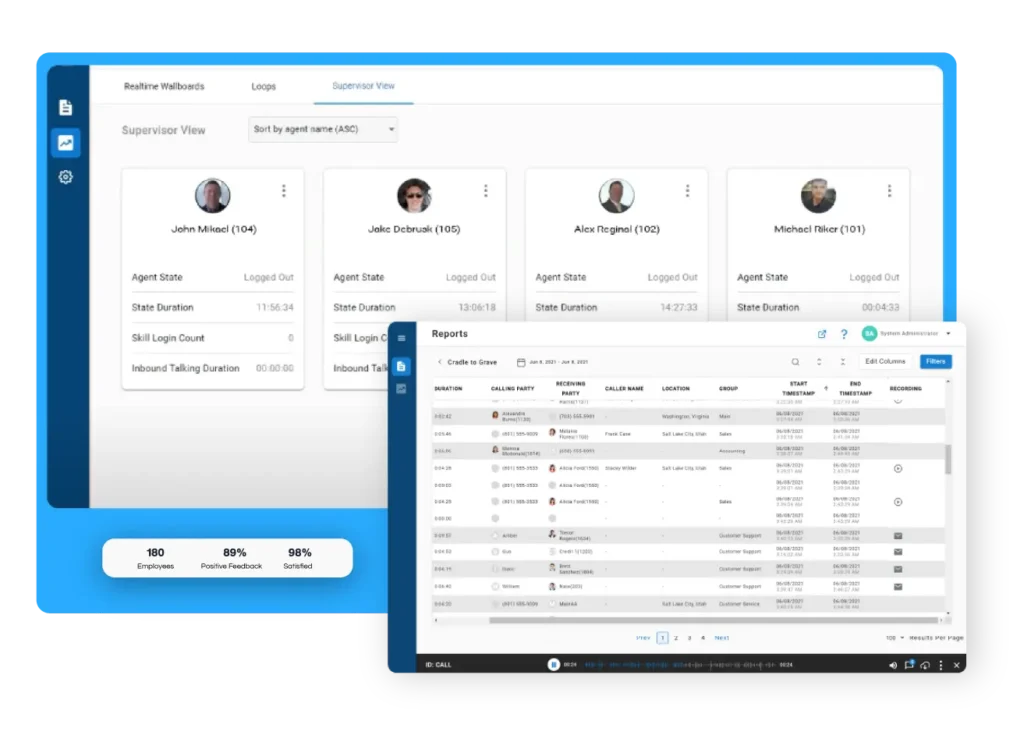
- Xima Software gives SMB teams real-time dashboards, skills-based routing, and cradle-to-grave reporting for complete visibility.
- Cloud platforms scale with your team—you add or remove agent seats without replacing hardware or phone systems.
- SMBs gain access to AI-powered analytics and sentiment analysis that were previously only available to large enterprises.
Smaller teams can start with Xima’s contact center solutions for small businesses.
What Is a Cloud Contact Center?
A cloud contact center is customer service software hosted on remote servers instead of hardware in your office. Your agents access it through a web browser or application, which means you don’t need to install, maintain, or upgrade physical equipment. Xima’s cloud contact center software is the product-level answer to this question.
This matters for SMB teams because it removes one of the biggest barriers to running a professional contact center: infrastructure cost. According to TechTarget’s definition, cloud contact centers route voice, email, chat, and social media through internet-based systems that handle all the complexity on the back end.
For your team, this translates to faster setup, lower upfront investment, and the ability to scale without a forklift upgrade every time you hire new agents.
How Does Omnichannel Support Work in a Cloud Contact Center?
Omnichannel support means your agents see every customer interaction—phone calls, emails, chats, SMS, and social media messages—in a single view. The customer doesn’t have to repeat themselves when they switch from chat to phone. The agent already has the context.
Here’s what happens in practice: a customer starts a chat on your website asking about a billing issue. They get disconnected or need to call back later. When they pick up the phone, your agent sees the chat transcript, knows what was already discussed, and picks up where the conversation left off.
This is different from multichannel support, where you might offer multiple ways to contact you but each channel operates in its own silo. According to Genesys, omnichannel unifies data across touchpoints so customer history follows the interaction across channels.
Why Are SMBs Moving to Cloud Contact Centers in 2026?
The math has changed. Five years ago, small and mid-sized businesses faced a choice: invest heavily in on-premise systems that required IT staff to maintain, or use basic phone systems that lacked visibility into what was actually happening.
Cloud contact centers removed that constraint. Now you get real-time reporting, AI-powered quality assurance, and skills-based routing without hiring a dedicated IT team or signing a multi-year contract with a massive upfront fee.
Xima Software designed its CCaaS platform specifically for this shift. SMB teams can access cradle-to-grave reporting—every interaction tracked from the moment a customer enters the queue until the conversation ends—without the complexity that comes with enterprise platforms.
What Capabilities Matter Most for SMB Contact Centers?
When evaluating cloud contact center options, focus on these operational priorities:
Real-time visibility: Can supervisors see what’s happening right now? Look for live wallboards, real-time dashboards, and queue monitoring that show call volume, wait times, and agent status at a glance.
Skills-based routing: Does the platform match incoming contacts to agents based on specific capabilities? This reduces transfer rates and improves first-contact resolution.
Queue callback: When hold times spike, can customers request a callback instead of waiting on the line? This reduces abandonment and improves customer satisfaction scores.
What Is Cradle-to-Grave Reporting and Why Does It Matter?
Cradle-to-grave reporting captures the complete lifecycle of every customer interaction—from the moment they enter your queue, through any transfers or holds, to the final resolution. Most basic phone systems only track call duration. They don’t tell you what happened between pickup and hangup.
Xima Software’s cradle-to-grave reporting shows you exactly where conversations stall, which agents handle the most complex issues, and how many times customers get transferred before reaching resolution. This level of detail lets you identify operational bottlenecks that would otherwise stay invisible.
For SMB contact center managers, this means you can finally answer questions like: Why did that customer have to call three times? What happened during the handoff? Where did the process break down?
How Does AI Change Cloud Contact Centers for SMBs?
AI-powered features are no longer reserved for enterprise contact centers. Cloud platforms now include speech analytics, sentiment analysis, and automated quality assurance that score 100% of your interactions—not just the 1-3% that supervisors can manually review.
Here’s what that looks like operationally: instead of a supervisor listening to a handful of randomly selected calls each week, the system flags interactions where sentiment shifted negative, where agents deviated from scripts, or where compliance language was missed.
Xima CCaaS includes AI-powered auto QA that covers every conversation. This means supervisors spend their time coaching agents on specific, documented issues instead of hunting through recordings hoping to find something useful.
What Should SMB Teams Look for When Evaluating Cloud Contact Center Vendors?
Not every platform is built for smaller teams. Enterprise systems often include features you don’t need at price points you can’t justify. Here’s what matters for SMB contact center leaders:
Transparent pricing: Look for clear, all-in pricing without variable monthly fees or surprise charges for basic features. Ask specifically what’s included and what costs extra.
Integration with existing systems: Your cloud contact center should connect to your CRM, EHR (if you’re in healthcare), or other business applications. Native integrations work more reliably than third-party middleware.
Support quality: White-glove onboarding and responsive customer support matter more for SMBs than for enterprises with dedicated IT staff. Ask vendors about implementation timelines and ongoing support tiers.
How Do Cloud Contact Centers Handle Compliance Requirements?
If you operate in healthcare, financial services, or another regulated industry, compliance isn’t optional. You need HIPAA-ready infrastructure for protected health information or PCI DSS compliance for payment card data.
Cloud contact centers handle this by building compliance controls directly into the platform. Call recording, data encryption, access controls, and audit trails become features you configure—not custom builds you have to spec out and maintain yourself.
Xima Software’s platform includes compliance-ready infrastructure for regulated industries. You get the documentation and security controls built in, which reduces the burden on your internal team to prove compliance during audits.
In Conclusion: How to Decide If a Cloud Contact Center Is Right for Your SMB
The question isn’t whether cloud contact centers work for SMBs. They do. The question is whether your current setup gives you the visibility you need to run your operation.
If your supervisors can’t see real-time call volume, if your agents work across disconnected channels, if you’re reviewing 1% of interactions and assuming the other 99% are fine—those are structural gaps that cloud platforms are designed to close.
Xima Software builds cloud contact center solutions specifically for SMB teams that want enterprise-grade features without enterprise complexity. Ready to see what real-time visibility looks like for your operation? Schedule a demo and see the difference.
FAQs About Cloud Contact Centers for SMBs
What is the difference between a cloud contact center and a call center?
A call center handles voice calls only. A cloud contact center manages voice, email, chat, SMS, and social media through one platform hosted on remote servers. This gives your agents a unified view of every customer conversation regardless of channel.
How much does a cloud contact center cost for small businesses?
Pricing varies by vendor and features. Xima Software offers transparent, all-in pricing with flexible concurrent licensing—you pay for the seats you use without surprise fees. Ask vendors for clear breakdowns of what’s included versus what costs extra.
Can a cloud contact center integrate with my existing phone system?
Yes. Most cloud contact center platforms integrate with existing phone infrastructure without requiring you to change phone numbers or replace hardware. Xima Software connects with popular CRMs, Microsoft Teams, and over 70 EHRs for healthcare operations.
What is omnichannel support in a contact center?
Omnichannel support connects all communication channels—phone, email, chat, SMS, social—into one system. Agents see the complete customer history in a single view. Xima CCaaS tracks every interaction as one consistent customer journey, so context follows the conversation.
How long does it take to implement a cloud contact center?
Implementation timelines depend on the vendor and your requirements. With Xima Software’s white-glove onboarding, setup is designed to minimize disruption and get your team operational quickly. Ask vendors specifically about their average implementation timeframe.
Do cloud contact centers work for remote teams?
Yes. Because cloud contact centers are accessed through the internet, agents can work from anywhere with a stable connection. Supervisors still see real-time dashboards and performance metrics regardless of where the team is located.