
Your customers’ words tell a story. Their emotions reveal the plot.
In a busy contact center, it’s easy to focus on what customers say. But how they say it—their tone, word choice, and subtle shifts in emotion—often holds the key to building lasting loyalty. Relying on gut feelings to gauge customer mood is inconsistent, especially across thousands of daily interactions. This is where sentiment analysis becomes a game-changer.
Sentiment analysis acts as an emotional compass for your customer conversations. It uses artificial intelligence (AI) to interpret whether an interaction is positive, negative, or neutral, providing objective insights that help your team prevent escalations, coach agents effectively, and elevate the entire customer experience (CX)—the overall perception a customer has of your brand based on their interactions.
Let’s dive into how this powerful technology can transform your contact center operations and strengthen your brand reputation.
What is Sentiment Analysis?
Sentiment analysis is a technology that uses AI to automatically identify and categorize the emotional tone within written or spoken language. As a core component of modern AI contact center analytics, it is built on advanced technologies like Natural Language Processing (NLP) and machine learning to decode the feelings behind the words.
In a contact center, sentiment analysis works quietly in the background of calls, chats, emails, and social media messages. It scores interactions in real time, flagging emotional cues that a busy agent or supervisor might otherwise miss. This allows businesses to understand customer emotions and respond with greater empathy and precision.
For example, if a customer’s frustration is rising on a call, the system can detect this change and alert a manager to provide support. It’s not just for phone calls; sentiment analysis tools are often embedded in:
Cloud-based contact center platforms (CCaaS, or Contact Center as a Service)
Social media monitoring dashboards
AI-powered chatbots and voicebots
Customer feedback and survey tools
Modern platforms like Xima Software integrate contact center sentiment analysis across all communication channels, empowering teams to move from reactive problem-solving to proactive experience management.
What Are the Different Types of Sentiment Analysis?
Sentiment analysis isn’t a one-size-fits-all technology. Different models analyze interactions in unique ways to provide a holistic view of the customer’s emotional journey. The most effective systems often blend these approaches for maximum accuracy.
Fine-Grained Sentiment Analysis: This method goes beyond simple “positive/negative/neutral” labels. It rates sentiment on a more detailed scale, such as very positive, positive, neutral, negative, and very negative. This granularity helps supervisors prioritize the most critical issues first.
Aspect-Based Sentiment Analysis (ABSA): ABSA connects sentiment to specific features of your product or service. For instance, if a customer says, “Your shipping was fast, but the app is confusing,” the system flags “shipping” as positive and “app” as negative. This pinpoints exact areas for operational improvement.
Emotion Detection: This advanced type identifies specific emotions like joy, anger, frustration, or confusion by analyzing vocal tone, pacing, and word choice. A customer might say “that’s fine” in a sharp tone, and emotion detection will correctly identify the underlying frustration.
Intent-Based Analysis: This model focuses on the customer’s goal. It helps determine if a customer is showing purchase intent, is at risk of churning, or needs urgent assistance. A phrase like “I want to cancel my subscription” would be flagged as a high-priority retention risk.
Multimodal Sentiment Analysis: The modern customer journey spans multiple touchpoints. Multimodal systems analyze sentiment across voice calls, emails, social media posts, and chat messages to create a unified view of the customer experience. This is crucial for understanding the complete interaction history.
How Does AI-Powered Sentiment Analysis Work in a Contact Center?
In the high-stakes environment of a contact center, every interaction matters. Sentiment analysis technology integrates into your daily workflow to provide real-time intelligence, ensuring no negative experience goes unnoticed.
Here’s a typical workflow using a platform like Xima Software:
Real-Time Transcription and Analysis: As a call or chat begins, the system transcribes the conversation in real time. AI algorithms then analyze the text and audio, using voice analytics to interpret vocal tone, pitch, and keywords.
Live Sentiment Scoring: The interaction is continuously scored for sentiment. If the score drops below a certain threshold—for example, due to raised voices, negative keywords (“frustrated,” “unacceptable”), or long silences—the system identifies a potential issue.
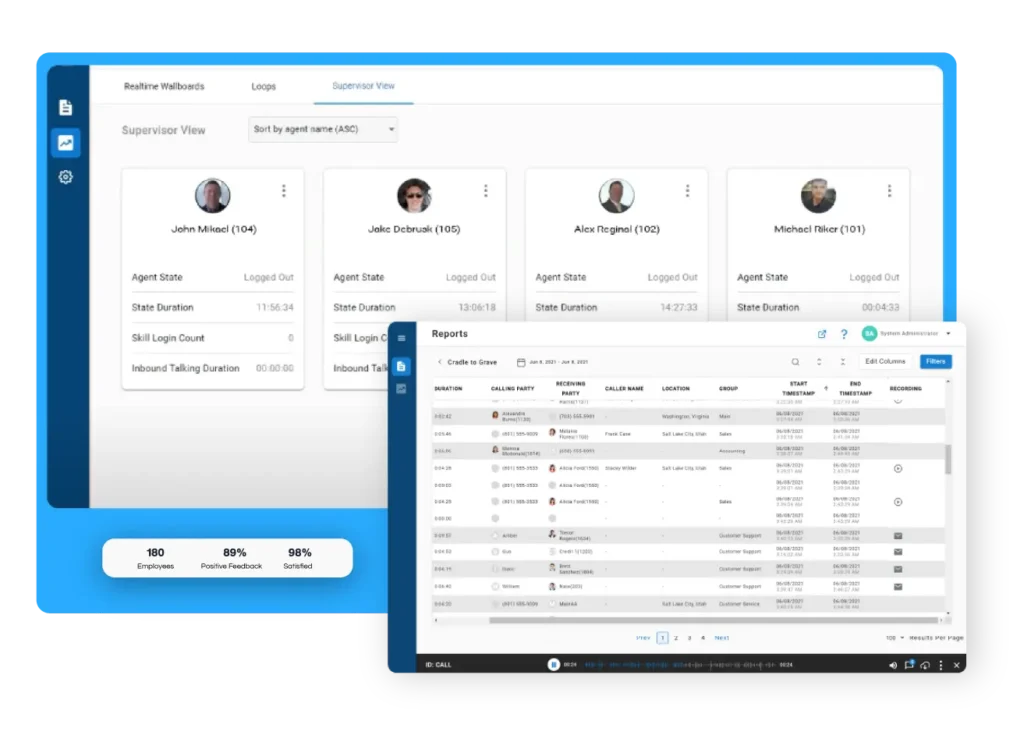
Intelligent Alerts for Supervisors: When negative sentiment is detected, an alert is automatically sent to a supervisor’s dashboard. This allows managers to discreetly monitor the interaction, provide live coaching to the agent via private chat, or join the call if an escalation is imminent.
Integration with CRM and QA: After the interaction, the sentiment score, transcript, and recording are automatically logged in your Customer Relationship Management (CRM) system. This data enriches the customer profile and becomes a valuable asset for call center quality assurance.
Imagine a customer calls about a billing error, initially calm. After being transferred, their tone becomes tense. A system like Xima’s Speech Analytics detects this shift, flags the call, and alerts a manager. The manager quickly reviews the transcript, sends the agent a message with an approved discount, and the agent successfully de-escalates the situation, turning a negative experience into a positive one.
What Are the Benefits of Using Sentiment Analysis?
Integrating sentiment analysis into your contact center strategy does more than just track emotions; it drives tangible business outcomes. By turning unstructured conversations into actionable data, you can significantly improve both agent performance and customer loyalty.
Prevent Escalations and Reduce Churn: Real-time alerts give supervisors the power to intervene before a customer asks for a manager. This proactive support helps resolve issues on the first contact, reducing frustration and preventing customer churn.
Deliver Targeted Agent Coaching: Move beyond generic feedback. Sentiment data reveals specific moments where agents excel or struggle with soft skills like empathy and tone. This allows for personalized coaching that builds stronger communicators.
Improve Customer Satisfaction (CSAT) and Loyalty: Sentiment analysis provides a direct pulse on customer happiness, even for customers who don’t fill out surveys. By addressing friction points in real time, you show customers you’re listening, which directly boosts key metrics like CSAT and retention.
Identify Root Causes of Customer Issues: Are customers frequently negative when discussing a specific product feature or policy? Sentiment trends can uncover systemic problems in your products, services, or processes, allowing you to fix the root cause instead of just the symptoms.
Automate and Scale Quality Assurance: Manually reviewing calls is time-consuming and covers only a small fraction of interactions (typically 2-5%). Sentiment analysis allows you to monitor 100% of your conversations automatically, providing a complete picture of your team’s performance.
Enhance Product and Service Development: Insights from sentiment analysis are a goldmine for your product and marketing teams. Understanding what customers love or hate helps guide feature development, refine marketing messaging, and make smarter business decisions.
Key Features to Look For in a Sentiment Analysis Solution
When choosing a sentiment analysis tool, focus on features that deliver actionable insights and integrate smoothly into your existing ecosystem. Here are the essentials:
Feature | Why It’s Important |
|---|---|
Real-Time Alerts & Dashboards | Enables immediate intervention on negative interactions and gives supervisors a live overview of team-wide sentiment. |
Omnichannel Capabilities | Ensures consistent analysis across all customer touchpoints, including voice, email, chat, SMS, and social media. |
Accurate Transcription | High-quality call center speech analytics with historical transcription is the foundation for meaningful sentiment analysis. |
Vocal Tone and Emotion Detection | Goes beyond keywords to analyze how something is said, capturing nuance, sarcasm, and stress for greater accuracy. |
Seamless CRM Integration | Syncs sentiment data with customer profiles in platforms like Salesforce or HubSpot, giving agents full context for every interaction. |
Customizable Reporting | Allows you to track sentiment trends over time, by agent, or by topic to identify patterns and measure the impact of improvements. |
Built-in Coaching Tools | Platforms like Xima Software provide AI-driven suggestions and live coaching features directly within the agent interface. |
Understanding the Risks and Tradeoffs of Sentiment Analysis
While incredibly powerful, sentiment analysis is not a magic wand. Leaders should be aware of its limitations and potential risks to implement it effectively. Acknowledging these tradeoffs helps you build smarter workflows that balance AI efficiency with human expertise.
Risk 1: Misinterpretation of Nuance
AI models can struggle with sarcasm, idioms, and cultural context. A customer might sarcastically say, “Oh, great,” which a basic system could misinterpret as positive.
The Tradeoff: You gain the ability to analyze every interaction at scale, but you risk some accuracy on complex, nuanced conversations.
How to Mitigate It: Choose an advanced platform that combines text analysis with vocal tone detection. Furthermore, use AI scores as a guide for human QA reviewers, not as a replacement for them. Your QA team can then focus their expertise on the edge cases flagged by the AI.
Risk 2: Over-Reliance on Automation
Relying solely on automated scores without human oversight can lead to poor decision-making. If a system is poorly calibrated, it may flag non-issues or, worse, miss critical ones.
The Tradeoff: The efficiency of automated QA comes with the risk of “garbage in, garbage out” if the system isn’t properly configured and monitored.
How to Mitigate It: Implement sentiment analysis with clear objectives and continuous human oversight. Partner with a provider like Xima Software that offers expert-led onboarding and calibration to ensure your system is tuned to your specific business needs and customer base.
Risk 3: Data Privacy and Security
Analyzing and storing customer conversations creates a significant responsibility to protect sensitive data.
The Tradeoff: Gaining deep customer insights requires handling personal data, which introduces compliance and security burdens.
How to Mitigate It: Prioritize a secure, compliant, and scalable cloud CCaaS solution. Ensure your provider adheres to standards like GDPR, CCPA, and HIPAA (if applicable) and offers robust data encryption and access controls.
Risk 4: Initial Investment vs. Long-Term ROI
Implementing a sophisticated AI solution can require an upfront investment in technology and training.
The Tradeoff: You must balance the initial cost against the long-term gains in operational efficiency, agent retention, and customer loyalty.
How to Mitigate It: Focus on the total value and on the time period over which you should start seeing a return (Time to Value). A powerful sentiment analysis tool can help cut contact center costs by reducing agent attrition, improving first-call resolution, and identifying process inefficiencies that drain resources. Start with a clear business case and request a demo to see the potential ROI firsthand.
Elevate Your Customer Experience with Xima Software
In today’s competitive landscape, understanding how your customers feel is no longer a luxury—it’s a necessity. Sentiment analysis gives your contact center the emotional intelligence it needs to move beyond simply resolving tickets and start building genuine, lasting relationships. It empowers managers to become better coaches, helps agents perform with confidence and empathy, and ensures every customer feels heard.
Xima Software’s cloud contact center platform comes with powerful, integrated contact center speech analytics, including:
Real-time sentiment scoring and alerts across voice and digital channels.
Sentiment-tagged transcripts that sync automatically with your CRM.
AI-powered features that guide agents with empathetic, effective responses.
Intuitive dashboards for monitoring sentiment trends and ensuring quality at scale.
The ability to detect and act on customer emotion is a competitive advantage you can’t afford to overlook. Discover how Xima’s AI-powered solutions can empower your team and strengthen your brand.
Ready to see how it works? Request a Demo Today!