
Xima and Intermedia are two platforms that help bridge that gap. Both support cloud-based communication and customer interactions, making them viable options for businesses building or improving a contact center. Where they differ is in how they approach call handling, reporting, and overall operational oversight.
This Xima vs. Intermedia comparison takes a closer look at how each contact center platform performs in day-to-day use, how clearly they surface performance data, how well they scale as your team grows, and how pricing evolves as your support needs expand.
Key Takeaways for SMB Support Teams
- Intermedia delivers voice and contact center capabilities within a broader communications platform.
- Xima is structured around queue management, reporting visibility, and supervisor control.
- Both support unified communications, but differ in how contact center functionality is surfaced.
- Pricing and feature access scale differently depending on how capabilities are packaged.
- The best fit depends on whether your operation is communication-driven or call-center-driven.
How Intermedia and Xima Approach Contact Center Operations
Both Intermedia and Xima support cloud-based communication, but they are built with different priorities. Those differences shape how teams manage support, track performance, and scale their operations over time.
Intermedia’s Communication-Centered Approach
Intermedia brings voice, messaging, and collaboration into a single environment. Contact center functionality lives within that broader ecosystem, allowing teams to manage both internal and external communication in one place.
This approach can work well for SMBs that want to simplify vendor management and keep everything centralized. As support needs become more complex, however, more advanced contact center features are often locked behind higher-tier plans.
Xima’s Contact Center-Focused Design
Xima is built around contact center workflows from the start. Queue behavior, routing logic, and reporting visibility are core to how the platform operates.
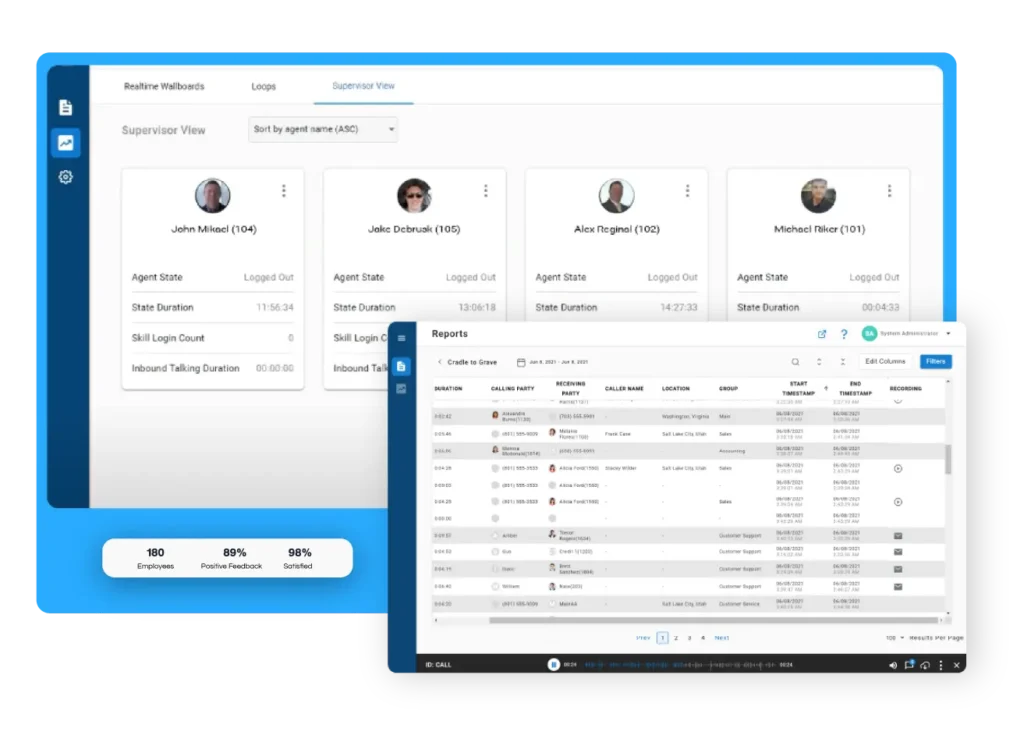
It is designed for teams where call handling is central to daily operations. Supervisors can monitor performance in real time, adjust routing as needed, and manage service levels without relying on delayed reporting or layered tools.
As teams grow, functionality and pricing scale with contact center needs.
Callout Placement: Insert a short callout reinforcing that scalability and manageability can coexist.
Communication platforms often position voice as one part of a broader system. Contact center platforms organize everything around how calls move through queues and how performance is measured. As volume increases, that distinction shapes both daily operations and long-term scalability.
When a Communication Platform Like Intermedia Makes Sense
In some cases, the goal is not to build a highly specialized contact center, but to consolidate communication in one platform and reduce complexity across the business. Intermedia can be a good solution to this. It works best when call handling is one part of a broader communication strategy, not the core driver of daily operations.
When Xima’s Structured Call Handling Makes Sense
As call volume grows, managing support becomes less about simple communication and more about structure, consistency, and visibility. Teams need to understand what is happening in real time and make adjustments that keep service levels on track.
Xima is well-suited for environments where call handling drives performance. Instead of fitting voice into a broader communication workflow, the platform is built to support structured call flows from the start.
This becomes especially important when teams need:
- Defined queue structures
- Service level tracking
- Real-time supervisor insight
- Predictable routing behavior
In these scenarios, having clear control over how calls move through the system and how performance is measured is crucial for maintaining efficiency and consistency.
Operational Comparison: Intermedia vs. Xima
Below is a side-by-side look at how Xima and Intermedia stack up in contact center environments.
Capability | Intermedia | Xima |
Core Focus | Unified communications and voice services | Structured contact center operations with unified communications options |
Queue Management | Integrated within communication workflows | Foundational routing and queue logic |
Reporting | Communication-level reporting with contact center overlays | Real-time dashboards built around call center KPIs |
Supervisor Visibility | Available within broader platform analytics | Direct visibility into queues, agents, and performance |
Integration Strategy | Broad UC and business tool integration | CRM integrations aligned to call workflows and reporting |
Pricing Structure | Tiered communication plans with add-ons | Contact center-aligned pricing tied to usage |
Scalability | Expands across communication channels | Expands with call volume and team structure |
Cost Structure and Long-Term Budget Fit
When comparing platforms, the starting price only tells part of the story. What really matters is how costs evolve as your team grows and your support operation becomes more complex.
Intermedia’s pricing reflects its broader communications platform. Core plans often include voice, messaging, and collaboration, with more advanced contact center features available through higher tiers or add-ons. This can be a strong fit for organizations that are scaling communication across multiple departments and want to keep everything within one system.
Xima’s pricing is more closely aligned with contact center functionality. Features like queue management, reporting, and supervisory tools are built into the core experience rather than sold as add-ons. As teams expand, costs tend to scale with contact center usage rather than with broader platform capabilities.
Is Your Support Operation Built for How You’re Growing?
As call volume and reporting needs increase, it’s important to choose a platform that aligns with how your team actually operates, not just how features are packaged.

Integration Strategy and Workflow Alignment
Both Intermedia and Xima integrate with common business tools, including CRM and helpdesk platforms. The difference is not in whether they connect, but in how those integrations support daily operations.
Intermedia uses integrations to extend communication across departments. The focus is on keeping conversations connected, whether they happen through voice, messaging, or collaboration tools.
Xima approaches integrations with a focus on contact center performance. Connections to CRM and support systems are used to improve queue visibility, maintain reporting accuracy, and support structured call workflows.
Managing Growth Without Adding Complexity
With platforms like Intermedia, growth can bring additional layers of configuration as more features and tiers are added. This can work well for organizations expanding communication across departments, but managing contact center complexity may require navigating broader system settings.
Xima is designed to maintain structured visibility as teams scale. Adding agents, queues, and reporting layers builds on an existing framework rather than introducing entirely new layers of configuration. Supervisors can continue to monitor performance and make adjustments without losing clarity.
The key is choosing a platform that supports growth without making day-to-day management more difficult as complexity increases.
Choosing the Right Platform for Your Support Strategy
The right SMB contact center platform depends on what drives your support operation.
If your priority is consolidating communication across teams, a platform like Intermedia can help bring voice, messaging, and collaboration into one place. If your focus is on managing call volume, improving performance, and maintaining clear operational control, a contact center-focused solution like Xima may be the better fit.
Book a demo with Xima today to see how a more structured approach to call handling and performance visibility can support your team as it scales.
FAQs
A communication platform is built to support conversations across channels like voice, messaging, and collaboration. A contact center-focused system is designed to manage call flow, queues, performance tracking, and service levels. Xima’s platform also includes omni-channel communications.
It can be, especially early on. Intermedia works well for teams that want unified communication. As call volume and reporting needs increase, some teams may find they need more structured contact center capabilities.
Xima is built specifically for queue control and real-time visibility. It provides deeper insight into call activity and agent performance. Intermedia includes these features but within a broader communication framework.
Costs typically increase with added agents, features, and reporting needs. Communication platforms often require higher tiers or add-ons, while contact center-focused systems tend to scale pricing alongside usage and operational complexity.
Limitations often appear when teams need more control over routing, real-time visibility into queues, or detailed performance tracking that goes beyond basic reporting.
Common signs include rising call volume, difficulty tracking performance, lack of real-time insight, inconsistent routing, and challenges maintaining service levels as the team grows.