Why Economic Uncertainty Is the Best Time to Optimize Your Contact Center
Everyone’s playing defense right now. Budget freezes, hiring slowdowns, “let’s wait and see what happens” plans. It makes sense. When things feel shaky, the natural response is to hold tight and avoid risk.
But here’s the thing: your contact center doesn’t pause during economic uncertainty. Your customers still call when they’re frustrated. Your agents still show up (or don’t) every day. Your competitors are still out there. And the cost of running an outdated, inefficient system? That doesn’t pause either. It keeps compounding.
So while your instinct might be to wait until things feel more stable, the math tells a different story. Economic uncertainty isn’t the time to freeze. It’s actually the best time to optimize.
Efficiency Matters More When Budgets Are Tight
When you’ve got plenty of budget cushion, inefficiency is annoying but manageable. You can absorb the waste. But when every dollar counts, suddenly those abandoned calls, those manual processes, those systems that require constant IT babysitting? They hurt more.
Think about it: if your contact center is losing customers because wait times are too long, or burning through agents because the tools are terrible to use, or missing insights because your reporting takes days to generate, those aren’t just frustrations anymore. They’re actively draining resources you can’t afford to lose.
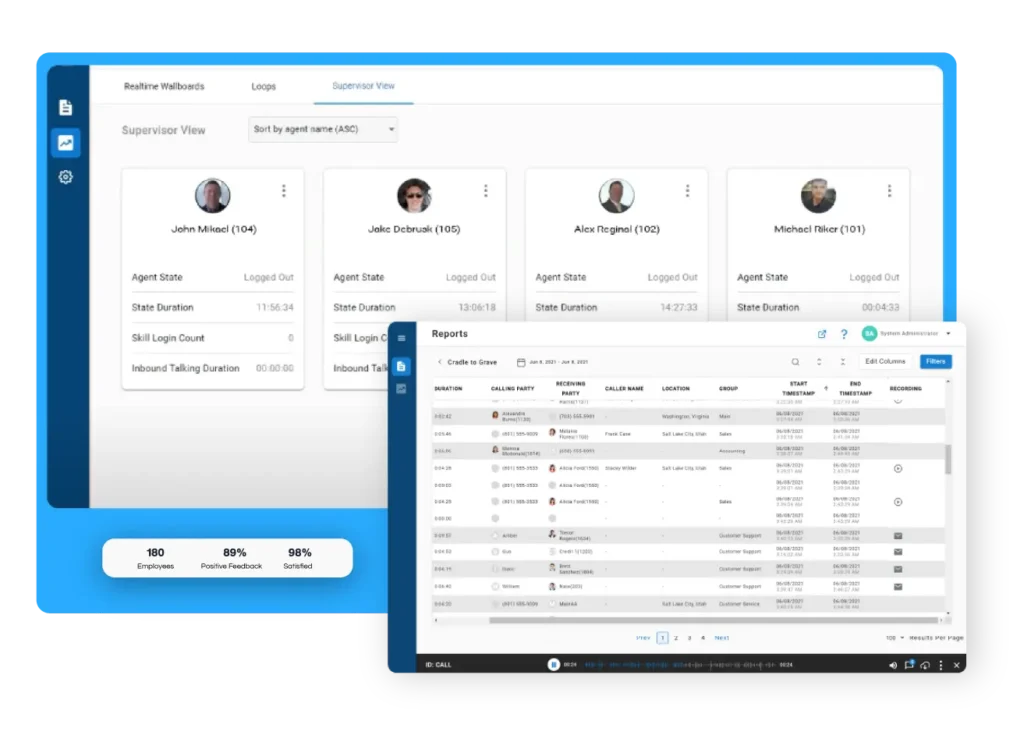
Optimization isn’t about spending more money. It’s about making the money you’re already spending actually work for you. Modern contact center software reduces waste by automating repetitive tasks, routing calls smarter, giving supervisors real-time visibility so they can fix problems before they spiral, and keeping good agents from quitting because the job is unnecessarily hard.
When budgets are tight, that efficiency ROI becomes crystal clear. You’re not adding expenses. You’re stopping the bleeding.
Customers Get Pickier When They’re Spending Carefully
Your customers are feeling the same economic pressure you are. And when people are being more careful with their money, they get more selective about who they spend it with.
A bad customer service experience used to be frustrating. Now? It’s a reason to switch. According to Zendesk’s Customer Experience Trends Report, 61% of customers will switch to a competitor after just one bad experience, and that number increases during economic uncertainty when every purchase decision gets scrutinized.
Long hold times, transferred calls that go nowhere, agents who don’t have access to account history, those “call back during business hours” dead ends? Those send a clear message: we don’t have our act together. And when customers are already nervous about spending money, that message pushes them straight to a competitor who does.
Contact center optimization isn’t just about internal efficiency. It’s about proving to your customers that you’re reliable, responsive, and worth their business. In uncertain times, that trust becomes your competitive edge.
Competitors Are Making Moves Right Now
While you’re waiting for things to feel more stable before you invest in improvements, someone else isn’t waiting. They’re upgrading their systems. They’re giving their agents better tools. They’re using AI to route calls smarter. They’re offering faster, smoother customer experiences.
And when economic pressure forces your customers to reevaluate where they’re spending their money, guess whose name comes up? The company that actually made their experience better.
Economic uncertainty doesn’t freeze the market. It reshuffles it. Companies that use this time to get smarter and more efficient come out ahead. Companies that wait and hope things get easier? They fall behind.
The gap between “good enough” contact center operations and truly optimized ones has never been more obvious. And customers notice.
The Cost of Doing Nothing Never Stops
Here’s what happens when you decide to wait:
Your agents keep struggling with outdated tools, which means turnover stays high and training costs stay brutal. Research from Deloitte and Harvard Business Review shows that replacing a frontline contact center agent costs between $12,000 and $20,000 when you factor in recruiting, training, and lost productivity.
Your customers keep having frustrating experiences, which means churn quietly ticks up. Your supervisors keep flying blind without real-time data, which means small problems turn into big fires. Your IT team keeps patching together a system that was never designed to handle what you’re asking it to do, which means downtime and emergency fixes become routine.
And all of that has a price tag. It’s just a price tag you’re paying in pieces: lost customers here, burned-out agents there, wasted hours everywhere. It doesn’t show up as one line item, so it’s easy to miss. But add it up over a year and it’s costing you more than modernization would have.
Doing nothing isn’t the safe choice. It’s just a different kind of risk, one that compounds daily.
Smart Companies Invest When Others Freeze
There’s a pattern that plays out every time the economy gets shaky: most companies pull back, freeze spending, wait for certainty. A few companies see the same uncertainty and use it as an opportunity to get better while their competitors are standing still.
Those companies come out of uncertain periods stronger. Not because they spent recklessly, but because they spent strategically. They fixed inefficiencies, improved operations, made themselves more competitive. And when things stabilized, they were miles ahead.
Contact center optimization falls into that category. It’s not a luxury expense. It’s an investment in being more efficient, more competitive, and more reliable when it matters most.
If you’re going to spend money, spend it on things that make you money. A modern contact center platform reduces costs, keeps customers, retains agents, and gives you the visibility to make smarter decisions faster. That’s not wasteful spending. That’s smart business.
Now Is When It Counts
Economic uncertainty doesn’t last forever. Eventually, things stabilize. And when they do, the companies that used the uncertainty as an excuse to wait will find themselves playing catch-up against competitors who didn’t.
You can’t control the economy. But you can control whether your contact center is a drag on your business or a driver of growth. You can control whether your customers feel supported or abandoned. You can control whether your agents have the tools to succeed or the frustrations that push them out the door.
The question isn’t whether you can afford to optimize during uncertain times. It’s whether you can afford not to.