
As of March 2026, healthcare practices are grappling with a significant challenge: patient demand is rising faster than ever, while a persistent staffing shortage puts immense pressure on teams. This often leads to a problem that practice managers and clinic administrators know all too well—long call queues, frustrated patients, and burned-out staff.
Every minute a patient waits on hold, their satisfaction drops. Each misdirected call wastes your team’s valuable time. In fact, these industry-wide pressures mean only about half of healthcare call centers are meeting patient service expectations [1]. A traditional “first-in, first-out” phone system is no longer enough. To deliver the outstanding care your patients deserve, you need a smarter strategy. This is where skills-based routing for healthcare offers a powerful, modern solution.
What is Skills-Based Routing?
A smarter way to connect patients with the right support, right away.
Simply put, skills-based routing (SBR) is an intelligent system that matches an incoming patient call to the team member who is best qualified to handle their specific need. Instead of sending a caller to the next available person, the system identifies the reason for the call and directs it to an agent with the right “skills” to solve the problem—ideally on the very first try.
Think of it like a digital triage nurse for your front desk [3]. Rather than making everyone wait in a general queue, a triage nurse quickly assesses each patient’s needs and sends them to the correct specialist. SBR applies this same efficient logic to your patient calls, creating a smooth and effective experience from the moment they connect.
In a healthcare setting, these “skills” can cover a wide range of expertise and attributes:
Language Proficiency: Routing a patient who selects “Spanish” in the phone menu directly to a bilingual team member.
Departmental Knowledge: Connecting a patient with a question about their recent cardiology visit to a scheduler in that specific department.
Administrative Expertise: Directing complex insurance questions to your billing specialist or new patient registration calls to an onboarding coordinator.
Clinical Qualifications: Forwarding a call with a potential medical question to a licensed nurse for immediate and appropriate triage.
How Skills-Based Routing Improves Key Healthcare Outcomes
Improve outcomes for your patients, your staff, and your practice.
Implementing an intelligent routing strategy delivers clear and immediate improvements across your entire organization. It’s a strategic choice that enhances support quality and provides positive outcomes for your patients, your team, and your bottom line.
Drastically Reduced Patient Wait Times: By connecting patients to the right expert on the first attempt, you eliminate the frustrating cycle of long holds and unnecessary transfers. This data-driven approach is proven to cut wait times and boost satisfaction.
Improved First Call Resolution (FCR): First Call Resolution (FCR) is a crucial metric that measures your ability to solve a patient’s issue in a single interaction. When the first person a patient speaks with has the expertise to solve their problem, FCR rates increase dramatically.
Enhanced Patient Experience (PX): A fast, smooth, and personalized interaction makes patients feel heard and valued. This directly improves key metrics like CSAT (Customer Satisfaction Score) and NPS (Net Promoter Score), which reflect patient loyalty. A better process ultimately boosts everyone’s experience.
Increased Staff Efficiency and Morale: Your team is your most important asset. Skills-based routing empowers them by ensuring they receive inquiries that match their unique talents. Agents feel more effective and less stressed, which is crucial for reducing burnout and improving job satisfaction.
Ready to see how these benefits can transform your practice? Request a Demo of Xima’s skills-based routing today.
How to Implement Skills-Based Routing with Xima: A 3-Step Guide
Transitioning to an intelligent routing system is a straightforward process with Xima Software. Our cloud-based contact center platform is designed for easy setup and powerful customization, so you can get up and running quickly.
Step 1: Identify and Map Your Team’s Core Skills
Before you can route calls based on skills, you need to know what they are. Work with your team leaders to create a “skills matrix”—a simple map of every team member and their unique capabilities.
Go beyond job titles to get a clear picture:
Who is fluent in languages other than English?
Who is the go-to expert for handling claims from specific insurance providers?
Who specializes in scheduling for complex procedures or specific departments like pediatrics or orthopedics?
Are there team members with clinical credentials, like licensed nurses, who can handle triage-related questions?
Step 2: Design Your Intelligent Call Flow
This is where your strategy comes to life. Xima’s skills-based routing makes this process seamless. You will use an IVR (Interactive Voice Response) system—the automated menu that greets callers—to identify their needs upfront and tag each call with the right skill.
Configure Your IVR Menu: Structuring your IVR to match common patient needs is one of the most effective healthcare call center best practices. For example:
“For Appointments, press 1.” → Tags the call with the
Schedulingskill.“For Billing and Insurance, press 2.” → Tags the call with the
Billingskill.“Para Español, oprima nueve.” → Tags the call with the
Spanishskill.
Assign Skills to Agents: In the Xima platform, you will assign these same skills to each contact center voice agent. You can even set proficiency levels (e.g., primary, secondary) to ensure calls always go to the most qualified person available. By automating this sorting, you also empower patients with valuable self-service options that improve healthcare access.
Step 3: Launch, Monitor, and Optimize
An intelligent routing system isn’t a “set it and forget it” tool; it’s a dynamic asset that gets better over time. The real power comes from using data to make continuous, informed improvements.
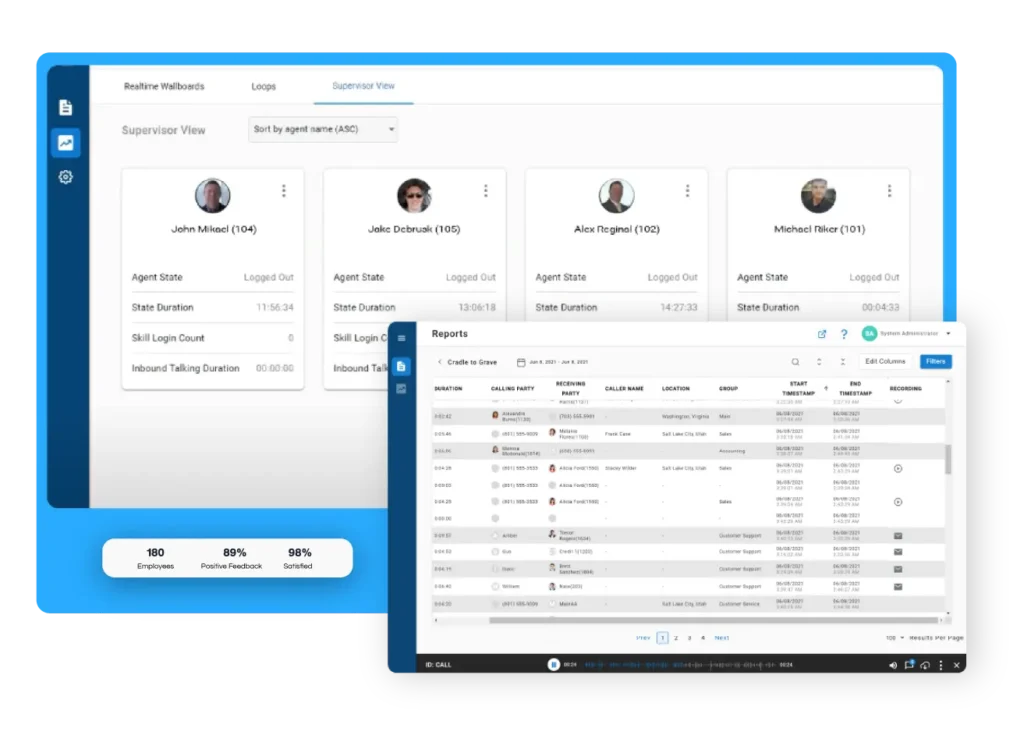
Xima provides a full suite of features built for you, including real-time dashboards and historical reports that give you actionable insights. Keep a close eye on these key performance indicators (KPIs):
Average Wait Times by Skill: Are callers needing
Billingsupport waiting longer than others? It might be time to train more agents on that skill.Call Transfer Rates: If calls tagged for
Schedulingare frequently being transferred, your IVR prompt may need clarification.First Call Resolution Rates: Track this metric for each skill to identify what’s working well and find opportunities for data-driven improvements.
See the Difference: A Real-World Patient Scenario
The difference between traditional routing and skills-based routing is night and day. Let’s look at how Xima transforms a common patient scenario, dramatically improving the experience for everyone involved [8].
Scenario | Traditional Routing (Without SBR) | Xima’s Skills-Based Routing |
|---|---|---|
Patient Need | A Spanish-speaking patient needs to reschedule an appointment with a cardiology specialist. | A Spanish-speaking patient needs to reschedule an appointment with a cardiology specialist. |
The Journey | Patient waits 8 mins → Reaches a general receptionist → Placed on hold → Transferred to scheduling (who doesn’t speak Spanish) → Another transfer → Finally reaches the right person after 15+ minutes. | IVR identifies “reschedule” and “Spanish” → Call is automatically routed to an agent with “Cardiology Scheduling” and “Spanish” skills → Appointment is rescheduled in under 5 minutes on the first call. |
Outcome | High patient frustration, long call handle time, and multiple staff members involved. | High patient satisfaction, fast resolution, and efficient use of staff time. |
Empower Your Team and Improve Patient Care Today
In today’s healthcare environment, skills-based routing for healthcare is no longer a luxury—it is a necessity. Faced with rising patient expectations and critical staff shortages, you need a communication system that works smarter, not harder.
By matching patient needs to agent expertise from the very first moment, you can dramatically reduce wait times, boost patient satisfaction, and empower your team to do their best work. It’s a win-win that transforms your patient communications from a source of frustration into a center for excellence.
Don’t let long wait times define your patient experience. Empower your team and deliver exceptional care from the first call. Get Your Free Demo Today and see how Xima can transform your contact center.