
Customer expectations are rising, budgets are tighter, and AI is evolving faster than most buying teams can track, especially for small businesses managing growth with lean teams. At the same time, contact centers are expected to deliver consistent, personalized service across every channel without increasing headcount. Choosing the wrong vendor can lock organizations into rigid contracts, fragile technology, and unclear AI practices that can create risk over time.
This guide is designed for small business decision-makers and growing SMB teams in the final stages of vendor evaluation. It focuses on the red flags that only become visible when you look beyond feature lists and demos. By understanding where contact center vendors often fall short, buyers can avoid costly mistakes and choose a platform that supports long-term customer experience, operational stability, and responsible innovation.
To help you vet providers quickly, here is a summary of the most common contact center vendor red flags, their impact on small business operations, and the “green flag” alternatives to look for instead.
Red Flag | Why It’s Risky for SMBs | Green Flag Alternative |
Hidden fees or unclear pricing | Unexpected costs strain lean budgets and reduce ROI. | Transparent, all-in pricing with clear implementation and usage costs. |
Omnichannel features sold separately | Increases tool sprawl and makes workflows more complex. | Unified licensing that includes voice, SMS, chat, and email in one seat. |
“No-code” tools that require IT support | Slows down adoption and forces reliance on expensive tech talent. | True drag-and-drop builders that CX managers can update in minutes. |
Weak or shallow integrations | Creates manual data entry and limits visibility into the customer journey. | Native, bi-directional sync with CRMs like HubSpot, Salesforce, or Zoho. |
AI without governance or transparency | Introduces compliance risks and potential for “AI hallucinations.” | Governed AI with clear data privacy policies and human-in-the-loop controls. |
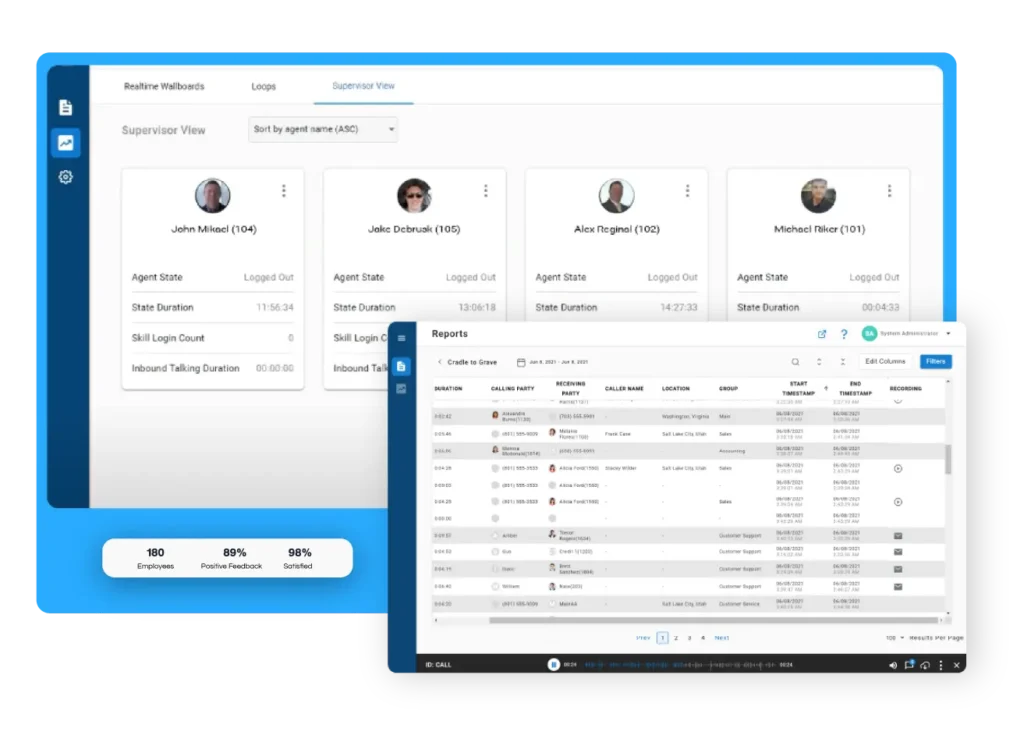
Limited reporting or delayed analytics | Makes it impossible to make fast, data-driven decisions. | Real-time dashboards and automated sentiment analysis for instant insights. |
Poor onboarding or gated support | Extends time-to-value and frustrates small, busy teams. | Widely available support and a dedicated onboarding specialist included. |
Rigid, long-term contracts | Reduces your ability to pivot or scale as the business grows. | Flexible annual terms with clear exit clauses. |
What Defines a Strong Contact Center Vendor in 2025
Modern contact center vendors often look similar at first glance. Most promise omnichannel engagement, AI-powered automation, and enterprise-grade security. The real differences appear when you examine how these capabilities work in practice and how well they support day-to-day operations.
Stronger vendors emphasize unified experiences, practical automation, transparent pricing, and tools that operations teams can manage without excessive technical lift. For small businesses, this balance is critical. Platforms built with this mindset, including vendors like Xima, tend to prioritize clarity and usability over complexity, helping SMBs scale support operations without overbuying enterprise features they may never use.
Core Solutions: CCaaS, UCaaS, and Omnichannel Communication
In 2025, contact center as a service and unified communications as a service should work together seamlessly. Agents should be able to move between voice, chat, email, SMS, and social messaging without losing context or customer history.
A common red flag is omnichannel support that exists only on paper. Some vendors split channels into separate products or pricing tiers, creating silos that limit visibility and complicate reporting. By contrast, platforms that unify channels by default, as Xima does, help teams maintain consistent routing, shared data, and a clearer view of the customer journey.
Integrations That Support Real Work
Integrations should reduce friction, not introduce more complexity. CRM connections with platforms like Salesforce or Microsoft Dynamics should surface complete customer histories automatically and support real workflows without custom development.
A common red flag is a long integration list backed by shallow connectors. These often require manual data entry, third-party middleware, or expensive professional services to function properly. For SMBs without dedicated IT resources, this can slow adoption and inflate the total cost of ownership. Strong contact center vendors prioritize ease of use, reliable sync, and integrations that work out of the box.
Clear Pricing and Contract Transparency
Pricing transparency is no longer optional. Reputable vendors provide clear breakdowns of licensing models, telephony costs, support tiers, and implementation fees.
Watch for vague proposals, hidden charges, or restrictive multi-year contracts with limited exit options. These risks disproportionately impact small businesses that need flexibility as priorities shift. Flexible terms, straightforward billing, and clearly defined service levels are signs of a vendor that expects to earn long-term loyalty rather than rely on lock-in.
AI Promises vs. AI Reality When Vendors Overpromise
Some vendors, including Xima, treat AI as a supporting capability designed to improve workflows and agent effectiveness rather than a standalone selling point. For small businesses, this approach matters. Practical AI that reduces manual work and supports agents is often more valuable than complex tools that require ongoing oversight or specialized expertise.
AI Assistants and Workflow Automation
AI assistants, digital workers, and no-code automation can significantly reduce agent workload and improve response times when implemented correctly. Virtual assistants should handle common inquiries, trigger workflows, and support agents during live interactions.
A major red flag appears when so-called no-code tools require heavy IT involvement or extensive configuration to deliver basic outcomes. For SMB teams, automation that relies on custom scripting or outside consultants can slow growth rather than enable it.
Sentiment Analysis & Real-Time Visibility
Real-time sentiment analysis helps supervisors coach agents, identify frustrated customers, and intervene before issues escalate. The value comes from immediate visibility and actionable insights, not just post-call reports.
Be cautious of vendors that promote sentiment tracking without explaining how models are trained, how accuracy is measured, or where limitations exist. Transparency around AI performance is essential for trust and adoption.
AI Trust, Governance, and Compliance
As AI becomes embedded in customer interactions, governance matters. Strong contact center vendors publish clear standards for data usage, model oversight, and bias mitigation. They provide auditability and human review options to support enterprise compliance requirements.
Unclear data ownership, vague governance policies, or an absence of published standards are serious warning signs. Without proper oversight, AI introduces long-term risk rather than value.
Operational Gaps That Signal Vendor Risk
Operational weaknesses often surface after implementation, when it is most expensive to switch platforms. For small businesses, these gaps can disrupt customer experience and strain already limited internal resources. Identifying them early can prevent downstream disruption.
Multilingual Support and Real-Time Interpretation
Multilingual support expands reach and improves accessibility, especially for global or diverse customer bases. Real-time voice interpretation is particularly important for contact centers handling complex or sensitive interactions.
A common red flag is a translation that only works for chat channels or depends entirely on unreliable third-party tools. Inconsistent language support creates uneven customer experiences and agent frustration.
Callback Display and Queue Transparency
Callback features and live queue updates empower customers to manage their time and reduce abandonment. Accurate wait time estimates and reliable callback execution are critical during peak volumes.
Vendors whose systems fail under load or provide misleading queue information undermine customer trust. These issues often appear only after real-world traffic increases.
Workforce Engagement and Quality Monitoring
Workforce engagement tools support coaching, quality assurance, and agent development. Modern platforms combine automated scoring, targeted feedback, and performance trends with human oversight.
Security and compliance also play a role here. Certifications such as SOC 2, PCI DSS, HIPAA, and ISO 27001, along with documented breach response plans and regular audits, indicate operational maturity.
Red flags include lagging data, opaque scoring models, or QA processes that rely almost entirely on manual reviews.
Reporting and Analytics That Drive Decisions
Dashboards should be intuitive, timely, and aligned with operational goals. Leaders need immediate access to KPIs like service levels, resolution rates, and customer satisfaction.
If reports require analysts to interpret basic metrics or arrive days after activity occurs, decision-making slows. Delayed or incomplete data is a sign that reporting was added as an afterthought.
How to Spot Warning Signs During Vendor Evaluation
Beyond features, the evaluation process itself reveals how a vendor operates. Sales behavior, documentation quality, and responsiveness often reflect future service experiences.
References, Metrics, and Case Studies
Credible contact center vendors provide specific performance metrics, current client references, and detailed case studies. These materials should explain challenges, approaches, and measurable outcomes.
Avoid vendors that rely on outdated examples or that do not share references. A lack of verifiable proof suggests limited experience or inconsistent results.
Security, Data-Handling, and Transparency
Vendors should be open about their corporate structure, financial stability, compliance posture, and physical presence. Security documentation should be current and easy to access.
Vague answers, outdated certifications, or conflicting information are strong indicators of risk, especially for organizations handling sensitive customer data.
Service Quality, Communication, and Support
Reliable vendors communicate clearly, avoid high-pressure sales tactics, and invest in onboarding and ongoing support. They set realistic timelines and provide thorough documentation.
Warning signs include rushed implementations, support locked behind expensive tiers, or frequent changes in account ownership that disrupt continuity.
Building Resilient, Future-Ready Customer Engagement
Choosing among contact center vendors requires more than comparing feature lists. The strongest platforms combine advanced AI with responsible governance, transparent contracts, robust integrations, and operational reliability.
By identifying red flags early, organizations can avoid costly replatforming and build customer engagement strategies that scale with confidence. Vendors that address these concerns directly position themselves as long-term partners, not short-term solutions, supporting consistent experiences and clear communication well into the future.