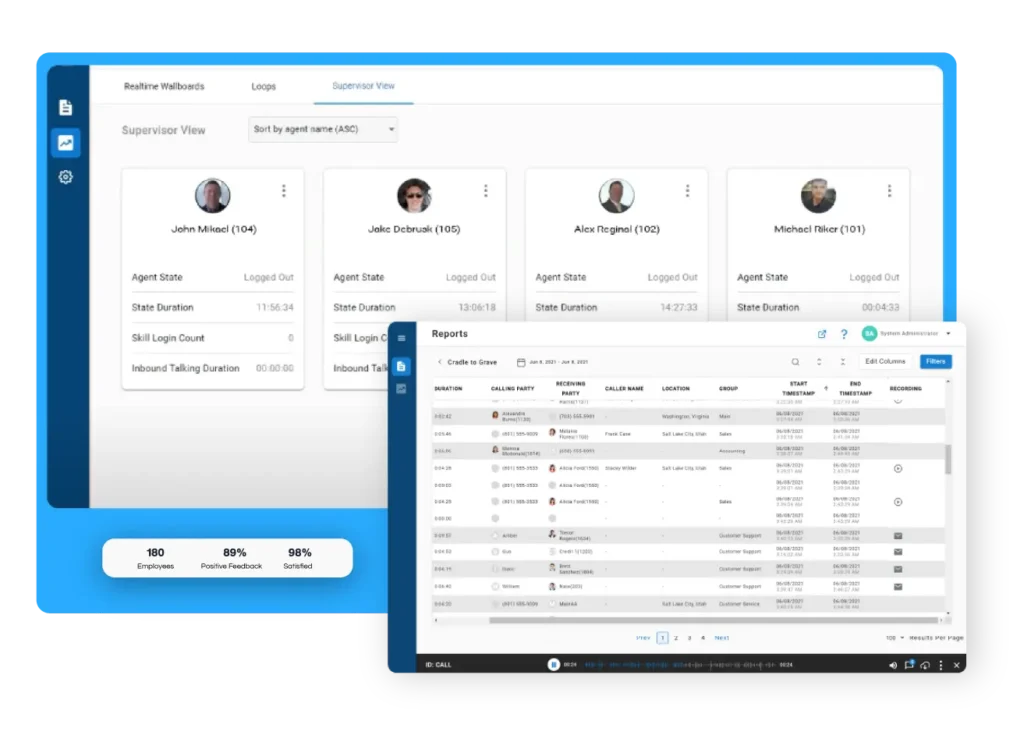

Your business has thousands of customer conversations, each one filled with valuable insights about what your customers want and need. But manually listening to and analyzing every single call is simply impossible. So, how do you tap into this goldmine of information? The answer is AI-powered speech analytics.
This technology acts like a super-powered assistant, automatically analyzing voice data from your customer interactions to give you clear, actionable intelligence. It helps companies understand customer needs, improve agent performance, and make their operations more efficient. This article will explain what speech analytics is, how it works, and the powerful benefits it can bring to your business.
What is AI Speech Analytics?
AI speech analytics is a technology that uses artificial intelligence to record, turn into text, and analyze voice conversations to find useful information [1]. The main goal is to transform spoken words, which are normally unstructured, into organized data that you can easily search and study. Xima’s speech analytics performs the analysis described here.
Instead of just checking a few random calls, speech analytics looks at 100% of your customer interactions. This gives you a complete picture of customer trends, their feelings about your brand, and how well your agents are performing. By using this technology, your business can make smarter, data-driven decisions to enhance every part of the customer journey, an approach central to our Speech Analytics platform.
How Does Speech Analytics Work? The 3-Step Process
Speech analytics follows a simple but powerful three-step process to turn spoken conversations into useful data. Advanced platforms like Xima Software’s Contact Center Speech Analytics handle this entire process for you, delivering insights that can make an immediate impact. Capture starts with Xima’s call recording.
1. Transcription: Converting Speech to Text
The first step is turning spoken words into written text. This is done using a technology called Automatic Speech Recognition (ASR). Modern ASR systems are incredibly accurate and can understand different accents, dialects, and even conversations with background noise [2]. This step creates a complete, searchable text version of every call, which is the foundation for all the analysis that follows.
2. Analysis: Uncovering Insights with AI
Once the call is transcribed, AI gets to work. Using Natural Language Processing (NLP), the system analyzes the text to understand what was discussed. It can identify important keywords, phrases, and topics that come up frequently.
But it doesn’t stop there. The technology also performs sentiment analysis to figure out the emotional tone of the call—was the customer happy, neutral, or frustrated? This helps you understand how the customer felt during the interaction, giving you much deeper insight than words alone [3].
3. Reporting: Visualizing Actionable Data
In the final step, all this analyzed information is presented in easy-to-read dashboards and reports. This allows managers and supervisors to quickly spot trends, track important metrics, and dive into specific calls if they need more detail. At Xima Software, we focus on this crucial step, ensuring that our Speech Analytics provides data delivered in a way that gives leaders clear, actionable insights to drive better business decisions.
Key Benefits of Adopting Speech Analytics
Bringing speech analytics into your contact center offers significant advantages that can transform your business.
Dramatically Improve Customer Experience (CX)
By analyzing every call, you gain a deep understanding of what your customers need and how satisfied they are. You can quickly identify common problems or pain points and fix them before they become bigger issues, which reduces customer frustration. When companies truly listen to what their customers are saying, it leads to higher satisfaction, greater loyalty, and a much better brand reputation [4].
Boost Agent Performance and Engagement
Speech analytics automates the quality assurance (QA) process, allowing you to review 100% of calls instead of a tiny, random sample. This gives you solid data to provide targeted coaching to agents who need it and to identify the successful tactics used by your top performers. As our voice analytics guide explains, this data-driven feedback helps agents grow their skills. Some advanced systems, like those from Xima Software, can even give agents helpful suggestions in real-time during a call, empowering them to solve problems more effectively.
Increase Operational Efficiency and Compliance
When you understand the root cause of why customers are calling, you can streamline your processes to handle those issues more efficiently, which can lower your average handle time. Speech analytics also automatically checks if agents are following required scripts and regulations, which helps reduce business risk. This automation frees up your supervisors from tedious manual reviews, so they can focus on more important tasks like coaching and strategy.
Unlock Your Call Center’s Potential with Xima
AI speech analytics is no longer a futuristic idea—it’s an essential tool for any business that wants to stay competitive. By turning your customer conversations into valuable insights, you can make smarter decisions that improve your company from the inside out.
Xima Software’s Speech Analytics platform offers a powerful yet easy-to-use solution that combines AI-driven transcription, sentiment analysis, and real-time reporting. By using Xima, you can transform every customer conversation into an opportunity for growth, better agent performance, and stronger customer relationships.
Ready to turn customer conversations into your greatest asset? Schedule a demo of Xima today to see how speech analytics can revolutionize your contact center.
Frequently Asked Questions about Speech Analytics
Though they sound similar, these terms refer to two different things:
- Speech analytics focuses on the what of a conversation—the words and phrases that were said.
- Voice analytics focuses on the how by analyzing acoustic qualities like the tone, pitch, and pace of someone’s voice to detect their emotional state.
Many modern platforms, including Xima Software, combine both to give you a complete picture of every interaction. You can learn more about this in our comprehensive voice analytics guide.
The accuracy of today’s AI-powered systems is very high. However, results can be affected by factors like poor call quality, strong accents, or a lot of background noise. Leading platforms are constantly learning and improving their AI models to become even more accurate over time, as seen in the machine learning capabilities of Xima’s Contact Center Speech Analytics.
Any business that wants to improve customer service, ensure compliance, or gain better visibility into their customer experience can benefit from speech analytics. It’s especially valuable in industries like financial services, healthcare, retail, and technology, but its advantages apply to any organization that communicates with customers over the phone [6].