
Somewhere in your contact center right now, an agent is handling a call while juggling three different screens—your CRM, your phone system, and a spreadsheet tracking who’s in queue. Meanwhile, a customer is waiting on hold for an answer that could’ve been delivered instantly through chat. This is the operational reality most SMB contact center leaders know too well.
The gap between what your contact center could do and what it actually delivers is widening. Enterprise companies have been adopting AI automation, omnichannel platforms, and real-time analytics for years. Now, those same capabilities are available to smaller organizations—without the complexity, cost, or six-month implementation timelines.
This guide walks you through what next-generation contact center technology actually means for SMBs in 2026, how to evaluate the options, and what questions to ask before you make a decision.
Key Takeaways: Next-Generation Contact Center Tech for SMBs in 2026
- AI-powered quality assurance can score 100% of your interactions, eliminating the blind spots created by manual sampling.
- Omnichannel platforms unify voice, chat, email, and SMS into one view so agents stop switching between disconnected tools.
- Real-time analytics give supervisors immediate visibility into queue performance, agent status, and customer sentiment as calls happen.
- Xima Software delivers enterprise-grade contact center features to SMBs through user-friendly interfaces and transparent pricing models.
- Cloud deployment options let you modernize your contact center without replacing your existing phone system or infrastructure.
What Is Next-Generation Contact Center Technology?
Next-generation contact center technology refers to the combination of AI automation, unified omnichannel communication, and real-time operational analytics that enables organizations to deliver faster, more personalized customer service. For SMBs, this means access to capabilities that were previously locked behind enterprise contracts and complex implementations. Xima’s contact center solutions for small businesses are scoped to SMB teams
The core components include AI-powered tools for quality assurance and speech analytics, platforms that consolidate voice, chat, email, and SMS into a single interface, and dashboards that display live performance metrics. These aren’t futuristic concepts anymore—they’re operational realities for contact centers that have made the switch.
What makes this generation different is accessibility. The technology has matured to the point where smaller teams can deploy and manage these systems without dedicated IT staff or months of training.
Why SMBs Need Modern Contact Center Technology in 2026
Your customers expect the same service quality from a 20-agent contact center as they do from a global brand. They don’t care about your headcount or budget—they care about getting answers quickly, through whatever channel they prefer, without repeating themselves.
Here’s what’s changed: the operational costs of NOT modernizing have become measurable. Every hour a supervisor spends manually reviewing call recordings is an hour not spent coaching agents. Every customer who abandons a call because of long hold times represents lost revenue and a potential complaint.
According to research from McKinsey, organizations that effectively deploy AI in contact centers can reduce average handle time by 20-40% while improving customer satisfaction scores. For SMBs operating with tight margins, those improvements translate directly to the bottom line.
The Real Cost of Outdated Contact Center Tools
Manual quality assurance is the clearest example. Most contact centers review 1-5% of calls through random sampling. That means 95-99% of your customer interactions are invisible from a quality perspective.
Fill in your real numbers below:
- Number of agents: ___
- Average calls per agent per day: ___
- Percentage of calls reviewed: ___
- Hours per week spent on manual QA: ___
The last row is what you’re actually working with. That’s not a soft cost—it’s a real one, and it compounds every week.
Understanding AI Automation for Contact Centers
AI in contact centers isn’t about replacing agents. It’s about eliminating the invisible work that consumes supervisor time and creates operational blind spots. The most impactful applications include automated quality assurance scoring, real-time speech analytics, and intelligent call routing.
AI-Powered Quality Assurance
Traditional QA relies on supervisors listening to a small sample of calls and scoring them against a checklist. The first problem is coverage—at 1-5% review rates, you’re making decisions based on incomplete data. The second problem is timing. By the time feedback reaches an agent, they’ve handled hundreds more interactions the same way.
AI-powered QA changes this equation. Xima Software’s Auto QA feature scores 100% of interactions automatically, flagging compliance issues, identifying coaching opportunities, and surfacing sentiment patterns in real time. Instead of random sampling, supervisors get a complete picture of what’s happening across every conversation.
Speech Analytics and Sentiment Analysis
Speech analytics converts call recordings into searchable, analyzable data. You can identify trending topics, track compliance phrase usage, and detect escalation patterns before they become complaints.
Sentiment analysis adds another layer by measuring emotional tone throughout conversations. When an agent’s call starts positive and ends negative, that’s a coaching opportunity. When multiple calls follow that pattern, it’s a process issue.
How to Evaluate AI Capabilities in Contact Center Platforms
Not all AI implementations deliver equal value. Use these questions in every demo:
- What percentage of interactions does your AI actually analyze? (If it’s not 100%, ask why.)
- How quickly do QA scores and sentiment data appear after a call ends?
- Can supervisors customize scoring criteria for our specific compliance requirements?
- What human oversight controls are built into the AI governance model?
If a vendor pivots away from any of these or redirects you to a different part of the demo, that’s your answer.
Building an Omnichannel Contact Center Strategy
Omnichannel support means your customers can reach you through voice, chat, email, SMS, or social media—and have a consistent experience regardless of which channel they choose. More importantly, it means your agents see the complete customer journey in one view, without switching between disconnected systems.
What Omnichannel Actually Requires
The term gets overused in vendor marketing. True omnichannel capability requires three things:
Unified routing: Interactions from any channel enter the same queue and get routed based on agent skills, availability, and customer priority—not which channel the customer happened to use.
Shared context: When a customer who sent an email yesterday calls today, the agent sees that email conversation immediately. No “can you explain what you already told my colleague” moments.
Consistent reporting: Your dashboards should display metrics across all channels in one place, so you’re not stitching together spreadsheets to understand overall performance.
Channel-Specific Considerations for SMBs
Voice: Still the primary channel for complex issues and high-value interactions. Focus on reducing hold times through queue callback features and skills-based routing.
Web chat: Ideal for quick questions and routine requests. Look for platforms that support chatbot handoff to live agents when conversations become complex.
Email and SMS: Often overlooked channels that can reduce call volume when customers have the option to receive updates asynchronously.
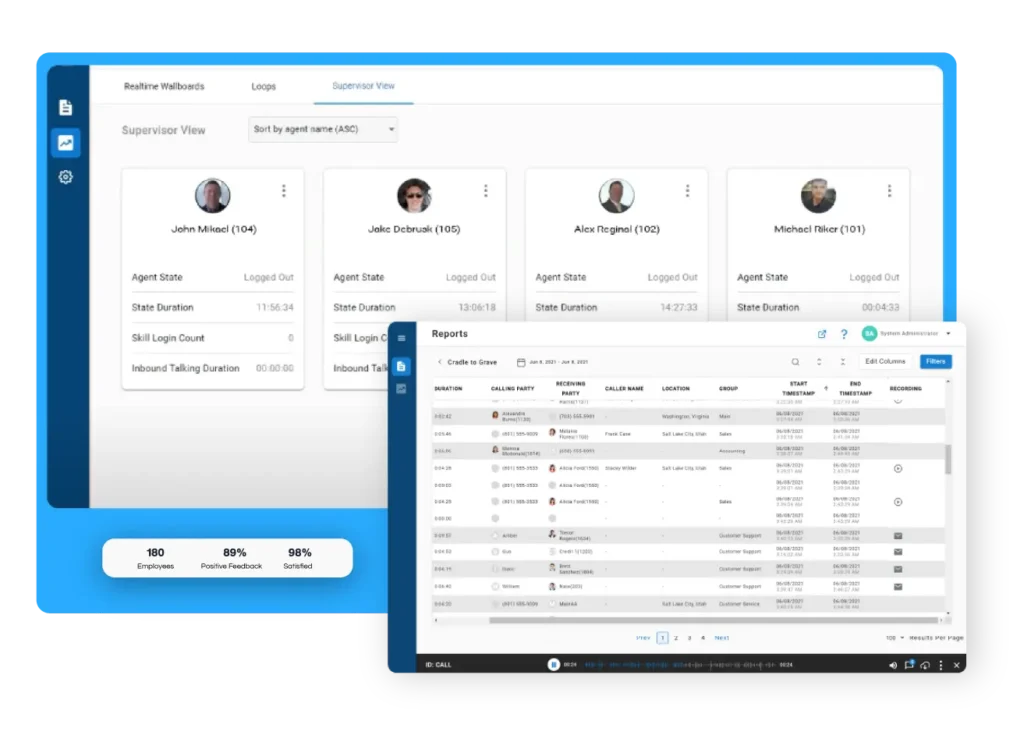
Xima CCaaS unifies all these channels into a single platform, giving your agents one interface to manage voice calls, web chat, email, and SMS conversations. The result: no more toggling between screens, and every interaction captured in your cradle-to-grave reporting.
Real-Time Analytics and Reporting for Contact Center Operations
Real-time visibility separates reactive contact centers from proactive ones. When you can see queue depth climbing, agent statuses shifting, and handle times extending as they happen, you can intervene before small problems become customer complaints.
What Real-Time Dashboards Should Display
Effective wallboards and dashboards show supervisors the metrics that matter most:
- Current queue depth and average wait time by queue
- Agent status (available, on call, in wrap-up, on break)
- Service level performance against target thresholds
- Abandoned call rate in the current hour
- Sentiment alerts for calls requiring attention
The goal isn’t to display every possible metric. It’s to surface the information that enables immediate action.
Historical Reporting for Operational Decisions
Real-time data tells you what’s happening now. Historical reporting tells you why it’s happening and what to change. Look for platforms that offer:
Cradle-to-grave call tracking: The ability to follow a single interaction from the moment it enters your system until wrap-up completes, including transfers, hold times, and dispositions.
Scheduled report delivery: Supervisors should receive performance summaries automatically, not spend time pulling reports manually.
Customizable dashboards: Different roles need different views. A supervisor needs agent-level detail; a director needs department-level trends.
How Xima Software Approaches Contact Center Analytics
Xima Chronicall and Xima CCaaS both deliver real-time wallboards and scheduled reporting capabilities designed specifically for SMB operations. Rather than overwhelming you with enterprise-scale complexity, the platform focuses on actionable metrics you can use immediately.
Supervisors can monitor queue performance through customizable wallboards that update in real time. Managers can schedule reports to land in their inbox before their morning standup. And because Xima captures every interaction from start to finish, you’re never missing data when questions arise.
How to Evaluate Contact Center Technology Vendors
The vendor landscape for contact center technology is crowded. Every platform promises AI, omnichannel, and analytics. The difference is in how those capabilities actually work for SMB operations.
Questions to Ask During Every Demo
Use these questions to separate marketing claims from operational reality:
On implementation:
- What does your typical implementation timeline look like for a team our size?
- Can we keep our existing phone numbers and handsets?
- What training resources are included, and how long until agents are productive?
On integrations:
- Show me how your platform connects to [your CRM]. Is it native or through middleware?
- How does data sync between systems, and how frequently?
- What happens to our data if we decide to switch platforms later?
On pricing:
- What’s included in your base pricing versus add-ons?
- How does pricing scale as we add agents or channels?
- Are there contract minimums or early termination fees?
Red Flags to Watch For
Some vendor behaviors signal problems you’ll encounter after signing:
- Reluctance to show specific features during demos (pivoting to slides instead)
- Implementation timelines that seem too short for your complexity
- Unclear answers about data ownership or export capabilities
- Support tiers that lock basic assistance behind premium plans
Cloud vs. On-Premises Deployment for SMB Contact Centers
The deployment decision affects more than just where your servers live. It impacts your flexibility, compliance posture, and total cost of ownership.
When Cloud Deployment Makes Sense
Cloud contact center platforms (CCaaS) offer several advantages for SMBs:
Speed to deployment: Most cloud implementations complete in weeks rather than months. You’re not waiting for hardware procurement or network infrastructure changes.
Scalability: Adding agents or channels doesn’t require capacity planning. The platform scales with your needs.
Automatic updates: Feature improvements and security patches deploy automatically, without requiring IT intervention or scheduled downtime.
Remote work support: Agents can work from anywhere with an internet connection and browser access.
When On-Premises Deployment Still Matters
Some organizations have legitimate reasons to keep contact center infrastructure local:
Regulatory requirements: Certain industries mandate specific data residency or handling requirements that complicate cloud deployment.
Existing infrastructure investment: Organizations with recent significant investments in phone systems may want to extend that lifecycle.
Predictable costs: On-premises licensing eliminates variable monthly fees, which can simplify budgeting.
Xima Software offers both deployment options—Xima CCaaS for cloud-first organizations and Chronicall for those who need on-premises capabilities—so you’re not forced into a deployment model that doesn’t fit your requirements.
Integration Requirements for Modern Contact Centers
Your contact center doesn’t operate in isolation. It connects to your CRM, your ticketing system, your EHR (for healthcare organizations), and potentially dozens of other applications. The quality of those integrations determines whether agents work efficiently or waste time copying data between screens.
CRM Integration Essentials
At minimum, your contact center should support:
- Screen pop of customer records when calls arrive
- Click-to-dial from within the CRM interface
- Automatic logging of call data back to the customer record
- Bi-directional sync that updates both systems
Native integrations—built directly between the contact center and CRM—typically perform better than middleware connections that add latency and potential failure points.
Healthcare-Specific Integration Considerations
Healthcare contact centers face additional integration requirements around EHR/EMR systems. Xima Software integrates with over 70 electronic health record systems, allowing agents to access patient context during calls while maintaining HIPAA compliance.
For healthcare organizations, this means agents can verify appointments, update contact information, and document interactions without leaving the contact center interface.
Microsoft Teams Integration
Many SMBs have standardized on Microsoft Teams for internal communication. Contact center integration with Teams allows agents to collaborate with subject matter experts during calls, transfer conversations to specialists, and maintain unified presence across platforms.
Compliance and Security in Contact Center Technology
For contact centers handling sensitive data—financial information, healthcare records, payment card details—compliance isn’t optional. Your platform choice directly affects your ability to meet regulatory requirements.
HIPAA Compliance for Healthcare Contact Centers
Healthcare contact centers must ensure:
- Protected Health Information (PHI) is encrypted in transit and at rest
- Access controls limit who can view patient data
- Audit trails document every interaction with patient records
- Business Associate Agreements (BAAs) are in place with vendors
PCI DSS Compliance for Payment Processing
Contact centers that handle payment card data must comply with PCI DSS requirements, including:
- Pause/resume recording capabilities to avoid capturing card numbers
- Secure data handling for stored payment information
- Regular security assessments and vulnerability scanning
AI Governance and Transparency
As AI becomes more embedded in contact center operations, governance becomes critical. Questions to ask:
- What data does the AI use for training, and who owns that data?
- Can we audit AI decisions and scoring criteria?
- What human oversight exists for automated QA scoring?
- How does the vendor handle data privacy for speech analytics?
Xima Software implements governed AI with documented privacy policies and human oversight controls, so you maintain visibility into how automation affects your operations.
Building Your Contact Center Technology Evaluation Checklist
Before you start scheduling demos, document your requirements. This checklist helps you compare vendors objectively.
Current State Assessment
Answer these questions honestly:
- How many agents do you have today, and what growth do you anticipate?
- Which channels do your customers currently use to reach you?
- What CRM, EHR, or ticketing systems must the platform integrate with?
- What percentage of calls does your team currently review for quality?
- What’s your biggest operational pain point right now?
Must-Have vs. Nice-to-Have Features
Categorize your requirements to avoid scope creep during evaluation:
Must-have examples:
- Native integration with Salesforce
- HIPAA-compliant call recording
- Real-time queue visibility for supervisors
Nice-to-have examples:
- AI-powered sentiment analysis
- SMS channel support
- Advanced workforce management scheduling
Total Cost of Ownership Factors
Platform pricing is only part of the equation. Factor in:
- Implementation and training costs
- Integration development or middleware licensing
- Ongoing support tier requirements
- Agent productivity during the learning curve
- IT resources for maintenance and updates
Your 30-Day Next-Generation Contact Center Action Plan
You don’t need to overhaul your contact center in a week. But you do need to start closing the gap between where you are and where the technology enables you to be.
Week 1: Document Current State
- Calculate your actual QA coverage percentage
- Map your current customer channels and identify gaps
- List every system agents currently use during calls
- Quantify supervisor time spent on manual reporting
Week 2: Define Requirements
- Identify must-have features based on your pain points
- Document integration requirements with existing systems
- Determine compliance requirements for your industry
- Set realistic timeline expectations for implementation
Week 3: Research and Shortlist
- Research vendors that serve your industry and company size
- Request demos from 2-3 platforms that meet your criteria
- Prepare your evaluation questions from this guide
Week 4: Evaluate and Decide
- Conduct demos with your prepared question list
- Score each vendor against your requirements
- Check references from similar-sized organizations
- Make your recommendation to stakeholders
In Conclusion: Choosing the Right Contact Center Technology for Your SMB
The question isn’t whether you need better contact center technology. The question is how long you’re willing to operate with blind spots in your quality program, disconnected customer channels, and supervisor time consumed by manual work that could be automated.
Next-generation contact center technology—AI automation, omnichannel support, and real-time analytics—is no longer reserved for enterprise budgets. Platforms designed for SMB operations make these capabilities accessible without requiring dedicated IT staff or six-month implementations.
Xima Software built both Chronicall and Xima CCaaS specifically for organizations that need powerful contact center capabilities without enterprise complexity. From AI-powered Auto QA that scores every interaction to omnichannel platforms that unify voice, chat, and email in one view, the tools to modernize your contact center exist today.
Ready to see what’s possible? Schedule a demo to see how Xima’s contact center technology works for teams like yours.
FAQs About Next-Generation Contact Center Technology for SMBs
What is the difference between a contact center and a call center?
A call center handles voice calls only. A contact center manages multiple communication channels—voice, chat, email, SMS, and social media—through a unified platform. Modern contact center technology like Xima CCaaS unifies all channels so agents see complete customer context regardless of how customers reach you.
How does AI improve contact center quality assurance?
AI-powered QA automatically scores every customer interaction instead of relying on manual sampling. Xima Software’s Auto QA feature analyzes 100% of calls for compliance, sentiment, and coaching opportunities—eliminating the blind spot created when supervisors can only review 1-5% of conversations manually.
What should SMBs look for in omnichannel contact center software?
Look for unified routing across all channels, shared customer context between conversations, and consolidated reporting. Your agents should work in one interface regardless of channel. Xima CCaaS brings voice, web chat, email, and SMS into a single platform with cradle-to-grave reporting that captures every interaction.
How long does it take to implement cloud contact center technology?
Cloud contact center implementations typically complete in weeks rather than months. Xima Software offers white-glove onboarding that minimizes disruption and gets agents productive quickly. On-premises deployments may take longer depending on infrastructure requirements.
Can I keep my existing phone numbers when switching contact center platforms?
Yes. Most modern contact center platforms, including Xima Software, allow you to port existing phone numbers and often integrate with your current phone system. You shouldn’t need to replace handsets or change the numbers your customers already know.
What compliance certifications should contact center software have?
Requirements depend on your industry. Healthcare contact centers need HIPAA-compliant platforms. Organizations processing payments need PCI DSS compliance. Xima Software maintains compliance with HIPAA, PCI DSS, and other regulatory standards, plus integrates with over 70 EHR systems for healthcare organizations.
How do real-time analytics help contact center supervisors?
Real-time dashboards show queue depth, agent status, and service level performance as they happen. Supervisors can intervene before small issues become customer complaints. Xima’s customizable wallboards display the metrics that matter most to your operation, updated in real time.
What is cradle-to-grave reporting in contact centers?
Cradle-to-grave reporting tracks every interaction from the moment it enters your system until wrap-up completes—including transfers, hold times, and dispositions. Xima Software’s cradle-to-grave functionality captures complete interaction lifecycles so you never miss data when questions arise about specific customer experiences.