
Your tech company is scaling. Customer calls are climbing. And somewhere between the fourth support ticket and the tenth queue overflow, you’re realizing your current phone setup wasn’t built for this moment.
Xima Software gives growing tech teams access to contact center software with skills-based routing, queue callback, and voice analytics—without the complexity that slows smaller operations down. This guide breaks down eight platforms built for teams like yours, so you can compare what actually matters.
Quick guide: 8 contact center platforms for growing tech teams
- Xima CCaaS: The top cloud contact center platform for tech teams that need enterprise-grade analytics, skills-based routing, and callback without the enterprise overhead
- Aircall: A cloud-based phone system that works well for teams already using multiple SaaS tools
- Dialpad: An AI-focused option for teams prioritizing real-time transcription
- CloudTalk: A call center platform that fits sales-heavy tech teams
- 8×8: A unified communications suite for companies wanting voice, video, and messaging in one package
- Nextiva: A VoIP and contact center option for teams wanting basic routing and analytics
- JustCall: A dialer-focused tool for outbound-heavy support and sales teams
- Freshdesk Contact Center: A help desk-adjacent option for teams already in the Freshworks ecosystem
How we chose contact center platforms for tech SMBs
Growing tech teams face a specific challenge: you need real-time analytics, smart call routing, and multi-channel support—but you don’t have the budget or IT resources to deploy enterprise-grade systems that take months to configure.
We evaluated each platform based on criteria that matter to teams scaling from 10 to 100+ agents:
- Skills-based routing: Does the platform let you route calls to agents based on expertise, language, or product knowledge—so customers reach the right person on the first try?
- Queue callback functionality: Can customers request a callback instead of waiting on hold, reducing abandonment and frustration during peak periods?
- Voice analytics and call recording: Does the system capture and analyze every interaction, giving supervisors actionable data instead of assumptions?
- Multi-channel support: Can your team handle voice, chat, email, and SMS from a single interface—or do agents need to toggle between disconnected tools?
- Real-time dashboards and reporting: Do supervisors get live visibility into queue depth, handle times, and agent status—or are they working with yesterday’s data?
- Implementation speed and onboarding: Can your team be operational in days rather than months, without requiring dedicated IT resources?
- Scalability without contract lock-in: Does the platform grow with your team without forcing you into rigid, long-term commitments?
Xima’s contact center software for technology companies is built for the teams described here.
The 8 contact center platforms for growing tech teams
1. Xima CCaaS: The top contact center platform for growing tech teams
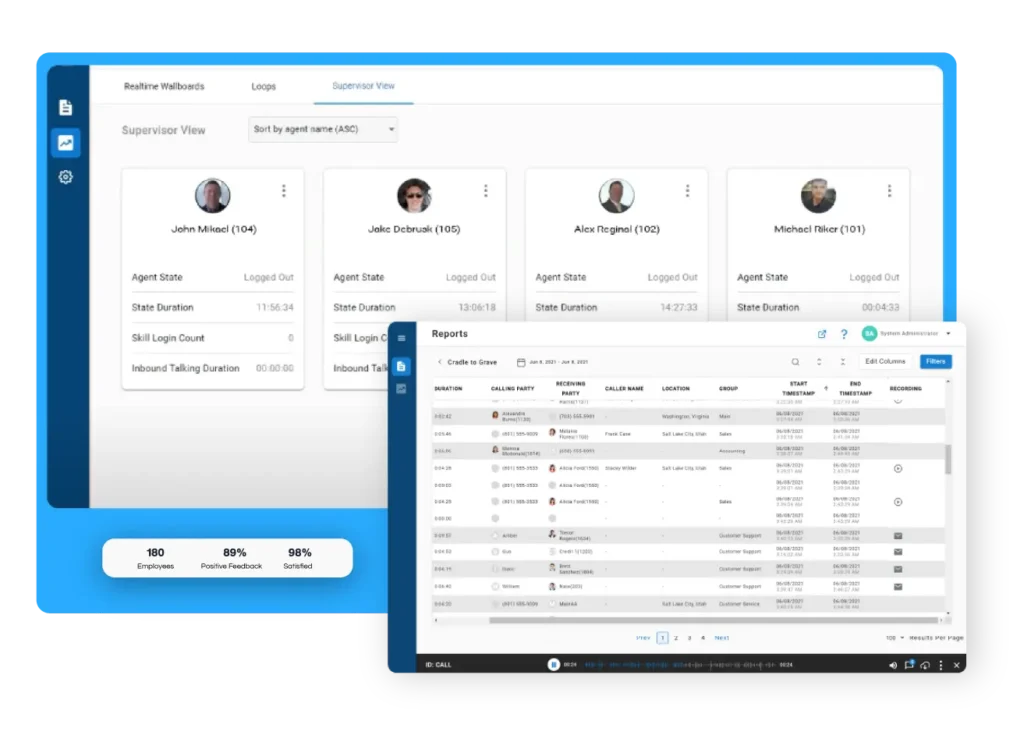
Xima CCaaS gives growing tech teams what larger enterprises have had for years: cradle-to-grave reporting, AI-powered quality assurance, and real-time wallboards—without the complexity that makes those tools unusable for smaller operations. When a customer calls your support line, Xima tracks every second of that interaction from queue entry to wrap-up.
Skills-based routing means your most experienced engineer handles the complex API questions while your general support agents handle password resets. Queue callback eliminates the hold-time frustration that drives customers to churn. And voice analytics gives supervisors visibility into 100% of interactions—not the 1-3% sample that most manual QA programs cover.
Xima Software built this platform specifically for SMBs that outgrew their basic phone system but aren’t ready for the six-figure implementations that enterprise vendors require. The interface is designed for non-technical staff, so your operations manager can adjust routing rules without filing IT tickets.
Xima CCaaS features
- Cradle-to-grave reporting: Xima tracks every interaction from the moment a customer enters your queue until the agent completes wrap-up—giving you the complete audit trail that compliance and operations teams need
- AI-powered Auto QA: Xima’s speech analytics scores 100% of your calls automatically, flagging issues in real-time instead of relying on supervisors to manually review random samples weeks after the fact
- Skills-based routing with multiple criteria: Route calls based on agent expertise, language, product line, or customer tier—ensuring the right agent handles each interaction the first time
- Queue callback: Customers request a callback when wait times spike, reducing abandonment and improving satisfaction scores during high-volume periods
- Real-time wallboards and dashboards: Supervisors see live queue depth, agent status, and service levels at a glance—enabling immediate adjustments instead of reactive firefighting
- Omnichannel inbox: Handle voice, chat, email, and SMS from a unified interface, so agents aren’t toggling between tools and losing context
Xima CCaaS pros and cons
Pros:
- Implementation typically completes in days, not months—your team starts seeing value immediately
- No-code administration means your operations team makes routing changes without waiting on IT
- Transparent, all-in pricing with no surprise fees for features you assumed were included
Cons:
- Smaller brand footprint compared to legacy enterprise vendors—though the product capabilities match or exceed what they offer
- Some highly specialized industry integrations may require custom configuration during onboarding
- Advanced AI features are newer compared to the core reporting functionality that Xima has refined since 2007
2. Aircall: A cloud phone system for SaaS-heavy tech stacks
Aircall positions itself as a cloud phone system built for teams that already run their business on SaaS tools like Salesforce, HubSpot, and Intercom. The platform includes basic routing, call recording, and integrations through a marketplace of third-party apps.
For tech teams with straightforward support needs and heavy CRM usage, Aircall handles inbound and outbound calls from a browser-based interface. The learning curve is minimal for teams familiar with modern SaaS products.
Aircall features
- App marketplace integrations: Connect to CRMs, help desks, and productivity tools through pre-built integrations
- Browser-based softphone: Agents make and receive calls from their laptop without additional hardware
- Basic call routing: Route incoming calls based on business hours, agent availability, or simple IVR menus
Aircall pros and cons
Pros:
- Quick setup for teams already using compatible CRM systems
- Familiar interface for teams accustomed to modern SaaS products
- Integration marketplace covers common business tools
Cons:
- Advanced skills-based routing requires workarounds or higher-tier plans
- Voice analytics and speech AI are limited compared to purpose-built contact center platforms
- Queue callback is not available as a native feature
3. Dialpad: An AI-focused option for transcription needs
Dialpad emphasizes real-time transcription and AI-generated call summaries. The platform captures conversations as they happen and produces searchable transcripts that agents and supervisors can reference after calls end.
For tech teams where documentation matters—think compliance-heavy support or complex technical troubleshooting—the transcription functionality reduces manual note-taking. The platform handles voice, video, and messaging through a unified app.
Dialpad features
- Real-time transcription: Calls are transcribed as they happen, creating searchable records automatically
- AI-generated summaries: Post-call summaries highlight key moments and action items
- Unified communications: Voice, video, and messaging live in a single application
Dialpad pros and cons
Pros:
- Transcription accuracy has improved significantly with recent AI updates
- Unified app reduces tool sprawl for distributed teams
- Searchable call records help with quality review and training
Cons:
- Contact center features require a separate product (Dialpad Ai Contact Center) beyond the base platform
- Skills-based routing is limited compared to dedicated CCaaS platforms
- Reporting depth trails purpose-built contact center analytics tools
4. CloudTalk: A call center option for sales-focused teams
CloudTalk targets sales and support teams that prioritize outbound calling alongside inbound support. The platform includes power dialer functionality, call campaigns, and integration with popular CRMs.
For tech companies where the support team also handles renewals, upsells, or outbound follow-ups, CloudTalk bridges the gap between help desk and sales dialer. The interface organizes contacts and call lists around revenue-generating workflows.
CloudTalk features
- Power dialer: Agents work through call lists automatically, reducing time between conversations
- CRM synchronization: Call data flows into Salesforce, HubSpot, and other platforms
- International numbers: Purchase local numbers in multiple countries for global presence
CloudTalk pros and cons
Pros:
- Outbound dialing features support sales-driven support models
- International number coverage works for globally distributed customer bases
- CRM integrations sync call activity automatically
Cons:
- Inbound-focused contact center features are less developed than outbound tools
- Queue callback and advanced routing require configuration beyond defaults
- Voice analytics depth is limited compared to platforms built specifically for QA
5. 8×8: A unified communications suite with contact center add-ons
8×8 packages voice, video conferencing, and team messaging into a unified communications platform. Contact center capabilities are available as an add-on for teams that need routing, queuing, and basic analytics.
For tech teams that want to consolidate their communication tools under one vendor, 8×8 handles internal collaboration and external customer calls from the same interface. The platform serves organizations ranging from small teams to mid-market enterprises.
8×8 features
- Unified communications: Voice, video, and chat in one platform for internal and external use
- Contact center add-on: ACD routing, IVR, and queue management available at higher tiers
- Global reach: Supports international calling and compliance in multiple regions
8×8 pros and cons
Pros:
- Single vendor for internal collaboration and customer-facing communications
- Global compliance coverage supports international operations
- Video conferencing included alongside voice capabilities
Cons:
- Contact center features require higher-tier plans and additional licensing
- Analytics and reporting trail dedicated CCaaS platforms in depth and customization
- Implementation complexity increases when enabling advanced contact center features
6. Nextiva: A VoIP option with contact center capabilities
Nextiva started as a business VoIP provider and has expanded into contact center territory. The platform offers call routing, basic analytics, and CRM integrations for teams graduating from traditional phone systems.
For tech teams replacing an aging PBX or basic phone setup, Nextiva handles the transition to cloud-based voice with a familiar interface. The platform emphasizes reliability and call quality for organizations where uptime matters.
Nextiva features
- VoIP calling with HD audio: Clear call quality over internet connections
- Auto-attendant and IVR: Route callers through menus before connecting to agents
- Call analytics: Track call volumes, durations, and basic queue metrics
Nextiva pros and cons
Pros:
- Reliable voice quality and uptime for basic calling needs
- Familiar phone system interface eases transition from legacy PBX
- Customer support is available for onboarding and technical questions
Cons:
- Advanced skills-based routing requires higher-tier contact center plans
- Voice analytics and AI-powered QA are limited compared to dedicated platforms
- Real-time dashboards and wallboards are less customizable than CCaaS alternatives
7. JustCall: A dialer-focused tool for outbound teams
JustCall focuses on outbound calling with features like auto-dialer, SMS campaigns, and call tracking. The platform integrates with CRMs and help desks to sync contact data and call outcomes.
For tech support teams that handle significant outbound volume—callbacks, follow-ups, proactive outreach—JustCall automates the dialing process. The interface is designed for agents who spend most of their day making calls rather than waiting for them.
JustCall features
- Auto-dialer and power dialer: Automate outbound calling to increase agent productivity
- SMS functionality: Send and receive text messages alongside voice calls
- Call tracking: Associate calls with campaigns, contacts, and outcomes
JustCall pros and cons
Pros:
- Outbound dialing automation increases call volume per agent
- SMS and voice in one interface supports multi-channel outreach
- CRM integrations log activity automatically
Cons:
- Inbound contact center features are secondary to outbound functionality
- Skills-based routing for inbound calls requires workarounds
- Real-time analytics and supervisor tools are limited for inbound queue management
8. Freshdesk Contact Center: A help desk-adjacent option
Freshdesk Contact Center (formerly Freshcaller) connects to the broader Freshworks ecosystem, including Freshdesk ticketing and Freshsales CRM. The platform handles basic call routing and recording for teams already invested in Freshworks products.
For tech teams using Freshdesk for ticketing, adding Freshdesk Contact Center creates a unified view of customer interactions across channels. The integration shares contact data and conversation history between voice and ticket workflows.
Freshdesk Contact Center features
- Freshworks integration: Native connection to Freshdesk, Freshsales, and other Freshworks products
- Call routing: Basic IVR and queue management for inbound calls
- Call recording: Capture conversations for quality review and training
Freshdesk Contact Center pros and cons
Pros:
- Deep integration with Freshworks products creates unified customer records
- Familiar interface for teams already using Freshdesk ticketing
- Quick setup for teams extending an existing Freshworks deployment
Cons:
- Advanced contact center features require Freshcaller as a separate product with its own licensing
- Voice analytics and AI-powered QA are limited compared to dedicated CCaaS platforms
- Skills-based routing and queue callback require higher tiers or workarounds
Comparison table: Contact center platforms for tech teams
| Platform | 100% Auto QA | Native Queue Callback | Cradle-to-Grave Reporting |
|---|---|---|---|
| Xima CCaaS | ✓ | ✓ | ✓ |
| Aircall | ✗ | ✗ | ✗ |
| Dialpad | ✗ | ✗ | ✗ |
| CloudTalk | ✗ | ✗ | ✗ |
| 8×8 | ✗ | ✗ | ✗ |
| Nextiva | ✗ | ✗ | ✗ |
| JustCall | ✗ | ✗ | ✗ |
| Freshdesk Contact Center | ✗ | ✗ | ✗ |
Xima’s cloud contact center software is included in the comparison below.
What should tech teams look for in skills-based routing?
Skills-based routing sounds straightforward: match incoming calls with agents who have the right expertise. In practice, most platforms either don’t offer it at all or limit it to basic yes/no criteria.
The difference between basic and advanced skills-based routing shows up when your support team grows. You might need to route calls based on product line, technical complexity, language preference, and customer tier—simultaneously. A customer calling about an API integration issue should reach a developer-facing support specialist, not a billing agent.
Xima CCaaS supports multiple routing criteria that you can combine and prioritize without writing code. Your operations team adjusts the rules as your product line expands or your support team’s expertise evolves—no IT tickets required.
Why does queue callback matter for customer experience?
When call volumes spike, customers have two options: wait on hold or hang up. Neither outcome is good for your support metrics or customer satisfaction. Queue callback gives customers a third option: leave your phone number and receive a call when an agent becomes available.
According to research from Genesys, long hold times rank among the top frustrations for contact center customers. For tech companies where support calls often involve complex troubleshooting, forcing customers to wait on hold while also trying to replicate their issue creates a frustrating experience.
Xima Software built queue callback into the core platform because growing tech teams face unpredictable call spikes—product launches, outages, feature releases. When those spikes happen, queue callback keeps your abandonment rates under control and your customers less frustrated.
Why Xima CCaaS is the top contact center platform for growing tech teams
Growing tech teams need contact center software that scales with them—without the complexity that slows operations down. Xima CCaaS delivers enterprise-grade capabilities like AI-powered quality assurance, skills-based routing, and real-time analytics in a package designed for teams that don’t have dedicated IT resources to manage it.
The difference shows up in daily operations. Your supervisors get real-time wallboards showing queue depth and agent status. Your QA process covers 100% of interactions automatically instead of the 1-3% that manual sampling produces. Your customers reach the right agent on the first try and can request callbacks when wait times spike.
Xima Software has refined this approach since 2007, starting with on-premise reporting and evolving into a full cloud contact center platform. The result is software that’s powerful enough for complex operations but intuitive enough that your team can manage it without filing support tickets.
See what Xima CCaaS looks like for your team.
FAQs about contact center platforms for tech teams
What is skills-based routing in contact center software?
Skills-based routing directs incoming calls to agents based on their expertise, language, product knowledge, or other criteria you define. Xima CCaaS supports multiple routing criteria simultaneously, so your most technical agents handle complex API questions while general support handles straightforward inquiries.
How does queue callback reduce call abandonment?
Queue callback lets customers request a callback instead of waiting on hold. When an agent becomes available, the system calls the customer automatically. Xima CCaaS includes native queue callback functionality, helping tech teams maintain service levels during volume spikes.
What is the difference between voice analytics and call recording?
Call recording captures audio for later review. Voice analytics uses AI to transcribe, analyze, and score those recordings automatically. Xima Software’s AI-powered Auto QA analyzes 100% of interactions, flagging compliance issues and coaching opportunities that manual review would miss.
Can small tech teams use enterprise-grade contact center features?
Yes. Xima CCaaS gives growing tech teams access to cradle-to-grave reporting, real-time dashboards, and AI-powered quality assurance—capabilities previously reserved for large enterprises with dedicated IT teams. The interface is designed for non-technical staff to manage without vendor support.
How long does it take to implement cloud contact center software?
Implementation timelines vary by platform and complexity. Xima Software typically completes implementations in days rather than months, with white-glove onboarding that gets your team operational quickly. You don’t need to change your existing phones or numbers to get started.