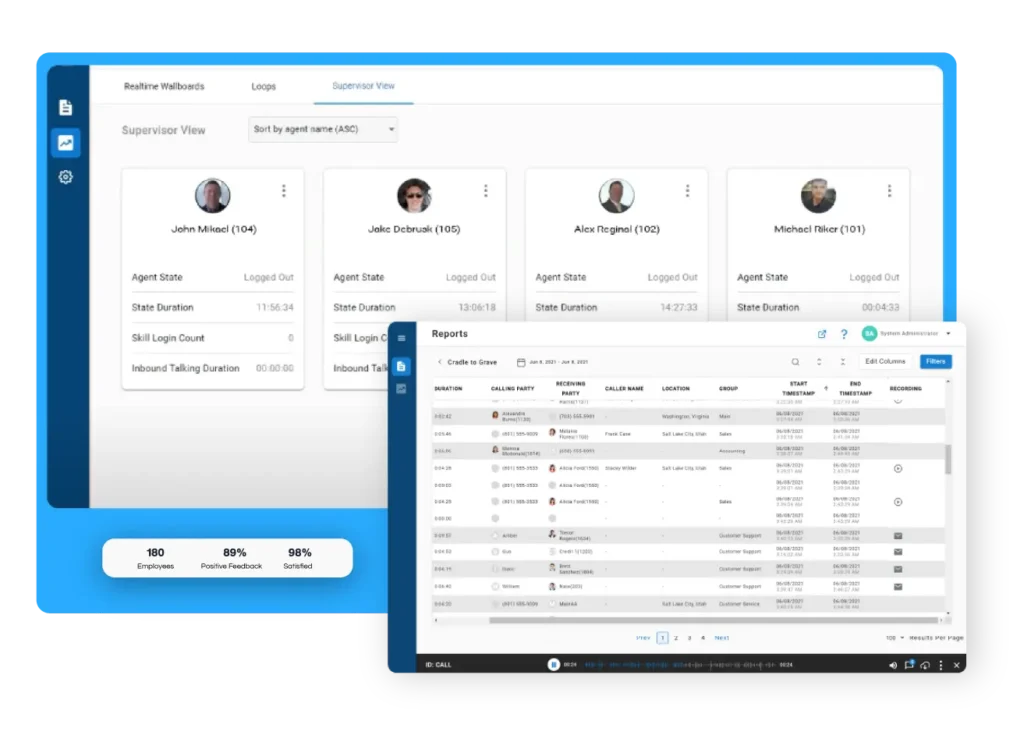

Contact center optimization is the ongoing process of improving people, processes, and technology so every customer interaction is faster, more consistent, and easier to manage. For SMB teams, the goal is not to chase every new tool or add more complexity. It is to create a clearer operating rhythm that helps supervisors see what is happening, helps agents work more efficiently, and helps customers get to the right answer sooner.
Optimization is difficult in modern environments because contact centers are rarely built around one clean workflow. Calls, chats, routing, reporting, coaching, and workforce planning often live in different systems. With a guided approach and the right software, teams can spot bottlenecks, improve service, and lower costs without overwhelming their people.
Key Takeaways
- Contact center optimization is the ongoing process of aligning people, processes, and technology so teams can deliver faster, more consistent customer support.
- Success comes from balancing speed with resolution quality, using metrics like FCR, CSAT, AHT, service level, and abandonment rate.
- Modern software gives SMBs the visibility they need to track operations, agent activity, and performance trends in real time.
What is Contact Center Optimization?
Contact center optimization is a data-driven effort to improve the way your contact center works across every level of the operation. It connects staffing, routing, training, reporting, and technology into one measurable strategy so your team can deliver better service without adding unnecessary cost or complexity.
It is broader than simply handling more calls. A contact center can be busy and still be inefficient. Optimization focuses on smoother customer journeys, stronger first contact resolution, better agent support, and fewer repeat contacts. When done well, it helps teams solve problems faster while keeping service quality high. Xima’s contact center solutions for small businesses are scoped to these operations.
For SMBs, the most important part of optimization is visibility. Leaders need to know what is happening right now, not just what happened last week. That is why real-time analytics and reporting are the backbone of continuous improvement. They help supervisors spot queue issues, coach agents more effectively, and make smarter decisions about staffing and workflow changes.
Optimization also works across both voice and digital channels. Customers may start with a call, move to chat, or follow up later through another channel. The goal is not to add more friction. The goal is to make the experience feel connected and manageable for both the customer and the team.
Common Contact Center Challenges that Require Optimization
Every contact center runs into challenges, but SMB teams usually feel them more sharply because they have fewer people and fewer margins for error.
High call volumes and long waits are one of the biggest issues. If forecasting is off, staffing is thin, or self-service options are limited, customers spend too long in the queue and abandon calls before reaching an agent.
Agent attrition and burnout create another layer of strain. When agents lack the right tools or visibility into their performance, the job becomes harder than it needs to be. That can lead to lower morale, poorer quality, and higher turnover.
Siloed systems and data make everything harder. If CRM, telephony, reporting, and coaching live in different places, supervisors lose time stitching together information and agents lose time switching between screens. That creates blind spots, slows down decisions, and makes it difficult to improve consistently.
Benefits of Contact Center Optimization for SMB Teams
Contact center optimization creates measurable business value. For small and mid-sized teams, the biggest benefits usually show up as faster resolution times, better use of the workforce, lower operating costs, and a stronger agent experience.
- Higher customer satisfaction through fewer transfers, shorter waits, and better first contact resolution
- Lower abandonment rates because customers can find answers faster and move through the journey with less friction
- Better agent performance when supervisors can coach with real interaction data instead of guesswork
- Improved retention when agents have clearer workflows, stronger support, and more manageable workloads
- Stronger service levels through better forecasting, scheduling, and real-time visibility
- Lower operational risk with better compliance tracking, consistent processes, and more complete reporting
- Smarter cost control by reducing repeat calls, manual work, and wasted time between interactions
The benefit that often gets overlooked is how much optimization improves the daily experience for supervisors and agents. When teams can see performance clearly and act on it quickly, the work becomes more manageable. That reduces burnout and helps keep experienced people on the team.
Optimization also directly affects customer effort. When a system is easier to navigate, customers do not have to repeat themselves as often. That means fewer dead ends, fewer callbacks, and fewer escalations.
Metrics and KPIs that Contact Centers Should Optimize
A strong optimization strategy depends on the right metrics. The goal is not to chase one number at the expense of everything else. It is to balance efficiency, quality, and workforce health.
- First Contact Resolution (FCR): Measures whether customer issues are resolved on the first interaction. Higher FCR usually means better routing, better agent access to information, and better process design.
- Abandoned Call Rate: Shows the percentage of callers who hang up before speaking with an agent. High abandonment often points to queue pressure, staffing gaps, or poor self-service design.
- Average Handle Time (AHT): Tracks the total time spent on an interaction, including talk time, hold time, and after-call work. AHT should go down when tools reduce manual work, not when agents are rushed.
- Service Level: Measures whether your team answers within a target time. This metric depends heavily on accurate forecasting and workforce scheduling.
- Agent Occupancy: Tracks how much time agents spend actively handling interactions versus waiting for work. Healthy occupancy supports productivity, but too much can lead to burnout.
- Customer Satisfaction (CSAT): Captures how customers feel about the interaction. Strong CSAT often reflects clarity, speed, and effective resolution.
The best contact centers monitor these metrics together. A lower AHT is not helpful if CSAT drops. A high occupancy rate is not healthy if it leads to burnout. The real goal is balance.
Strategies for Optimizing a Contact Center
The most effective optimization efforts start with a clear plan. Here is a practical sequence SMB teams can use:
Baseline Audit
Start with the data you already have. Review historical call patterns, agent performance history, queue trends, and resolution results to identify where the biggest bottlenecks are occurring.
This is where a Cradle to Grave view becomes especially valuable. When supervisors can see the full interaction history in one place, it is easier to understand what happened, where time was lost, and what changed before a problem escalated.
The goal of the baseline audit is not just to find bad numbers. It is to understand the patterns behind them so you can make better decisions going forward.
Routing and Desktop Alignment
Once you know where friction exists, look at how calls are getting to agents and what agents see when they answer. Confusing IVR flows and disconnected desktops can create unnecessary transfers and slow down every interaction.
A cleaner interactive voice response system helps customers get to the right place sooner. When that is paired with a connected agent desktop, the right context appears as soon as the call is answered. That improves speed, reduces repetition, and supports better first contact resolution.
This step is especially important for SMBs because it removes avoidable complexity without requiring a large technology overhaul.
Real-Time Instrumentation
Optimization should not wait for end-of-week reports. Supervisors need a live view of queues, call volume, and agent status so they can respond before service breaks down.
That is where real-time wallboards make a difference. They turn live operational data into action. If wait times climb or service levels fall, supervisors can see it immediately and adjust resources in the moment.
For a busy contact center, this kind of visibility changes the day. It helps leaders move from reacting late to managing proactively.
Agent Training and Tool Adoption
New software only helps if the team knows how to use it well. Even the best platform can slow things down if agents are not comfortable with the workflow.
That is why workforce management should include training and adoption support, not just scheduling and staffing. Teams need practice sessions, clear expectations, and time to build confidence with new tools.
When agents understand the system and trust it, they spend less time fighting technology and more time helping customers. That reduces tool fatigue and improves consistency.
Coaching Feedback Loops
Optimization is not a one-time project. It works best when coaching is continuous and tied to real interaction data.
A strong quality management process gives supervisors a way to review calls, spot coaching opportunities, and support skill growth over time. That makes feedback more useful because it is grounded in actual performance, not just general observations.
This approach helps agents improve faster and gives managers a clearer view of where training is working and where more support is needed.
Accelerating Optimization with Xima Software
Xima Software helps small and mid-sized contact centers improve performance without adding unnecessary complexity. Our platform is built for teams that need visibility, control, and practical tools that deliver value quickly.
With features like intelligent queue callback and skills-based routing, Xima helps reduce abandoned call rates and improve first contact resolution. Supervisors get the visibility they need, agents get the context they need, and customers get a smoother experience from the first ring to the last hang-up.
If your team is ready to improve contact center performance with a practical, scalable approach, book a demo and see how Xima can help streamline your operations.