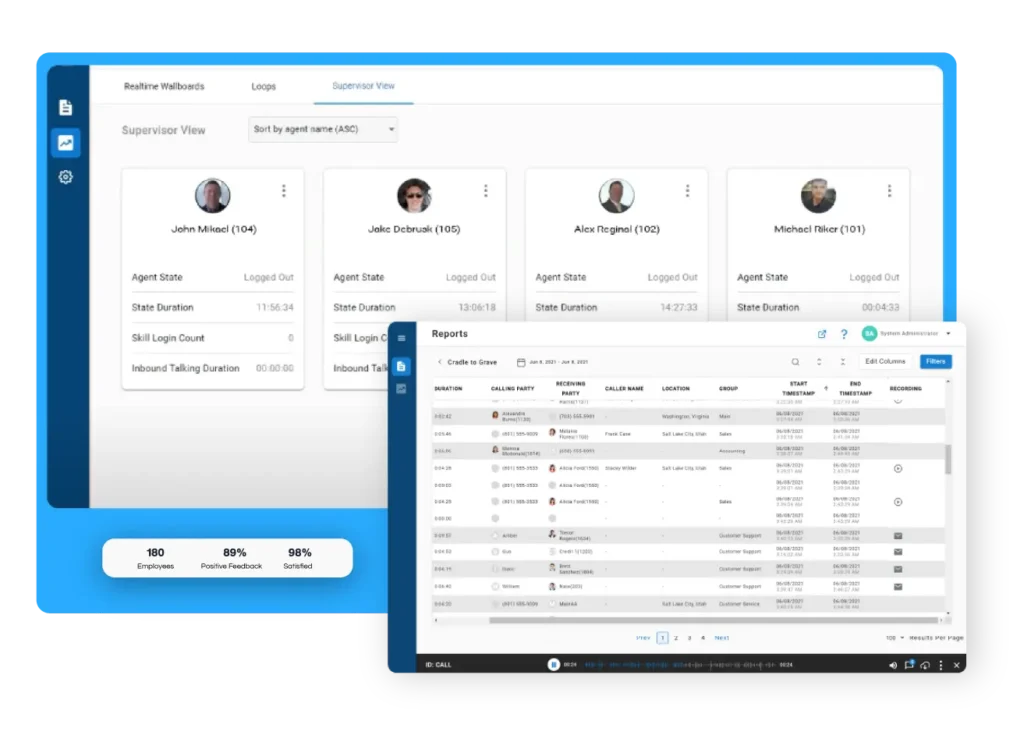

The discussion around Xima vs RingCentral comes down to operational focus. RingCentral is built as a communications-first platform, centralizing voice, messaging, and collaboration across an organization. Xima, by contrast, is designed as a contact center-first solution, emphasizing call management, reporting clarity, and performance visibility. For teams evaluating RingCentral vs Xima, the key question is whether they need unified communications or structured contact center oversight.
This comparison focuses on what matters most to growing SMBs: pricing predictability, onboarding effort, reporting transparency, and day-to-day usability. For businesses beginning to look for a Ringcentral alternative for contact centers, the decision often reflects a shift toward greater operational control and measurable performance management.
Key Takeaways for Small Businesses Evaluating Contact Center Solutions
- Growing small business contact centers often begin comparing Xima vs RingCentral when basic phone systems can no longer support increasing call volume, multiple queues, or the need for stronger agent oversight.
- RingCentral delivers contact center capabilities within a broader unified communications ecosystem, combining voice, messaging, video, and collaboration tools into a single platform.
- Xima focuses specifically on contact center operations, centering its platform around structured queue management, consistent reporting reliability, and real-time supervisor visibility for daily performance management.
- As teams scale, the key difference in the RingCentral vs Xima conversation becomes how operational complexity is handled—through bundled communications expansion or through contact center-focused control and performance clarity.
- The best fit ultimately depends on how central call handling, reporting transparency, and supervisory oversight are to the organization’s day-to-day performance—and whether the business is seeking a communications suite or a purpose-built RingCentral alternative for contact centers.
- Xima’s contact center solutions for small businesses are built for teams at this size.
Two Different Paths for Growing Support Teams
When evaluating Xima vs RingCentral, it’s important to recognize that both platforms support cloud-based calling, routing, and distributed teams. On the surface, they may appear to solve the same problem. However, they originate from different priorities, and that foundation shapes how each system behaves as support operations expand.
RingCentral evolved from a unified communications model, while Xima was designed around structured contact center management. As a result, the difference is not whether calls can be handled in the cloud—it’s how the platform manages operational growth, visibility, and control over time.
RingCentral’s Unified Communications Foundation
RingCentral began as a broad communications suite built to unify voice, video, messaging, and collaboration tools within a single environment. Its strength lies in consolidating internal and external communications under one vendor, reducing fragmentation across platforms.
For many small businesses, this consolidation provides simplicity. Teams can manage employee communication and customer-facing interactions in the same ecosystem, which can streamline vendor relationships and administrative oversight. The appeal is especially strong for organizations prioritizing bundled tools and cross-channel collaboration.
Within this structure, contact center functionality is delivered as part of the larger platform. For businesses that want communications consolidation first and layered contact center capabilities second, this model can feel cohesive and convenient.
Xima’s Contact Center Core
Xima approaches the problem from the opposite direction. Rather than layering contact center tools onto a broader communications ecosystem, it is purpose-built around structured call center management. Its architecture centers on predictable queue behavior, consistent routing logic, and real-time supervisor visibility as teams grow.
This design emphasizes day-to-day operational oversight. As call volume increases and queue structures become more complex, the platform is engineered to support reporting reliability and clear performance management without introducing unnecessary administrative overhead.
Callout: Why Platform Design Matters
A platform’s foundation influences how routing behaves under pressure, how consistently reporting data is delivered, and how manageable configuration changes feel over time. Unified communications systems may prioritize breadth, while contact center-first systems often prioritize operational predictability. For growing SMBs, this distinction can shape long-term stability.
What Changes as Call Volume Increases?
In the early stages, most cloud calling platforms can manage basic routing and queue functionality. The real differences in a RingCentral vs Xima comparison tend to emerge as agent count increases, queues multiply, and reporting expectations grow more sophisticated.
As teams expand, scaling can introduce configuration complexity. Administrative controls, routing logic adjustments, and performance tracking require more structure. What once felt simple may require additional layers of oversight.
Supervisory visibility also becomes more critical. Managers need real-time insight into queue health, agent activity, and performance trends. The question shifts from “Can the system handle calls?” to “Can leadership clearly see and manage what’s happening?”
For steady SMB growth, the more stable model is often the one that aligns with how the team intends to operate long term—whether that means expanding within a bundled communications suite or adopting a contact center-focused approach designed around operational control.
Pricing and Cost Predictability for SMBs
For small businesses, the conversation about a RingCentral alternative for contact centers often includes pricing behavior over time. Initial subscription costs rarely tell the full story. What matters is how pricing evolves as users, queues, and feature requirements expand.
Bundled communications platforms typically structure pricing around tiered packages. As additional capabilities are needed, businesses may move into higher tiers that include expanded feature sets beyond contact center functionality. This can offer convenience, but it may also introduce cost shifts tied to broader communications upgrades.
Contact center-aligned pricing models are often structured more directly around call handling, agent count, and operational usage. For SMBs, this can provide clearer visibility into long-term spend and a closer alignment between pricing structure and actual contact center needs.
Ultimately, budgeting confidence depends on understanding how each platform scales financially—and whether its pricing model mirrors the way your support operation is expected to grow.
Feature Comparison: RingCentral vs Xima
When evaluating Xima vs RingCentral, decision-makers often want a clear, side-by-side view of how each platform supports daily contact center operations. While both offer cloud-based calling and routing, the underlying priorities of each system shape how features are delivered and managed over time.
The comparison below highlights practical differences in structure, oversight, and scalability. Rather than focusing on surface-level capabilities, it’s designed to clarify how each platform aligns with real-world operational needs for growing SMB contact centers. Xima pairs both through contact center and unified communications.
Capability | RingCentral | Xima |
Core calling | Cloud-based voice delivered within a broader unified communications ecosystem that includes messaging, video, and collaboration tools. | Cloud-based voice designed specifically for structured inbound and outbound contact center operations. |
Queue management | Queue functionality available within the contact center offering, layered into a larger communications suite. | Queue behavior is central to the platform, with controls built around predictable routing and day-to-day call flow management. |
Reporting and dashboards | Reporting includes performance data and AI-driven insights, often tied to broader platform analytics. | Reporting focuses on operational clarity, with real-time and historical metrics tailored to contact center performance. |
Supervisor visibility | Supervisors can monitor calls and activity within the contact center environment, supported by broader collaboration tools. | Supervisors have direct, real-time visibility into queues, agent status, and call handling performance. |
Agent experience | Unified workspace combining calls, messaging, and collaboration within one interface. | Agent interface centered on call handling efficiency and streamlined workflows during high-volume periods. |
CRM and productivity integrations | Integrates with major CRMs and business tools as part of a broad communications ecosystem. | Integrates with CRMs and business systems to support reporting accuracy, call tracking, and workflow management. |
Pricing structure | Pricing typically aligned to bundled communications and contact center tiers, with feature access tied to plan level. | Pricing structured around contact center usage and operational needs, with clearer alignment to support team scale. |
Scalability for growing teams | Scales across communications and collaboration needs as businesses expand. | Scales around agent growth, call volume increases, and supervisory complexity within the contact center. |
Where RingCentral May Align Operationally
Some SMBs prioritize communication consolidation over advanced queue control. For teams that value integrating messaging, video meetings, and phone within a single ecosystem, RingCentral’s unified communications foundation can simplify vendor management and internal collaboration.
It may also align well with support teams handling moderate call volume and straightforward queue structures, where layered routing logic and deep performance oversight are not central operational requirements.
Before choosing a platform, businesses should assess projected call volume, reporting expectations, and internal capacity for managing system complexity. Understanding how critical structured queue management and supervisor visibility are to daily performance will help clarify the right operational fit.
Competitor Example:
Where Xima Offers Greater Operational Control
As contact centers grow, some teams prioritize reporting clarity, predictable routing behavior, and real-time supervisor visibility over bundled communications breadth. In these environments, operational manageability becomes more important than expanding collaboration features—especially as call volume increases and queue structures become more layered.
Xima often aligns with call-heavy support teams where consistent queue behavior and performance tracking are central to daily operations. Managers who need immediate insight into queue status, agent availability, and handling performance may benefit from a platform designed specifically around contact center oversight rather than layered communications tools.
It can also appeal to businesses seeking contact center depth without enterprise-level administrative overhead. When pricing is structured around contact center growth—agent count, call volume, and supervisory complexity—rather than bundled communications tiers, budgeting can feel more aligned with actual operational usage.
Choosing the Right Fit for Contact Centers
The RingCentral vs Xima decision ultimately depends on operational maturity. Teams with lower call intensity and simpler routing needs may prioritize communications consolidation, while growing contact centers often place greater weight on reporting accuracy, structured queue management, and supervisor oversight.
Call volume, performance expectations, and how actively managers monitor daily operations should guide the decision. The more central real-time visibility and measurable performance are to your support model, the more important the platform’s operational foundation becomes.
Final Considerations for Small Business Contact Centers with Xima
For small businesses evaluating a RingCentral alternative for contact centers, early implementation typically centers on configuring queues, defining routing logic, and establishing reporting dashboards aligned with performance goals. Initial setup involves mapping call flows, setting supervisor permissions, and aligning metrics with existing service expectations.
Because the platform is structured around contact center management, ramp-up often focuses on operational clarity—ensuring supervisors understand real-time dashboards and agents are comfortable within streamlined call-handling workflows. Clear configuration at the outset helps support steady growth without introducing avoidable complexity as call volume increases.
FAQs
RingCentral can be a strong fit for small teams that prioritize unified communications and have moderate call complexity. It works well when collaboration tools and phone services are equally important as contact center structure.
Xima centers reporting around real-time and historical contact center metrics, giving supervisors clear visibility into queues, agent performance, and call trends as volume increases. The focus is on operational clarity rather than broad platform analytics.
A unified communications platform integrates voice, messaging, video, and collaboration tools across the organization, while a contact center-first system is built specifically around queue management, routing logic, and performance oversight for customer-facing teams.
Ease of management depends on operational needs: unified communications systems may simplify vendor consolidation, while contact center-focused platforms can offer more predictable oversight for teams centered on call performance. The right fit depends on how complex your routing and reporting requirements are.
SMBs should assess how pricing evolves as agents, features, and call volume grow, ensuring the cost structure aligns with actual contact center usage rather than bundled communications tiers that may include tools they do not fully utilize.