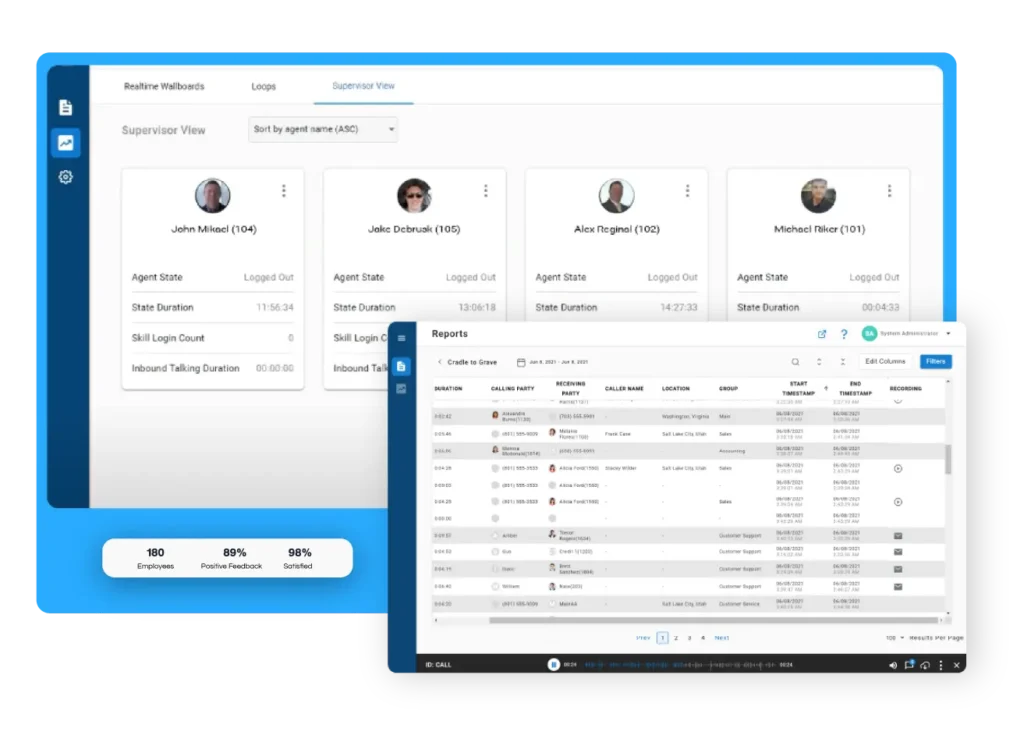

AI in customer service automation helps manufacturers improve speed, consistency, and visibility across service operations. When automation is designed to support real manufacturing workflows, it strengthens service teams instead of replacing them. The result is faster responses, clearer accountability, and better experiences for customers and internal teams alike.
What Customer Service Automation Looks Like in Manufacturing
Customer service automation in manufacturing focuses on handling repeatable service tasks tied to orders, production status, asset history, and support requests. These tasks often create high call volumes and slow response times when handled manually.
Basic automation relies on predefined rules such as routing calls based on keypad selections or sending automatic order confirmations. AI driven automation goes further. It understands natural language, adapts to customer intent, and improves over time based on real interactions. This allows manufacturers to support a wider range of requests without rigid scripts or constant manual updates.
AI-Powered Automation vs. Traditional Automation
Traditional automation follows fixed rules. It works well for simple tasks but struggles when requests vary or context matters. AI powered automation uses natural language understanding and contextual awareness to interpret what customers actually need.
In manufacturing environments, this means AI systems can identify whether a caller is asking about a shipment delay, a warranty claim, or a technical issue and route the request correctly the first time. Over time, AI learns from patterns in customer behavior and service outcomes, which reduces misrouting, repeat calls, and unnecessary escalations.
Core Automation Technologies Used by Manufacturing Service Teams
Manufacturers rely on several automation technologies to scale customer service while maintaining accuracy and operational alignment.
Chatbots, Virtual Assistants, and Self-Service
AI powered chatbots and virtual assistants handle common requests such as order lookups, shipping updates, documentation requests, and basic troubleshooting. These tools reduce inbound volume by giving customers fast answers without waiting for an agent.
When an issue requires human support, automation ensures a smooth handoff with full context. Agents can see the customer’s history, recent interactions, and relevant asset data before the conversation begins.
Voice Automation and Intelligent Routing
Voice automation plays a critical role in manufacturing customer service, where urgency and issue type vary widely. AI driven IVR and intelligent routing identify customer intent early and direct calls to the right team or agent.
This shortens wait times, reduces transfers, and improves first contact resolution. For manufacturers handling technical support, logistics questions, and partner inquiries, intelligent routing ensures the right expertise is available without manual intervention.
Workflow Automation and Case Management
Workflow automation supports ticket creation, categorization, prioritization, and escalation. Service requests move efficiently between customer service, operations, and technical teams without getting lost or delayed.
When automation aligns with manufacturing workflows, it improves accountability and keeps teams focused on resolution rather than administrative work.
Xima’s contact center software for manufacturing supports these workflows.
How Automation Supports the Full Customer Service Lifecycle
Automation delivers the most value when it supports the entire customer service lifecycle rather than isolated touchpoints.
Omnichannel Support With Shared Context
Manufacturers interact with customers across voice, chat, email, and messaging channels. Automation preserves context across all channels so agents can see the full interaction history in one place.
This shared context prevents customers from repeating information and allows service teams to deliver more consistent and informed support.
CRM, ERP, and Operations Integration
Customer service automation becomes far more effective when integrated with CRM, ERP, and order management systems. Real time access to customer data, production status, and asset history allows agents to answer questions accurately and confidently.
For manufacturing organizations, these integrations connect service operations with the systems that drive production and fulfillment, creating better visibility and faster resolutions.
The Impact of Automation in Manufacturing
Customer service automation delivers measurable outcomes that matter to manufacturing leaders.
Service Speed, Resolution, and Customer Satisfaction
Automation improves response times and increases first contact resolution by ensuring customers reach the right resources quickly. During peak demand or unexpected disruptions, automated systems maintain consistent service levels without overwhelming teams.
Faster answers and fewer handoffs lead to higher customer satisfaction and stronger long term relationships.
Operational Efficiency and Scalability
By reducing manual workload, automation allows service teams to focus on complex issues that require expertise and judgment. Manufacturers can scale support during busy periods without adding proportional headcount, which improves efficiency and ROI.
Cloud based automation also gives manufacturers the flexibility to adjust capacity as demand fluctuates.
Balancing Automation and Human Support
Automation works best when paired with human oversight and clear escalation paths.
Escalation, Accountability, and Trust
Customers expect transparency and accountability, especially when issues affect production timelines or equipment performance. Automated systems must make it easy to escalate to a live agent when needed.
AI also plays a growing role in identifying issues early and supporting proactive service. By analyzing trends and patterns, automation helps teams address problems before they escalate, which builds trust and reduces friction.
Customer Service Automation in Manufacturing Today
Customer service automation helps manufacturers deliver faster, more consistent support while improving visibility and operational control. AI in customer service automation supports service teams by reducing repetitive work, improving routing accuracy, and connecting service interactions with core business systems.
Manufacturers evaluating automation solutions should look for platforms that integrate cleanly with existing CRM and ERP systems, support omnichannel engagement, and scale with changing demand. With the right approach, customer service automation in manufacturing becomes a competitive advantage rather than a technical upgrade.