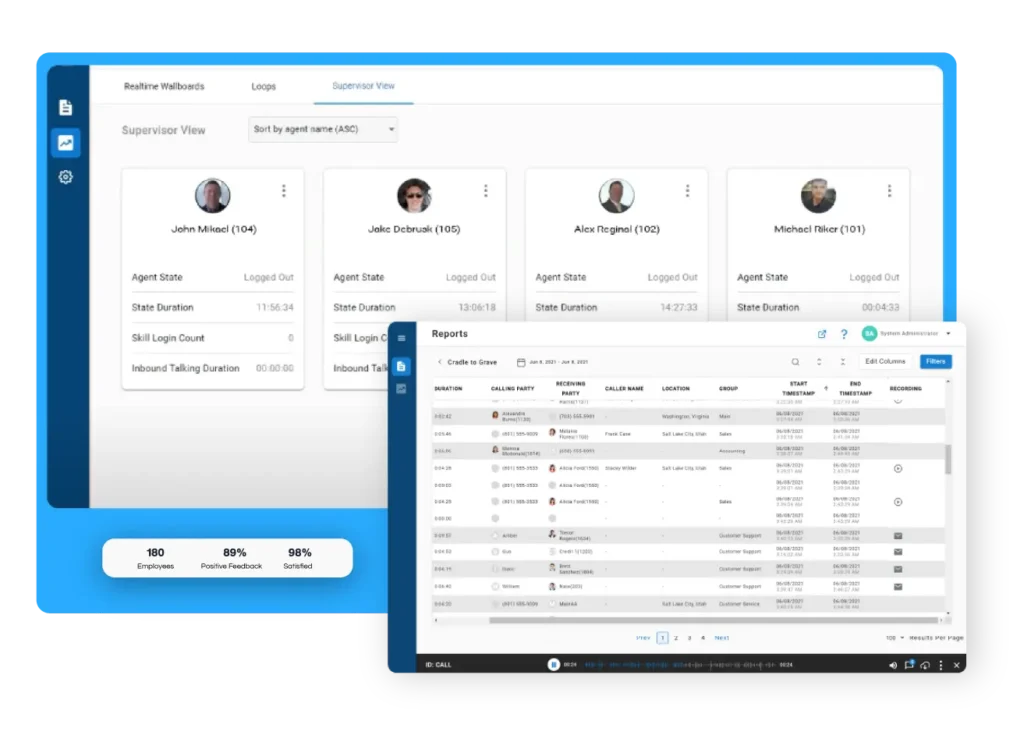

Picture this: your contact center fields thousands of calls every week. Each conversation holds valuable insights about customer satisfaction, agent performance, and recurring pain points–but most of that information never sees the light of day. Traditional methods of reviewing call recordings or manually tagging transcripts are time-consuming, expensive, and limited by human capacity. Even the most dedicated quality assurance teams can only scratch the surface of what’s really being said.
Now imagine what your business might be missing: frustrated customers whose tone reveals dissatisfaction before their words do, agents who consistently deliver exceptional service but go unrecognized, or patterns in call outcomes that could improve training and efficiency. Without the right tools, those opportunities remain buried in hours of unstructured audio.
That’s where voice analytics comes in. By transforming raw call data into actionable insights through AI and speech regulation, voice analytics helps contact centers understand not just what customers say, but how they feel when they say it. In this guide, we’ll break down how voice analytics works, why it’s reshaping customer communication, and how your contact center can leverage it to drive smarter, more informed decisions.
Key Takeaways
- What is voice analytics?
- Voice analytics is a technology that uses artificial intelligence to analyze spoken conversations, identifying keywords, emotions, and patterns within customer calls to uncover insights about performance and satisfaction.
- How does it work?
- It converts audio into text through speech recognition, then applies natural language processing (NLP) and sentiment analysis to interpret tone, intent, and emotion—turning unstructured call data into measurable metrics and trends.
- What are the core business benefits?
- Voice analytics helps contact centers improve customer experience, boost agent performance, and make data-driven decisions by revealing what truly drives satisfaction, frustration, and loyalty during every call.
What is Voice Analytics?
Voice analytics is the process of using artificial intelligence and machine learning to analyze spoken conversations between customers and agents. While traditional tools can convert speech into text, voice analytics goes several steps further by identifying trends, behaviors, and emotional cues hidden within those interactions. It turns every customer call into a source of measurable insight that can guide decision-making, improve training, and enhance the overall customer experience.
Unlike basic speech-to-text software, which only captures what was said, voice analytics uncovers the why behind the words. By examining tone, sentiment, and emotion, it helps contact centers understand the mood and intent behind each interaction. This deeper layer of understanding allows businesses to detect frustration, satisfaction, or urgency in real time, empowering teams to respond faster, refine service strategies, and build stronger customer relationships.
Voice Analytics vs. Speech Analytics: What’s the difference?
While speech analytics focuses on the what of a conversation, analyzing spoken words, phrases, and topics to identify common themes, voice analytics dives into the how. It examines tone, pitch, pace, and emotion to reveal the underlying sentiment and intent behind a customer’s words. In other words, speech analytics tells you what was said, while voice analytics helps you understand how it was said and why it matters. This added layer of emotional intelligence gives businesses a deeper, more nuanced understanding of customer interactions and service quality.
How does Voice Analytics Work?
At a high level, voice analytics follows a straightforward pipeline: (1) capture the call, (2) transcribe it, (3) interpret what was said and how it was said, and (4) surface insights in dashboards your team can act on. Calls are first captured through your telephony stack or IVR flows, then converted from audio to text. AI models, like those discussed in our post on AI customer service, analyze both content (keywords, topics) and acoustics (tone, pitch, emotion). Finally, results roll up into reporting and analytics views with searchable transcripts, trend charts, alerts, and QA scorecards so leaders can coach agents, optimize routing, and improve CX.
1. Speech Recognition and Conversion
This is the foundation. Automatic Speech Recognition (ASR) precisely converts spoken words into text so downstream analytics have a reliable transcript to work with. Modern engines use phonetic analysis to handle different accents, dialects, and speaking speeds, improving accuracy across diverse callers. They also employ word spotting to automatically flag critical terms or phrases, like “cancel,” “refund,” or a product name, so your team can trigger alerts, workflows, or follow-ups the moment they occur.
2. Natural Language Processing (NLP)
If speech recognition is the foundation of voice analytics, Natural Language Processing (NLP) is the brain that makes sense of it all. Once audio is converted to text, NLP steps in to analyze language patterns and meaning. Through syntax analysis, it examines grammar, sentence structure, and relationships between words to understand how phrases are formed. Then, using semantic analysis, it interprets the actual meaning and context behind those words, distinguishing between literal statements and implied emotions or intent. This combination allows voice analytics to move beyond transcription and uncover what customers truly mean, not just what they say.
3. Emotion and Speaker Analysis
This is where the “voice” in voice analytics truly comes to life. Using acoustic analysis, the system evaluates vocal cues, such as pitch, tone, speed, and volume, to detect emotional states like frustration, satisfaction, or urgency. This layer helps contact centers gauge how customers feel during an interaction, not just what they’re saying. Speaker diarization technology distinguishes between different voices on a call, labeling who is speaking and when. This makes multi-party conversations, like those between agents and customers, easier to interpret and analyze for performance, sentiment, and engagement trends.
4. Data Management and Real-Time Insights
Once voice data is processed, a real-time analytics engine takes over and analyzes calls as they happen to deliver instant feedback and actionable insights. This enables supervisors to monitor customer sentiment, identify service bottlenecks, and make on-the-fly adjustments that improve outcomes. Behind the scenes, advanced audio indexing and database systems organize and store massive volumes of call data so teams can easily retrieve and review specific moments or topics.
Key capabilities include:
- Real-time dashboards that visualize trends in sentiment, keywords, and call volume.
- Searchable archives that let teams locate calls by topic, emotion, or phrase in seconds.
- Automated tagging and categorization that simplify compliance tracking and performance reviews.
Together, these tools transform every recorded call into a structured, searchable data source, fueling continuous improvement across your contact center.
The Business Benefits of Voice Analytics
Voice analytics turns reporting into a real understanding of your customers, teams, and daily operations. By analyzing both the content and emotion within conversations, organizations can uncover trends that directly improve service quality and efficiency.
Improve Customer Experience (CX)
Every customer interaction holds valuable insights into satisfaction, sentiment, and potential churn. Voice analytics captures and interprets these emotional signals to pinpoint where customers are struggling and why. Businesses can use this information to resolve recurring pain points, anticipate churn before it happens, and provide proactive support that makes customers feel heard and valued. By listening not just to what customers say, but also how they say it, brands can create more empathetic and personalized experiences.
Boost Agent Performance
For contact centers, voice analytics is like having an always-on performance coach. It automates quality assurance, reviewing 100% of calls instead of just random samples, and highlights specific areas for improvement. Managers can access data-driven insights to provide personalized feedback, recognize top performers, and replicate best practices across teams. With real-time visibility into tone and engagement, voice analytics helps agents refine communication skills and deliver customer outcomes with every call.
Drive Operational Efficiency
Voice analytics helps teams deliver better service through smoother, more efficient processes. By identifying common call drivers and root causes of repeated issues, businesses can refine workflows and reduce call handle times. Automated call tagging and categorization eliminate manual review, freeing up supervisors for higher-value tasks. Over time, these efficiency gains translate into measurable savings, higher first-call resolution rates, and a more agile contact center operation.
How to Choose a Voice Analytics Solution
Selecting the right voice analytics platform means finding a solution that balances accuracy, flexibility, and compliance. Here are key criteria to guide your decision:
- Accuracy: Look for a high-quality transcription engine that delivers precise results, even with background noise, varied accents, or complex terminology. The better the transcription, the stronger the insights.
- Integration: Your analytics tool should connect seamlessly with your contact center software and CRM systems. Learn more about Xima’s extensive integrations designed for effortless connectivity.
- Security & Compliance: Protecting sensitive data is essential. Choose a solution with data encryption, secure storage, and compliance features that meet regulations such as HIPAA, GDPR, and PCI.
- Reporting & Dashboards: Ensure the platform offers clear, customizable dashboards so teams can visualize trends, monitor KPIs, and act quickly on new insights.
- Scalability: As your business grows, your analytics needs will too. A scalable platform adapts to higher call volumes, additional data sources, and new features without compromising performance.
Unlock Call Center Potential with Xima’s Voice Analytics
Your customer conversations are one of your business’s most valuable assets. Xima’s voice analytics helps you put that data to work. By combining AI-driven transcription, emotion detection, and real-time reporting, Xima gives contact centers the tools to improve customer experience, boost agent performance, and streamline operations.
With seamless integration, secure data handling, and intelligent dashboards, Xima transforms every call into an opportunity for improvement and growth. Experience how actionable insights can elevate your contact center and strengthen customer relationships.
Ready to learn more? Request a demo today and see how Xima’s voice analytics platform can help your business deliver smarter, more personalized service at scale.
FAQs About Voice Analytics
Answer common questions, such as:
- What types of businesses can benefit from voice analytics?
- While voice analytics is a game-changer for most call centers, it’s especially valuable in industries like retail, financial services, and healthcare—helping teams improve compliance, optimize sales conversations, and enhance customer or patient experiences.
- How accurate is voice analysis?
- No technology is 100% perfect, but modern AI-driven systems deliver high accuracy rates when supported by clear audio and strong models. Accuracy depends on factors like background noise, call quality, accents, and the sophistication of the underlying technology, so it’s best to test solutions within your specific environment.
- What are the different types of voice analysis?
- Voice analytics can perform several types of evaluations, including sentiment analysis (detecting positive, negative, or neutral tones), emotion detection (identifying anger, frustration, or joy), and conversational analytics that assess talk-to-listen ratios, silences, and overtalk patterns.
- How does voice analytics help with quality assurance?
- It automates call evaluations by scanning interactions for compliance criteria, key phrases, and sentiment shifts—quickly identifying which calls meet or miss benchmarks. This allows QA teams to spend less time on manual reviews and more time coaching agents for improved performance.