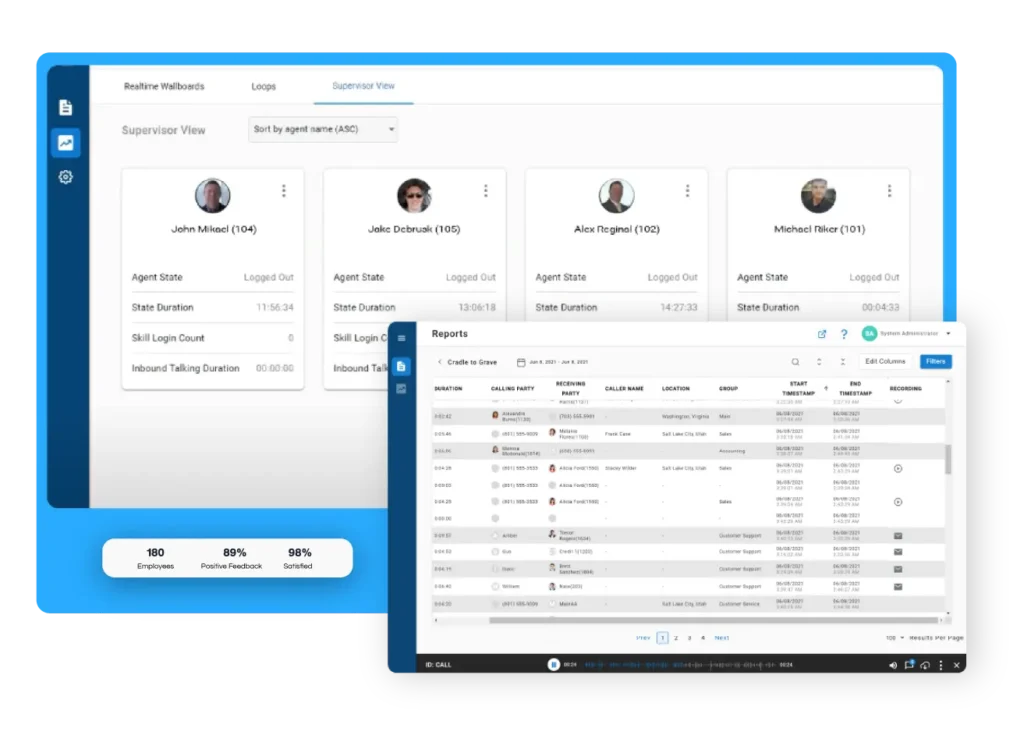

In this comparison of Dialpad and Xima, we will break down the differences between a communications-first platform and a contact center-first solution. The goal is to help you identify which approach aligns with your workflows, reporting needs, and customer engagement priorities.
Key Takeaways for Small Businesses Evaluating Call Center Management Solutions
- Small and mid-sized businesses comparing Dialpad and Xima are typically evaluating how to manage inbound and outbound calls more effectively without adding operational complexity.
- Dialpad approaches call center management as part of a broader unified communications platform, combining calling, messaging, and meetings in a single workspace.
- Xima is designed specifically for contact center management, with queue control, reporting accuracy, and supervisor visibility as core priorities.
- The right solution depends on how central call volume, agent oversight, and real-time reporting are to daily operations.
- Businesses with lighter call center needs may prioritize communication consolidation, while call-heavy teams often need deeper call center workforce management and operational clarity.
How Dialpad and Xima Approach Call Center Management Needs
Dialpad and Xima are built with different priorities that shape how each platform supports call center management. Understanding this distinction is crucial to making the right decision for your SMB.
Dialpad’s Communications-First Model
Dialpad is designed primarily as a unified communications platform. Calling, messaging, and meetings sit at the core of the product experience, allowing organizations to consolidate internal collaboration and external conversations in one system. Its strength lies in bringing teams together across channels. Voice, video, chat, and support tools are integrated into a shared interface that aims to streamline communication across departments.
Contact center functionality is available, but it is layered onto this broader unified communications foundation. The product architecture prioritizes general business communication first, with contact center features built to extend that experience rather than define it. This approach may work for organizations seeking a single platform to manage company-wide communication alongside customer interactions.
Xima’s Contact Center-First Model
Xima is built specifically around contact center operations. Queues, reporting, and supervisor visibility are product pillars. Every component is designed to support inbound and outbound support calls with operational precision. Real-time dashboards, historical reporting, and queue management are not secondary tools. They are central to how the system functions and how leaders manage performance.
The emphasis is on operational clarity over tool consolidation. Teams gain visibility into agent activity, queue performance, and service levels without navigating features designed for broader internal communication. Overall, Xima is a purpose-built solution for SMBs that prioritize contact center efficiency, accountability, and performance insight.
Use a short callout box here to highlight how the underlying platform architecture affects call quality and operational reliability:
Dialpad uses a globally distributed telephony architecture designed to support call quality and reliability across cloud environments. Xima takes a different approach, prioritizing consistent queue performance, accurate reporting, and real-time supervisor visibility. These architectural choices influence how predictable and manageable day-to-day call center operations feel.
Pricing and Cost Predictability for SMBs
Understanding how costs evolve as your team grows is critical when choosing between Dialpad and Xima. Small and midsize businesses need confidence that their communications or contact center platform will scale without unexpected spikes in expenses. Let’s take a look at how these solutions compare.
Dialpad Pricing
Dialpad’s pricing structure reflects its communications-first foundation.
- Costs generally increase as you add users across calling, messaging, and meetings
- Advanced contact center functionality is often tied to higher tiers or bundled plans
- Feature access may depend on plan level rather than operational need alone
- Growth can require plan upgrades to unlock additional reporting or support capabilities
This model can feel straightforward for teams focused on consolidating communications. As contact center complexity increases, budgeting may require closer attention to tier thresholds and bundled feature access.
Xima Pricing
Xima’s pricing structure aligns with its contact center-first design.
- Costs scale primarily with agent count and contact center usage
- Reporting, queue visibility, and supervisor tools are core rather than tier-based add-ons
- Feature expansion tends to follow operational needs instead of bundled communications upgrades
- Call volume growth aligns more directly with contact center capacity planning
- Add-on features available to customize your call center
For SMBs expecting steady growth in support operations, this structure can offer better visibility into how costs connect to performance drivers.
Feature Comparison: Dialpad vs Xima
This comparison focuses on how each platform supports real-world call center operations rather than listing every available feature. Small teams evaluating Dialpad and Xima should pay close attention to how queues are managed, how easily supervisors can monitor activity, and how clearly performance data is reported day to day.
|
Capability |
Dialpad |
Xima |
|
Core calling |
Cloud-based calling designed for internal and external communication, with voice as part of a broader unified workspace. |
Cloud-based calling built specifically for inbound and outbound contact center use cases. |
|
Queue management |
Available, but positioned as an add-on to a broader communications platform. |
Central focus, with queue management designed for day-to-day support operations. |
|
Reporting and dashboards |
Reporting available, with emphasis on conversation insights and AI-assisted summaries. |
Reporting designed for operational visibility, including real-time and historical call center metrics. |
|
Supervisor visibility |
Supervisors can monitor activity, but visibility is oriented around conversations rather than queue performance. |
Supervisors have clear, real-time visibility into queues, agent activity, and call flow. |
|
Agent experience |
Unified interface for calls, messages, and meetings, optimized for multi-purpose communication. |
Agent workflows focused on call handling efficiency and reduced friction during high call volumes. |
|
CRM and productivity integrations |
Integrates with common productivity tools and CRMs to support collaboration and context. |
Integrates with CRMs and business systems to support reporting, tracking, and call workflows. |
|
Pricing transparency |
Pricing tied to unified communications tiers, with contact center features layered in. |
Pricing structured around contact center needs, with clearer alignment to support usage. |
|
Scalability for growing teams |
Scales well for communication needs as teams grow. |
Scales around call volume, agent count, and supervisory complexity as support teams expand. |
When Dialpad Makes More Sense for SMBs
Dialpad can be a strong fit for SMBs whose primary goal is to unify company communication. Organizations that view customer support as one component of a broader collaboration strategy often benefit from a communications-first platform.
This approach may make more sense in scenarios such as:
- Teams prioritizing internal communication and cross-department collaboration
- Businesses looking to consolidate phones, video meetings, and team messaging into a single system
- Organizations with lighter queue management and reporting requirements
- Support teams that do not require deep supervisor oversight or advanced operational analytics
- Growing companies focused on simplifying tools rather than optimizing complex contact center workflows
Think through your average call volume, the level of reporting and supervisor visibility you require, and how you expect your support function to grow over the next 12 to 24 months. Clarifying these operational priorities can help determine whether a communications-first model aligns with your needs or whether a contact center-first solution would better support your long-term goals.
When Xima Makes More Sense for SMBs
Xima is often the better fit for SMBs that rely heavily on phone-based or omnichannel customer interactions and need operational clarity to manage performance effectively. When support operations are central to the business, depth and visibility matter more than consolidating internal communication tools.
This model tends to align with teams such as:
- Call-heavy support environments where queue performance directly impacts customer experience
- Managers who require real-time insight into agent activity, service levels, and workload distribution
- Organizations that depend on clear, actionable reporting to guide staffing and performance decisions
- Businesses seeking contact center depth without the complexity of enterprise-level infrastructure
- Growing teams that value transparent pricing that scales with agent count and usage, without overcommitting to bundled features they do not need
Assess your call volume, the level of reporting detail your managers rely on, and how your support team is expected to scale. Determine if your growth plans require deeper queue management and performance tracking, or if lighter oversight will suffice.
Choosing the Right Fit
The right call center solution comes down to how your team operates each day. Technology should reinforce your workflows, not force you to adapt around limitations.
SMBs that prioritize unified communications across departments often lean toward Dialpad. A communications-first platform can simplify collaboration, centralize conversations, and reduce the number of tools employees use internally.
Teams centered on call handling, reporting accuracy, and operational control often find a contact center-first platform like Xima better aligned with their needs. When queue performance, supervisor visibility, and service levels are central to success, depth and clarity take priority over broad tool consolidation.
Evaluating your daily call volume, reporting expectations, and management structure will typically make the decision clearer than comparing feature lists alone.
Getting Started with Xima
Onboarding with Xima is structured around contact center operations from the start.
- Initial setup focuses on configuring queues, routing logic, and reporting dashboards
- Supervisors are onboarded early to establish visibility into agent activity and performance metrics
- Workflows are configured to reflect real-world call handling processes rather than generic templates
- Teams can begin actively managing inbound and outbound calls quickly once queues and reporting views are in place
The emphasis during implementation is on operational readiness. Managers gain immediate insight into call activity, and agents begin working within clearly defined workflows that support consistent performance tracking.
Choosing the Right Contact Center Management Solution
Dialpad and Xima are designed to support different operational priorities. Dialpad focuses on unified communications, helping businesses consolidate calling, messaging, and meetings into a single platform. Xima focuses on contact center control, providing leaders with structured oversight of queues, reporting, and daily call performance.
Ready to see how Xima can transform your SMB call center? Request a demo today!
FAQs
Dialpad is a unified communications platform with contact center capabilities layered on top. It focuses on consolidating calling, messaging, and meetings across the organization. Xima is built specifically for contact center operations, with queues, reporting, and supervisor visibility at the core. The primary difference is the breadth of communication tools versus the depth of contact center control.
Dialpad supports call center functions within a broader communications environment. Daily operations are managed alongside internal collaboration tools. Xima structures the entire experience around queue performance, agent activity, and reporting clarity. Daily management in Xima centers on real-time oversight and operational metrics rather than general communication workflows.
Small businesses should evaluate how costs evolve as users, features, and call volume increase. Dialpad pricing often scales through seat counts and tier-based feature access tied to its unified communications model. Xima pricing typically aligns more directly with agent count and contact center usage. Budget predictability depends on how closely pricing tracks operational growth.
Dialpad often makes more sense for SMBs prioritizing internal collaboration and tool consolidation with lighter call center requirements. Xima is typically a better fit for call-heavy support teams that rely on structured queue management, detailed reporting, and active supervisor oversight to manage performance.
Dialpad onboarding generally focuses on setting up company-wide communication tools first, with contact center features configured as needed. Xima onboarding centers on queue configuration, reporting dashboards, and supervisor workflows from day one. Day-to-day management in Xima emphasizes operational visibility, while Dialpad balances support activity within a broader communications framework.