
Many teams rely on disconnected tools or manual processes to manage day-to-day operations. That approach makes it harder to see what’s happening in real time and even harder to adjust when demand shifts.
This guide is built for SMB contact centers that need a clearer view of their operations and a more practical way to improve staffing, performance, and service outcomes. It will delve into the principles of contact center workforce optimization and how to improve your processes.
Key Takeaways
- Contact center workforce optimization (WFO) is the process of aligning staffing, performance, and reporting so that the right agents are available at the right time.
- WFO goes beyond workforce management by including quality monitoring, performance tracking, and analytics.
- SMB contact centers benefit from improved visibility into operations, which supports better staffing and coaching decisions.
- Strong workforce optimization helps reduce overstaffing and understaffing while improving customer experience.
- Reporting and real-time insights are central to making WFO work in day-to-day operations.
What Is Contact Center Workforce Optimization?
Contact center workforce optimization (WFO) is the process of improving how a contact center staffs, manages, and supports its team so operations run smoothly throughout the day. The goal is simple: make sure the right agents are available at the right time and have the insight they need to perform effectively.
Agent scoring is configured through scorecards and evaluations.
It brings together several key functions that help managers understand what is happening across the contact center and act on it. These typically include workforce management for forecasting and scheduling, along with tools for tracking performance, reviewing interactions, and analyzing trends.
Instead of treating staffing, performance, and reporting as separate efforts, WFO connects them. This gives teams a more complete view of operations and helps managers make decisions based on real activity rather than guesswork.
Workforce Optimization vs. Workforce Management
Workforce management and workforce optimization are closely related, but they are not the same thing.
Workforce management focuses on the operational basics, like forecasting contact volume, building schedules, and making sure enough agents are available to handle demand throughout the day. These functions are essential for keeping a contact center running, but they only address part of the bigger picture.
Workforce optimization takes a broader approach. It includes workforce management, but it also provides visibility into agent performance, interaction quality, and overall contact center activity. This added context helps managers understand not just how many agents are working, but how effectively the team is performing and where improvements can be made.
For SMB teams, this distinction matters. Scheduling alone does not provide the insight needed to adjust in real time or improve outcomes over time. A more complete view of operations makes it easier to connect staffing decisions with actual performance and customer experience.
The Core Parts of Contact Center Workforce Optimization
Rather than a single tool or feature, WFO is a combination of connected functions that work together to give SMB contact centers better control.
Forecasting and Scheduling
Forecasting and scheduling focus on aligning staffing with actual demand. Teams use historical trends and expected contact volume to plan coverage across shifts and queues.
The goal is to avoid coverage gaps during busy periods and reduce unnecessary staffing during slower times. When forecasting is accurate, teams can maintain more consistent service levels without overextending resources.
Quality Management
Quality management helps SMB contact centers assess how well agents handle interactions. Managers review calls, chats, or other touchpoints to evaluate consistency and identify areas for improvement.
This offers visibility into the customer experience and highlights where additional coaching or support may be needed. Over time, it helps teams deliver more consistent service across every interaction.
Performance Management
Performance management focuses on using data to support agents and improve outcomes. Supervisors can track key metrics, identify trends, and spot where individuals or teams may need guidance.
This makes coaching more targeted and practical. Instead of relying on assumptions, managers can use real performance data to support ongoing development and keep teams moving in the right direction.
Reporting and Analytics
Reporting and analytics bring everything together. They show what is happening across calls, queues, and agent activity in a clear and actionable way.
With better visibility, managers can quickly understand trends, adjust staffing decisions, and respond to issues as they happen. Strong reporting also supports long-term improvements by making it easier to track performance over time and refine how the contact center operates.
Why Contact Center Workforce Optimization Matters
For SMB contact centers, every decision carries more weight. Smaller teams don’t have the cushion of excess staff or time to rely on trial and error. WFO helps bring structure and clarity to those decisions.
One of the most immediate benefits is more balanced staffing. Clear visibility into contact volume and agent activity makes it easier to avoid overstaffing during slow periods and understaffing during periods of increased demand. This leads to more consistent service levels without stretching resources too thin.
WFO also helps managers better support agents. When performance data and interaction insights are easy to access, coaching becomes more focused and relevant. Agents understand where they can improve, and supervisors can guide them confidently.
Operational visibility is another key advantage. Instead of relying on fragmented reports or delayed insights, teams can see what is happening across the contact center in real time. This allows managers to respond quickly, adjust coverage, and keep operations running smoothly throughout the day.
Overall, the value of contact center WFO for SMBs comes down to control. Better visibility, clearer data, and more informed decisions lead to stronger performance without adding unnecessary complexity.
Common Workforce Optimization Challenges for SMB Contact Centers
SMB contact centers often operate with lean teams and limited resources. This causes WFO challenges like:
- Manual scheduling that does not adapt well to real-time changes in contact volume
- Limited headcount, which forces managers to balance scheduling, monitoring, and coaching at once
- Inconsistent coaching due to a lack of clear, accessible performance data
- Difficulty connecting performance metrics to staffing decisions
- Fragmented reporting that makes it hard to see what is happening across the contact center
These issues are exacerbated by a lack of visibility. When teams have a clearer view of operations, they can move from reactive decisions to more consistent and informed WFO.
Best Practices for Improving Workforce Optimization
Improving contact center WFO doesn’t require a complete overhaul of systems or processes. Follow these key best practices:
- Use historical trends to guide staffing decisions and plan for expected demand
- Review reporting consistently, not just when problems arise
- Connect coaching efforts directly to real performance data and interaction insights
- Focus on the key metrics that reflect both service levels and agent effectiveness
- Use automation and AI to support decision-making, while keeping core processes simple and practical
What To Look for in Contact Center Workforce Optimization Software
Choosing the right SMB contact center WFO can transform your operations. When evaluating your options, look for:
- Easy-to-use dashboards that make it simple to understand contact center activity at a glance
- Real-time visibility into calls, queues, and agent performance
- Clear, customizable reporting that highlights trends and supports better decisions
- Tools that help supervisors quickly identify issues and adjust staffing as needed
- Seamless access to performance data for coaching and ongoing improvement
The right solution should reduce complexity, not add to it. When software is intuitive and focused on visibility, teams can spend less time navigating tools and more time improving performance.
How Xima Helps SMB Contact Centers Improve Workforce Visibility
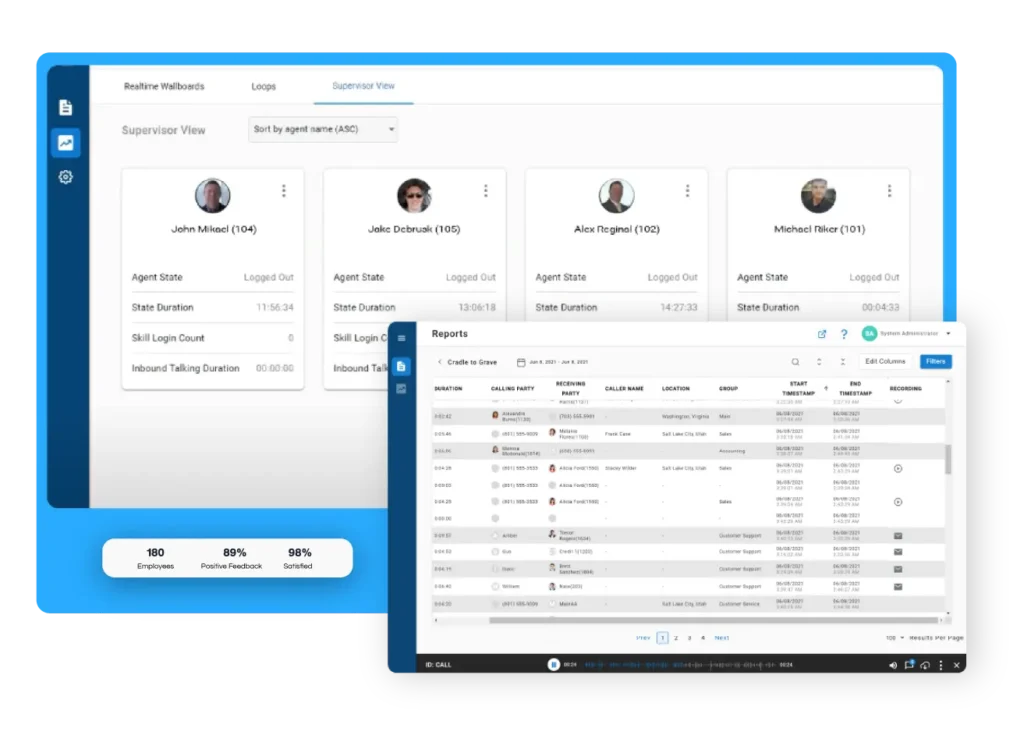
SMB contact centers need clear, reliable insight into what’s happening across their operations. Xima is designed to bring that visibility into one place, helping teams understand contact volume, agent activity, and performance in real time. With intuitive dashboards and accessible reporting, managers can quickly spot trends and support agents with data that reflects actual day-to-day activity. Instead of reacting to issues after they happen, supervisors can stay ahead of demand and keep service levels on track.
If your SMB is looking for a more practical contact center workforce optimization solution, request a demo from Xima today.
Frequently Asked Questions About Contact Center Workforce Optimization
Contact center workforce optimization (WFO) is the process of improving staffing, performance, and reporting to ensure the right agents are available and working effectively at all times.
Workforce management focuses on forecasting and scheduling, while WFO includes those functions plus performance tracking, quality management, and analytics.
Workforce optimization is important in a contact center because it improves staffing accuracy, supports better agent performance, and gives managers clearer visibility into operations, leading to more consistent service levels.
Contact center workforce optimization software should include real-time visibility, customizable reporting, performance tracking, and tools that help managers act quickly on operational insights.
Yes, small contact centers benefit from workforce optimization by gaining better visibility, improving staffing decisions, and supporting agents more effectively.