
Security concerns often surface right before a final purchase decision, especially for small businesses that handle sensitive customer information every day. When evaluating cloud contact center platforms, questions around data protection, regulatory compliance, and overall risk can feel complicated fast.
This guide breaks down what cloud contact center security looks like today, how compliance works in practice, and what small businesses should realistically expect from a secure and scalable solution.
Are Cloud Contact Centers Secure for Small Businesses?
Modern cloud contact centers are built with security as a core requirement, not an afterthought. Reputable providers invest heavily in enterprise grade infrastructure, ongoing monitoring, and dedicated security teams. In many cases, these protections exceed what most small businesses could manage internally with on premise systems.
Cloud contact center security is also based on a shared responsibility model. The provider secures the platform itself, including infrastructure, networks, and system controls. The business maintains responsibility for user access, policies, and how data is used. When both sides do their part, cloud platforms can deliver a strong security posture without adding complexity.
What Data Does a Cloud Contact Center Protect?
A cloud contact center handles a wide range of sensitive information. This often includes customer contact details, call recordings, chat transcripts, support tickets, and in some cases payment or health related data.
Protecting this information is central to cloud contact center security. Secure platforms are designed to safeguard data at every stage, from the moment it is captured to how it is stored, accessed, and eventually archived or deleted. Strong security practices help maintain customer trust while reducing exposure to risk.
How Do Cloud Contact Centers Secure Data with Encryption?
Encryption is one of the most important tools used to protect customer data, even though it often sounds technical. In simple terms, encryption turns readable information into coded data that cannot be accessed without proper authorization.
Cloud contact centers use encryption while data is moving between systems and while it is stored. This means customer information stays protected whether an agent is taking a call or data is sitting in a database. Encryption plays a critical role in preventing unauthorized access and supporting compliance requirements.
What Does Contact Center Security Compliance Really Mean?
Contact center security compliance is not a one time certification. It is an ongoing framework that helps businesses meet regulatory expectations while maintaining secure operations.
Compliance ready cloud contact centers support small businesses by offering secure system design, clear documentation, and built in controls. These features make it easier to align with regulatory requirements without creating additional operational burden for internal teams.
What Is a HIPAA Compliant Contact Center?
HIPAA applies to businesses that handle protected health information, including healthcare providers, insurers, and many related service organizations. A HIPAA compliant contact center provides the technical safeguards needed to protect patient data during customer interactions.
It is important to note that software alone does not guarantee compliance. However, choosing a HIPAA capable cloud contact center is a critical foundation. It gives businesses the tools they need to implement proper policies and protect sensitive health information.
What is a PCI Compliant Contact Center?
PCI compliance applies to organizations that process or handle payment card information. A PCI compliant contact center supports secure payment interactions by reducing how much sensitive data is exposed to agents and systems.
This often includes secure call handling, data masking, restricted access controls, and detailed reporting. Together, these safeguards help lower risk during payment related conversations and support broader contact center security compliance efforts.
How is Access to Customer Data Controlled?
Access control is a key part of cloud contact center security. Role based access controls allow businesses to decide who can see or manage specific types of data.
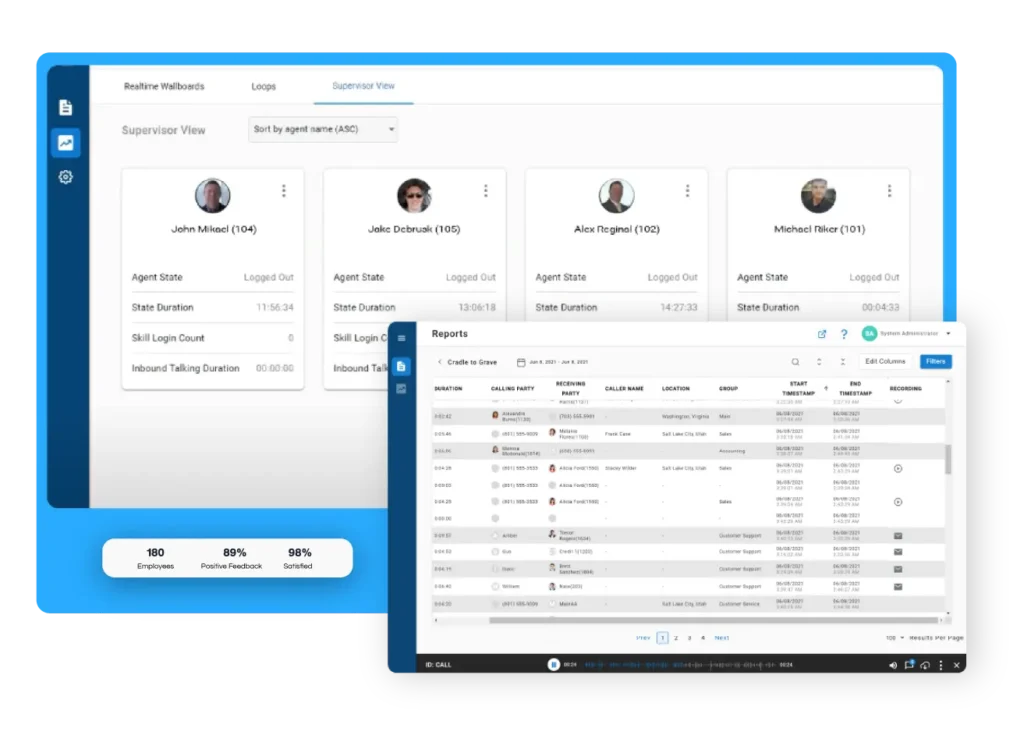
For example, supervisors may need access to reporting and recordings, while agents only need what is required to assist customers. Limiting access by role helps prevent internal misuse, supports accountability, and creates clear audit trails for compliance and review.
What Happens If There’s a Security Incident?
Security incidents are a common concern, but strong cloud contact center security focuses on preparation as much as prevention. Reputable providers use continuous monitoring, redundancy, and defined incident response plans to detect and respond to issues quickly.
These measures help minimize disruption and protect customer data if an issue does occur. For small businesses, this level of preparedness can be difficult to replicate without dedicated security resources.
How Does Secure Cloud Infrastructure Support Growth and Reporting?
Security and scalability go hand in hand. A secure cloud contact center makes it easier to add agents, expand communication channels, and introduce advanced reporting as the business grows.
Because the infrastructure is designed with security in mind, growth does not introduce new vulnerabilities. This foundation supports reporting that grows with your business, allowing leaders to access insights and performance data with confidence.
Key Takeaways for SMBs Evaluating Cloud Contact Center Security
Cloud contact center security is built to enterprise standards that support small business needs.
Compliance ready platforms help meet HIPAA and PCI requirements.
Encryption and access controls protect sensitive customer data.
Secure infrastructure supports long term growth and reporting.
Choosing a Secure Cloud Contact Center with Confidence
The right cloud contact center should make security feel manageable, not intimidating. When evaluating providers, focus on transparency, compliance readiness, and how security is built into the platform.
Instead of fear based messaging, look for solutions that treat security as a foundation for smarter decisions, better reporting, and sustainable growth. A secure cloud contact center does more than protect data. It helps your business move forward with confidence.