
Understanding Small Business Contact Center Software
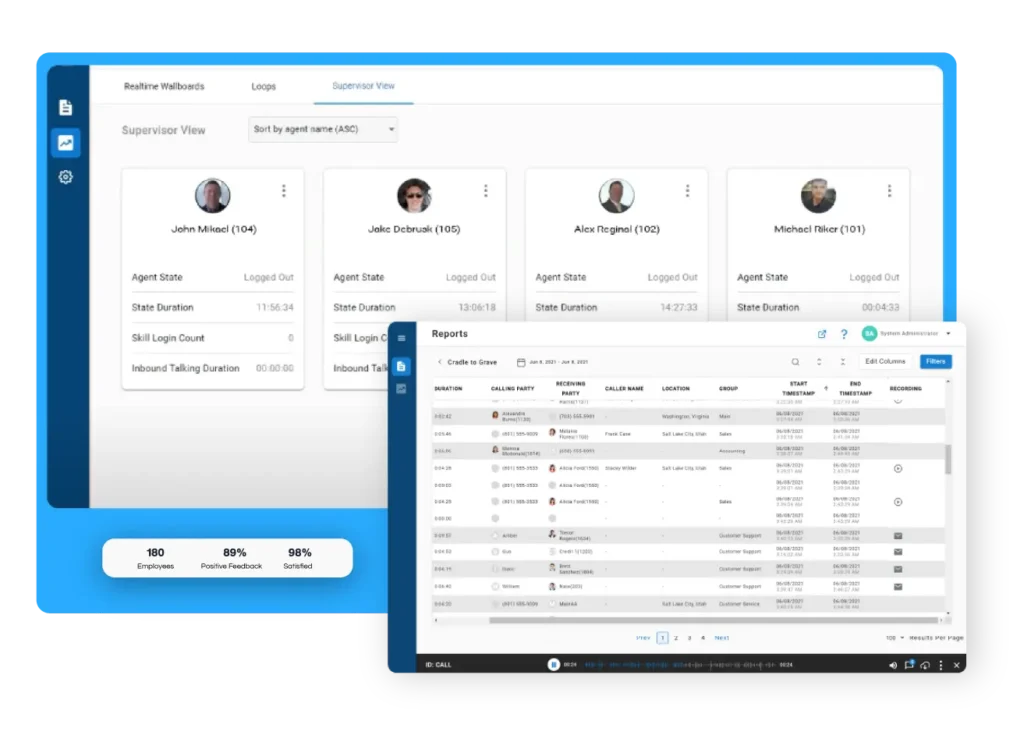
Contact center software is a centralized platform that manages customer interactions across phone calls and, in many cases, chat, email, and text messaging. Instead of calls ringing randomly or messages getting lost between inboxes, the system routes interactions to the right people, tracks activity, and gives managers visibility into what is happening in real time.
For small businesses, this structure reduces confusion and helps teams respond faster without adding complexity. Calls are answered more consistently, customers reach the right department sooner, and teams have a clearer picture of service performance.
Most modern contact center platforms are designed so small teams can manage them without dedicated IT staff. Cloud-based systems handle updates, maintenance, and hosting behind the scenes. Admin tools are typically visual and easy to configure, which makes tasks like updating call routing or adjusting hours straightforward.
This is one reason many small businesses move away from traditional phone systems and toward cloud contact center solutions built specifically for growing teams.
Common challenges include missed calls, long hold times, scattered communication, and limited insight into customer issues. When teams rely on personal phones, shared voicemail boxes, or disconnected tools, it becomes hard to maintain a consistent experience.
Contact center software brings everything into one place. It helps ensure calls are answered, routes customers efficiently, and provides reporting so managers can spot problems early instead of reacting after complaints appear.
Signs usually appear gradually. Call volume increases, customers start calling back about unresolved issues, or employees spend too much time switching between tools. Another indicator is when business growth starts to strain your existing phone setup.
If customer service feels harder to manage than it used to be, contact center software can help restore structure without adding headcount.
A good contact center platform grows alongside your business. You can start with core features like call routing and reporting, then add users or channels later as needs change. This flexibility allows small businesses to plan ahead without overcommitting upfront, which is especially important during periods of growth or seasonal demand.
Pricing, Plans, and Total Cost
Understanding pricing early helps avoid surprises later and makes it easier to budget confidently.
Most platforms use per-user pricing, with costs influenced by feature tiers and optional add-ons. Entry-level plans typically cover core voice functionality, while higher tiers include advanced routing, analytics, or AI functionality.
Usage patterns can also affect pricing, especially if minutes or messages are billed separately.
Pricing usually covers user seats, access to the platform, cloud hosting, and ongoing support. Many providers also include updates and security maintenance as part of the subscription. Additional costs may apply for premium features, integrations, or specialized compliance needs.
Reviewing what is included in each plan helps ensure you are paying for tools your team will actually use.
Entry-level plans focus on essentials like inbound calling, basic routing, and simple reports. More advanced plans often include omnichannel support, deeper analytics, workflow automation, and CRM integrations.
For small teams, starting with a simpler plan can be effective, especially if the platform allows easy upgrades later.
Costs usually scale predictably as users are added or features expanded. Because pricing is typically tied to seats or usage, small businesses can forecast expenses and adjust gradually rather than facing sudden, large investments. This scalability is one reason cloud contact center solutions are popular among growing companies.
In many cases, yes. Automation, smarter routing, and better visibility reduce the need for additional hires by helping existing teams handle higher volumes more efficiently. Software can also reduce costly mistakes like missed calls or unresolved issues that lead to lost customers.
Essential Features of Small Business Customer Service Software
Break down the tools SMBs actually need and how to decide what’s essential vs. optional.
Core features include call routing, IVR menus, real-time dashboards, call recording, and basic reporting. Integrations with CRM or ticketing tools can also be valuable, especially as customer volume grows. These features help small teams stay organized and responsive without unnecessary complexity.
Voice-only service works well for many businesses, particularly early on. As customer expectations evolve, adding chat, email, or text messaging can improve responsiveness and convenience.
The key is choosing software that supports omnichannel growth when you are ready, rather than forcing it from day one.
Intelligent routing, callback queues, and availability dashboards play a major role. Basic automation, such as after-hours routing or overflow rules, also helps ensure customers are not left waiting without answers.
Clear reports help identify bottlenecks, staffing gaps, and recurring issues. Even simple metrics can reveal where small adjustments make a big difference, such as changing call flows or shifting schedules during peak hours.
AI, Automation & Security in Small Business Customer Service
Automation and security features play a growing role in helping small teams work efficiently while protecting customer data.
AI and automation save time by handling repetitive tasks like call summaries, routing decisions, and follow-ups. This allows agents to focus on real conversations instead of manual work.
When used thoughtfully, these tools improve accuracy and consistency without overwhelming small teams.
Small businesses should look for secure data handling, encrypted communications, and consistent service reliability. If your business operates in a regulated industry, the platform should also support basic compliance requirements around data access and storage.
Clear documentation and transparent security practices matter more than enterprise-only certifications that most small teams will never use.
AI can support small teams by handling simple tasks like call summaries, suggested responses, and smarter call routing. These features save time and reduce manual work without adding complexity to daily workflows. The most effective AI tools work quietly in the background and require little ongoing management.
Essential security features include encrypted call data, role-based user access, and strong uptime commitments. These controls help prevent unauthorized access and keep customer conversations available when they matter most. Together, they form a reliable foundation for protecting customer trust.
Advanced AI features like sentiment analysis can be helpful for higher call volumes or specialized support teams. For many small businesses, they are optional rather than necessary at the start.
Most teams see more value from core automation and visibility tools before adding advanced analytics.
Setup, Onboarding, and Ease of Use
A smooth setup and simple onboarding process can make the transition to a modern contact center feel manageable instead of disruptive.
Most platforms support smooth transitions with staged onboarding and parallel setup. This allows teams to migrate gradually while continuing to handle customer calls. With proper planning, disruption is minimal.
Many small businesses can be up and running within days or a few weeks. Cloud-based systems eliminate the need for hardware installation, speeding up setup. Downtime is typically limited or avoided altogether.
Most providers support phone number porting and offer integrations with common business tools. This helps teams keep familiar numbers and workflows in place. The process is usually handled with provider guidance.
Modern contact center platforms are designed for non-technical users. Most teams can learn the basics quickly with short training sessions or self-guided resources. Ongoing training is minimal for day-to-day use.
Performance Metrics and Continuous Improvement for Small Business Customer Service
Tracking the right performance metrics helps small teams identify issues early and improve customer service without adding complexity.
Small businesses should focus on wait times, average handle time, missed calls, and customer satisfaction. These metrics clearly show how responsive the team is and where service may be breaking down as call volume changes.
Improvement typically shows up as shorter wait times, fewer missed calls, and faster resolutions. More consistent customer feedback is often another sign that the system is supporting better service.
Very small teams benefit most from tracking missed calls and wait time, since those metrics directly reflect availability and responsiveness without adding reporting complexity.
Implementation and Choosing the Right Customer Service Solution
Choosing the right platform comes down to balancing usability, cost, and long-term fit as your business grows.
The fairest comparison looks at ease of use, pricing transparency, support quality, and whether the features actually match your needs. Platforms that stay simple tend to deliver more value for small teams.
Ask about setup time, ongoing support, scalability, and how pricing changes as usage grows. These questions help surface limitations early.
The right platform should feel manageable for your team today while allowing room to grow. If it requires heavy customization or long training just to get started, it may be too complex.
Small business-focused platforms are usually easier to implement and more cost-effective. Enterprise systems often introduce unnecessary complexity, and cost, for smaller teams.