
SMBs need something in between.
They need call center software for SMB environments that delivers enterprise capability without unnecessary complexity. They need visibility into every interaction, tools to manage performance, and flexibility to expand as customer demand grows.
Xima Contact Center is built for that journey. It supports early-stage teams, growing departments, and scaling operations without forcing a platform change along the way. Instead of outgrowing your system, your system grows with you.
The Problem With Enterprise Contact Center Tools for SMBs
Many contact center platforms are designed for large enterprises. They require dedicated administrators, have complex integrations, and long deployment cycles. For SMBs, that often creates more friction than value.
Growing businesses need structure and visibility, but they cannot afford systems that require months of configuration or ongoing technical oversight just to function.
Overbuilt Platforms and Underused Features
Enterprise contact center tools often come packed with advanced functionality that SMBs do not need yet. Extensive configuration requirements, layered permissions, and specialized admin roles can slow adoption and overwhelm small teams. Instead of empowering growth, these platforms introduce complexity that limits agility.
The Cost of Outgrowing Early-Stage Tools
Basic phone systems and entry-level tools work well in the beginning because they’re easy to deploy and inexpensive to maintain. As call volume increases, however, those systems start to show their limitations. Limited routing logic, minimal visibility into interactions, and a lack of performance tracking make it difficult to maintain service quality. If your contact center can’t grow with your business, you’ll eventually have to replace it.
Why SMBs Need Software That Evolves With Them
SMBs need a call center solution that starts simple and scales intentionally. They need flexibility to expand queues, refine routing, add reporting depth, and introduce performance oversight without disrupting operations. The right system does not force a tradeoff between simplicity and capability; it provides both at the right time.
Stage 1: Early-Stage SMBs Building Their First Contact Center
The first stage of growth is about moving from reactive support to intentional structure. Calls are increasing. Customers expect faster responses. Leadership wants visibility. What once felt manageable now needs defined processes and measurable performance.
At this point, SMBs are not looking for enterprise-level infrastructure. They are looking for a system that brings order, clarity, and accountability without adding operational strain.
Getting Started Without Overhead
Early-stage SMBs need structure without adding operational burden. Xima makes it possible to formalize call handling with intelligent routing, queue management, and clear reporting without requiring dedicated administrators or lengthy implementation cycles.
Teams can launch quickly, define how calls are distributed, and ensure customers reach the right person the first time. Instead of layering on unnecessary features, Xima provides the core functionality that small teams actually use to create a strong operational foundation from the start.
Immediate Visibility Into Customer Conversations
Visibility becomes critical the moment support becomes a defined function. Even with a small team, leaders need to understand what is happening across every interaction.
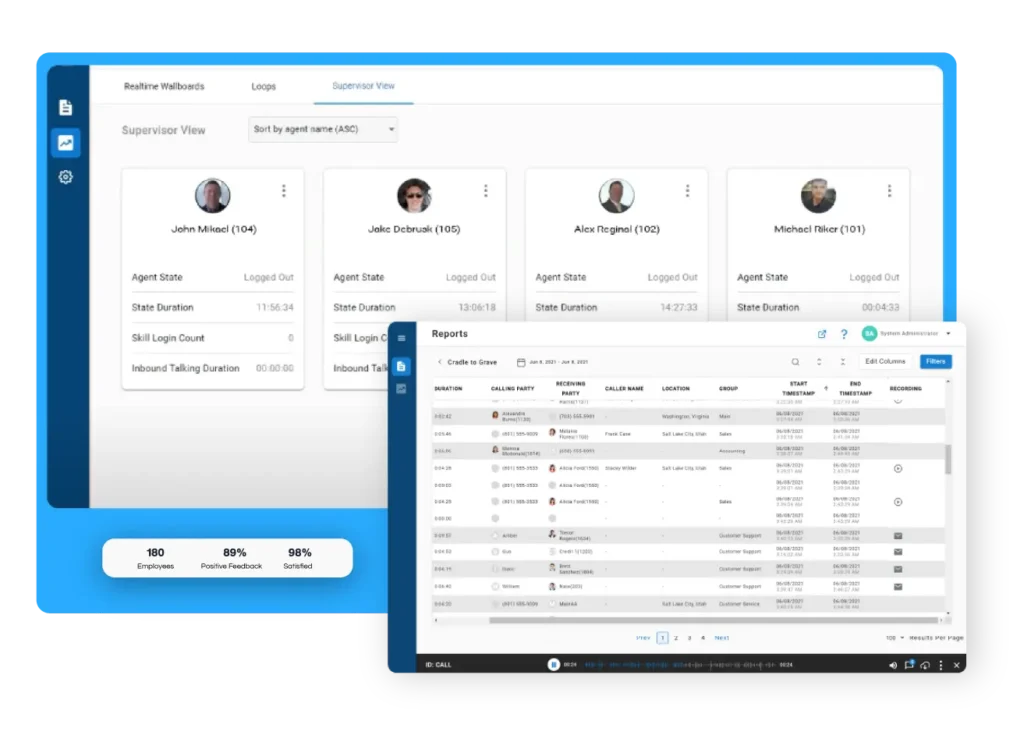
Xima’s Cradle-to-Grave visibility tracks each customer conversation from beginning to end. This means no blind spots and no guessing about what happened before a call was transferred or escalated. From day one, teams gain insight into performance, response times, and customer experience, which sets the stage for smarter growth decisions.
Stage 2: Growing Teams Managing Higher Volume and More Channels
Once a structured foundation is in place, growth tends to accelerate. Call volume increases, more agents join the team, and customers expect faster answers and more ways to connect. What worked for a small, tightly coordinated group now requires more deliberate management.
Stage two often exposes the limitations of entry-level systems. This is because the priority shifts from simply handling calls to maintaining consistency and control as complexity rises.
Scaling Call Volume Without Losing Control
As queues grow and workloads shift throughout the day, manual adjustments are no longer enough. Routing needs to account for agent skill sets, availability, and performance goals. Supervisors need to understand service levels in real time, not at the end of the week.
Xima allows teams to expand their routing logic and queue management without rebuilding their system. As volume increases, the contact center remains organized. Leaders can see where delays occur, balance workloads more effectively, and provide a predictable customer experience even during peak periods.
Adding Channels Without Fragmentation
Customer communication rarely stays limited to one channel for long. As expectations evolve, businesses often introduce new ways for customers to connect. The risk at this stage is fragmentation, where conversations and reporting live in separate systems that do not communicate with one another.
Xima keeps interaction history and reporting unified, so expanding communication methods doesn’t mean losing operational clarity. Supervisors can track performance across the entire contact center without stitching together data from disconnected tools. That consistency protects both service quality and internal efficiency.
Supervisor Tools for Accountability
With more agents and higher activity levels, performance management must become intentional. Leaders need reliable insight into individual and team performance so coaching can happen in real time rather than after problems escalate.
Xima provides the monitoring and reporting capabilities supervisors rely on to guide growing teams. Patterns become visible. Opportunities for improvement are easier to identify. Accountability strengthens as expectations become clearer.
Stage 3: Scale-Ups Requiring Structure, Performance, and Forecasting
As SMBs move into true scale-up mode, growth becomes less about handling higher call volume and more about creating operational predictability. Leadership needs to understand how staffing levels impact service performance, how agent productivity trends over time, and how customer experience metrics connect to business outcomes. Informal oversight no longer works, and reactive decision-making begins to create risk.
At this stage, many organizations find that entry-level tools lack the depth needed for forecasting and long-term planning, while enterprise systems introduce layers of complexity that seem disproportionate to the team’s size. What scaling SMBs need instead is structured capability that supports disciplined growth without overcomplicating operations.
Workforce Management as a Growth Requirement
As teams expand, scheduling becomes more complex, and performance expectations become more defined. Managers must anticipate call volume fluctuations, align staffing with demand, and ensure agents remain accountable for meeting service-level targets. Relying on intuition or static schedules can lead to overstaffing during slow periods and service gaps during peak times.
Xima’s Workforce Management functionality addresses these challenges by connecting forecasting, scheduling, adherence tracking, and performance monitoring within a unified system. Leaders gain visibility into how staffing decisions affect queue performance and customer wait times, allowing them to plan proactively rather than respond after service levels decline.
Data-Driven Service Decisions
With scale comes the need for deeper analysis. Historical reporting is no longer a summary of activity but a tool for strategic improvement. Leadership teams need to understand trends across weeks and months, identify recurring bottlenecks, and evaluate how operational adjustments affect customer outcomes.
Xima delivers advanced reporting that connects interaction data to measurable performance indicators. Supervisors can analyze trends across teams, assess long-term productivity, and make informed decisions that strengthen both efficiency and service quality. As insight improves, so does consistency, which allows the contact center to mature alongside the business.
Deployment Flexibility That Supports Long-Term Growth
As SMBs scale, so do their operational and technical requirements. Infrastructure decisions that made sense in the early stages may need to be reconsidered as security standards mature, compliance requirements expand, or IT strategy shifts to support broader organizational goals. A contact center platform should accommodate that evolution rather than restrict it.
Many contact center solutions lock businesses into a single deployment approach, which can create unnecessary friction over time. When a system cannot adapt to changing infrastructure priorities, organizations are often forced into disruptive migrations that introduce risk, retraining costs, and operational downtime. Growing businesses need flexibility that protects their investment while supporting future change.
Cloud, On-Premise, or Hybrid Options
Xima provides cloud, on-premise, and hybrid deployment models within the same platform framework, allowing SMBs to align their contact center environment with their current IT strategy while preserving long-term adaptability.
Organizations that prioritize speed and distributed accessibility can leverage cloud deployment, while those with stricter control or compliance requirements can maintain on-premise environments. Hybrid configurations offer a practical path for businesses transitioning between models or supporting geographically dispersed teams.
This flexibility ensures that infrastructure decisions do not dictate platform replacement; instead, the contact center remains consistent while the underlying environment adapts as needed.
Avoiding Costly Replatforming as Requirements Change
Replatforming is one of the most disruptive events a contact center can experience. It often requires data migration, retraining agents and supervisors, rebuilding reporting structures, and temporarily sacrificing operational efficiency. For SMBs, that disruption can stall momentum at a critical time.
Because Xima scales in both functionality and deployment options, businesses can expand capabilities, introduce workforce management, refine reporting depth, or adjust infrastructure without abandoning the system they already have. The platform evolves alongside operational maturity, so growth feels continuous rather than cyclical.
Why Xima Fits Between Entry-Level Tools and Enterprise Platforms
During periods of growth, SMBs often find themselves caught between two extremes. Entry-level systems provide quick setup and simplicity but begin to show limitations once reporting, performance management, and routing complexity increase. Enterprise platforms offer depth, but they often introduce administrative overhead, longer implementation timelines, and functionality that a growing team realistically does not need.
This gap leaves many organizations searching for a solution that delivers meaningful capability without unnecessary operational burden.
Enterprise Capability Without Enterprise Complexity
Xima provides advanced contact center functionality that aligns with how SMBs actually operate. Features such as intelligent routing, real-time and historical reporting, workforce management, and full interaction visibility are available when needed, yet they do not require large technical teams or prolonged deployment cycles to manage. The platform is structured to support growth incrementally. Teams can introduce deeper reporting, refine performance oversight, and formalize workforce planning as operational demands increase.
A Platform Built for SMB Growth, Not Just SMB Entry
Many solutions are designed to help small businesses get started, but not necessarily to stay with them as they scale. Xima is built for long-term operational maturity. The same system that supports a small, newly structured contact center can also support larger teams with forecasting requirements, performance accountability, and multi-channel coordination.
Because the platform grows in depth and flexibility alongside the organization, SMBs are not forced to reevaluate their technology at every milestone. Instead, they continue building on a system that already understands their workflows, reporting structures, and performance standards.
How SMBs Grow With Xima Over Time
Growth rarely happens all at once. It unfolds in stages, each introducing new operational demands and higher expectations around performance, visibility, and accountability. A contact center platform should support that progression without forcing teams to rebuild processes or replace systems as they mature.
For SMBs using Xima, expansion builds on an existing foundation. The tools that support early structure continue to serve the organization as reporting becomes more advanced, staffing models become more sophisticated, and leadership requires deeper operational insight.
Expanding Features as Needs Evolve
Most growing businesses don’t need every advanced capability on day one. Early stages focus on routing calls effectively, tracking basic performance, and establishing visibility into customer interactions. As volume increases and teams expand, the need for deeper reporting, more refined queue management, and structured workforce planning becomes more apparent.
Xima allows organizations to introduce these capabilities gradually, aligning technology investment with operational maturity. Teams can enhance reporting depth, formalize coaching processes, and implement workforce management tools when they are ready, rather than paying upfront for capabilities that go unused.
Long-Term Partnership vs. Short-Term Tooling
Many SMBs initially approach contact center software as a tactical purchase designed to solve an immediate problem. Over time, it becomes clear that the platform plays a much larger role in shaping customer experience and operational efficiency. The right solution should support that broader impact.
Xima functions as a long-term operational partner rather than a temporary fix. Its visibility tools, performance insights, and deployment flexibility remain relevant as the organization matures. Leadership can refine strategy, improve service consistency, and plan for future growth without questioning whether the system will keep pace.
Choosing a Contact Center You Won’t Outgrow
Growing SMBs need more than a short-term solution; they need a contact center platform that scales with them. Xima delivers the visibility, workforce management, and deployment flexibility required to support every stage of growth without forcing a system replacement along the way.
Ready to build a contact center designed for long-term success? Contact Xima today to get started.