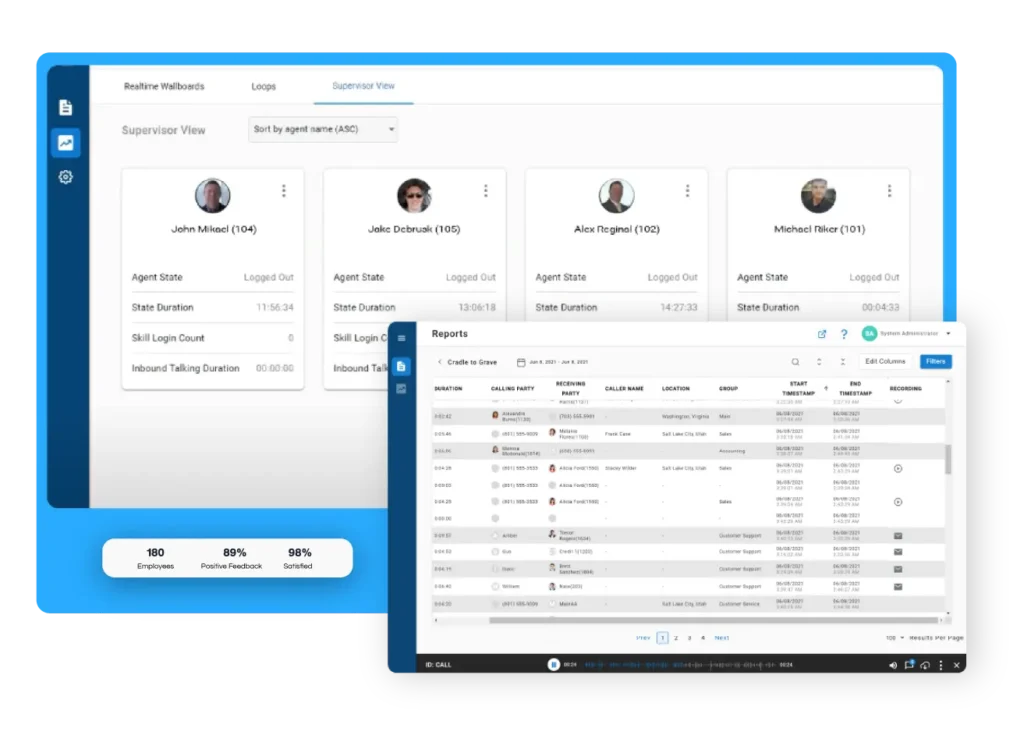

Evaluating contact center platforms for SMBs can get overwhelming fast. Feature lists blur together, demos sound the same, and it becomes hard to tell which solution actually fits your team. Asking the right questions makes it easier to compare vendors side by side, understand real-world capabilities, and avoid surprises after implementation. In this guide, we’ll provide ten questions teams can use to evaluate contact center vendors and select a solution that supports their current operations and future growth.
How to Use This Small Business Buyer’s Checklist
Use this checklist as a shared evaluation tool throughout your buying process:
- Review the questions internally before talking to vendors
- Ask every vendor the same questions to keep comparisons consistent
- Capture responses in a simple scorecard or comparison table
- Use the answers to narrow your shortlist and guide deeper follow-up conversations
The answers you get will surface real differences between platforms, so the right choice becomes clearer. Xima’s contact center solutions for small businesses answer most of the questions that follow.
10 Questions to Ask Contact Center Vendors
1. What experience does the vendor have supporting small business teams?
Experience with small and midsize teams matters. Vendors that regularly work with SMBs tend to understand common challenges such as limited IT resources, lean staffing, and the need for rapid adoption. Look for examples of similar customers, relevant industries, and proven problem-solving at a comparable scale. References, case studies, and a track record of long-term SMB support can be strong indicators of fit.
2. How does the vendor handle onboarding and daily support?
Clear onboarding processes help teams get up and running without disruption. Ask about setup timelines, configuration assistance, and training options. Top vendors offer structured onboarding that feels manageable rather than overwhelming. Daily support also matters; confirm how support requests are handled, how escalation works, and what response times to expect.
3. What pricing model does the vendor use, and what extra costs should buyers anticipate?
Pricing transparency helps avoid budget surprises. Ask how pricing is structured, such as per user or usage-based models. Clarify what features are included and which ones require additional fees. Items like integrations, advanced reporting, or premium channels can affect the total cost of ownership. Xima pricing answers the cost questions on this list directly.
4. Which KPIs and reporting tools does the vendor provide?
Reporting gives small businesses visibility into performance, staffing, and customer experience. Ask which metrics are included out of the box and how data is presented. Call center dashboards should surface insights quickly, and reports should be easy to export or automate. Strong reporting supports better coaching, smarter staffing decisions, and more consistent service delivery.
5. What communication channels does the platform support?
Modern customer interactions span multiple channels. Look for platforms that support every channel you use, such as voice, chat, email, SMS, and social messaging. A unified agent workspace helps teams manage conversations without switching tools. Routing flexibility and queue management across channels also play a key role in maintaining consistent service levels.
6. What automation features help lighten the team’s workload?
Automation helps small teams work more efficiently. Ask about features like intelligent routing, automated follow-ups, task triggers, or AI-powered summaries. These tools reduce repetitive tasks and allow agents to focus on meaningful customer conversations.
7. How does the platform manage call recording, quality monitoring, and secure storage?
Call recordings and quality tools support training and performance improvement. Ask about retention policies, access controls, and secure storage practices. Easy search and review workflows make it simpler to use recordings for coaching. Clear policies around data access and storage help protect sensitive information.
8. How easily does the platform integrate with existing tools?
Integrations reduce friction in daily workflows. Confirm connections with CRMs, help desks, and other essential systems. Open APIs can support custom needs as well. Fewer tabs and better data sharing give agents more context and improve reporting accuracy.
9. What security, compliance, and reliability standards does the vendor meet?
Security and uptime are critical for SMBs that rely on a single platform. Ask about data encryption, privacy controls, and compliance documentation. Uptime commitments, failover plans, and published service level agreements can provide insight into reliability. Strong standards help protect operations and customer trust.
10. How flexible and scalable is the solution as the business grows?
Growth should not require a platform change. Ask how easily users can be added, routing adjusted, and workflows updated. Seasonal fluctuations and long-term expansion should be supported without disruption. Predictable updates, clear release notes, and transparent communication signal a platform built for evolving needs.
Putting Your Small Business Buyer’s Checklist into Action
Selecting a contact center platform is about finding a solution that fits how your team works today and supports how you want to grow tomorrow. These ten questions help bring clarity to the evaluation process, uncover meaningful differences between vendors, and reduce the risk of costly surprises after launch.
If you are ready to see how a contact center platform can support your team in practice, schedule a demo with Xima today!