
Today’s AI contact center software can assist with everything from virtual agents and automated call summaries to quality assurance, speech analytics, and agent coaching. Rather than replacing human agents, these tools can reduce manual work and give teams better information to resolve customer needs efficiently. This guide explores the most practical, high-impact AI use cases in contact centers and how they can improve day-to-day operations.
Key Takeaways
- Virtual agents resolve routine requests like password resets and payments, reducing wait times and agent workload.
- Real-time coaching surfaces relevant knowledge and compliance prompts during live calls.
- Automated call summaries reduce after-call work by eliminating manual note-taking.
- Sentiment analysis flags at-risk interactions and helps managers identify effective de-escalation strategies.
- AI-powered QA can review 100% of calls instead of relying on a small manual sample.
- AI forecasting uses historical and seasonal call patterns to help managers build more accurate staffing schedules.
1. AI Virtual Agents Deliver Instant Resolution for Routine Inquiries
Conversational AI allows contact centers to automate high-volume, repetitive inquiries across phone, web chat, and messaging channels. Messaging bots and voice bots can help customers check order statuses, process payments, reset passwords, schedule appointments, and complete other routine tasks without waiting for a human agent.
AI-powered virtual agents can work alongside Interactive Voice Response (IVR) systems to understand customer needs and guide them toward faster resolutions. As voice bot technology becomes more advanced, contact centers can automate more natural spoken interactions while still providing a clear path to a live agent when needed.
Resolving straightforward requests through automation reduces queue wait times and gives human agents more capacity for complex, multi-step, or high-empathy conversations. This helps contact centers improve efficiency without sacrificing the human support customers need for more complicated issues.
2. Agents Receive Real-Time On-Screen Coaching During Live Calls
AI-powered agent assist tools support reps while conversations are still in progress. These systems can transcribe live calls, analyze what the customer is asking, and surface relevant knowledge base articles, troubleshooting steps, compliance prompts, or recommended responses directly on the agent’s screen.
By giving agents immediate access to the right information, real-time coaching reduces time spent searching through documents or putting customers on hold. It can also shorten onboarding for new hires and help improve first-contact resolution by giving agents more consistent guidance during complex calls. Xima’s live agent call recording capabilities can support greater visibility into these conversations and agent performance.
3. Instant Call Summaries That Reduce Post-Call Work
Manual wrap-up tasks can add significant time between customer interactions. AI-generated call summaries use speech-to-text technology to turn completed conversations into concise notes, assign reason codes, capture key outcomes, and log follow-up tasks in connected CRM systems.
Saving even one to two minutes of manual entry per call can add meaningful capacity across an entire contact center. Agents can move on to the next customer faster, while managers gain more consistent documentation without relying on each rep to manually summarize every conversation.
4. Tracking Sentiment Drops to Save At-Risk Calls
Sentiment analysis helps contact centers understand how customer emotion changes throughout a conversation. AI can identify shifts from frustration or confusion to relief and satisfaction, giving managers a clearer view of which moments influence the outcome of a call.
By reviewing these changes, teams can pinpoint the agent responses, policy options, or product solutions that successfully de-escalate difficult interactions. Those insights can then inform coaching, call-handling strategies, and retention efforts across the broader team. Learn more about how sentiment analysis can improve agent performance.
5. AI Draws Instant Answers from Unified Knowledge Bases
Contact center agents often need information stored across multiple systems, including help center articles, policy documents, account records, and internal databases. AI-powered knowledge tools can search these connected sources at once and return a direct, plain-English answer to the agent.
For example, a rep could ask a question about an account policy and receive an answer that combines information from a CRM record, internal policy document, and product knowledge base. This reduces long hold times, eliminates manual searches, and helps agents provide faster, more consistent answers.
6. Predicting Customer Issues Before the Phone Rings
Traditional customer service is reactive, with agents responding only after a customer reaches out. AI enables a more proactive approach by analyzing product usage, service data, and live event trends to identify issues that may trigger incoming calls.
If a regional outage occurs or a connected device begins showing signs of failure, the contact center can send an automated text, chatbot message, or service notification before customers start calling. Addressing the issue early can reduce avoidable volume spikes, lower queue pressure, and keep customers informed before frustration builds.
7. Auditing Every Single Call for Quality Assurance
Traditional QA programs often rely on managers manually reviewing a small sample of calls, leaving most customer interactions unchecked. AI-powered QA automation can score 100% of calls against defined criteria, giving supervisors a much broader view of performance and compliance.
Automated systems can flag missed disclosures, negative sentiment, script deviations, and other quality issues across every interaction. Instead of coaching agents based on a handful of random calls, managers can identify patterns, prioritize high-risk conversations, and provide targeted feedback using data from the entire contact center.
8. Forecasting Call Volume to Avoid Overworked (or Idle) Reps
AI-powered forecasting tools analyze historical call traffic, seasonal spikes, and external factors such as weather trends to predict future contact volume. Managers can use these forecasts to build schedules that provide enough coverage during busy periods without overworking agents or wasting budget on unnecessary staffing during slower hours.
AI can also help managers understand why demand or performance is changing. Rather than spending significant time digging through reports, tools like Xima AI Insights can surface trends and potential root causes in seconds. Combined with contact center workforce optimization, these insights help leaders adjust staffing faster, balance workloads, and make more informed operational decisions.
Xima Software Turns Contact Center Performance Data into Action
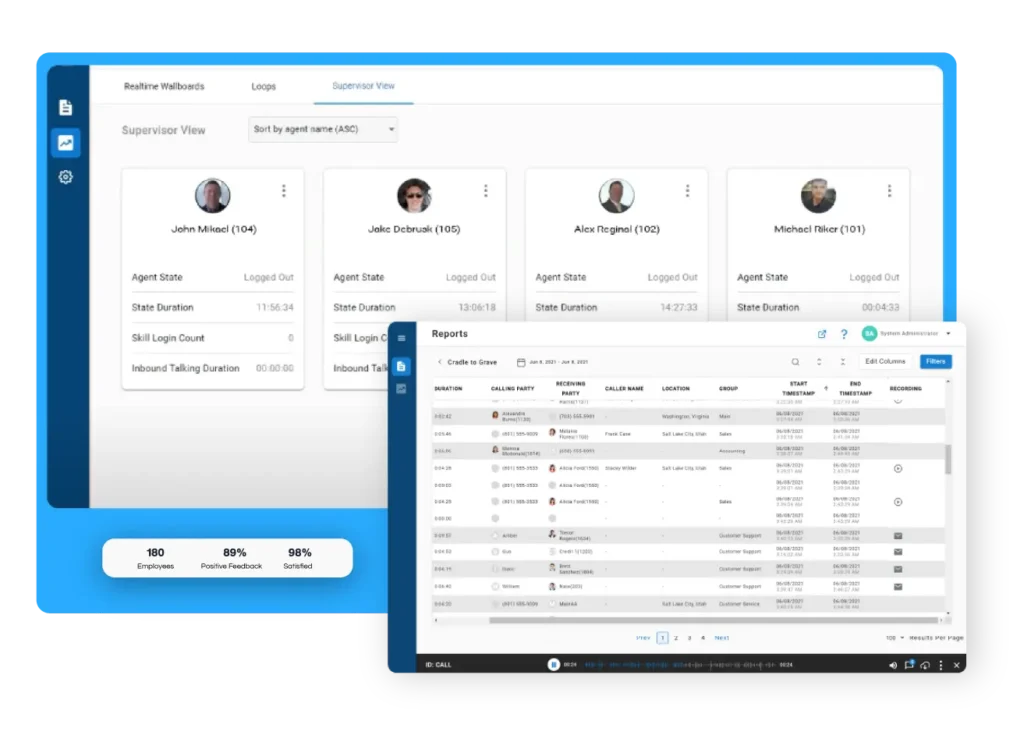
AI is most valuable when contact center leaders can turn its insights into measurable operational improvements. Xima Software provides real-time visibility into queue performance, agent activity, and call analytics, helping managers understand what is happening across the contact center and identify where changes can have the greatest impact.
Customizable dashboards, detailed call reporting, and workforce management tools give leaders the data they need to optimize agent schedules, reduce handle times, and maintain consistent service quality across customer interactions. Instead of relying on disconnected reports or delayed performance reviews, teams can use real-time and historical data to make faster, more informed decisions.
Ready to see how better visibility can improve your contact center? Schedule a custom demo with Xima Software to explore how real-time call tracking, analytics, and reporting can help your team operate more efficiently.
FAQs About AI Contact Center Use Cases
ROI timelines vary based on the AI tools, implementation, and contact center goals. High-impact applications like automated QA, call summarization, and virtual agents can begin delivering efficiency gains relatively quickly.
Not necessarily. Contact center AI is often used to automate repetitive tasks and support agents, allowing teams to spend more time on complex customer needs rather than replacing human interaction entirely.
Contact centers should use secure AI platforms with strong access controls, encryption, data retention policies, and automatic redaction of sensitive information. Regular audits and compliance monitoring can further help protect customer data.