
Key Takeaways
- Xima Copilot shifts quality support from after-the-fact review to in-call guidance, helping agents resolve issues correctly the first time instead of catching errors after the call ends.
- Real-time agent assist gives smaller teams a way to improve resolution quality without adding QA staff, a knowledge management function, or extra operational overhead.
- Copilot works alongside existing Cisco, Mitel, or Avaya environments, so teams get in-call guidance without replacing their current phone system.
- The real value of agent assist only shows up with reporting that confirms whether agents are actually using the guidance, which is where Xima’s platform ties assist and analytics together.
Optimized Outline
How Xima Copilot supports agents during live customer interactions
Small contact center teams are often asked to do more without adding more people. Agents need to resolve questions accurately, follow required processes, and keep conversations moving, while supervisors are trying to support the team without spending the day listening to calls.
Xima Copilot brings real-time agent assist into that workflow. Instead of waiting until a call ends to identify what went wrong, Copilot helps agents while the conversation is happening. It is designed to surface useful guidance at the right moment so agents can stay focused on the customer rather than searching through systems or relying on memory.
That distinction matters for smaller teams. When the same people are handling calls, coaching agents, managing queues, and reviewing quality, there is not much room for another layer of manual work. Real-time assistance gives agents support in the moment while giving supervisors better visibility into how that guidance affects performance.
What happens on a live call with Xima Copilot running
Xima Copilot is designed to fit into the agent’s existing workflow instead of creating another task to manage. The process is straightforward:
- The call or chat begins and is captured in real time.
As the customer and agent interact, the conversation is processed as it happens. - Copilot analyzes the conversation.
Speech-to-text and language analysis help identify what the customer is asking about, what part of the workflow the agent is in, and whether there are important requirements to consider. - Relevant guidance surfaces on the agent’s screen.
Instead of asking the agent to search through a knowledge base or put the customer on hold, Copilot can surface information and prompts that are relevant to the conversation. - The agent uses the guidance without leaving the interaction.
The agent can keep the conversation moving while using the information provided to answer questions, follow required steps, or handle an unfamiliar request. - Supervisors can continue to use reporting and analytics alongside the interaction.
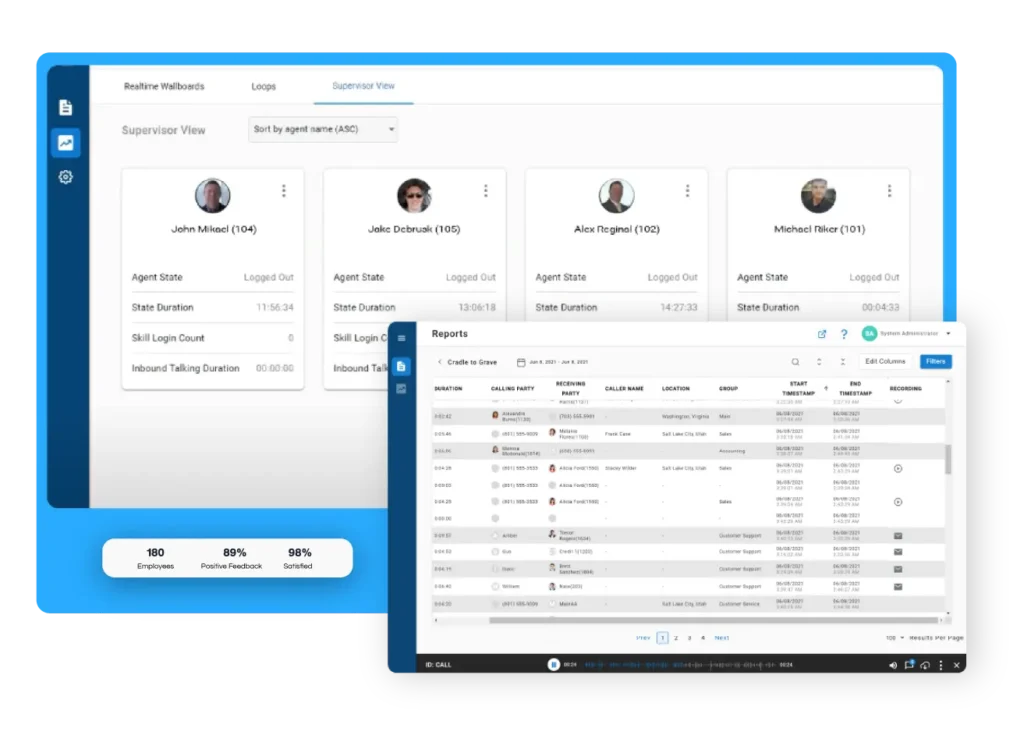
The goal is not to separate agent assist from the rest of the contact center. The value comes from connecting in-call support with the reporting and performance data supervisors already rely on.
For teams interested in the broader capabilities behind Xima Copilot, the platform is designed to work as part of Xima’s larger contact center environment rather than as another disconnected tool.
Why real-time assist matters most for smaller teams
Large contact centers can afford specialized teams for quality assurance, knowledge management, training, and analytics. Smaller teams usually cannot. A supervisor may be responsible for all of those functions while also keeping an eye on queues and service levels.
That is where real-time agent assist can make a practical difference.
When an agent can get help during the conversation, fewer issues need to be escalated simply because the answer was hard to find. Agents can handle less familiar questions with more confidence, and supervisors do not have to step in every time someone needs a quick answer.
The biggest benefit is resolution quality. Better guidance during a call can help agents solve more issues on the first contact instead of creating another interaction later. That can mean fewer callbacks, fewer transfers, and fewer situations where a supervisor has to take over.
It also changes the role of quality assurance. Instead of relying entirely on after-the-fact review to identify errors, teams can use in-call guidance to prevent some of those errors from happening in the first place.
For a smaller operation, that matters. The team does not need another department to get the benefits of more consistent support. The existing team gets better tools for the work they are already doing.
Key capabilities that improve resolution quality
Real-time agent assist is most useful when it solves problems agents encounter during ordinary customer conversations.
- Surfaces relevant answers during the call
Agents should not have to search through multiple systems while a customer waits. Copilot can bring relevant information into the conversation so the agent can respond without breaking the flow of the call. - Flags required disclosures and compliance steps
Some conversations require specific language or process steps. Real-time prompts can help agents remember those requirements while they are still in the interaction, rather than relying on a later QA review to catch a missed step. Teams handling sensitive information can also evaluate security and compliance controls as part of the broader platform decision. - Helps with unfamiliar or complex questions
Not every agent will know the answer to every question, especially on smaller teams where everyone may handle a wide range of call types. In-call guidance can give an agent a way to work through a less common request without immediately transferring the customer or escalating the issue. - Reduces reliance on a large knowledge management operation
Smaller teams do not always have someone whose job is to maintain an enormous knowledge base. Helpful guidance should be easy for agents to access and simple enough to use during a live conversation. That lowers the burden on both the agent and the people responsible for keeping information current. - Keeps the agent focused on the customer
The best assist tools reduce the amount of screen switching and searching an agent has to do. That gives the agent more room to listen, ask useful questions, and actually respond to the customer instead of managing the technology.
The point is not to give agents more information. It is to give them the right information when it matters.
Getting started without adding operational complexity
Adopting a new AI capability can sound like a much bigger project than it needs to be. Smaller contact centers do not necessarily have the people or time for a long implementation followed by weeks of training.
A practical rollout can start much smaller:
- Start with one team or one use case.
Pick a queue where agents regularly need help with the same types of questions. That makes it easier to see whether the guidance is helping. - Position Copilot as support, not surveillance.
Agents are more likely to use a tool consistently when they understand that it is there to help them resolve customer issues, not simply watch what they are doing. - Keep training focused.
A live demonstration and a few practice scenarios can show agents where the guidance appears and how to use it without interrupting the conversation. - Review early results before expanding.
Look at resolution quality, escalation patterns, and agent feedback after the first few weeks. Use what the team learns to decide where Copilot should be expanded next.
For teams already using Cisco, Mitel, or Avaya, the goal does not have to be replacing the phone system. Real-time agent assist can be evaluated as an added capability that helps the people already using the environment.
Measuring the impact on resolution quality
The easiest way to tell whether agent assist is working is to compare performance before and after implementation. Smaller teams do not need a complicated analytics program to do that. A few consistent measures can tell you whether the guidance is improving customer interactions.
Metric | What to Watch |
First Call Resolution | Whether guidance reduces repeat contacts |
Average Handle Time | Change after Copilot is introduced |
Compliance Adherence | Whether required steps are consistently followed |
Escalation Rate | Whether fewer calls need supervisor intervention |
First Call Resolution is particularly useful because it connects agent guidance directly to the customer outcome. If agents are finding the right answer sooner and handling more questions without transferring the call, FCR should reflect that.
Average Handle Time can add another layer of context. A small decrease may indicate that agents are spending less time searching for information. It should not be viewed in isolation, though. The goal is not simply shorter calls. It is better resolution without sacrificing quality.
Compliance adherence is another area where real-time guidance can be useful. If required steps are being followed more consistently, supervisors have evidence that the support is helping during the interaction rather than only after it.
Finally, watch escalation rate. If agents are more comfortable handling unfamiliar situations, fewer conversations may need to be handed off to a supervisor or another department.
The most useful results come from looking at these metrics together. Xima’s reporting capabilities make it possible to connect interaction performance with broader operational trends instead of judging the success of Copilot on agent feedback alone.

FAQs About real-time agent assist
Xima Copilot is a real-time agent assist capability designed to support agents while they are handling customer interactions. It helps surface relevant guidance during the conversation so agents can spend less time searching for information and more time resolving the customer’s issue.
Xima is designed to work alongside established contact center environments, including Cisco, Mitel, and Avaya deployments. For teams with an existing phone system, the goal can be to add useful in-call guidance without requiring a complete replacement of the current environment.
Yes. Smaller teams can benefit because they often have fewer dedicated QA, training, and knowledge management resources. Real-time guidance puts support directly in the agent’s workflow, helping the existing team handle more complex questions without adding another layer of staffing.
A smaller team can start with a focused use case or limited group of agents instead of rolling out the technology everywhere at once. A short training session, a few practice scenarios, and an early review of performance metrics can provide a practical starting point before expanding further.