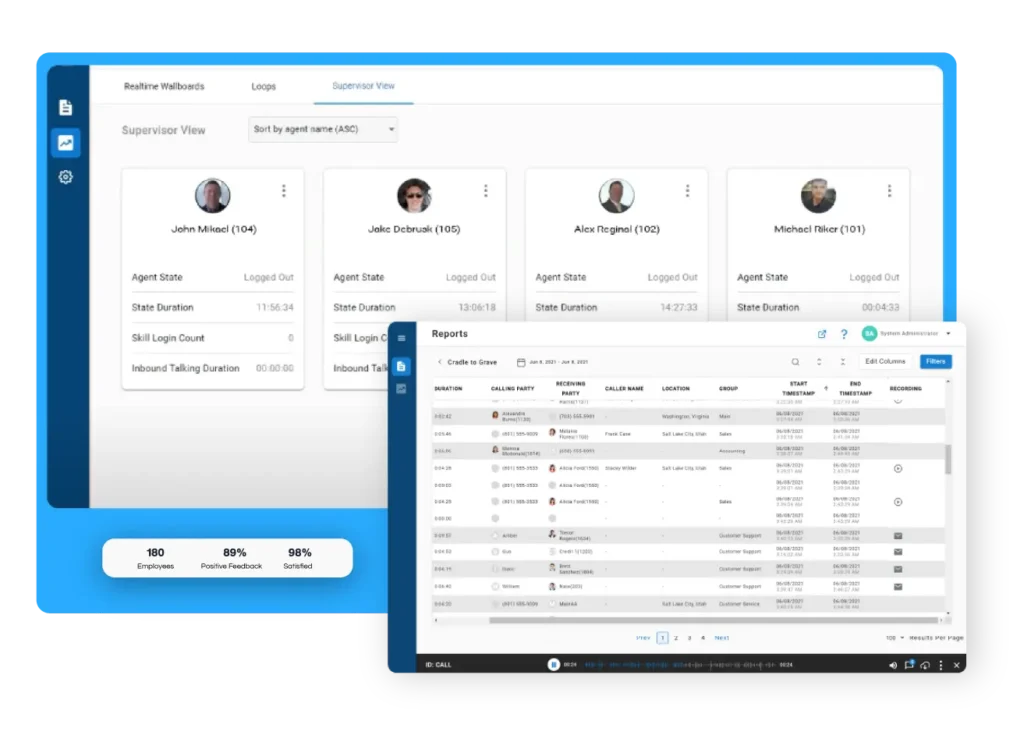

In manufacturing, operations run on precision—but that shouldn’t stop with equipment. Your workforce, support teams, and service operations must also move efficiently. When calls go unanswered, chat queues grow, or shift handoffs fail, the ripple effects hit production, employee morale, and customer satisfaction. Yet many manufacturers still rely on outdated, retrospective reporting—meaning they only discover issues after it’s too late.
This checklist identifies the 7 key real-time visibility areas that matter most. Tracking these will help keep your workforce agile and proactive—whether you’re managing internal IT, customer service lines, or dispatch coordination.
1. Monitor Live Call and Chat Queues
When no one’s watching the queue, delays grow—and customers or coworkers wait longer. Xima’s contact center software for manufacturing supports these operations.
Real-time queue monitoring empowers supervisors to resolve backups before they escalate.
- Can you see pending voice calls and chat sessions instantly?
- Do agents’ statuses (available, on call, in chat, wrap-up) appear live?
- Are queue surges flagged automatically?
For deeper tracking, Xima’s reporting and analytics tools offer visibility across calls, chats, and agent activity in real time.
2. Track Agent Status and Availability
Overloaded agents burn out fast; underutilized ones get bored. Live monitoring helps you rebalance workloads before they impact service or morale.
- Are agent statuses displayed live by role or location?
- Can managers see and adjust coverage as patterns emerge?
- Does your system provide custom reporting by feature for tracking utilization?
Live agent status is shown through Xima’s real-time wallboards.
3. Focus on High‑Impact Metrics
Tracking every stat adds noise. Instead, prioritize KPIs like AHT (average handle time), resolution rate, missed calls, and total chat engagements—actionable, meaningful metrics.
- Can you compare AHT and resolution rates across teams?
- Are escalations or wrap-ups tracked in real time?
- Do you have dashboards that combine real-time and historical insights?
The right analytics tools make it easy to focus on what matters most without digging through disconnected data.
4. Align Shift Coverage with Real Demand
Too many on the clock? Waste. Not enough? Service gaps. Use real-time data to dynamically match staffing with actual volume—not scheduled assumptions.
- Do your staff plans consider both current and historical trends?
- Can you adjust coverage mid-shift when volume spikes?
- Are low-traffic periods covered without overstaffing?
Visibility into scheduling gaps helps prevent reactive firefighting later.
5. Set Thresholds and Live Alerts
You can’t fix what you can’t see coming. Real-time alerting helps you spot issues before they impact operations.
- Do you have custom alert thresholds (queue length, wait time)?
- Are SLA deviations signaled immediately?
- Do alerts route automatically to supervisors to take immediate action?
Setting proactive rules for workload spikes helps your teams stay ahead of demand.
6. Unify Voice and Chat Analytics
If you’re supporting both phone and chat channels (and most manufacturers do), make sure both are tracked and visible in a single dashboard. Disconnected data leads to blind spots.
- Do you monitor chat and voice in tandem?
- Are chat metrics like hold time and wrap-up captured?
- Have you implemented AI-powered automation, like Xima’s Virtual Agent, to handle routine requests and support agents?
With the right tools, you can manage both channels with the same level of insight.
7. Empower Teams with Role‑Based Dashboards
Manufacturing doesn’t depend on a single team—it’s a collective effort. Tailor dashboards so department leads see the insights that matter most.
- Do different groups get dashboards customized by role?
- Can plant managers, support leads, and field dispatch see only what’s relevant?
- Are escalation paths and handoffs visible in real time?
Well-structured access to real-time data keeps the right people in control of the right outcomes.
Final Word: Real-Time Visibility = Competitive Advantage
Manufacturers can’t afford operational guesswork—not on the line, and not in the support queue. Live visibility into queues, agent performance, and staffing lets you prevent escalation, rebalance resources, and minimize waste—every day.
Even small shifts in availability or wait times compound into significant gains over time. If you’re not tracking these seven areas in real time, now’s the time to start.